


Automated Labeling Machines Market Outlook
The Automated Labeling Machines market was valued at $3.86 billion in 2025 and is projected to reach $6.24 billion by 2034, growing at a CAGR of 5.5% during the forecast period 2026-2034. This market is witnessing significant growth due to the increasing demand for automation in packaging processes across various industries. The need for efficient, accurate, and high-speed labeling solutions is driving the adoption of automated labeling machines. These machines are becoming essential in industries such as food and pharmaceuticals, where labeling accuracy and speed are critical. The market is also benefiting from technological advancements, such as the integration of IoT and AI, which enhance the functionality and efficiency of labeling machines.
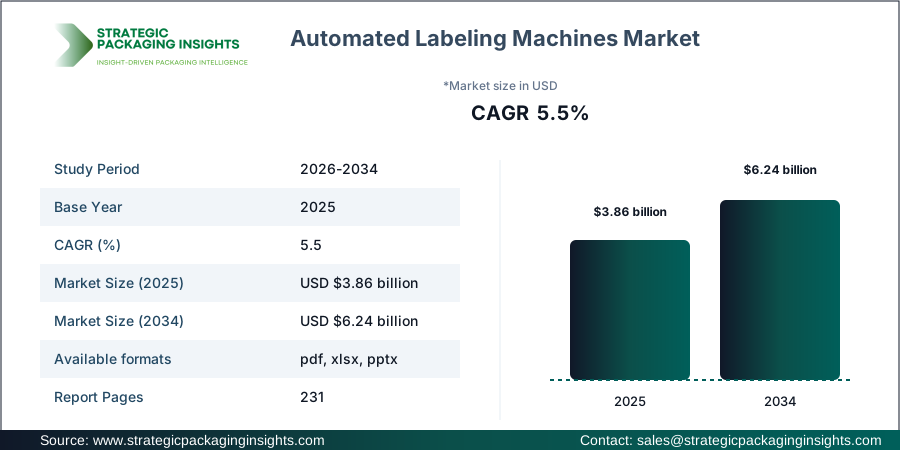
Report Scope
| Attributes | Details |
| Report Title | Automated Labeling Machines Market Size, Future Growth and Forecast 2034 |
| Type | Pressure Sensitive, Hot Melt |
| Speed | Low, High |
| Application | Bottle, Carton |
| End Use | Food, Pharma |
| Region | Asia Pacific, North America, Latin America, Europe, Middle East & Africa |
| Base Year | 2025 |
| Historic Period | 2018-2024 |
| Forecast Period | 2026-2034 |
| Number of Pages | 231 |
| Customization Available | Yes* |
Opportunities & Threats
One of the significant opportunities in the Automated Labeling Machines market is the growing demand for packaged goods, driven by the increasing global population and urbanization. As more consumers prefer packaged products for convenience and safety, manufacturers are investing in automated labeling solutions to meet the rising demand. Additionally, the trend towards sustainable packaging is creating opportunities for manufacturers to develop eco-friendly labeling solutions. The integration of advanced technologies, such as machine learning and IoT, is also opening new avenues for innovation in labeling machines, allowing for more precise and efficient operations.
Another opportunity lies in the expansion of the e-commerce sector, which is driving the need for efficient packaging and labeling solutions. With the rise of online shopping, there is an increased demand for quick and accurate labeling to ensure timely delivery and customer satisfaction. Automated labeling machines are becoming crucial in meeting these demands, providing opportunities for market growth. Furthermore, the increasing focus on product traceability and regulatory compliance in industries such as pharmaceuticals and food is boosting the demand for advanced labeling solutions that can provide detailed product information.
However, the market faces certain threats, such as the high initial investment required for automated labeling machines. Small and medium-sized enterprises may find it challenging to invest in these machines due to budget constraints. Additionally, the complexity of integrating these machines into existing production lines can be a barrier for some manufacturers. The market also faces challenges from the availability of low-cost manual labeling solutions, which may deter some companies from adopting automated systems. Moreover, the ongoing economic uncertainties and supply chain disruptions could impact the market growth negatively.
Drivers & Challenges
The primary driver of the Automated Labeling Machines market is the increasing demand for automation in the packaging industry. As manufacturers seek to improve efficiency and reduce labor costs, the adoption of automated labeling machines is on the rise. These machines offer several advantages, including high-speed operations, accuracy, and the ability to handle a wide range of label types and sizes. The growing emphasis on product safety and quality assurance is also driving the demand for automated labeling solutions, as they ensure consistent and accurate labeling, reducing the risk of errors.
Another significant driver is the technological advancements in labeling machines. The integration of IoT and AI technologies is enhancing the capabilities of these machines, allowing for real-time monitoring and predictive maintenance. This not only improves the efficiency of labeling operations but also reduces downtime and maintenance costs. The development of user-friendly interfaces and software solutions is making it easier for operators to manage and control labeling processes, further driving the adoption of automated labeling machines.
Despite these drivers, the market faces challenges such as the high cost of automated labeling machines, which can be a barrier for small and medium-sized enterprises. The complexity of integrating these machines into existing production lines can also pose challenges for manufacturers. Additionally, the market is facing competition from low-cost manual labeling solutions, which may deter some companies from investing in automated systems. The ongoing economic uncertainties and supply chain disruptions could also impact the market growth negatively.
Market Share Analysis
The Automated Labeling Machines market is characterized by a competitive landscape with several key players striving to gain a significant market share. Companies such as Krones, Sidel, and Gernep are leading the market with their innovative labeling solutions and strong global presence. These companies are focusing on expanding their product portfolios and enhancing their technological capabilities to maintain their competitive edge. The market is also witnessing strategic collaborations and partnerships among key players to strengthen their market position and expand their customer base.
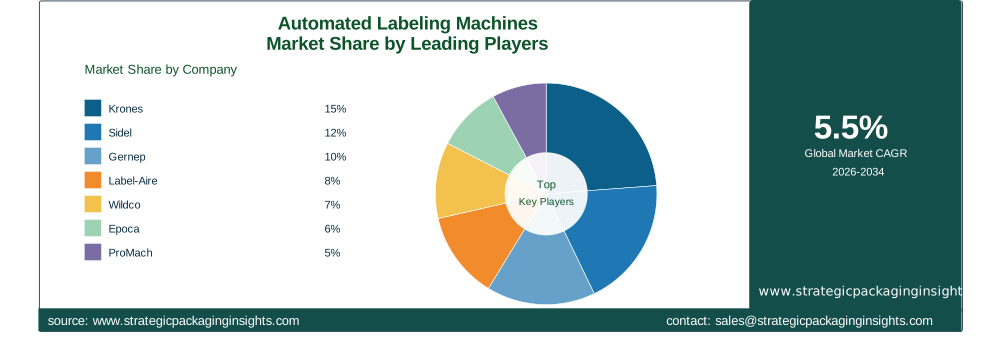
Krones is a prominent player in the market, known for its advanced labeling technologies and comprehensive product offerings. The company holds a significant market share due to its strong focus on research and development and its ability to provide customized solutions to meet specific customer needs. Sidel, another major player, is recognized for its innovative labeling solutions and strong customer relationships. The company is continuously investing in new technologies to enhance its product offerings and improve its market position.
Gernep is a key player in the market, offering a wide range of labeling machines for various applications. The company's strong focus on quality and customer satisfaction has helped it gain a substantial market share. Label-Aire is another important player, known for its high-performance labeling machines and strong customer support. The company is focusing on expanding its product portfolio and enhancing its technological capabilities to maintain its competitive edge.
Other notable companies in the market include Wildco, Epoca, ProMach, Lawson Label, Harland Machine Systems, and Quadrel Labeling. These companies are focusing on strategic partnerships and collaborations to expand their market presence and enhance their product offerings. The competitive landscape of the Automated Labeling Machines market is dynamic, with companies continuously striving to innovate and improve their products to meet the evolving needs of customers.
Key Highlights
- The Automated Labeling Machines market is projected to grow at a CAGR of 5.5% from 2026 to 2034.
- Technological advancements, such as IoT and AI integration, are driving market growth.
- The food and pharmaceutical industries are major end-users of automated labeling machines.
- High initial investment costs pose a challenge for small and medium-sized enterprises.
- The market is witnessing increased demand from the e-commerce sector.
- Key players are focusing on strategic partnerships and collaborations to expand their market presence.
- The trend towards sustainable packaging is creating opportunities for eco-friendly labeling solutions.
Top Countries Insights
In the Automated Labeling Machines market, the United States holds a significant market share, driven by the presence of major manufacturers and the high demand for automated solutions in the packaging industry. The market in the U.S. is expected to grow at a CAGR of 6%, supported by technological advancements and the increasing focus on product safety and quality assurance. The country's strong regulatory framework and emphasis on sustainable packaging are also contributing to market growth.
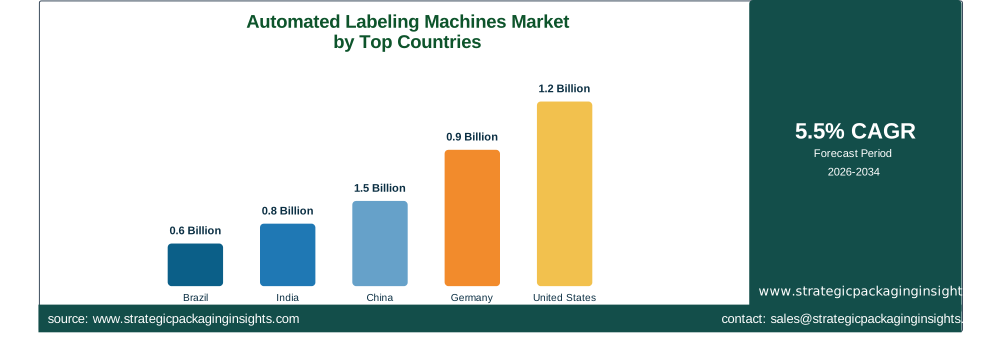
Germany is another key market for automated labeling machines, with a strong focus on innovation and technological advancements. The market in Germany is projected to grow at a CAGR of 5%, driven by the increasing demand for efficient and accurate labeling solutions in the food and pharmaceutical industries. The country's strong manufacturing base and emphasis on quality and precision are key growth drivers.
China is emerging as a significant market for automated labeling machines, with rapid industrialization and urbanization driving demand. The market in China is expected to grow at a CAGR of 7%, supported by the increasing adoption of automation in the packaging industry and the growing e-commerce sector. The government's focus on improving manufacturing efficiency and product quality is also contributing to market growth.
India is witnessing significant growth in the automated labeling machines market, driven by the expanding food and pharmaceutical industries. The market in India is projected to grow at a CAGR of 8%, supported by the increasing demand for packaged goods and the government's initiatives to promote manufacturing and automation. The country's large consumer base and growing middle class are also contributing to market growth.
Brazil is another important market for automated labeling machines, with a growing demand for efficient packaging solutions in the food and beverage industry. The market in Brazil is expected to grow at a CAGR of 6%, supported by the increasing focus on product safety and quality assurance. The country's strong agricultural base and emphasis on sustainable packaging are key growth drivers.
Automated Labeling Machines Market Segments Insights

Type Analysis
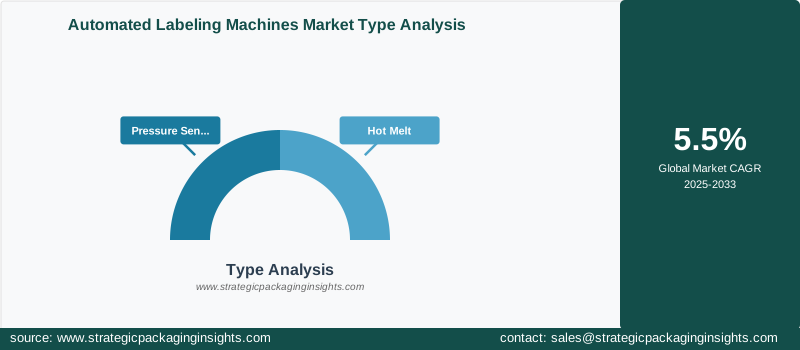
The Automated Labeling Machines market is segmented by type into Pressure Sensitive and Hot Melt. Pressure Sensitive labeling machines are widely used due to their versatility and ability to handle a variety of label materials and shapes. These machines are preferred in industries such as food and pharmaceuticals, where labeling accuracy and speed are critical. The demand for pressure-sensitive labeling machines is driven by their ability to provide high-quality labels with excellent adhesion properties. On the other hand, Hot Melt labeling machines are gaining popularity due to their cost-effectiveness and ability to handle high-speed operations. These machines are ideal for applications where quick label application is required, such as in the beverage industry.
Speed Analysis
Based on speed, the market is segmented into Low and High-speed labeling machines. High-speed labeling machines are in high demand due to their ability to handle large volumes of products efficiently. These machines are essential in industries such as food and pharmaceuticals, where high production rates are required. The demand for high-speed labeling machines is driven by the need for increased productivity and efficiency in packaging operations. Low-speed labeling machines, on the other hand, are preferred in applications where precision and accuracy are more important than speed. These machines are ideal for small-scale operations and niche applications where high-speed operations are not required.
Application Analysis
The market is segmented by application into Bottle and Carton labeling machines. Bottle labeling machines are widely used in the beverage and pharmaceutical industries, where accurate and efficient labeling is essential. The demand for bottle labeling machines is driven by the increasing consumption of bottled products and the need for high-quality labels that can withstand various environmental conditions. Carton labeling machines are gaining popularity in the food and e-commerce industries, where efficient and accurate labeling is crucial for product identification and traceability. The demand for carton labeling machines is driven by the increasing demand for packaged goods and the need for efficient packaging solutions.
End Use Analysis
The Automated Labeling Machines market is segmented by end use into Food and Pharma. The food industry is a major end-user of automated labeling machines, driven by the increasing demand for packaged food products and the need for accurate labeling to ensure product safety and compliance with regulatory standards. The demand for automated labeling machines in the food industry is also driven by the trend towards sustainable packaging and the need for eco-friendly labeling solutions. The pharmaceutical industry is another significant end-user, where labeling accuracy and compliance with regulatory standards are critical. The demand for automated labeling machines in the pharmaceutical industry is driven by the need for detailed product information and traceability.
Automated Labeling Machines Market Segments
The Automated Labeling Machines market has been segmented on the basis ofType
- Pressure Sensitive
- Hot Melt
Speed
- Low
- High
Application
- Bottle
- Carton
End Use
- Food
- Pharma
Region
- Asia Pacific
- North America
- Latin America
- Europe
- Middle East & Africa




