


Anti-Blocking Agents for Packaging Films Market Outlook
The Anti-Blocking Agents for Packaging Films market was valued at $1.13 billion in 2025 and is projected to reach $2.09 billion by 2034, growing at a CAGR of 7.1% during the forecast period 2026-2034. This market is driven by the increasing demand for high-quality packaging films that prevent sticking, which is crucial for maintaining the integrity and usability of packaged products. The growth in the food and beverage industry, along with the rising demand for flexible packaging solutions, is significantly contributing to the market expansion. Additionally, advancements in packaging technologies and the introduction of innovative anti-blocking agents are expected to further propel market growth.
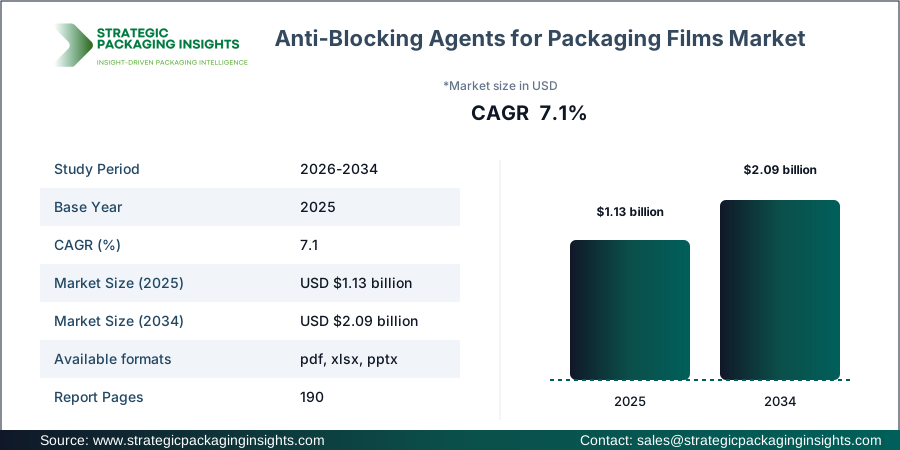
However, the market faces challenges such as stringent environmental regulations and the need for sustainable packaging solutions. The increasing focus on reducing plastic waste and the shift towards eco-friendly packaging materials may pose a threat to the growth of traditional anti-blocking agents. Despite these challenges, the market holds significant growth potential due to the ongoing research and development activities aimed at creating biodegradable and environmentally friendly anti-blocking agents. The adoption of these sustainable solutions is expected to open new avenues for market players, thereby enhancing the overall market dynamics.
Report Scope
| Attributes | Details |
| Report Title | Anti-Blocking Agents for Packaging Films Market Size, Future Growth and Forecast 2034 |
| Product Type | Silica-Based Agents, Talc-Based Agents, Calcium Carbonate Agents, Polymeric Agents |
| Film Type | PE Films, PP Films, PET Films |
| Application | Flexible Packaging, Food Films, Industrial Films |
| End Use | Film Converters, Resin Producers, Packaging Manufacturers |
| Region | Asia Pacific, North America, Latin America, Europe, Middle East & Africa |
| Base Year | 2025 |
| Historic Period | 2018-2024 |
| Forecast Period | 2026-2034 |
| Number of Pages | 190 |
| Customization Available | Yes* |
Opportunities & Threats
The Anti-Blocking Agents for Packaging Films market presents numerous opportunities, particularly in the development of eco-friendly and biodegradable agents. As environmental concerns continue to rise, there is a growing demand for sustainable packaging solutions that minimize environmental impact. Companies investing in research and development to create innovative, biodegradable anti-blocking agents are likely to gain a competitive edge. Additionally, the increasing adoption of flexible packaging in various industries, such as food and beverage, pharmaceuticals, and consumer goods, offers significant growth opportunities for market players. The shift towards lightweight and durable packaging solutions is expected to drive the demand for advanced anti-blocking agents.
Another opportunity lies in the expansion of the market in emerging economies. As these regions experience rapid industrialization and urbanization, the demand for packaging films is expected to rise. This creates a favorable environment for the growth of the anti-blocking agents market. Furthermore, the increasing focus on improving packaging efficiency and reducing production costs is likely to drive the adoption of high-performance anti-blocking agents. Companies that can offer cost-effective solutions without compromising on quality are well-positioned to capitalize on these opportunities.
Despite the promising opportunities, the market faces certain threats, primarily from stringent regulatory frameworks. Governments worldwide are implementing strict regulations to curb plastic pollution, which may impact the production and use of traditional anti-blocking agents. Additionally, the volatility in raw material prices poses a significant challenge for manufacturers, affecting their profit margins. Companies need to navigate these regulatory and economic challenges effectively to sustain their market position.
Drivers & Challenges
The primary driver of the Anti-Blocking Agents for Packaging Films market is the increasing demand for high-quality packaging solutions across various industries. The food and beverage sector, in particular, is witnessing a surge in demand for flexible packaging, which requires effective anti-blocking agents to ensure product integrity. The growing consumer preference for convenient and easy-to-use packaging is further fueling the demand for advanced packaging films. Additionally, technological advancements in packaging materials and the development of innovative anti-blocking agents are driving market growth. Companies are focusing on enhancing the performance of these agents to meet the evolving needs of end-users.
Another significant driver is the rising awareness about the benefits of anti-blocking agents in improving packaging efficiency. These agents play a crucial role in preventing film adhesion, thereby enhancing the overall functionality and usability of packaging films. The increasing emphasis on reducing production costs and improving operational efficiency is encouraging manufacturers to adopt high-performance anti-blocking agents. Furthermore, the expansion of the e-commerce sector is boosting the demand for packaging films, thereby driving the growth of the anti-blocking agents market.
However, the market faces challenges such as the need for sustainable and environmentally friendly packaging solutions. The growing concerns about plastic waste and the environmental impact of packaging materials are prompting companies to explore alternative solutions. The development of biodegradable and eco-friendly anti-blocking agents is a complex and costly process, posing a challenge for manufacturers. Additionally, the fluctuating prices of raw materials used in the production of anti-blocking agents can impact the profitability of market players. Companies need to adopt innovative strategies to overcome these challenges and maintain their competitive edge.
Market Share Analysis
The Anti-Blocking Agents for Packaging Films market is characterized by intense competition, with several key players vying for market share. The competitive landscape is shaped by the presence of both established companies and emerging players, each striving to enhance their product offerings and expand their market presence. Companies are focusing on strategic collaborations, mergers, and acquisitions to strengthen their market position and gain a competitive edge. The market is also witnessing a trend towards the development of innovative and sustainable anti-blocking agents, as companies aim to meet the evolving needs of consumers and adhere to stringent environmental regulations.
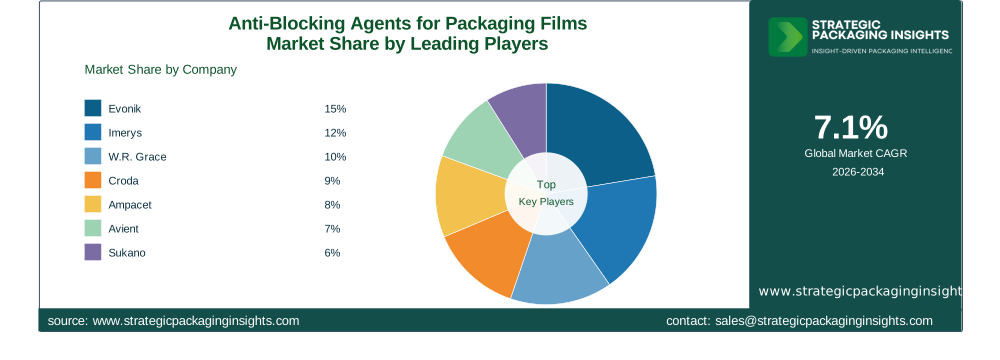
Evonik is a leading player in the market, known for its extensive range of high-performance anti-blocking agents. The company is committed to innovation and sustainability, investing heavily in research and development to create eco-friendly solutions. Imerys, another major player, offers a diverse portfolio of mineral-based anti-blocking agents, catering to various applications in the packaging industry. W.R. Grace is renowned for its advanced silica-based agents, which are widely used in the production of packaging films.
Croda is a key player in the market, focusing on the development of polymeric anti-blocking agents that offer superior performance and environmental benefits. Ampacet and Avient are prominent players, known for their comprehensive range of color and additive masterbatches, including anti-blocking agents. Sukano and Tosaf are also significant contributors to the market, offering innovative solutions tailored to meet the specific needs of packaging manufacturers.
Momentive and PQ Corporation are notable players, providing high-quality anti-blocking agents that enhance the functionality and durability of packaging films. These companies are actively engaged in expanding their product portfolios and strengthening their distribution networks to cater to the growing demand for advanced packaging solutions. The competitive landscape is expected to remain dynamic, with companies focusing on innovation and sustainability to maintain their market leadership.
Key Highlights
- The Anti-Blocking Agents for Packaging Films market is projected to grow at a CAGR of 7.1% from 2026 to 2034.
- Increasing demand for flexible packaging solutions is driving market growth.
- Stringent environmental regulations are prompting the development of eco-friendly anti-blocking agents.
- Technological advancements in packaging materials are enhancing the performance of anti-blocking agents.
- The food and beverage industry is a major end-user of anti-blocking agents.
- Emerging economies offer significant growth opportunities for market players.
- Volatility in raw material prices poses a challenge for manufacturers.
- Companies are focusing on strategic collaborations to strengthen their market position.
- The development of biodegradable anti-blocking agents is a key trend in the market.
- The e-commerce sector is boosting the demand for packaging films.
Top Countries Insights
In the Anti-Blocking Agents for Packaging Films market, the United States holds a significant share, driven by the robust demand for packaging films in the food and beverage industry. The market in the U.S. is expected to grow at a CAGR of 6%, supported by the increasing adoption of flexible packaging solutions and the presence of major market players. The country's focus on sustainability and innovation is further propelling market growth, with companies investing in the development of eco-friendly anti-blocking agents.
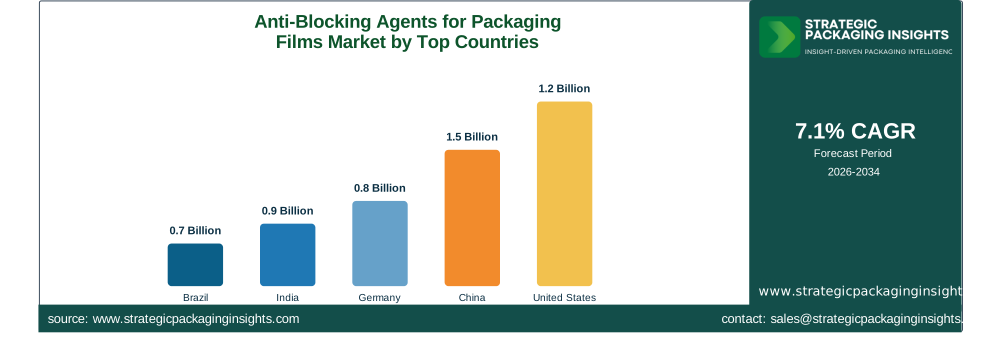
China is another key market, with a projected CAGR of 8%. The rapid industrialization and urbanization in the country are driving the demand for packaging films, creating a favorable environment for the growth of anti-blocking agents. The government's initiatives to promote sustainable packaging solutions are encouraging companies to develop innovative and environmentally friendly products. The expanding e-commerce sector is also contributing to the market's growth, as it boosts the demand for packaging films.
Germany is a prominent market in Europe, with a CAGR of 5%. The country's strong manufacturing base and focus on technological advancements are driving the demand for high-performance anti-blocking agents. The increasing emphasis on reducing plastic waste and promoting sustainable packaging solutions is encouraging companies to invest in research and development activities. The presence of leading market players in Germany further enhances the market's growth prospects.
India is experiencing significant growth in the Anti-Blocking Agents for Packaging Films market, with a CAGR of 9%. The country's booming food and beverage industry and the rising demand for flexible packaging solutions are key growth drivers. The government's initiatives to promote sustainable packaging and reduce plastic waste are encouraging companies to develop eco-friendly anti-blocking agents. The increasing consumer awareness about the benefits of advanced packaging solutions is further boosting market growth.
Brazil is a key market in Latin America, with a projected CAGR of 7%. The country's growing industrial sector and the rising demand for packaging films in various industries are driving the market's growth. The focus on improving packaging efficiency and reducing production costs is encouraging manufacturers to adopt high-performance anti-blocking agents. The government's efforts to promote sustainable packaging solutions are also contributing to the market's expansion.
Anti-Blocking Agents for Packaging Films Market Segments Insights

Product Type Analysis
The Anti-Blocking Agents for Packaging Films market is segmented by product type into silica-based agents, talc-based agents, calcium carbonate agents, and polymeric agents. Silica-based agents are widely used due to their excellent anti-blocking properties and compatibility with various film types. These agents are particularly favored in applications requiring high clarity and transparency. Talc-based agents, on the other hand, are preferred for their cost-effectiveness and ease of processing. They are commonly used in applications where cost considerations are paramount. Calcium carbonate agents offer a balance between performance and cost, making them suitable for a wide range of applications. Polymeric agents are gaining traction due to their superior performance and environmental benefits, as they can be tailored to meet specific application requirements.
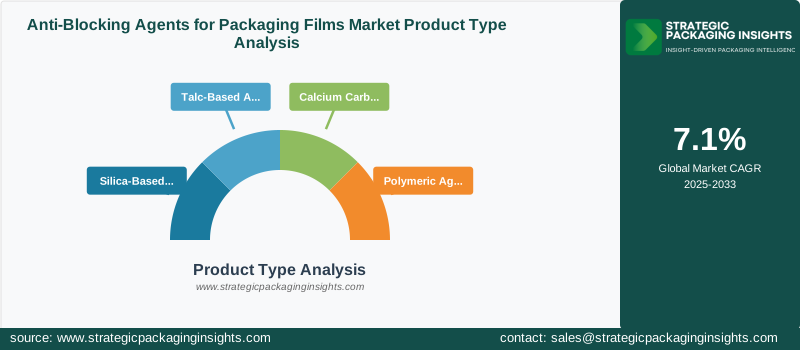
The demand for silica-based agents is driven by the increasing need for high-quality packaging films in the food and beverage industry. These agents provide excellent anti-blocking properties, ensuring the integrity and usability of packaged products. The growing emphasis on sustainability is also driving the demand for polymeric agents, as they offer eco-friendly solutions without compromising on performance. Companies are focusing on developing innovative polymeric agents that meet the evolving needs of end-users and adhere to stringent environmental regulations.
Film Type Analysis
The market is segmented by film type into PE films, PP films, and PET films. PE films are the most widely used due to their versatility and cost-effectiveness. They are commonly used in applications requiring flexibility and durability, such as food packaging and industrial films. PP films are favored for their excellent clarity and resistance to moisture, making them ideal for applications in the food and beverage industry. PET films are known for their superior strength and barrier properties, making them suitable for high-performance applications.
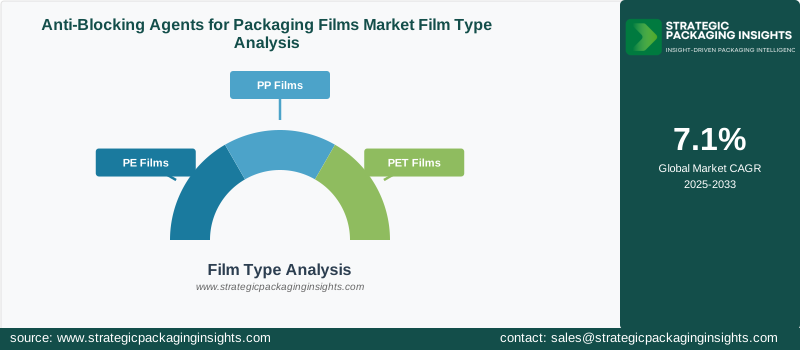
The demand for PE films is driven by the increasing adoption of flexible packaging solutions in various industries. These films offer a cost-effective solution for packaging applications, ensuring product integrity and usability. The growing emphasis on sustainability is also driving the demand for PET films, as they offer superior barrier properties and can be recycled. Companies are focusing on developing innovative film solutions that meet the evolving needs of end-users and adhere to stringent environmental regulations.
Application Analysis
The market is segmented by application into flexible packaging, food films, and industrial films. Flexible packaging is the largest segment, driven by the increasing demand for convenient and easy-to-use packaging solutions. The food films segment is also witnessing significant growth, as consumers demand high-quality packaging that ensures product freshness and safety. Industrial films are used in a variety of applications, including automotive and construction, where durability and performance are critical.
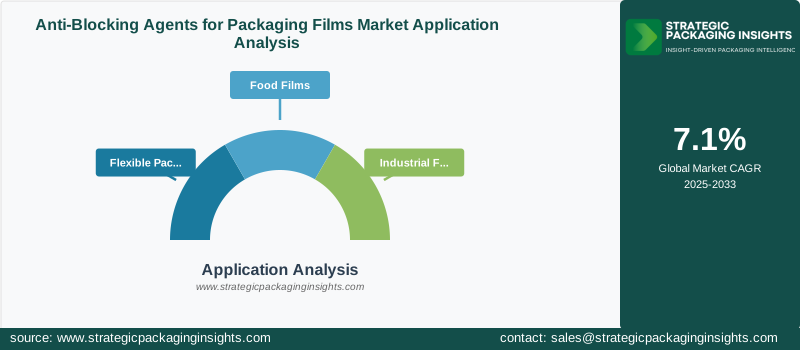
The demand for flexible packaging is driven by the growing consumer preference for convenient and easy-to-use packaging solutions. These films offer a cost-effective solution for packaging applications, ensuring product integrity and usability. The increasing emphasis on sustainability is also driving the demand for food films, as they offer superior barrier properties and can be recycled. Companies are focusing on developing innovative film solutions that meet the evolving needs of end-users and adhere to stringent environmental regulations.
End Use Analysis
The market is segmented by end use into film converters, resin producers, and packaging manufacturers. Film converters are the largest segment, driven by the increasing demand for high-quality packaging films in various industries. Resin producers are also witnessing significant growth, as they provide the raw materials needed for the production of anti-blocking agents. Packaging manufacturers are focusing on developing innovative solutions that meet the evolving needs of end-users and adhere to stringent environmental regulations.
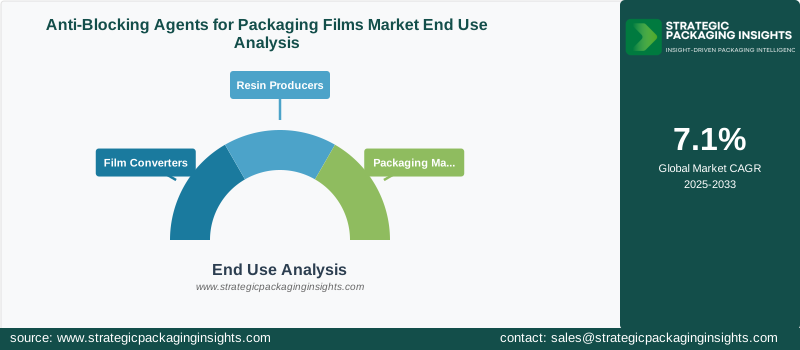
The demand for film converters is driven by the growing consumer preference for convenient and easy-to-use packaging solutions. These converters offer a cost-effective solution for packaging applications, ensuring product integrity and usability. The increasing emphasis on sustainability is also driving the demand for resin producers, as they offer superior barrier properties and can be recycled. Companies are focusing on developing innovative film solutions that meet the evolving needs of end-users and adhere to stringent environmental regulations.
Anti-Blocking Agents for Packaging Films Market Segments
The Anti-Blocking Agents for Packaging Films market has been segmented on the basis ofProduct Type
- Silica-Based Agents
- Talc-Based Agents
- Calcium Carbonate Agents
- Polymeric Agents
Film Type
- PE Films
- PP Films
- PET Films
Application
- Flexible Packaging
- Food Films
- Industrial Films
End Use
- Film Converters
- Resin Producers
- Packaging Manufacturers
Region
- Asia Pacific
- North America
- Latin America
- Europe
- Middle East & Africa




