


Aluminum Foil Market Outlook
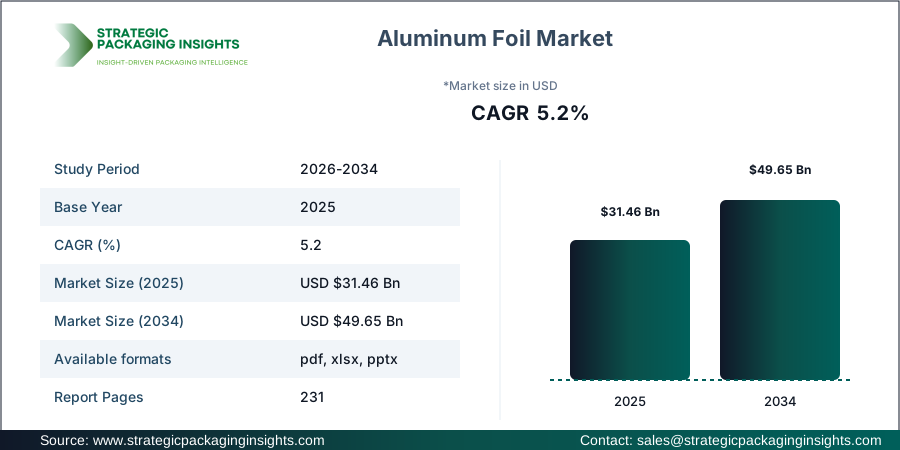
The Aluminum Foil market size was valued at USD 31.46 billion in 2025 and is anticipated to reach USD 49.65 billion by 2034, growing at a CAGR of 5.2% during the forecast period according to Strategic Packaging Insights. The market is witnessing robust growth driven by the increasing demand for lightweight and durable packaging solutions across various industries. Companies like Hindalco and Novelis are at the forefront, leveraging advanced manufacturing technologies to enhance product quality and meet the rising consumer expectations. The versatility of aluminum foil in terms of its application in food packaging, pharma packaging, and industrial use is a significant factor contributing to its market expansion.
One of the most impactful drivers of the Aluminum Foil market is the growing emphasis on sustainable packaging solutions. Governments and environmental agencies worldwide are advocating for the reduction of plastic usage, which has led to a surge in demand for recyclable materials like aluminum foil. This shift is supported by the increasing consumer awareness regarding environmental conservation and the benefits of using eco-friendly packaging. Companies such as Amcor and Constantia Flexibles are investing heavily in R&D to develop innovative aluminum foil products that align with sustainability goals, thereby enhancing their market position and driving overall growth.
Report Scope
| Attributes | Details |
| Report Title | Aluminum Foil Market Size, Future Growth and Forecast 2034 |
| Product Type | Plain Foil, Printed Foil, Laminated Foil, Container Foil |
| Thickness | Below 20 Micron, 20–50 Micron, Above 50 Micron |
| Application | Food Packaging, Pharma Packaging, Household Foil, Industrial Use |
| End Use | Food & Beverage, Healthcare, Consumer Goods, Industrial |
| Region | Asia Pacific, North America, Latin America, Europe, Middle East & Africa |
| Base Year | 2025 |
| Historic Period | 2018-2024 |
| Forecast Period | 2026-2034 |
| Number of Pages | 231 |
| Customization Available | Yes* |
Sustainability & Circular Economy Analysis
Sustainability initiatives are significantly shaping the aluminum foil market, with a strong focus on recyclable materials and eco-friendly innovations. The industry is witnessing a shift towards lightweight packaging solutions that not only reduce material usage but also minimize transportation emissions. Companies are increasingly adopting waste reduction strategies and extended producer responsibility (EPR) programs to align with environmental regulations and consumer preferences for sustainable products. This trend is influencing packaging design and manufacturing processes, encouraging investment in technologies that enhance recyclability and reduce carbon footprints.
Moreover, the circular economy model is gaining traction, promoting the reuse and recycling of aluminum foil products. This approach not only conserves resources but also offers economic benefits by reducing production costs and enhancing supply chain efficiency. As a result, companies are focusing on developing closed-loop systems that facilitate the collection and recycling of used aluminum foil, thereby supporting long-term market competitiveness. Regulatory compliance with packaging standards and ESG initiatives further drives the adoption of sustainable practices, ensuring that companies remain competitive in a rapidly evolving market landscape.
Consumer preferences are increasingly leaning towards products that demonstrate a commitment to sustainability, prompting brand owners and retailers to prioritize eco-friendly packaging solutions. This shift is influencing investment decisions and supply chain strategies, as companies seek to enhance their sustainability credentials and meet regulatory requirements. The integration of sustainable practices into the aluminum foil market is not only a response to environmental concerns but also a strategic move to capture market share and drive growth in an increasingly competitive industry.
Packaging Value Chain & Supply Chain Analysis
The aluminum foil market's value chain is a complex ecosystem involving raw material sourcing, manufacturing, and distribution. Raw material availability plays a crucial role in determining production capabilities and market performance. Companies like Hindalco and UACJ Corporation are investing in efficient procurement strategies to ensure a steady supply of high-quality aluminum, which is essential for maintaining competitive advantage. Packaging converters and manufacturers are focusing on optimizing production processes to enhance efficiency and reduce costs, thereby improving overall market competitiveness.
Logistics and distribution channels are integral components of the aluminum foil supply chain, influencing market reach and customer satisfaction. Efficient transportation and inventory management are critical for ensuring timely delivery and minimizing operational costs. Strategic partnerships with logistics providers and retailers enable companies to expand their market presence and enhance supply chain resilience. Localization and global sourcing strategies are also being employed to mitigate risks associated with geopolitical uncertainties and fluctuating raw material prices.
Recycling networks are becoming increasingly important in the aluminum foil market, driven by the growing emphasis on sustainability and circular economy practices. Companies are investing in recycling infrastructure and technologies to facilitate the collection and processing of used aluminum foil, thereby reducing environmental impact and enhancing resource efficiency. This focus on recycling not only supports regulatory compliance but also offers economic benefits by reducing material costs and enhancing brand reputation. Overall, the integration of sustainable practices into the supply chain is a strategic move to drive growth and maintain competitiveness in the aluminum foil market.
Opportunities & Threats
The aluminum foil market presents numerous opportunities for growth, driven by the increasing demand for sustainable packaging solutions. The shift towards eco-friendly materials is creating a favorable environment for companies to innovate and develop new products that meet consumer expectations. The food and beverage industry, in particular, offers significant growth potential, as aluminum foil is widely used for packaging due to its excellent barrier properties and recyclability. Companies can capitalize on this trend by investing in R&D to enhance product quality and expand their product portfolios.
Another opportunity lies in the healthcare sector, where aluminum foil is used for pharma packaging due to its ability to protect sensitive products from moisture, light, and contamination. The growing demand for pharmaceutical products, driven by an aging population and increasing health awareness, is expected to boost the demand for aluminum foil in this segment. Companies can leverage this opportunity by developing specialized foil products that cater to the specific needs of the healthcare industry, thereby enhancing their market position and driving growth.
However, the aluminum foil market also faces certain threats, primarily related to regulatory challenges and environmental concerns. Stringent regulations regarding packaging waste and recycling can pose challenges for companies, requiring them to invest in compliance and sustainability initiatives. Additionally, the volatility of raw material prices and geopolitical uncertainties can impact production costs and supply chain stability. Companies need to adopt proactive strategies to mitigate these risks and ensure long-term market competitiveness.
Drivers & Challenges
The aluminum foil market is driven by several key factors, including the increasing demand for lightweight and durable packaging solutions. The versatility of aluminum foil, combined with its excellent barrier properties, makes it an ideal choice for various applications, from food packaging to industrial use. The growing emphasis on sustainability and the reduction of plastic usage is further driving the demand for aluminum foil, as it is a recyclable material that aligns with environmental goals. Companies are investing in advanced manufacturing technologies to enhance product quality and meet the rising consumer expectations.
Another significant driver is the growing demand for convenience and ready-to-eat food products, which require efficient packaging solutions. Aluminum foil's ability to preserve food quality and extend shelf life makes it a preferred choice for food packaging. The increasing urbanization and changing consumer lifestyles are contributing to the demand for convenient packaging solutions, thereby driving the growth of the aluminum foil market. Companies are focusing on developing innovative products that cater to these evolving consumer needs, enhancing their market position and driving growth.
Despite the positive growth drivers, the aluminum foil market faces several challenges, including regulatory compliance and environmental concerns. Stringent regulations regarding packaging waste and recycling require companies to invest in sustainability initiatives and compliance measures. Additionally, the volatility of raw material prices and geopolitical uncertainties can impact production costs and supply chain stability. Companies need to adopt proactive strategies to mitigate these risks and ensure long-term market competitiveness. The integration of sustainable practices into the supply chain is essential for addressing these challenges and driving growth in the aluminum foil market.
Market Share Analysis
The aluminum foil market is characterized by a competitive landscape with several key players vying for market share. Companies like Hindalco, Novelis, and Amcor are leading the market, leveraging their extensive product portfolios and advanced manufacturing capabilities to maintain a competitive edge. These companies are focusing on innovation and sustainability to enhance their market position and meet the evolving consumer demands. The market is also witnessing the entry of new players, further intensifying the competition and driving the need for differentiation and strategic partnerships.
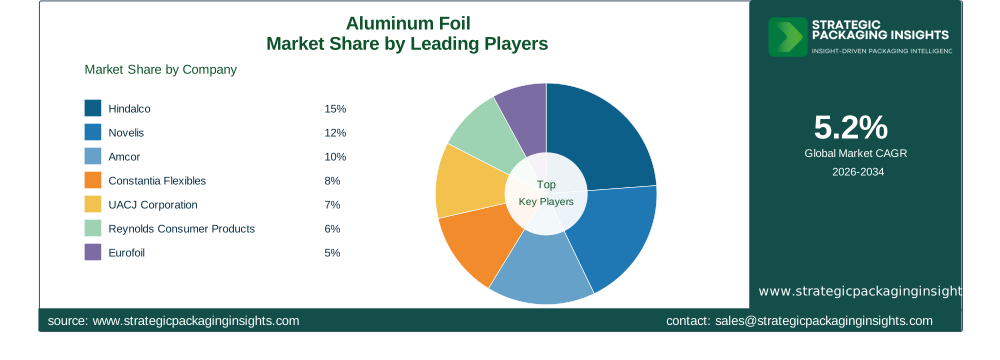
Hindalco, a leading player in the aluminum foil market, is known for its extensive product range and commitment to sustainability. The company is investing in advanced manufacturing technologies to enhance product quality and reduce environmental impact. Novelis, another major player, is focusing on innovation and R&D to develop new products that cater to the evolving consumer needs. The company's emphasis on sustainability and recycling is a key factor driving its market success and enhancing its competitive position.
Amcor, a global leader in packaging solutions, is leveraging its extensive distribution network and strategic partnerships to expand its market presence. The company's focus on sustainability and innovation is driving its growth in the aluminum foil market. Constantia Flexibles, known for its high-quality packaging solutions, is investing in R&D to develop innovative products that meet the specific needs of its customers. The company's commitment to sustainability and environmental responsibility is a key factor driving its market success.
Other notable players in the aluminum foil market include UACJ Corporation, Reynolds Consumer Products, Eurofoil, Gränges, JW Aluminum, and Raviraj Foils. These companies are focusing on enhancing their product offerings and expanding their market reach through strategic partnerships and acquisitions. The competitive landscape of the aluminum foil market is characterized by a strong emphasis on innovation, sustainability, and customer-centric solutions, driving growth and enhancing market competitiveness.
Key Highlights
- Market Size: The aluminum foil market was valued at USD 31.46 billion in 2025 and is projected to reach USD 49.65 billion by 2034.
- Growth Rate: The market is expected to grow at a CAGR of 5.2% during the forecast period.
- Leading Companies: Key players include Hindalco, Novelis, Amcor, and Constantia Flexibles.
- Product Segments: The market is segmented by product type, thickness, application, and end use.
- Regional Insights: Asia Pacific is expected to witness significant growth, driven by increasing demand for packaging solutions.
- Sustainability Focus: Companies are investing in recyclable materials and eco-friendly innovations to meet consumer expectations.
- Regulatory Compliance: Stringent regulations regarding packaging waste and recycling are influencing market dynamics.
Aluminum Foil Market Segments Insights

Product Type Analysis
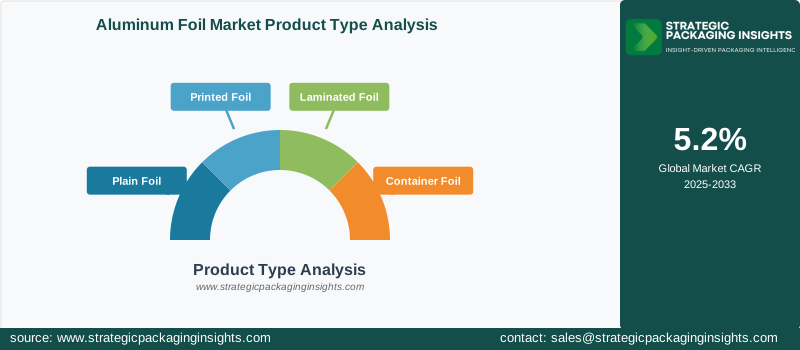
The aluminum foil market is segmented by product type into plain foil, printed foil, laminated foil, and container foil. Each segment caters to specific applications and consumer needs, driving demand across various industries. Plain foil is widely used in food packaging due to its excellent barrier properties and cost-effectiveness. Printed foil, on the other hand, is gaining popularity in the consumer goods sector, where branding and aesthetics play a crucial role. Laminated foil is preferred for its enhanced durability and protection, making it ideal for industrial applications. Container foil is extensively used in the food and beverage industry for packaging ready-to-eat meals and beverages, offering convenience and extended shelf life.
The demand for these product types is driven by the increasing emphasis on sustainability and the reduction of plastic usage. Companies are focusing on developing innovative products that align with environmental goals and meet consumer expectations. The versatility of aluminum foil, combined with its recyclability, makes it an attractive choice for various applications, driving growth in the market. The competitive landscape is characterized by a strong emphasis on innovation and sustainability, with companies investing in R&D to enhance product quality and expand their product portfolios.
Thickness Analysis
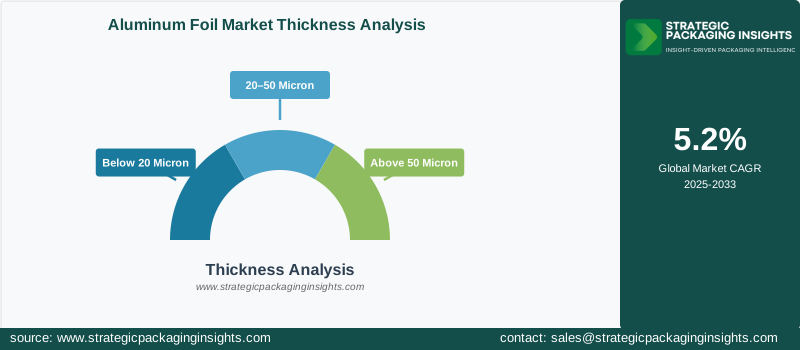
The aluminum foil market is segmented by thickness into below 20 micron, 20-50 micron, and above 50 micron. Each thickness category caters to specific applications, influencing demand across various industries. Foils below 20 micron are primarily used in household applications, offering flexibility and ease of use. The 20-50 micron category is widely used in food and pharma packaging, providing excellent barrier properties and protection against moisture and contamination. Foils above 50 micron are preferred for industrial applications, where durability and strength are critical.
The demand for different thickness categories is driven by the increasing emphasis on sustainability and the reduction of material usage. Companies are focusing on developing lightweight packaging solutions that minimize environmental impact and enhance resource efficiency. The versatility of aluminum foil, combined with its recyclability, makes it an attractive choice for various applications, driving growth in the market. The competitive landscape is characterized by a strong emphasis on innovation and sustainability, with companies investing in R&D to enhance product quality and expand their product portfolios.
Application Analysis
The aluminum foil market is segmented by application into food packaging, pharma packaging, household foil, and industrial use. Each application segment caters to specific consumer needs, driving demand across various industries. Food packaging is the largest application segment, driven by the increasing demand for convenience and ready-to-eat food products. Pharma packaging is another significant segment, where aluminum foil is used to protect sensitive products from moisture, light, and contamination. Household foil is widely used for everyday applications, offering convenience and ease of use. Industrial use of aluminum foil is driven by its excellent barrier properties and durability, making it ideal for various industrial applications.
The demand for these application segments is driven by the increasing emphasis on sustainability and the reduction of plastic usage. Companies are focusing on developing innovative products that align with environmental goals and meet consumer expectations. The versatility of aluminum foil, combined with its recyclability, makes it an attractive choice for various applications, driving growth in the market. The competitive landscape is characterized by a strong emphasis on innovation and sustainability, with companies investing in R&D to enhance product quality and expand their product portfolios.
End Use Analysis
The aluminum foil market is segmented by end use into food & beverage, healthcare, consumer goods, and industrial. Each end-use segment caters to specific consumer needs, driving demand across various industries. The food & beverage industry is the largest end-use segment, driven by the increasing demand for convenience and ready-to-eat food products. The healthcare sector is another significant segment, where aluminum foil is used for pharma packaging due to its excellent barrier properties and protection against moisture, light, and contamination. Consumer goods and industrial applications of aluminum foil are driven by its versatility and durability, making it an ideal choice for various applications.
The demand for these end-use segments is driven by the increasing emphasis on sustainability and the reduction of plastic usage. Companies are focusing on developing innovative products that align with environmental goals and meet consumer expectations. The versatility of aluminum foil, combined with its recyclability, makes it an attractive choice for various applications, driving growth in the market. The competitive landscape is characterized by a strong emphasis on innovation and sustainability, with companies investing in R&D to enhance product quality and expand their product portfolios.
Aluminum Foil Market Segments
The Aluminum Foil market has been segmented on the basis ofProduct Type
- Plain Foil
- Printed Foil
- Laminated Foil
- Container Foil
Thickness
- Below 20 Micron
- 20–50 Micron
- Above 50 Micron
Application
- Food Packaging
- Pharma Packaging
- Household Foil
- Industrial Use
End Use
- Food & Beverage
- Healthcare
- Consumer Goods
- Industrial
Region
- Asia Pacific
- North America
- Latin America
- Europe
- Middle East & Africa




