


Algae Ink Market Outlook
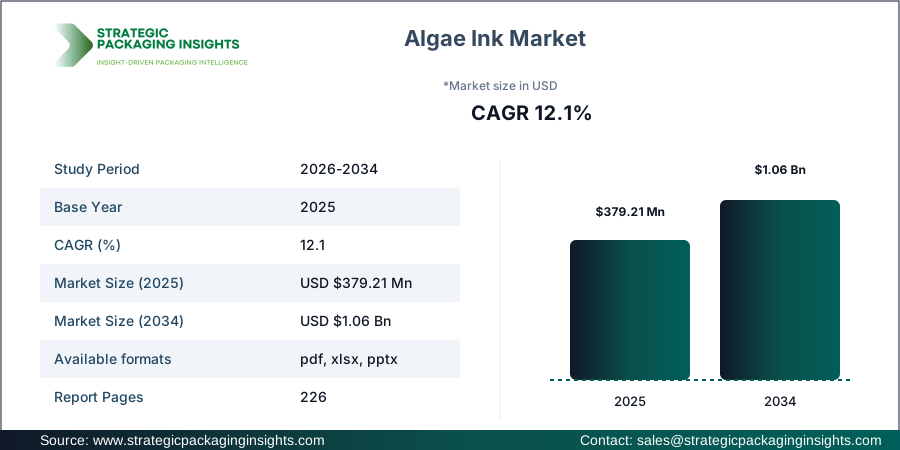
The Algae Ink market size was valued at USD 379.21 million in 2025 and is anticipated to reach USD 1.06 billion by 2034, growing at a CAGR of 12.1% during the forecast period according to Strategic Packaging Insights. Algae Ink, known for its eco-friendly properties, is gaining traction as a sustainable alternative to traditional inks. Companies like Living Ink Technologies are at the forefront, driving innovation and adoption in various sectors. The market's growth is fueled by increasing demand for sustainable packaging solutions and the rising awareness of environmental impacts associated with conventional ink production.
One of the most impactful drivers of the Algae Ink market is the growing regulatory pressure to reduce carbon footprints and promote sustainable practices. Governments worldwide are implementing stringent regulations to curb pollution and encourage the use of renewable resources. This regulatory environment is pushing industries to adopt eco-friendly alternatives like Algae Ink. Additionally, consumer preferences are shifting towards products that are environmentally responsible, further propelling the demand for Algae Ink. Companies such as Algix and Checkerspot are leveraging these trends to expand their market presence and develop innovative products that meet both regulatory standards and consumer expectations.
Report Scope
| Attributes | Details |
| Report Title | Algae Ink Market Size, Future Growth and Forecast 2034 |
| Ink Type | Water-Based Algae Ink, Flexographic Algae Ink, Screen Printing Algae Ink |
| Application | Packaging Printing, Labels, Commercial Printing, Branding |
| End Use | Sustainable Packaging Brands, Food & Beverage, Retail, Printing Houses |
| Distribution Channel | Direct Sales, Distributors, Digital Print Providers |
| Region | Asia Pacific, North America, Latin America, Europe, Middle East & Africa |
| Base Year | 2025 |
| Historic Period | 2018-2024 |
| Forecast Period | 2026-2034 |
| Number of Pages | 226 |
| Customization Available | Yes* |
Sustainability & Circular Economy Analysis
Sustainability initiatives are significantly influencing the Algae Ink market, as companies strive to reduce their environmental impact. The use of recyclable materials and eco-friendly innovations in ink production are becoming standard practices. Algae Ink, derived from renewable sources, aligns perfectly with these sustainability goals. It offers a lower carbon footprint compared to traditional petroleum-based inks, making it an attractive option for companies looking to enhance their ESG profiles. The shift towards lightweight and reusable packaging further complements the use of Algae Ink, as it supports waste reduction strategies and aligns with circular economy principles.
Packaging design and manufacturing are being reshaped by these sustainability trends. Companies are investing in research and development to create inks that not only meet regulatory compliance but also appeal to environmentally conscious consumers. This shift is influencing investment decisions, as businesses prioritize sustainable solutions to remain competitive in the long term. The integration of Algae Ink into supply chain strategies is also becoming more prevalent, as companies seek to reduce their carbon footprint and adhere to extended producer responsibility (EPR) regulations.
Moreover, consumer preferences for sustainable products are driving demand for Algae Ink in various applications, from packaging to branding. This trend is encouraging manufacturers to innovate and develop new formulations that enhance the performance and appeal of Algae Ink. As a result, the market is witnessing increased collaboration between ink producers, packaging companies, and retailers to create products that meet both environmental and consumer demands. These collaborations are essential for maintaining market competitiveness and ensuring compliance with evolving packaging regulations.
Packaging Value Chain & Supply Chain Analysis
The packaging value chain for Algae Ink involves several key components, from raw material sourcing to distribution. Raw materials, primarily algae biomass, are sourced sustainably, ensuring minimal environmental impact. Packaging converters and manufacturers play a crucial role in transforming these materials into usable ink products. Companies like Siegwerk and Sun Chemical are leading the charge in developing advanced packaging solutions that incorporate Algae Ink, enhancing the overall value chain efficiency.
Supply chain efficiency is critical for the success of the Algae Ink market. The availability of raw materials, coupled with efficient transportation and logistics, influences market performance. Strategic partnerships between ink manufacturers and logistics providers are essential to ensure timely delivery and distribution of Algae Ink products. These partnerships help mitigate risks associated with supply chain disruptions and enhance inventory management practices, ensuring a steady supply of products to meet growing demand.
Global sourcing and localization strategies are also impacting the Algae Ink market. Companies are exploring opportunities to localize production to reduce transportation costs and carbon emissions. This approach not only supports sustainability goals but also enhances supply chain resilience. By establishing local production facilities, companies can better serve regional markets and respond quickly to changing consumer demands. This strategic localization is crucial for maintaining competitiveness in a rapidly evolving market landscape.
Opportunities & Threats
The Algae Ink market presents numerous opportunities for growth, driven by the increasing demand for sustainable and eco-friendly products. As consumers become more environmentally conscious, there is a growing preference for products that minimize environmental impact. This trend is creating opportunities for companies to innovate and develop new Algae Ink formulations that meet these consumer demands. Additionally, the expansion of the sustainable packaging industry is providing a significant boost to the Algae Ink market, as companies seek to incorporate eco-friendly inks into their packaging solutions.
Another opportunity lies in the potential for Algae Ink to replace traditional inks in various applications, from packaging to commercial printing. The versatility of Algae Ink, combined with its environmental benefits, makes it an attractive option for companies looking to enhance their sustainability profiles. As regulatory pressures increase, there is a growing need for inks that comply with environmental standards, further driving demand for Algae Ink. Companies that can effectively leverage these opportunities are likely to gain a competitive edge in the market.
However, the Algae Ink market also faces certain threats, primarily related to the high cost of production and limited availability of raw materials. The production of Algae Ink requires specialized equipment and processes, which can be costly and time-consuming. Additionally, the availability of algae biomass is limited, which can impact the scalability of production. These challenges may hinder the growth of the market, as companies struggle to balance cost and sustainability. To overcome these threats, companies must invest in research and development to improve production efficiency and explore alternative raw material sources.
Drivers & Challenges
The primary driver of the Algae Ink market is the increasing demand for sustainable and eco-friendly products. As consumers become more aware of the environmental impact of traditional inks, there is a growing preference for products that minimize environmental harm. This shift in consumer preferences is driving demand for Algae Ink, as it offers a sustainable alternative to petroleum-based inks. Additionally, the expansion of the sustainable packaging industry is providing a significant boost to the Algae Ink market, as companies seek to incorporate eco-friendly inks into their packaging solutions.
Another key driver is the growing regulatory pressure to reduce carbon footprints and promote sustainable practices. Governments worldwide are implementing stringent regulations to curb pollution and encourage the use of renewable resources. This regulatory environment is pushing industries to adopt eco-friendly alternatives like Algae Ink. Companies that can effectively navigate these regulatory challenges and develop innovative products that meet both regulatory standards and consumer expectations are likely to gain a competitive edge in the market.
Despite these drivers, the Algae Ink market faces several challenges, primarily related to the high cost of production and limited availability of raw materials. The production of Algae Ink requires specialized equipment and processes, which can be costly and time-consuming. Additionally, the availability of algae biomass is limited, which can impact the scalability of production. These challenges may hinder the growth of the market, as companies struggle to balance cost and sustainability. To overcome these challenges, companies must invest in research and development to improve production efficiency and explore alternative raw material sources.
Market Share Analysis
The competitive landscape of the Algae Ink market is characterized by the presence of several key players, each striving to gain a larger share of the market. Companies like Living Ink Technologies, Algix, and Checkerspot are leading the charge in innovation and product development, focusing on creating sustainable and eco-friendly ink solutions. These companies are investing heavily in research and development to enhance the performance and appeal of their Algae Ink products, catering to the growing demand for sustainable packaging solutions.
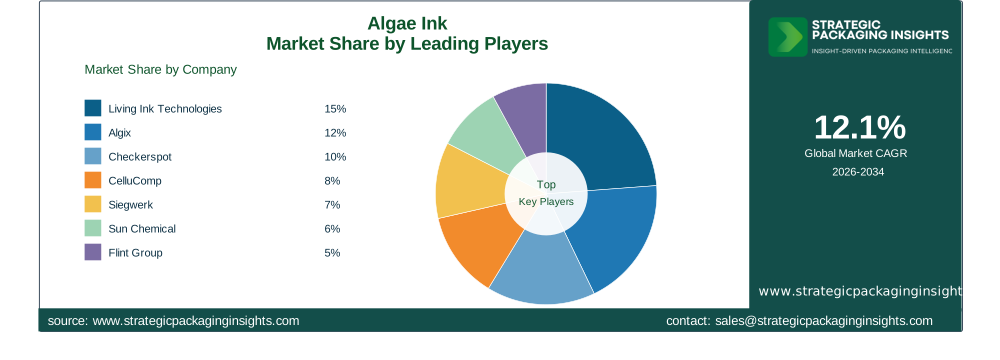
Living Ink Technologies is a pioneer in the Algae Ink market, known for its innovative approach to ink production. The company focuses on developing inks derived from renewable sources, offering a sustainable alternative to traditional inks. Algix, another key player, is leveraging its expertise in algae-based products to expand its presence in the Algae Ink market. The company's commitment to sustainability and innovation is driving its growth and helping it capture a significant share of the market.
Checkerspot is also making waves in the Algae Ink market, with a focus on creating high-performance inks that meet the needs of environmentally conscious consumers. The company's emphasis on research and development is enabling it to develop new formulations that enhance the performance and appeal of Algae Ink. Other notable players in the market include CelluComp, Siegwerk, Sun Chemical, Flint Group, Toyo Ink, Hubergroup, and INX International, each contributing to the market's growth through their unique offerings and strategic initiatives.
These companies are not only competing on the basis of product innovation but also focusing on strategic partnerships and collaborations to enhance their market presence. By working closely with packaging companies, retailers, and other stakeholders, these companies are able to develop comprehensive solutions that meet the evolving needs of the market. This collaborative approach is essential for maintaining competitiveness and ensuring long-term success in the Algae Ink market.
Key Highlights
- Market Size: The Algae Ink market was valued at USD 379.21 million in 2025 and is projected to reach USD 1.06 billion by 2034.
- Growth Rate: The market is expected to grow at a CAGR of 12.1% during the forecast period.
- Leading Companies: Key players include Living Ink Technologies, Algix, Checkerspot, and CelluComp.
- Growing Segments: Water-Based Algae Ink and Packaging Printing are among the fastest-growing segments.
- Regional Insights: Asia Pacific is expected to witness significant growth, driven by increasing demand for sustainable packaging solutions.
- Regulatory Impact: Stringent environmental regulations are driving the adoption of Algae Ink.
- Consumer Preferences: There is a growing preference for eco-friendly products, boosting demand for Algae Ink.
Algae Ink Market Segments Insights

Ink Type Analysis
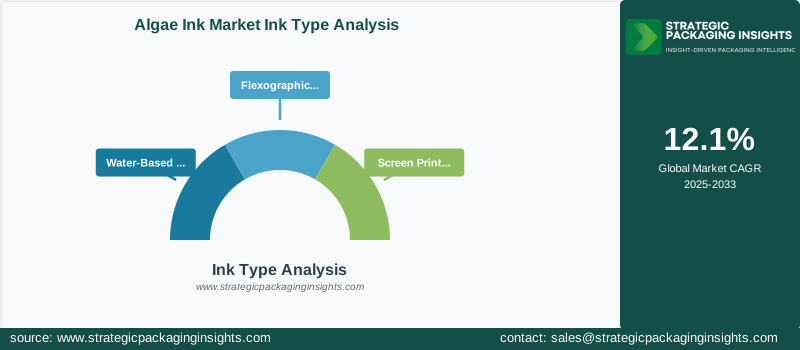
The Algae Ink market is segmented by ink type, including Water-Based Algae Ink, Flexographic Algae Ink, and Screen Printing Algae Ink. Water-Based Algae Ink is gaining popularity due to its eco-friendly properties and versatility in various applications. It is particularly favored in the packaging industry, where sustainability is a key concern. Flexographic Algae Ink is also witnessing increased demand, driven by its suitability for high-speed printing and compatibility with a wide range of substrates. Screen Printing Algae Ink, while niche, is finding applications in specialized printing processes, offering unique benefits such as vibrant colors and durability.
Competition within the ink type segment is intense, with companies focusing on innovation and product development to gain a competitive edge. The demand for Water-Based Algae Ink is particularly strong, as it aligns with the growing trend towards sustainable packaging solutions. Companies are investing in research and development to enhance the performance and appeal of their ink products, catering to the evolving needs of consumers and industries. The shift towards eco-friendly inks is also driving collaboration between ink manufacturers and packaging companies, as they work together to develop comprehensive solutions that meet both environmental and performance requirements.
Application Analysis
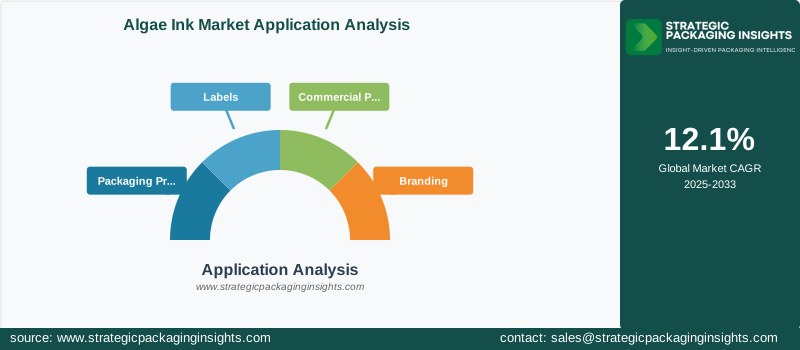
The application segment of the Algae Ink market includes Packaging Printing, Labels, Commercial Printing, and Branding. Packaging Printing is the largest application segment, driven by the increasing demand for sustainable packaging solutions. Algae Ink is being used extensively in this segment due to its eco-friendly properties and ability to deliver high-quality prints. The Labels segment is also witnessing significant growth, as companies seek to enhance their branding efforts with sustainable and visually appealing labels. Commercial Printing and Branding are other key application areas, where Algae Ink is being used to create environmentally responsible and high-impact prints.
Trends within the application segment are shaped by consumer preferences and regulatory pressures. The demand for sustainable packaging solutions is driving the adoption of Algae Ink in the Packaging Printing segment, as companies seek to reduce their environmental impact and comply with stringent regulations. The Labels segment is also benefiting from this trend, as companies look to differentiate their products with eco-friendly and visually appealing labels. The focus on sustainability is encouraging companies to innovate and develop new formulations that enhance the performance and appeal of Algae Ink, catering to the evolving needs of consumers and industries.
End Use Analysis
The Algae Ink market is segmented by end use, including Sustainable Packaging Brands, Food & Beverage, Retail, and Printing Houses. Sustainable Packaging Brands are the largest end-use segment, driven by the increasing demand for eco-friendly packaging solutions. Algae Ink is being used extensively in this segment due to its environmental benefits and ability to deliver high-quality prints. The Food & Beverage segment is also witnessing significant growth, as companies seek to enhance their sustainability profiles with eco-friendly packaging solutions. Retail and Printing Houses are other key end-use segments, where Algae Ink is being used to create environmentally responsible and high-impact prints.
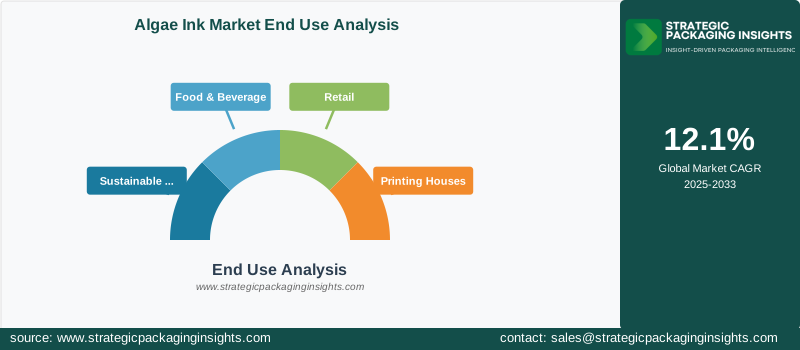
Trends within the end-use segment are shaped by consumer preferences and regulatory pressures. The demand for sustainable packaging solutions is driving the adoption of Algae Ink in the Sustainable Packaging Brands segment, as companies seek to reduce their environmental impact and comply with stringent regulations. The Food & Beverage segment is also benefiting from this trend, as companies look to differentiate their products with eco-friendly and visually appealing packaging solutions. The focus on sustainability is encouraging companies to innovate and develop new formulations that enhance the performance and appeal of Algae Ink, catering to the evolving needs of consumers and industries.
Distribution Channel Analysis
The distribution channel segment of the Algae Ink market includes Direct Sales, Distributors, and Digital Print Providers. Direct Sales is the largest distribution channel, driven by the increasing demand for customized and high-quality ink solutions. Distributors play a crucial role in the market, providing a wide range of ink products to meet the diverse needs of consumers and industries. Digital Print Providers are also witnessing significant growth, as companies seek to enhance their printing capabilities with eco-friendly and high-performance ink solutions.
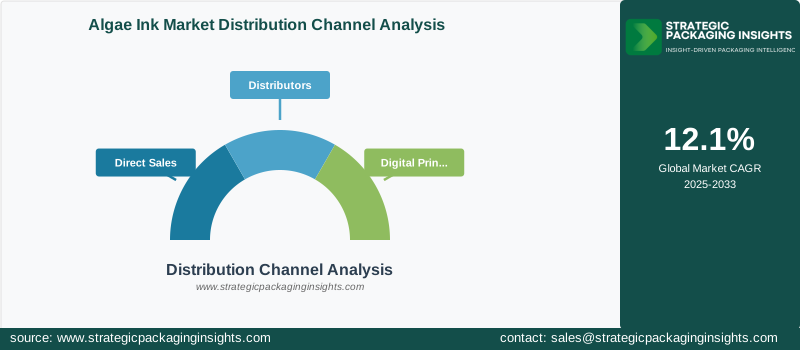
Trends within the distribution channel segment are shaped by consumer preferences and technological advancements. The demand for customized and high-quality ink solutions is driving the adoption of Direct Sales, as companies seek to enhance their printing capabilities and meet the evolving needs of consumers and industries. Distributors are also benefiting from this trend, as they provide a wide range of ink products to meet the diverse needs of consumers and industries. The focus on sustainability is encouraging companies to innovate and develop new formulations that enhance the performance and appeal of Algae Ink, catering to the evolving needs of consumers and industries.
Algae Ink Market Segments
The Algae Ink market has been segmented on the basis ofInk Type
- Water-Based Algae Ink
- Flexographic Algae Ink
- Screen Printing Algae Ink
Application
- Packaging Printing
- Labels
- Commercial Printing
- Branding
End Use
- Sustainable Packaging Brands
- Food & Beverage
- Retail
- Printing Houses
Distribution Channel
- Direct Sales
- Distributors
- Digital Print Providers
Region
- Asia Pacific
- North America
- Latin America
- Europe
- Middle East & Africa




