


Algae-Based Bioplastics Market Outlook
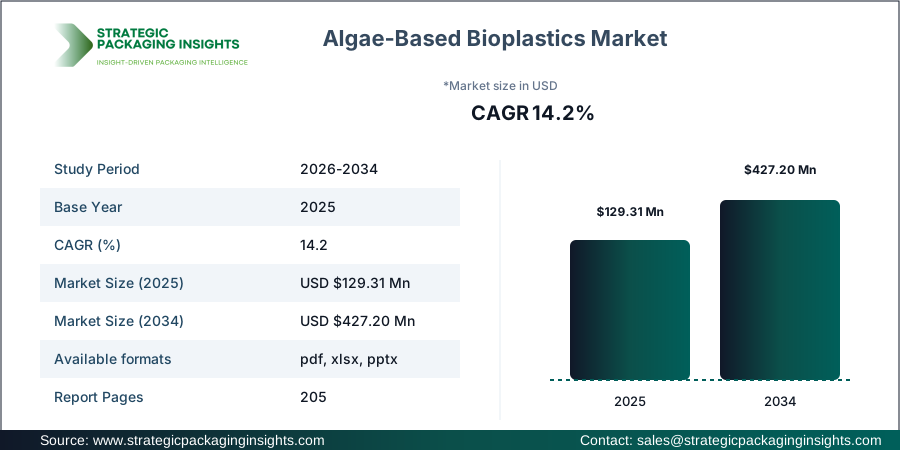
The Algae-Based Bioplastics market size was valued at USD 129.31 million in 2025 and is anticipated to reach USD 427.20 million by 2034, growing at a CAGR of 14.2% during the forecast period according to Strategic Packaging Insights. This remarkable growth trajectory is driven by the increasing demand for sustainable and eco-friendly packaging solutions across various industries. Companies like Algix and Bloom are at the forefront of this market, leveraging innovative technologies to produce bioplastics that are not only biodegradable but also offer superior performance compared to traditional plastics. The shift towards algae-based bioplastics is further fueled by the growing consumer awareness and preference for environmentally friendly products, which is compelling manufacturers to adopt sustainable practices.
One of the most impactful drivers of the algae-based bioplastics market is the stringent environmental regulations imposed by governments worldwide. These regulations are aimed at reducing plastic waste and promoting the use of biodegradable materials. For instance, the European Union's directive on single-use plastics has significantly boosted the demand for bioplastics in the region. Companies like Loliware and Eranova are capitalizing on these regulatory changes by developing innovative products that meet the required standards. Additionally, the increasing investment in research and development by key players is expected to further propel market growth, as it leads to the development of new and improved bioplastic products.
Report Scope
| Attributes | Details |
| Report Title | Algae-Based Bioplastics Market Size, Future Growth and Forecast 2034 |
| By Product Type | Algae-Based Films, Algae-Based Resins, Algae-Based Coatings |
| By Application | Food Packaging, Retail Bags, Personal Care Packaging, Agricultural Films |
| By End Use | Packaging, FMCG, Agriculture, Consumer Goods |
| By Processing Type | Extrusion, Injection Molding, Film Blowing |
| Region | Asia Pacific, North America, Latin America, Europe, Middle East & Africa |
| Base Year | 2025 |
| Historic Period | 2018-2024 |
| Forecast Period | 2026-2034 |
| Number of Pages | 205 |
| Customization Available | Yes* |
Sustainability & Circular Economy Analysis
Sustainability initiatives and circular economy practices are profoundly influencing the algae-based bioplastics market. The focus on reducing carbon footprints and minimizing waste has led to the adoption of recyclable materials and reusable packaging solutions. Companies are increasingly investing in eco-friendly material innovations, such as algae-based films and resins, which are not only biodegradable but also contribute to waste reduction strategies. These trends are reshaping packaging design and manufacturing processes, as businesses strive to align with consumer sustainability preferences and regulatory requirements.
The integration of ESG (Environmental, Social, and Governance) initiatives is becoming a critical factor in the decision-making processes of packaging manufacturers and brand owners. By adopting sustainable practices, companies can enhance their brand image and gain a competitive edge in the market. The emphasis on lightweight packaging and extended producer responsibility (EPR) is driving investments in new technologies and materials that reduce environmental impact. This shift towards sustainability is also influencing supply chain strategies, as companies seek to optimize their operations and reduce their carbon footprint.
Regulatory compliance is a key consideration for companies operating in the algae-based bioplastics market. Governments worldwide are implementing stringent regulations to promote the use of sustainable materials and reduce plastic waste. This has led to increased investment in research and development, as companies strive to develop innovative products that meet regulatory standards. The long-term competitiveness of the market is closely tied to the ability of companies to adapt to these changing regulations and consumer preferences, making sustainability a critical factor in the success of the algae-based bioplastics industry.
Packaging Value Chain & Supply Chain Analysis
The packaging value chain for algae-based bioplastics is complex and involves multiple stakeholders, from raw material sourcing to recycling networks. The availability of raw materials, such as algae, plays a crucial role in determining the production capabilities and cost-effectiveness of bioplastics. Companies like Checkerspot and Sway are focusing on optimizing their raw material procurement strategies to ensure a steady supply of high-quality algae for bioplastic production. This involves establishing strategic partnerships with algae producers and investing in sustainable sourcing practices.
Packaging converters and manufacturers are key players in the value chain, responsible for transforming raw materials into finished products. The efficiency of the production process is influenced by the availability of advanced packaging machinery and the expertise of the workforce. Companies are investing in state-of-the-art equipment and training programs to enhance their production capabilities and meet the growing demand for algae-based bioplastics. Logistics and distribution channels also play a critical role in ensuring the timely delivery of products to brand owners and retailers.
Recycling networks are an integral part of the supply chain, as they facilitate the collection and processing of used bioplastics. The development of efficient recycling systems is essential for promoting the circular economy and reducing environmental impact. Companies are collaborating with recycling partners to establish closed-loop systems that enable the reuse of bioplastic materials. This not only enhances supply chain resilience but also supports the sustainability goals of the industry. Overall, the success of the algae-based bioplastics market is heavily dependent on the efficiency and collaboration of all stakeholders in the value chain.
Opportunities & Threats
The algae-based bioplastics market presents numerous opportunities for growth and innovation. One of the most promising opportunities lies in the development of new applications for bioplastics, beyond traditional packaging solutions. Companies are exploring the use of algae-based materials in sectors such as automotive, electronics, and textiles, where the demand for sustainable materials is on the rise. This diversification of applications is expected to drive market growth and open up new revenue streams for manufacturers.
Another significant opportunity is the increasing consumer demand for eco-friendly products. As awareness of environmental issues continues to grow, consumers are becoming more conscious of their purchasing decisions and are actively seeking out sustainable alternatives. This shift in consumer preferences is driving companies to invest in the development of innovative bioplastic products that meet the needs of environmentally conscious consumers. Additionally, the growing trend of corporate social responsibility is encouraging businesses to adopt sustainable practices, further boosting the demand for algae-based bioplastics.
Despite the numerous opportunities, the algae-based bioplastics market also faces several threats. One of the primary challenges is the high cost of production, which can limit the adoption of bioplastics by cost-sensitive industries. The production of algae-based bioplastics requires significant investment in research and development, as well as advanced manufacturing technologies. Additionally, the availability of raw materials, such as algae, can be affected by environmental factors, leading to fluctuations in supply and pricing. Companies must navigate these challenges to maintain their competitiveness in the market.
Drivers & Challenges
The algae-based bioplastics market is driven by several key factors, including the increasing demand for sustainable packaging solutions and the growing awareness of environmental issues. The shift towards eco-friendly materials is being fueled by consumer preferences and regulatory pressures, as governments worldwide implement policies to reduce plastic waste and promote the use of biodegradable materials. Companies like Notpla and B'ZEOS are capitalizing on these trends by developing innovative products that meet the needs of environmentally conscious consumers.
Technological advancements are also playing a crucial role in driving the growth of the algae-based bioplastics market. The development of new processing techniques and materials is enabling manufacturers to produce high-quality bioplastics that offer superior performance compared to traditional plastics. This is attracting investment from both established players and new entrants, who are eager to capitalize on the growing demand for sustainable materials. Additionally, the increasing investment in research and development is expected to lead to further innovations in the field, driving market growth.
Despite the positive drivers, the algae-based bioplastics market faces several challenges that could hinder its growth. One of the primary challenges is the high cost of production, which can limit the adoption of bioplastics by cost-sensitive industries. The production of algae-based bioplastics requires significant investment in research and development, as well as advanced manufacturing technologies. Additionally, the availability of raw materials, such as algae, can be affected by environmental factors, leading to fluctuations in supply and pricing. Companies must navigate these challenges to maintain their competitiveness in the market.
Market Share Analysis
The competitive landscape of the algae-based bioplastics market is characterized by the presence of several key players, each striving to gain a larger share of the market. Companies like Algix, Bloom, and Loliware are leading the charge, leveraging their expertise in bioplastic production and innovation to capture a significant portion of the market. These companies are investing heavily in research and development to develop new and improved products that meet the evolving needs of consumers and regulatory requirements.
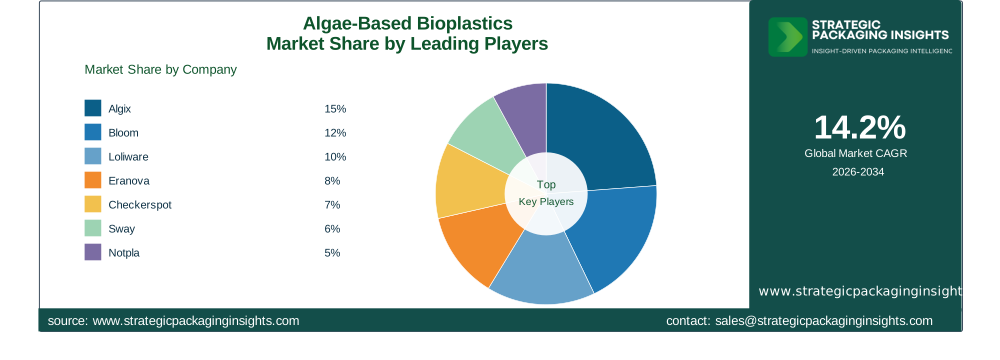
Algix is a prominent player in the market, known for its innovative use of algae in bioplastic production. The company has developed a range of products that are not only biodegradable but also offer superior performance compared to traditional plastics. Bloom, another key player, is focused on developing sustainable materials that reduce environmental impact. The company's products are widely used in various applications, including packaging and consumer goods, making it a leader in the algae-based bioplastics market.
Loliware is a pioneer in the development of edible bioplastics, offering a unique solution to the problem of plastic waste. The company's products are made from seaweed and are designed to be consumed after use, eliminating the need for disposal. Eranova is another key player, known for its innovative approach to bioplastic production. The company uses algae as a raw material to produce biodegradable plastics that are used in a variety of applications, including packaging and agriculture.
Checkerspot and Sway are also notable players in the market, each with their unique approach to bioplastic production. Checkerspot focuses on developing high-performance materials that are both sustainable and cost-effective, while Sway is known for its innovative use of seaweed in bioplastic production. These companies, along with others like Notpla, B'ZEOS, Kelpi, and Zerocircle, are driving the growth of the algae-based bioplastics market through their commitment to sustainability and innovation.
Key Highlights
- The algae-based bioplastics market is projected to grow from USD 129.31 million in 2025 to USD 427.20 million by 2034.
- Key players include Algix, Bloom, and Loliware, driving innovation in sustainable materials.
- Food packaging and retail bags are among the fastest-growing application segments.
- North America and Europe are leading regions in terms of market share and growth.
- Technological advancements in processing techniques are enhancing product quality.
- Stringent environmental regulations are boosting demand for biodegradable materials.
- Consumer preference for eco-friendly products is driving market growth.
Algae-Based Bioplastics Market Segments Insights

Product Type Analysis
The algae-based bioplastics market is segmented by product type into algae-based films, resins, and coatings. Algae-based films are gaining traction due to their biodegradability and versatility in various applications, particularly in packaging. Companies are investing in research and development to enhance the properties of these films, making them more competitive with traditional plastics. Algae-based resins are also seeing increased demand, driven by their use in manufacturing durable and sustainable products. The coatings segment is benefiting from advancements in material science, which are enabling the development of high-performance coatings that offer superior protection and environmental benefits.
Algae-based films are particularly popular in the food packaging industry, where they are used to create biodegradable and compostable packaging solutions. This is driven by the increasing consumer demand for sustainable packaging options and the need to comply with stringent environmental regulations. Algae-based resins are being used in a variety of applications, including automotive and consumer goods, where their durability and sustainability are highly valued. The coatings segment is seeing growth in sectors such as construction and electronics, where the need for environmentally friendly coatings is on the rise.
Application Analysis
The application segment of the algae-based bioplastics market includes food packaging, retail bags, personal care packaging, and agricultural films. Food packaging is one of the largest and fastest-growing segments, driven by the increasing demand for sustainable and biodegradable packaging solutions. Companies are developing innovative products that meet the needs of the food industry, offering superior performance and environmental benefits. Retail bags are also seeing increased demand, as consumers and retailers seek eco-friendly alternatives to traditional plastic bags.
Personal care packaging is another key application area, where algae-based bioplastics are being used to create sustainable packaging solutions for cosmetics and personal care products. This is driven by the growing consumer awareness of environmental issues and the demand for eco-friendly products. Agricultural films are also benefiting from the shift towards sustainable materials, as farmers seek to reduce their environmental impact and comply with regulatory requirements. Overall, the application segment of the algae-based bioplastics market is characterized by a strong focus on sustainability and innovation.
End Use Analysis
The end-use segment of the algae-based bioplastics market includes packaging, FMCG, agriculture, and consumer goods. Packaging is the largest end-use segment, driven by the increasing demand for sustainable packaging solutions across various industries. Companies are investing in the development of innovative packaging products that meet the needs of environmentally conscious consumers and comply with regulatory requirements. The FMCG sector is also seeing increased demand for algae-based bioplastics, as companies seek to enhance their sustainability credentials and reduce their environmental impact.
Agriculture is another key end-use segment, where algae-based bioplastics are being used to create sustainable agricultural films and other products. This is driven by the need to reduce the environmental impact of agricultural practices and comply with regulatory requirements. Consumer goods is a growing segment, as companies seek to develop sustainable products that meet the needs of environmentally conscious consumers. Overall, the end-use segment of the algae-based bioplastics market is characterized by a strong focus on sustainability and innovation.
Processing Type Analysis
The processing type segment of the algae-based bioplastics market includes extrusion, injection molding, and film blowing. Extrusion is one of the most widely used processing techniques, due to its versatility and ability to produce a wide range of products. Companies are investing in advanced extrusion technologies to enhance the quality and performance of their products, making them more competitive with traditional plastics. Injection molding is also seeing increased demand, driven by its use in manufacturing durable and sustainable products.
Film blowing is another key processing technique, used to create high-quality films for packaging and other applications. This is driven by the increasing demand for sustainable packaging solutions and the need to comply with stringent environmental regulations. Companies are investing in research and development to enhance the properties of their films, making them more competitive with traditional plastics. Overall, the processing type segment of the algae-based bioplastics market is characterized by a strong focus on innovation and technological advancements.
Algae-Based Bioplastics Market Segments
The Algae-Based Bioplastics market has been segmented on the basis ofBy Product Type
- Algae-Based Films
- Algae-Based Resins
- Algae-Based Coatings
By Application
- Food Packaging
- Retail Bags
- Personal Care Packaging
- Agricultural Films
By End Use
- Packaging
- FMCG
- Agriculture
- Consumer Goods
By Processing Type
- Extrusion
- Injection Molding
- Film Blowing
Region
- Asia Pacific
- North America
- Latin America
- Europe
- Middle East & Africa




