


AI Packaging Sensor Market Outlook
The AI Packaging Sensor market was valued at $764.85 million in 2025 and is projected to reach $2.05 billion by 2034, growing at a CAGR of 11.6% during the forecast period 2026-2034. This market is witnessing significant growth due to the increasing demand for smart packaging solutions across various industries. The integration of AI in packaging sensors is revolutionizing the way products are monitored and managed throughout the supply chain. With advancements in sensor technology and AI analytics, companies are now able to track and ensure the quality and safety of products more efficiently. The market is also driven by the rising need for real-time data and analytics to enhance operational efficiency and reduce waste.
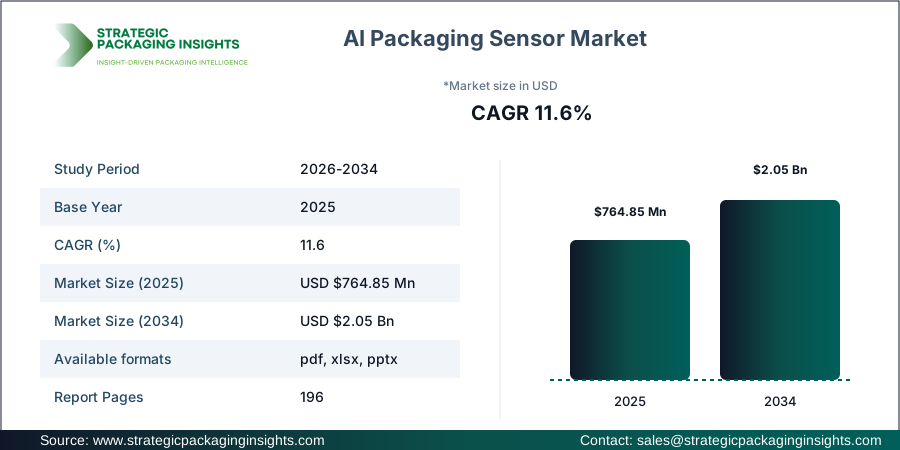
However, the market faces challenges such as high initial costs and the complexity of integrating AI technologies into existing systems. Regulatory constraints and data privacy concerns also pose significant hurdles for market growth. Despite these challenges, the potential for AI packaging sensors to transform supply chain management and product quality assurance presents substantial growth opportunities. As industries continue to adopt digital transformation strategies, the demand for AI-enabled packaging solutions is expected to rise, offering lucrative prospects for market players.
Report Scope
| Attributes | Details |
| Report Title | AI Packaging Sensor Market Size, Future Growth and Forecast 2034 |
| Sensor Type | Freshness Sensors, Temperature Sensors, Shock Sensors, Leakage Sensors |
| Technology | AI Analytics, IoT, RFID/NFC, Printed Electronics |
| Application | Food, Pharma, Logistics, Industrial Packaging |
| End Use | Brand Owners, Cold Chain, Retailers, Healthcare |
| Region | Asia Pacific, North America, Latin America, Europe, Middle East & Africa |
| Base Year | 2025 |
| Historic Period | 2018-2024 |
| Forecast Period | 2026-2034 |
| Number of Pages | 196 |
| Customization Available | Yes* |
Opportunities & Threats
The AI Packaging Sensor market presents numerous opportunities, particularly in the realm of food and pharmaceutical industries. These sectors are increasingly adopting AI sensors to ensure product safety and compliance with stringent regulatory standards. The ability of AI sensors to provide real-time monitoring and data analytics is crucial for maintaining product integrity and extending shelf life. Additionally, the growing trend of smart packaging in the retail sector offers significant potential for market expansion. Retailers are leveraging AI sensors to enhance customer experience by providing interactive and informative packaging solutions. This trend is expected to drive the demand for AI packaging sensors in the coming years.
Another opportunity lies in the integration of AI sensors with IoT and RFID/NFC technologies. This combination allows for seamless tracking and management of products throughout the supply chain. The ability to gather and analyze data in real-time enables companies to optimize logistics and reduce operational costs. Furthermore, the increasing focus on sustainability and eco-friendly packaging solutions is driving the adoption of AI sensors that can monitor and reduce environmental impact. As companies strive to meet sustainability goals, the demand for AI-enabled packaging solutions is expected to grow significantly.
Despite the promising opportunities, the AI Packaging Sensor market faces several threats. One of the primary challenges is the high cost associated with the development and implementation of AI technologies. Small and medium-sized enterprises may find it difficult to invest in such advanced solutions, limiting market penetration. Additionally, the complexity of integrating AI sensors into existing systems can pose significant challenges for companies. Data privacy and security concerns also present a threat to market growth, as companies must ensure compliance with regulations and protect sensitive information from cyber threats.
Drivers & Challenges
The AI Packaging Sensor market is primarily driven by the increasing demand for smart packaging solutions across various industries. The integration of AI in packaging sensors allows for real-time monitoring and data analytics, enhancing product quality and safety. This is particularly important in the food and pharmaceutical industries, where compliance with regulatory standards is crucial. The ability of AI sensors to provide accurate and timely information helps companies maintain product integrity and extend shelf life. Additionally, the growing trend of digital transformation in supply chain management is driving the adoption of AI-enabled packaging solutions. Companies are leveraging AI sensors to optimize logistics, reduce waste, and improve operational efficiency.
Another significant driver is the advancement in sensor technology and AI analytics. The development of sophisticated sensors that can detect freshness, temperature, shock, and leakage is revolutionizing the packaging industry. These sensors provide valuable insights into product conditions, enabling companies to take proactive measures to ensure quality and safety. The integration of AI analytics allows for the processing and analysis of large volumes of data, providing actionable insights for decision-making. This capability is particularly beneficial for industries with complex supply chains, such as logistics and industrial packaging.
Despite the positive drivers, the AI Packaging Sensor market faces several challenges. One of the primary challenges is the high cost associated with the development and implementation of AI technologies. The initial investment required for AI sensors can be substantial, particularly for small and medium-sized enterprises. Additionally, the complexity of integrating AI sensors into existing systems can pose significant challenges for companies. The need for skilled personnel to manage and operate AI technologies is another barrier to market growth. Furthermore, data privacy and security concerns present a challenge, as companies must ensure compliance with regulations and protect sensitive information from cyber threats.
Market Share Analysis
The AI Packaging Sensor market is characterized by a competitive landscape with several key players vying for market share. Companies such as Avery Dennison, Zebra Technologies, and SATO Holdings are leading the market with their innovative solutions and strong market presence. These companies are investing heavily in research and development to enhance their product offerings and maintain a competitive edge. The market is also witnessing the entry of new players, further intensifying competition. The presence of a diverse range of companies, from established players to startups, is driving innovation and technological advancements in the market.
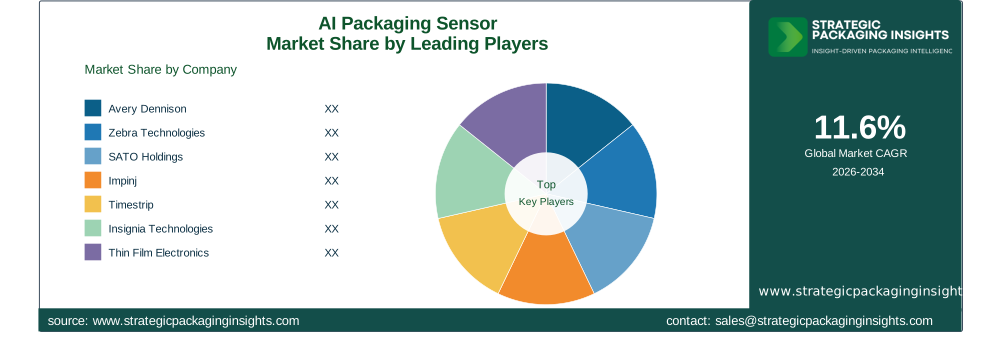
Avery Dennison is a prominent player in the AI Packaging Sensor market, known for its advanced sensor technologies and comprehensive product portfolio. The company is focused on expanding its market presence through strategic partnerships and collaborations. Zebra Technologies is another key player, offering a wide range of AI-enabled packaging solutions. The company's strong focus on innovation and customer-centric approach has helped it maintain a leading position in the market. SATO Holdings is also a significant player, known for its expertise in RFID/NFC technologies and smart packaging solutions.
Impinj is a notable player in the AI Packaging Sensor market, specializing in RFID solutions that enable real-time tracking and monitoring of products. The company's innovative technologies are widely used in various industries, including logistics and retail. Timestrip is another key player, offering a range of time and temperature monitoring solutions for the food and pharmaceutical industries. The company's focus on sustainability and eco-friendly solutions has helped it gain a competitive edge in the market. Insignia Technologies is known for its freshness sensors, which are widely used in the food industry to ensure product quality and safety.
Thin Film Electronics is a leading player in the AI Packaging Sensor market, known for its printed electronics solutions. The company's innovative technologies are used in a variety of applications, including smart packaging and IoT. Emerson is another key player, offering a range of AI-enabled packaging solutions for the industrial sector. The company's strong focus on innovation and customer satisfaction has helped it maintain a competitive position in the market. Sensitech and Tive are also notable players, known for their advanced sensor technologies and comprehensive product offerings.
Key Highlights
- The AI Packaging Sensor market is projected to grow at a CAGR of 11.6% from 2026 to 2034.
- Key players in the market include Avery Dennison, Zebra Technologies, and SATO Holdings.
- The market is driven by the increasing demand for smart packaging solutions across various industries.
- Advancements in sensor technology and AI analytics are revolutionizing the packaging industry.
- The integration of AI sensors with IoT and RFID/NFC technologies offers significant growth potential.
- Data privacy and security concerns present a challenge to market growth.
- The market is witnessing the entry of new players, further intensifying competition.
Top Countries Insights
In the AI Packaging Sensor market, the United States holds a significant share, driven by the strong presence of key players and the rapid adoption of advanced technologies. The market size in the U.S. is substantial, with a CAGR of 12%. The country's focus on innovation and digital transformation in supply chain management is a major growth driver. However, regulatory constraints and data privacy concerns pose challenges for market expansion.
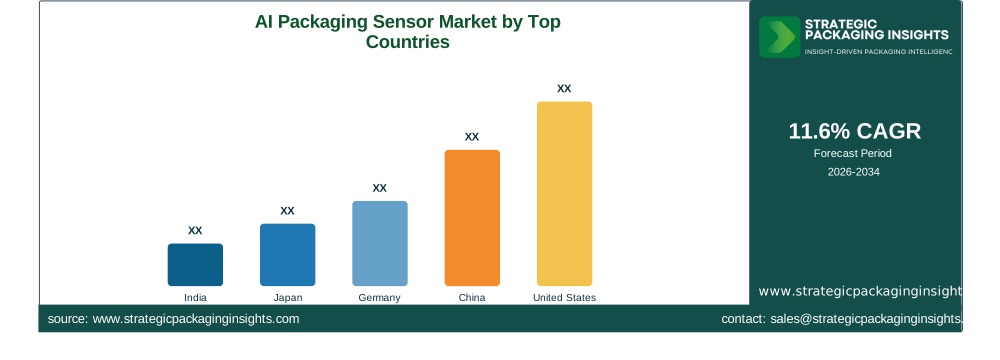
China is another key market for AI Packaging Sensors, with a growing emphasis on smart packaging solutions in the food and pharmaceutical industries. The market in China is expected to grow at a CAGR of 15%, driven by the increasing demand for real-time monitoring and data analytics. The government's focus on sustainability and eco-friendly packaging solutions is also contributing to market growth. However, the high cost of AI technologies remains a challenge for market penetration.
Germany is a leading market in Europe, with a strong focus on innovation and technological advancements in the packaging industry. The market in Germany is projected to grow at a CAGR of 9%, driven by the increasing adoption of AI sensors in logistics and industrial packaging. The country's emphasis on sustainability and regulatory compliance is a key growth driver. However, the complexity of integrating AI technologies into existing systems poses a challenge for market growth.
Japan is a significant market for AI Packaging Sensors, with a strong emphasis on quality and safety in the food and pharmaceutical industries. The market in Japan is expected to grow at a CAGR of 10%, driven by the increasing demand for smart packaging solutions. The country's focus on innovation and technological advancements is a major growth driver. However, data privacy and security concerns present a challenge for market expansion.
India is an emerging market for AI Packaging Sensors, with a growing emphasis on digital transformation in supply chain management. The market in India is projected to grow at a CAGR of 13%, driven by the increasing adoption of AI sensors in the food and logistics industries. The government's focus on sustainability and eco-friendly packaging solutions is also contributing to market growth. However, the high cost of AI technologies remains a challenge for market penetration.
AI Packaging Sensor Market Segments Insights

Sensor Type Analysis
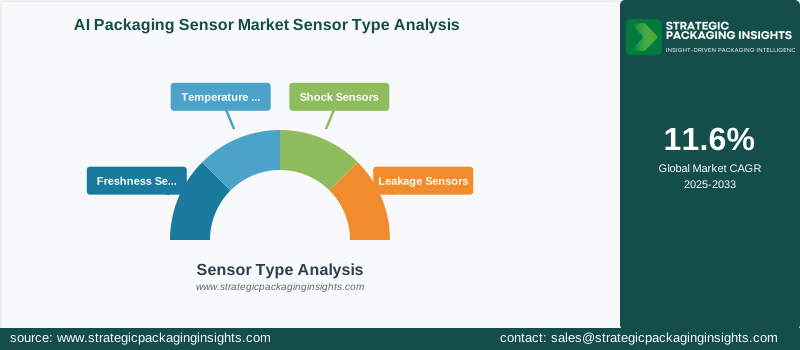
The AI Packaging Sensor market is segmented by sensor type, including freshness sensors, temperature sensors, shock sensors, and leakage sensors. Freshness sensors are gaining traction in the food industry, where maintaining product quality and safety is paramount. These sensors provide real-time data on product freshness, enabling companies to take proactive measures to ensure quality. Temperature sensors are widely used in the pharmaceutical and cold chain industries, where temperature control is critical for product integrity. Shock sensors are essential in logistics and industrial packaging, where products are subject to handling and transportation risks. Leakage sensors are increasingly used in the packaging of liquid products to prevent contamination and ensure safety.
The demand for these sensors is driven by the increasing need for real-time monitoring and data analytics in supply chain management. Companies are leveraging sensor technologies to enhance operational efficiency and reduce waste. The integration of AI analytics with sensor data provides valuable insights for decision-making, enabling companies to optimize logistics and improve product quality. The market is also witnessing advancements in sensor technology, with the development of sophisticated sensors that offer enhanced accuracy and reliability. These advancements are driving the adoption of AI packaging sensors across various industries.
Technology Analysis
The AI Packaging Sensor market is segmented by technology, including AI analytics, IoT, RFID/NFC, and printed electronics. AI analytics is revolutionizing the packaging industry by providing real-time data and insights for decision-making. The integration of AI with sensor technologies enables companies to monitor and manage products more efficiently, enhancing product quality and safety. IoT is another key technology driving market growth, allowing for seamless connectivity and data exchange between devices. The combination of IoT and AI sensors enables real-time tracking and monitoring of products throughout the supply chain.
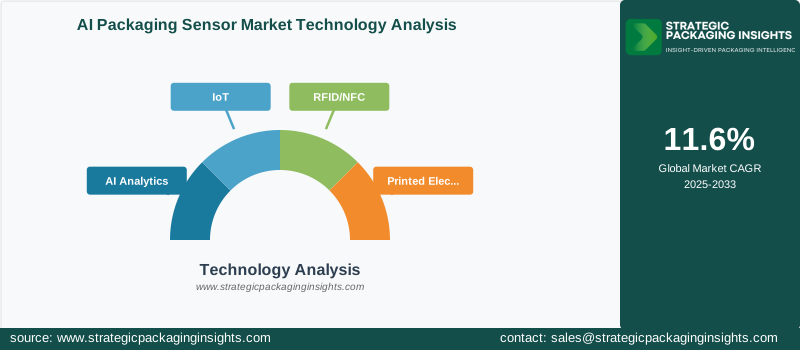
RFID/NFC technologies are widely used in the packaging industry for product identification and tracking. These technologies provide valuable data on product location and condition, enabling companies to optimize logistics and reduce operational costs. Printed electronics is an emerging technology in the AI Packaging Sensor market, offering cost-effective and flexible solutions for smart packaging. The development of printed sensors and circuits is driving innovation in the market, providing new opportunities for companies to enhance their product offerings. The demand for these technologies is driven by the increasing focus on digital transformation and sustainability in the packaging industry.
Application Analysis
The AI Packaging Sensor market is segmented by application, including food, pharma, logistics, and industrial packaging. The food industry is a major application area for AI packaging sensors, where maintaining product quality and safety is critical. AI sensors provide real-time data on product freshness and temperature, enabling companies to ensure compliance with regulatory standards. The pharmaceutical industry is another key application area, where temperature control and product integrity are paramount. AI sensors are widely used in the cold chain industry to monitor and manage temperature-sensitive products.
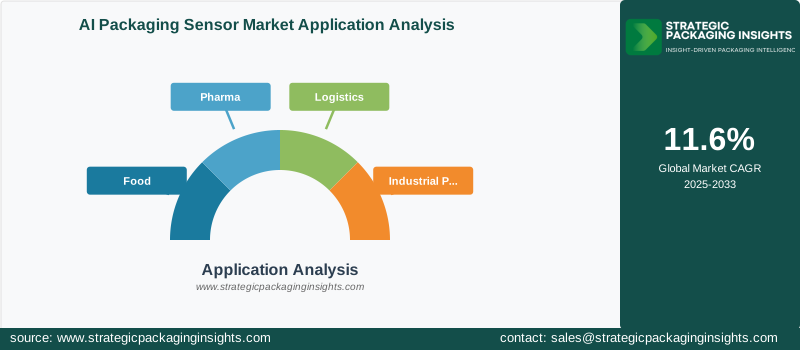
Logistics is a significant application area for AI packaging sensors, where real-time tracking and monitoring of products are essential for operational efficiency. AI sensors provide valuable data on product location and condition, enabling companies to optimize logistics and reduce waste. Industrial packaging is another key application area, where AI sensors are used to monitor and manage products throughout the supply chain. The demand for AI packaging sensors in these application areas is driven by the increasing focus on digital transformation and sustainability in the packaging industry.
End Use Analysis
The AI Packaging Sensor market is segmented by end use, including brand owners, cold chain, retailers, and healthcare. Brand owners are increasingly adopting AI packaging sensors to enhance product quality and safety. These sensors provide real-time data on product conditions, enabling companies to take proactive measures to ensure quality. The cold chain industry is another key end-use area, where temperature control and product integrity are critical. AI sensors are widely used in the cold chain industry to monitor and manage temperature-sensitive products.
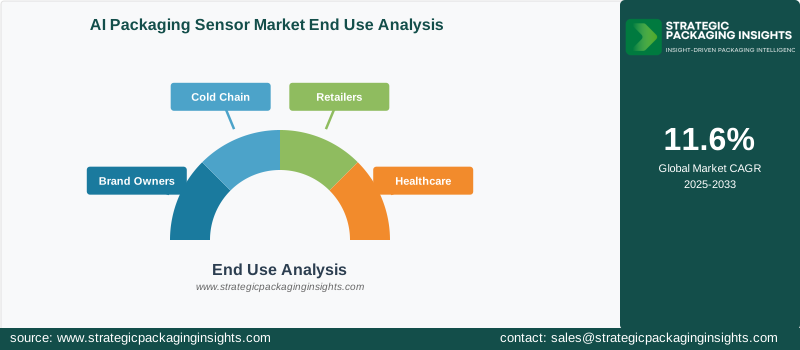
Retailers are leveraging AI packaging sensors to enhance customer experience by providing interactive and informative packaging solutions. These sensors provide valuable data on product freshness and quality, enabling retailers to ensure compliance with regulatory standards. The healthcare industry is another key end-use area, where AI sensors are used to monitor and manage temperature-sensitive products. The demand for AI packaging sensors in these end-use areas is driven by the increasing focus on digital transformation and sustainability in the packaging industry.
AI Packaging Sensor Market Segments
The AI Packaging Sensor market has been segmented on the basis ofSensor Type
- Freshness Sensors
- Temperature Sensors
- Shock Sensors
- Leakage Sensors
Technology
- AI Analytics
- IoT
- RFID/NFC
- Printed Electronics
Application
- Food
- Pharma
- Logistics
- Industrial Packaging
End Use
- Brand Owners
- Cold Chain
- Retailers
- Healthcare
Region
- Asia Pacific
- North America
- Latin America
- Europe
- Middle East & Africa




