


AI-Driven Packaging Design Software Market Outlook
The AI-Driven Packaging Design Software market size was valued at USD 438.0 Million in 2025 and is anticipated to reach USD 2.18 Billion by 2034, growing at a CAGR of 19.5% during the forecast period according to Strategic Packaging Insights. This remarkable growth trajectory is driven by the increasing demand for innovative and efficient packaging solutions across various industries. Companies like Esko and Adobe Inc. are at the forefront, leveraging AI to enhance design capabilities, reduce time-to-market, and improve sustainability. The integration of AI in packaging design is revolutionizing the industry by enabling more personalized and adaptive solutions that cater to the evolving consumer preferences and regulatory requirements.
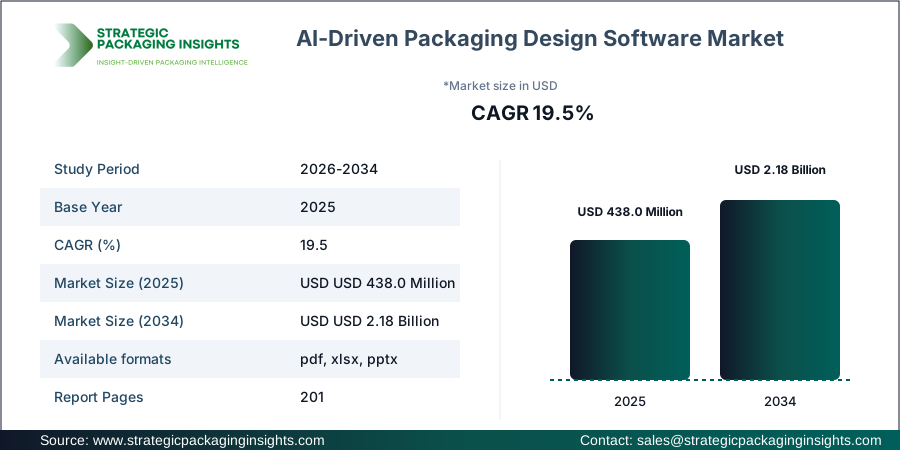
One of the most impactful drivers of this market is the growing emphasis on sustainability and eco-friendly packaging solutions. According to recent government initiatives and environmental regulations, there is a significant push towards reducing carbon footprints and minimizing waste. This has led to an increased adoption of AI-driven software that can optimize material usage and design for recyclability. Companies like Autodesk Inc. and Dassault Systèmes are investing heavily in R&D to develop tools that support sustainable packaging practices. These advancements not only help in meeting regulatory compliance but also enhance brand reputation and consumer trust, further propelling market growth.
Report Scope
| Attributes | Details |
| Report Title | AI-Driven Packaging Design Software Market Size, Future Growth and Forecast 2034 |
| By Deployment | Cloud-Based, On-Premises, Hybrid |
| By Functionality | Generative Packaging Design, Structural Packaging Design, Packaging Optimization, Material Selection & Sustainability Analysis, Design Validation & Simulation, Artwork Automation |
| By End User | Packaging Manufacturers, Food & Beverage Companies, Consumer Goods Companies, Healthcare & Pharmaceutical Companies, Packaging Design Agencies, Retail & E-commerce |
| By Enterprise Size | Large Enterprises, Small & Medium Enterprises (SMEs) |
| Region | Asia Pacific, North America, Latin America, Europe, Middle East & Africa |
| Base Year | 2025 |
| Historic Period | 2018-2024 |
| Forecast Period | 2026-2034 |
| Number of Pages | 201 |
| Customization Available | Yes* |
Sustainability & Circular Economy Analysis
Sustainability initiatives and circular economy practices are reshaping the packaging industry, with a strong focus on reducing environmental impact. The integration of recyclable materials and reusable packaging is becoming a standard practice, driven by consumer demand for eco-friendly products. Companies are investing in lightweight packaging solutions that not only reduce material costs but also lower transportation emissions. This shift is supported by innovations in eco-friendly materials, which are being incorporated into AI-driven design software to ensure compliance with environmental regulations and extended producer responsibility (EPR) mandates.
The influence of sustainability trends extends beyond design to manufacturing and investment decisions. Packaging manufacturers are increasingly adopting waste reduction strategies and ESG initiatives to align with global sustainability goals. This has led to a surge in demand for AI-driven software that can simulate and validate sustainable packaging designs. By optimizing the supply chain and reducing the carbon footprint, companies can enhance their long-term market competitiveness. The focus on sustainability is also driving regulatory compliance, as governments worldwide implement stricter packaging regulations to protect the environment.
Consumer preferences for sustainable packaging are influencing supply chain strategies and investment decisions. Companies are prioritizing eco-friendly material innovation and carbon footprint reduction to meet these demands. This trend is evident in the growing adoption of AI-driven packaging design software that enables efficient material selection and sustainability analysis. By leveraging these tools, companies can not only comply with regulatory requirements but also gain a competitive edge in the market. The emphasis on sustainability is expected to continue shaping the packaging industry, driving innovation and growth in the AI-driven packaging design software market.
Packaging Value Chain & Supply Chain Analysis
The packaging value chain is a complex ecosystem that involves multiple stakeholders, from raw material suppliers to brand owners and retailers. The efficiency of this value chain is crucial for the overall performance of the packaging industry. AI-driven packaging design software plays a pivotal role in optimizing the value chain by enhancing raw material sourcing and packaging converter processes. Companies like SAP and Trace One are leveraging AI to streamline procurement strategies and inventory management, ensuring a resilient supply chain that can adapt to market fluctuations and disruptions.
Supply chain efficiency is heavily influenced by raw material availability and transportation capabilities. The integration of AI in packaging design software allows manufacturers to optimize production capabilities and reduce lead times. Strategic partnerships with logistics providers and distribution channels are essential for maintaining a competitive edge in the market. By leveraging AI-driven insights, companies can enhance their supply chain resilience and localization efforts, ensuring a steady supply of materials and products to meet consumer demand.
Global sourcing and recycling networks are integral components of the packaging supply chain. Companies are increasingly focusing on sustainable procurement strategies and recycling initiatives to minimize environmental impact. AI-driven packaging design software enables manufacturers to optimize their supply chain by identifying opportunities for waste reduction and material reuse. This not only enhances business competitiveness but also aligns with global sustainability goals. The emphasis on supply chain optimization is expected to drive growth in the AI-driven packaging design software market, as companies seek to enhance their operational efficiency and market performance.
Opportunities & Threats
The AI-driven packaging design software market presents numerous opportunities for growth and innovation. One of the key opportunities lies in the increasing demand for personalized and adaptive packaging solutions. As consumer preferences continue to evolve, companies are leveraging AI to create customized packaging designs that cater to individual needs and preferences. This trend is particularly evident in the food and beverage industry, where personalized packaging can enhance brand loyalty and consumer engagement. Additionally, the integration of AI in packaging design software enables companies to optimize material usage and reduce waste, further enhancing their sustainability efforts.
Another significant opportunity in the market is the growing adoption of cloud-based solutions. As businesses increasingly shift towards digital transformation, cloud-based AI-driven packaging design software offers scalability, flexibility, and cost-effectiveness. This trend is particularly beneficial for small and medium enterprises (SMEs) that may not have the resources to invest in on-premises solutions. By leveraging cloud-based software, SMEs can access advanced design capabilities and compete with larger enterprises in the market. The rise of e-commerce and online retail also presents opportunities for AI-driven packaging design software, as companies seek to enhance their packaging strategies to meet the demands of the digital marketplace.
Despite the numerous opportunities, the AI-driven packaging design software market also faces certain threats. One of the primary challenges is the high cost of implementation and integration. For many companies, especially SMEs, the initial investment required for AI-driven software can be prohibitive. Additionally, the rapid pace of technological advancements in AI and machine learning can pose a threat to companies that are unable to keep up with the latest developments. Regulatory compliance and data privacy concerns also present challenges, as companies must navigate complex legal frameworks to ensure the security and confidentiality of their data.
Drivers & Challenges
The AI-driven packaging design software market is primarily driven by the increasing demand for innovative and efficient packaging solutions. As consumer preferences continue to evolve, companies are leveraging AI to enhance their design capabilities and create more personalized and adaptive packaging solutions. This trend is particularly evident in the food and beverage industry, where personalized packaging can enhance brand loyalty and consumer engagement. Additionally, the integration of AI in packaging design software enables companies to optimize material usage and reduce waste, further enhancing their sustainability efforts.
Another significant driver of the market is the growing emphasis on sustainability and eco-friendly packaging solutions. According to recent government initiatives and environmental regulations, there is a significant push towards reducing carbon footprints and minimizing waste. This has led to an increased adoption of AI-driven software that can optimize material usage and design for recyclability. Companies like Autodesk Inc. and Dassault Systèmes are investing heavily in R&D to develop tools that support sustainable packaging practices. These advancements not only help in meeting regulatory compliance but also enhance brand reputation and consumer trust, further propelling market growth.
Despite the numerous drivers, the AI-driven packaging design software market also faces certain challenges. One of the primary challenges is the high cost of implementation and integration. For many companies, especially SMEs, the initial investment required for AI-driven software can be prohibitive. Additionally, the rapid pace of technological advancements in AI and machine learning can pose a threat to companies that are unable to keep up with the latest developments. Regulatory compliance and data privacy concerns also present challenges, as companies must navigate complex legal frameworks to ensure the security and confidentiality of their data.
Market Share Analysis
The competitive landscape of the AI-driven packaging design software market is characterized by the presence of several key players, each striving to gain a significant share of the market. Companies like Esko, Adobe Inc., and Autodesk Inc. are leading the charge, leveraging their expertise in design software to offer innovative solutions that cater to the evolving needs of the packaging industry. These companies are investing heavily in research and development to enhance their product offerings and maintain a competitive edge in the market.
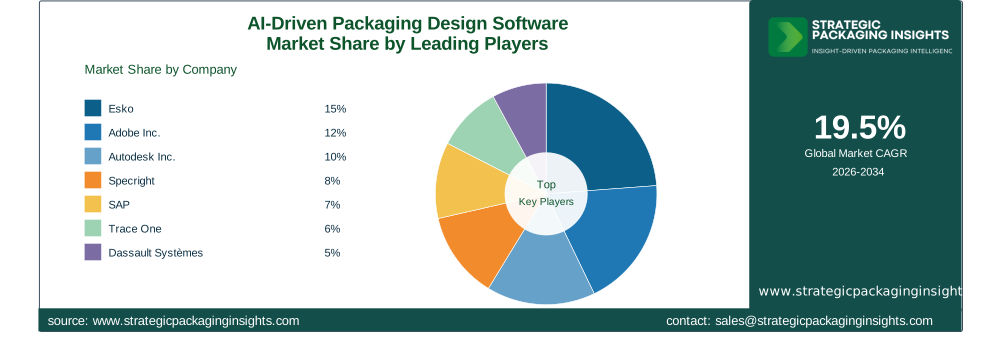
Esko, a prominent player in the market, is known for its comprehensive suite of packaging design software solutions that cater to various industries. The company's focus on innovation and customer-centric solutions has helped it maintain a strong market position. Adobe Inc., another key player, is leveraging its expertise in creative software to offer AI-driven packaging design solutions that enhance design capabilities and streamline workflows. Autodesk Inc. is also making significant strides in the market, with its focus on sustainability and eco-friendly packaging solutions.
Other notable players in the market include Specright, SAP, and Trace One, each offering unique solutions that cater to specific industry needs. Specright is known for its focus on data management and specification solutions, while SAP offers comprehensive enterprise software solutions that integrate packaging design capabilities. Trace One is leveraging its expertise in product lifecycle management to offer AI-driven packaging design solutions that enhance efficiency and reduce time-to-market.
In addition to these key players, several other companies are making their mark in the AI-driven packaging design software market. Dassault Systèmes, Packaging Design Corporation, and ArtiosCAD (Esko) are known for their innovative solutions that cater to the evolving needs of the packaging industry. Packaging Corporation of America, Makersite, and Sphera are also making significant contributions to the market, with their focus on sustainability and eco-friendly packaging solutions. iPoint Systems, Canva, and CoreTechnologie are leveraging their expertise in design and technology to offer AI-driven packaging design solutions that enhance efficiency and reduce costs.
Key Highlights
- Market Size: The AI-Driven Packaging Design Software market is projected to grow from USD 438.0 Million in 2025 to USD 2.18 Billion by 2034.
- Growth Rate: The market is expected to grow at a CAGR of 19.5% during the forecast period.
- Leading Companies: Key players include Esko, Adobe Inc., Autodesk Inc., and Dassault Systèmes.
- Deployment Trends: Increasing adoption of cloud-based solutions for scalability and flexibility.
- Sustainability Focus: Growing emphasis on eco-friendly packaging solutions and material optimization.
- Regional Insights: Asia Pacific is expected to witness significant growth due to rising demand for innovative packaging solutions.
- End-User Demand: High demand from packaging manufacturers and food & beverage companies.
AI-Driven Packaging Design Software Market Segments Insights

By Deployment Analysis
The deployment segment of the AI-driven packaging design software market is categorized into cloud-based, on-premises, and hybrid solutions. Cloud-based solutions are gaining significant traction due to their scalability, flexibility, and cost-effectiveness. As businesses increasingly shift towards digital transformation, cloud-based software offers a viable solution for companies looking to enhance their packaging design capabilities without the need for significant upfront investment. This trend is particularly beneficial for small and medium enterprises (SMEs) that may not have the resources to invest in on-premises solutions. By leveraging cloud-based software, SMEs can access advanced design capabilities and compete with larger enterprises in the market.
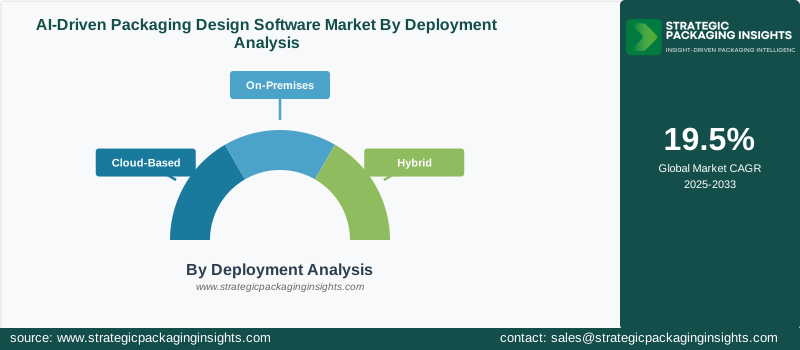
On-premises solutions, while less popular than their cloud-based counterparts, still hold a significant share of the market. These solutions offer greater control and security, making them a preferred choice for large enterprises with stringent data privacy and security requirements. Hybrid solutions, which combine the benefits of both cloud-based and on-premises software, are also gaining popularity as companies seek to balance flexibility and control. The growing adoption of hybrid solutions is driven by the need for seamless integration with existing systems and the ability to scale as business needs evolve.
By Functionality Analysis
The functionality segment of the AI-driven packaging design software market includes generative packaging design, structural packaging design, packaging optimization, material selection & sustainability analysis, design validation & simulation, and artwork automation. Generative packaging design is a key area of focus, as companies look to leverage AI to create innovative and adaptive packaging solutions that cater to evolving consumer preferences. Structural packaging design is also gaining traction, with companies investing in AI-driven software to enhance design capabilities and reduce time-to-market.
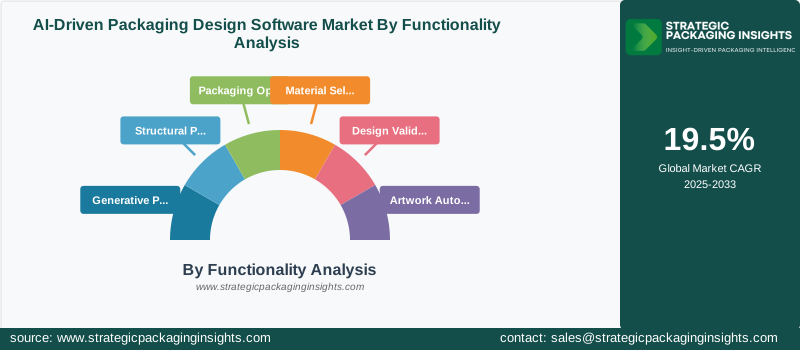
Packaging optimization and material selection & sustainability analysis are critical components of the functionality segment, as companies seek to enhance their sustainability efforts and reduce environmental impact. AI-driven software enables companies to optimize material usage and design for recyclability, aligning with global sustainability goals and regulatory requirements. Design validation & simulation and artwork automation are also important functionalities, as companies look to streamline workflows and enhance efficiency. By leveraging AI-driven software, companies can reduce costs and improve overall design quality, further enhancing their competitiveness in the market.
By End User Analysis
The end-user segment of the AI-driven packaging design software market includes packaging manufacturers, food & beverage companies, consumer goods companies, healthcare & pharmaceutical companies, packaging design agencies, and retail & e-commerce. Packaging manufacturers are the primary users of AI-driven software, as they seek to enhance their design capabilities and meet the evolving needs of their clients. Food & beverage companies are also significant users, as they look to create personalized and adaptive packaging solutions that enhance brand loyalty and consumer engagement.
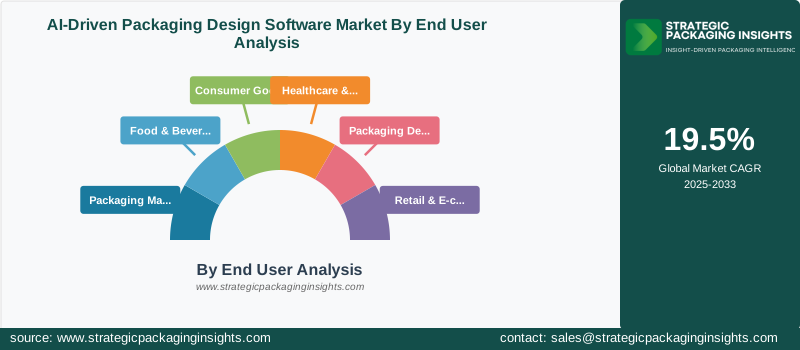
Consumer goods companies, healthcare & pharmaceutical companies, and packaging design agencies are also key end-users, leveraging AI-driven software to enhance design capabilities and streamline workflows. The rise of e-commerce and online retail has further increased demand for AI-driven packaging design software, as companies seek to enhance their packaging strategies to meet the demands of the digital marketplace. By leveraging AI-driven software, companies can create innovative and efficient packaging solutions that cater to the evolving needs of their customers, further enhancing their competitiveness in the market.
By Enterprise Size Analysis
The enterprise size segment of the AI-driven packaging design software market is divided into large enterprises and small & medium enterprises (SMEs). Large enterprises are the primary users of AI-driven software, as they have the resources and infrastructure to invest in advanced design capabilities. These companies are leveraging AI-driven software to enhance their design capabilities, streamline workflows, and reduce costs. By investing in AI-driven software, large enterprises can enhance their competitiveness and meet the evolving needs of their clients.
Small & medium enterprises (SMEs) are also significant users of AI-driven software, as they seek to enhance their design capabilities and compete with larger enterprises in the market. The growing adoption of cloud-based solutions is particularly beneficial for SMEs, as it offers scalability, flexibility, and cost-effectiveness. By leveraging cloud-based software, SMEs can access advanced design capabilities and enhance their competitiveness in the market. The rise of e-commerce and online retail has further increased demand for AI-driven packaging design software, as SMEs seek to enhance their packaging strategies to meet the demands of the digital marketplace.
AI-Driven Packaging Design Software Market Segments
The AI-Driven Packaging Design Software market has been segmented on the basis ofBy Deployment
- Cloud-Based
- On-Premises
- Hybrid
By Functionality
- Generative Packaging Design
- Structural Packaging Design
- Packaging Optimization
- Material Selection & Sustainability Analysis
- Design Validation & Simulation
- Artwork Automation
By End User
- Packaging Manufacturers
- Food & Beverage Companies
- Consumer Goods Companies
- Healthcare & Pharmaceutical Companies
- Packaging Design Agencies
- Retail & E-commerce
By Enterprise Size
- Large Enterprises
- Small & Medium Enterprises (SMEs)
Region
- Asia Pacific
- North America
- Latin America
- Europe
- Middle East & Africa




