


3D Printed Packaging Kit Market Outlook
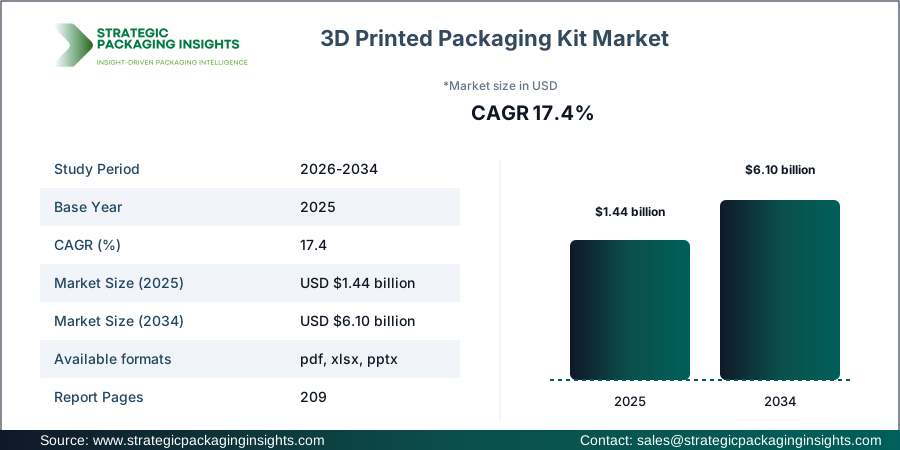
The 3D Printed Packaging Kit market was valued at $1.44 billion in 2025 and is projected to reach $6.10 billion by 2034, growing at a CAGR of 17.4% during the forecast period 2026-2034. This market is experiencing significant growth due to the increasing demand for customized and sustainable packaging solutions. The adoption of 3D printing technology in packaging is driven by its ability to produce complex designs with precision and efficiency, reducing material waste and production time. The market is also benefiting from advancements in 3D printing materials, which are becoming more versatile and cost-effective, further enhancing the appeal of 3D printed packaging solutions across various industries.
Despite the promising growth prospects, the 3D Printed Packaging Kit market faces certain challenges. Regulatory constraints and the high initial investment required for 3D printing technology can act as barriers to entry for smaller players. However, the potential for innovation and the growing emphasis on eco-friendly packaging solutions present significant opportunities for market expansion. As companies continue to invest in research and development, the market is expected to witness the introduction of new materials and technologies that will further drive growth and adoption.
Report Scope
| Attributes | Details |
| Report Title | 3D Printed Packaging Kit Market Size, Future Growth and Forecast 2034 |
| By Printing Type | FDM, SLA, SLS |
| By Application | Prototyping, Custom Inserts, Protective Packaging |
| By End Use | E-commerce, Industrial, Design |
| By Material | PLA, ABS, PETG |
| Region | Asia Pacific, North America, Latin America, Europe, Middle East & Africa |
| Base Year | 2025 |
| Historic Period | 2018-2024 |
| Forecast Period | 2026-2034 |
| Number of Pages | 209 |
| Customization Available | Yes* |
Opportunities & Threats
The 3D Printed Packaging Kit market presents numerous opportunities, particularly in the realm of customization and personalization. As consumer preferences shift towards unique and personalized products, companies are leveraging 3D printing technology to offer tailored packaging solutions that meet specific customer needs. This trend is particularly evident in the e-commerce sector, where businesses are using 3D printed packaging to enhance the unboxing experience and strengthen brand identity. Additionally, the growing focus on sustainability is driving demand for eco-friendly packaging solutions, providing further opportunities for growth in this market.
Another significant opportunity lies in the development of new materials and technologies that enhance the capabilities of 3D printed packaging. Innovations in materials such as biodegradable plastics and advanced composites are enabling the production of more durable and environmentally friendly packaging solutions. Furthermore, advancements in 3D printing technology, such as faster printing speeds and improved precision, are making it more feasible for companies to adopt this technology on a larger scale. As these innovations continue to evolve, the market is expected to see increased adoption across various industries, including food and beverage, healthcare, and consumer goods.
However, the market also faces certain threats that could hinder its growth. One of the primary challenges is the high cost associated with 3D printing technology, which can be a significant barrier for small and medium-sized enterprises. Additionally, the lack of standardization in 3D printing processes and materials can lead to inconsistencies in product quality, posing a risk to companies looking to adopt this technology. Furthermore, regulatory challenges related to the use of certain materials and the environmental impact of 3D printing processes could also pose threats to market growth.
Drivers & Challenges
The 3D Printed Packaging Kit market is driven by several key factors, including the increasing demand for sustainable packaging solutions and the growing adoption of 3D printing technology across various industries. As consumers become more environmentally conscious, there is a rising demand for packaging solutions that minimize waste and reduce environmental impact. 3D printing technology offers a viable solution by enabling the production of lightweight, durable, and recyclable packaging materials. Additionally, the ability to produce complex designs with precision and efficiency is driving the adoption of 3D printed packaging in industries such as e-commerce, healthcare, and consumer goods.
Another significant driver of market growth is the increasing focus on customization and personalization. With the rise of e-commerce and the growing importance of brand differentiation, companies are seeking innovative ways to enhance the customer experience. 3D printed packaging allows businesses to create unique and personalized packaging solutions that cater to individual customer preferences, thereby enhancing brand loyalty and customer satisfaction. Furthermore, advancements in 3D printing technology, such as faster printing speeds and improved material capabilities, are making it more feasible for companies to adopt this technology on a larger scale.
Despite these drivers, the market faces several challenges that could impact its growth. One of the primary challenges is the high cost associated with 3D printing technology, which can be a significant barrier for small and medium-sized enterprises. Additionally, the lack of standardization in 3D printing processes and materials can lead to inconsistencies in product quality, posing a risk to companies looking to adopt this technology. Furthermore, regulatory challenges related to the use of certain materials and the environmental impact of 3D printing processes could also pose threats to market growth.
Market Share Analysis
The competitive landscape of the 3D Printed Packaging Kit market is characterized by the presence of several key players who are driving innovation and growth in the industry. Companies such as 3D Systems, Stratasys, Desktop Metal, HP, EOS, Ultimaker, Protolabs, Materialise, Formlabs, and Carbon are at the forefront of this market, leveraging their expertise in 3D printing technology to offer advanced packaging solutions. These companies are investing heavily in research and development to enhance their product offerings and expand their market presence.
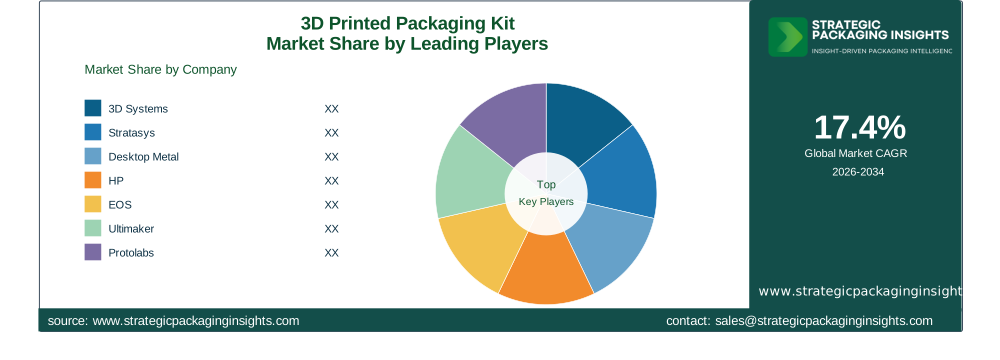
3D Systems is a leading player in the market, known for its comprehensive range of 3D printing solutions that cater to various industries, including packaging. The company is focused on developing innovative materials and technologies that enhance the capabilities of 3D printed packaging. Stratasys, another major player, is renowned for its advanced 3D printing systems and materials that enable the production of high-quality packaging solutions. The company's focus on sustainability and customization has helped it establish a strong foothold in the market.
Desktop Metal is making significant strides in the market with its cutting-edge 3D printing technology that offers high-speed and cost-effective solutions for packaging applications. The company's focus on innovation and sustainability has positioned it as a key player in the industry. HP, with its advanced Multi Jet Fusion technology, is also a prominent player in the market, offering high-quality and efficient 3D printing solutions for packaging. The company's emphasis on speed and precision has made it a preferred choice for businesses looking to adopt 3D printed packaging solutions.
Other notable players in the market include EOS, Ultimaker, Protolabs, Materialise, Formlabs, and Carbon, each of which brings unique capabilities and expertise to the table. These companies are focused on expanding their product portfolios and enhancing their technological capabilities to meet the growing demand for 3D printed packaging solutions. As the market continues to evolve, these key players are expected to play a crucial role in driving innovation and growth in the industry.
Key Highlights
- The 3D Printed Packaging Kit market is projected to grow at a CAGR of 17.4% from 2026 to 2034.
- Advancements in 3D printing materials are enhancing the capabilities of 3D printed packaging solutions.
- Customization and personalization are key trends driving the adoption of 3D printed packaging.
- The e-commerce sector is a major driver of demand for 3D printed packaging solutions.
- Regulatory challenges and high costs are potential barriers to market growth.
- Key players in the market include 3D Systems, Stratasys, Desktop Metal, HP, and EOS.
- Innovations in biodegradable plastics and advanced composites are creating new opportunities for growth.
- The market is witnessing increased adoption across industries such as healthcare, consumer goods, and food and beverage.
- Asia Pacific is expected to be a key growth region for the 3D Printed Packaging Kit market.
Top Countries Insights
In the 3D Printed Packaging Kit market, the United States is a leading player, with a market size of approximately $1.2 billion and a CAGR of 15%. The country's strong focus on innovation and technology, coupled with a robust e-commerce sector, is driving demand for 3D printed packaging solutions. Additionally, favorable government policies and investments in research and development are supporting market growth.
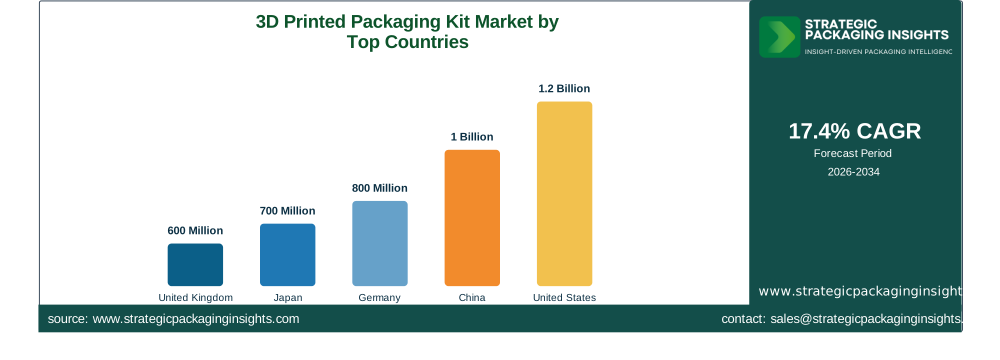
China is another key market, with a market size of around $1 billion and a CAGR of 18%. The country's rapid industrialization and growing emphasis on sustainability are driving the adoption of 3D printed packaging solutions. Furthermore, China's large manufacturing base and increasing investments in 3D printing technology are contributing to market expansion.
Germany, with a market size of approximately $800 million and a CAGR of 12%, is a significant player in the European market. The country's strong engineering and manufacturing capabilities, along with a focus on sustainability, are driving demand for 3D printed packaging solutions. Additionally, government initiatives to promote advanced manufacturing technologies are supporting market growth.
Japan, with a market size of around $700 million and a CAGR of 14%, is a key market in the Asia Pacific region. The country's advanced technology infrastructure and focus on innovation are driving the adoption of 3D printed packaging solutions. Furthermore, Japan's strong emphasis on quality and precision is contributing to market growth.
The United Kingdom, with a market size of approximately $600 million and a CAGR of 10%, is a notable player in the European market. The country's strong focus on sustainability and innovation, along with a growing e-commerce sector, is driving demand for 3D printed packaging solutions. Additionally, government support for advanced manufacturing technologies is contributing to market expansion.
3D Printed Packaging Kit Market Segments Insights

Printing Type Analysis
The 3D Printed Packaging Kit market is segmented by printing type into Fused Deposition Modeling (FDM), Stereolithography (SLA), and Selective Laser Sintering (SLS). FDM is the most widely used printing type due to its cost-effectiveness and versatility in producing a wide range of packaging solutions. The ability to use a variety of materials, including PLA and ABS, makes FDM a popular choice for companies looking to adopt 3D printed packaging. SLA, known for its high precision and smooth surface finish, is gaining traction in applications that require intricate designs and detailed features. SLS, with its ability to produce durable and functional parts, is increasingly being used in industrial applications where strength and durability are critical.
FDM's popularity is driven by its affordability and ease of use, making it accessible to a wide range of businesses, from small startups to large corporations. The ability to produce complex geometries and lightweight structures with minimal material waste is a significant advantage of FDM, particularly in the packaging industry. SLA's high precision and ability to produce fine details make it ideal for applications that require intricate designs, such as custom inserts and decorative packaging. SLS's strength and durability make it suitable for protective packaging applications, where the ability to withstand impact and stress is essential.
Application Analysis
The application segment of the 3D Printed Packaging Kit market includes prototyping, custom inserts, and protective packaging. Prototyping is a key application area, as 3D printing allows for rapid iteration and testing of packaging designs, reducing time-to-market and development costs. Custom inserts, which are used to secure and protect products during shipping, are increasingly being produced using 3D printing technology due to its ability to create tailored solutions that fit specific product dimensions. Protective packaging, which requires strength and durability, is also benefiting from advancements in 3D printing materials and technologies.
Prototyping is a critical application area for 3D printed packaging, as it allows companies to quickly test and refine their packaging designs before mass production. The ability to produce prototypes rapidly and cost-effectively is a significant advantage of 3D printing, enabling companies to bring new products to market faster. Custom inserts, which are designed to fit specific product dimensions, are increasingly being produced using 3D printing technology due to its ability to create tailored solutions that provide optimal protection during shipping. Protective packaging, which requires strength and durability, is also benefiting from advancements in 3D printing materials and technologies, enabling the production of packaging solutions that can withstand impact and stress.
End Use Analysis
The end-use segment of the 3D Printed Packaging Kit market includes e-commerce, industrial, and design applications. The e-commerce sector is a major driver of demand for 3D printed packaging solutions, as companies seek to enhance the unboxing experience and strengthen brand identity. Industrial applications, which require durable and functional packaging solutions, are also benefiting from advancements in 3D printing technology. The design sector, which values customization and creativity, is increasingly adopting 3D printed packaging solutions to create unique and personalized packaging designs.
The e-commerce sector is a significant driver of demand for 3D printed packaging solutions, as companies seek to enhance the unboxing experience and strengthen brand identity. The ability to create unique and personalized packaging designs is a key advantage of 3D printing, enabling companies to differentiate themselves in a competitive market. Industrial applications, which require durable and functional packaging solutions, are also benefiting from advancements in 3D printing technology, enabling the production of packaging solutions that can withstand impact and stress. The design sector, which values customization and creativity, is increasingly adopting 3D printed packaging solutions to create unique and personalized packaging designs that reflect brand identity and enhance the customer experience.
Material Analysis
The material segment of the 3D Printed Packaging Kit market includes PLA, ABS, and PETG. PLA, a biodegradable plastic, is gaining popularity due to its eco-friendly properties and ease of use. ABS, known for its strength and durability, is widely used in applications that require robust packaging solutions. PETG, which offers a balance of strength and flexibility, is increasingly being used in applications that require clear and durable packaging solutions.
PLA is a popular choice for 3D printed packaging due to its eco-friendly properties and ease of use. As consumers become more environmentally conscious, there is a growing demand for packaging solutions that minimize waste and reduce environmental impact. ABS, known for its strength and durability, is widely used in applications that require robust packaging solutions, such as protective packaging and custom inserts. PETG, which offers a balance of strength and flexibility, is increasingly being used in applications that require clear and durable packaging solutions, such as food and beverage packaging.
3D Printed Packaging Kit Market Segments
The 3D Printed Packaging Kit market has been segmented on the basis ofBy Printing Type
- FDM
- SLA
- SLS
By Application
- Prototyping
- Custom Inserts
- Protective Packaging
By End Use
- E-commerce
- Industrial
- Design
By Material
- PLA
- ABS
- PETG
Region
- Asia Pacific
- North America
- Latin America
- Europe
- Middle East & Africa




