


3D Printed Packaging Market Outlook
The 3D Printed Packaging market was valued at $1.50 billion in 2025 and is projected to reach $2.77 billion by 2034, growing at a CAGR of 7.0% during the forecast period 2026-2034. This market is witnessing significant growth due to the increasing demand for customized packaging solutions across various industries. The ability of 3D printing technology to produce complex designs and reduce material waste is driving its adoption in the packaging sector. Moreover, the growing trend of sustainable packaging is further propelling the market as 3D printing allows for the use of eco-friendly materials. The rise in e-commerce and the need for efficient packaging solutions to ensure product safety during transit are also contributing to the market's expansion.
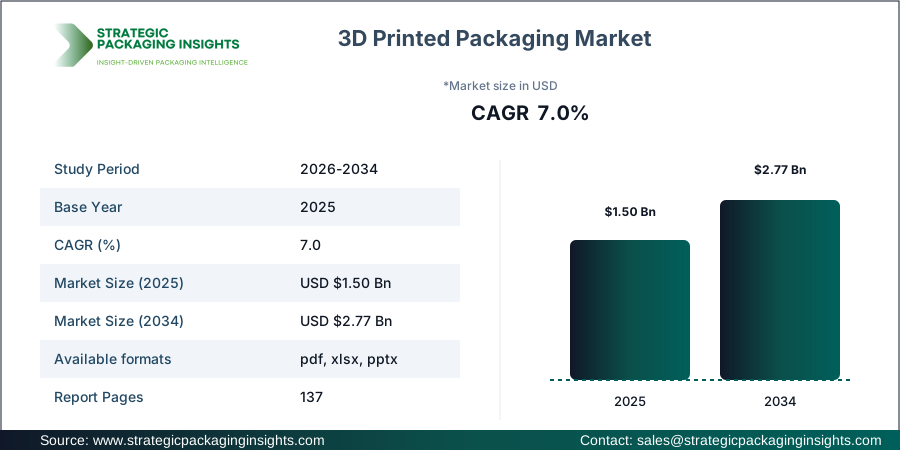
However, the market faces certain challenges that could hinder its growth. The high initial investment required for 3D printing technology and the lack of skilled professionals are significant barriers. Additionally, regulatory constraints related to the use of certain materials in packaging could pose challenges. Despite these hurdles, the market holds immense potential for growth, driven by technological advancements and the increasing adoption of 3D printing in emerging economies. The development of new materials and the integration of artificial intelligence in 3D printing processes are expected to create lucrative opportunities for market players.
Report Scope
| Attributes | Details |
| Report Title | 3D Printed Packaging Market Size, Future Growth and Forecast 2034 |
| Technology | FDM, SLA, SLS |
| Material | Polymers, Metal, Ceramics |
| End Use | Food, Pharma, Automotive, Consumer Goods |
| Region | Asia Pacific, North America, Latin America, Europe, Middle East & Africa |
| Base Year | 2025 |
| Historic Period | 2018-2024 |
| Forecast Period | 2026-2034 |
| Number of Pages | 137 |
| Customization Available | Yes* |
Opportunities & Threats
The 3D Printed Packaging market presents numerous opportunities for growth, primarily driven by the increasing demand for personalized and sustainable packaging solutions. As consumers become more environmentally conscious, there is a growing preference for packaging that minimizes waste and uses eco-friendly materials. 3D printing technology enables the production of lightweight and recyclable packaging, aligning with these consumer preferences. Additionally, the ability to create intricate designs and customized packaging solutions offers a competitive edge to businesses, allowing them to differentiate their products in the market. The rise of e-commerce and the need for efficient packaging solutions to ensure product safety during transit further amplify the demand for 3D printed packaging.
Another significant opportunity lies in the technological advancements in 3D printing. The development of new materials and the integration of artificial intelligence in 3D printing processes are expected to enhance the efficiency and capabilities of 3D printed packaging. These advancements enable the production of more complex and durable packaging solutions, catering to the diverse needs of various industries. Moreover, the increasing adoption of 3D printing in emerging economies presents a vast untapped market for growth. As these economies continue to develop, the demand for innovative packaging solutions is expected to rise, providing ample opportunities for market expansion.
Despite the promising opportunities, the 3D Printed Packaging market faces certain threats that could impede its growth. One of the primary challenges is the high initial investment required for 3D printing technology. The cost of acquiring and maintaining 3D printers can be prohibitive for small and medium-sized enterprises, limiting their ability to adopt this technology. Additionally, the lack of skilled professionals in the field poses a significant barrier to market growth. The complexity of 3D printing processes requires specialized knowledge and expertise, which is currently in short supply. Furthermore, regulatory constraints related to the use of certain materials in packaging could pose challenges, as companies must navigate complex compliance requirements to ensure their products meet industry standards.
Drivers & Challenges
The 3D Printed Packaging market is primarily driven by the increasing demand for customized packaging solutions across various industries. The ability of 3D printing technology to produce complex designs and reduce material waste is a significant driver of market growth. As consumers become more environmentally conscious, there is a growing preference for packaging that minimizes waste and uses eco-friendly materials. 3D printing technology enables the production of lightweight and recyclable packaging, aligning with these consumer preferences. Additionally, the rise of e-commerce and the need for efficient packaging solutions to ensure product safety during transit are contributing to the market's expansion.
Technological advancements in 3D printing are another key driver of market growth. The development of new materials and the integration of artificial intelligence in 3D printing processes are expected to enhance the efficiency and capabilities of 3D printed packaging. These advancements enable the production of more complex and durable packaging solutions, catering to the diverse needs of various industries. Moreover, the increasing adoption of 3D printing in emerging economies presents a vast untapped market for growth. As these economies continue to develop, the demand for innovative packaging solutions is expected to rise, providing ample opportunities for market expansion.
Despite the promising growth drivers, the 3D Printed Packaging market faces several challenges that could impede its growth. One of the primary challenges is the high initial investment required for 3D printing technology. The cost of acquiring and maintaining 3D printers can be prohibitive for small and medium-sized enterprises, limiting their ability to adopt this technology. Additionally, the lack of skilled professionals in the field poses a significant barrier to market growth. The complexity of 3D printing processes requires specialized knowledge and expertise, which is currently in short supply. Furthermore, regulatory constraints related to the use of certain materials in packaging could pose challenges, as companies must navigate complex compliance requirements to ensure their products meet industry standards.
Market Share Analysis
The competitive landscape of the 3D Printed Packaging market is characterized by the presence of several key players who are driving innovation and growth in the industry. Companies such as HP Inc., Stratasys, 3D Systems, Materialise, EOS, Nexa3D, Protolabs, GE Additive, Renishaw, and SLM Solutions are at the forefront of this market, leveraging their technological expertise and extensive product portfolios to maintain a competitive edge. These companies are investing heavily in research and development to enhance their 3D printing capabilities and expand their product offerings, catering to the diverse needs of various industries.
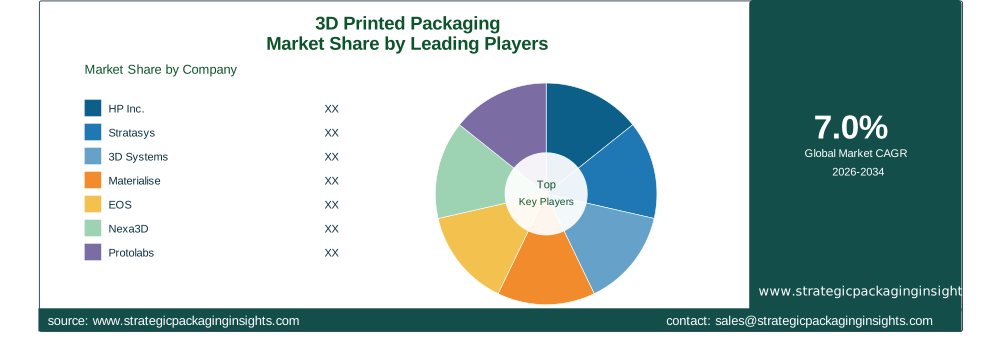
HP Inc. is a leading player in the 3D Printed Packaging market, known for its innovative solutions and advanced 3D printing technology. The company has a significant market share, driven by its strong focus on research and development and its ability to deliver high-quality, customized packaging solutions. Stratasys is another major player, renowned for its expertise in 3D printing and its extensive range of products and services. The company's commitment to innovation and customer satisfaction has helped it maintain a strong position in the market.
3D Systems is a key player in the market, offering a wide range of 3D printing solutions for various industries. The company's focus on technological advancements and its ability to deliver customized packaging solutions have contributed to its success in the market. Materialise is another prominent player, known for its expertise in 3D printing software and services. The company's strong focus on innovation and its ability to provide tailored solutions to meet the specific needs of its clients have helped it maintain a competitive edge.
EOS, Nexa3D, Protolabs, GE Additive, Renishaw, and SLM Solutions are also significant players in the 3D Printed Packaging market, each contributing to the industry's growth through their unique offerings and technological expertise. These companies are continuously investing in research and development to enhance their 3D printing capabilities and expand their product portfolios, catering to the diverse needs of various industries. The competitive landscape of the market is dynamic, with companies striving to differentiate themselves through innovation and customer-centric solutions.
Key Highlights
- The 3D Printed Packaging market is projected to grow at a CAGR of 7.0% from 2026 to 2034.
- Technological advancements in 3D printing are enhancing the efficiency and capabilities of packaging solutions.
- The rise of e-commerce is driving the demand for efficient and customized packaging solutions.
- There is a growing preference for eco-friendly and sustainable packaging materials.
- The market faces challenges related to high initial investment and lack of skilled professionals.
- Regulatory constraints related to material usage in packaging could pose challenges.
- Key players are investing heavily in research and development to maintain a competitive edge.
Top Countries Insights
In the 3D Printed Packaging market, the United States stands out as a leading country, with a market size of approximately $500 million and a CAGR of 6%. The country's strong technological infrastructure and high adoption rate of 3D printing technology are key growth drivers. Additionally, the presence of major market players and a robust e-commerce sector further contribute to the market's expansion. However, regulatory constraints related to material usage in packaging could pose challenges.
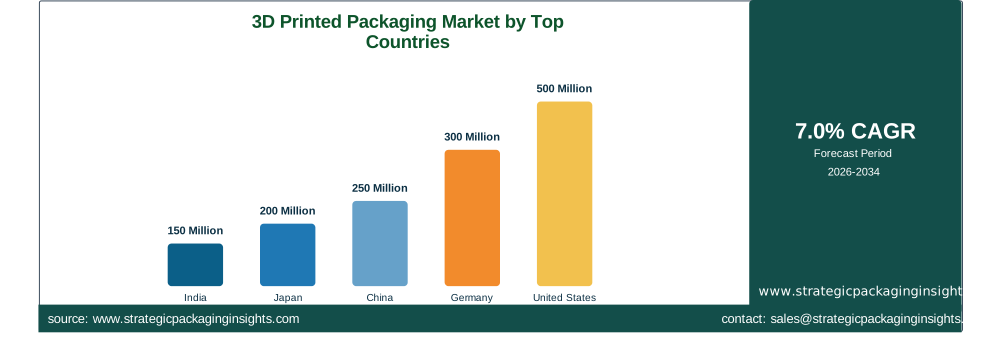
Germany is another significant player in the market, with a market size of around $300 million and a CAGR of 5%. The country's strong manufacturing sector and focus on innovation are driving the demand for 3D printed packaging solutions. The government's support for sustainable packaging initiatives and the presence of key market players further bolster the market's growth. However, the high cost of 3D printing technology could be a restraining factor.
China is emerging as a key market for 3D printed packaging, with a market size of approximately $250 million and a CAGR of 8%. The country's rapid industrialization and growing e-commerce sector are driving the demand for innovative packaging solutions. Additionally, government initiatives to promote sustainable packaging and the increasing adoption of 3D printing technology are contributing to the market's growth. However, the lack of skilled professionals could pose challenges.
Japan is also a notable player in the market, with a market size of around $200 million and a CAGR of 4%. The country's strong focus on technological advancements and innovation is driving the demand for 3D printed packaging solutions. The presence of key market players and government support for sustainable packaging initiatives further contribute to the market's growth. However, regulatory constraints related to material usage in packaging could pose challenges.
India is an emerging market for 3D printed packaging, with a market size of approximately $150 million and a CAGR of 9%. The country's growing e-commerce sector and increasing demand for customized packaging solutions are key growth drivers. Additionally, government initiatives to promote sustainable packaging and the increasing adoption of 3D printing technology are contributing to the market's growth. However, the high cost of 3D printing technology could be a restraining factor.
3D Printed Packaging Market Segments Insights

Technology Analysis
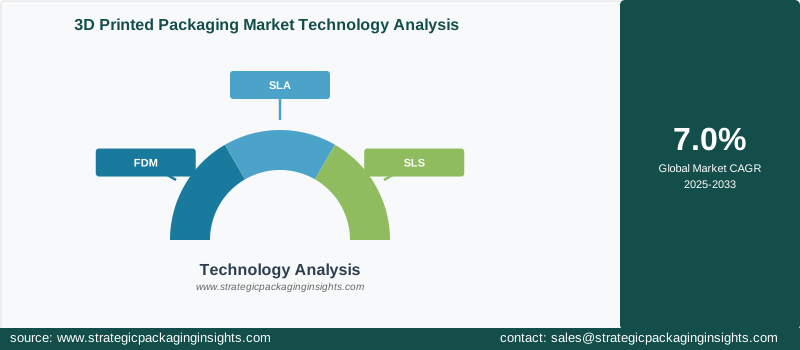
The 3D Printed Packaging market is segmented by technology into Fused Deposition Modeling (FDM), Stereolithography (SLA), and Selective Laser Sintering (SLS). FDM is the most widely used technology due to its cost-effectiveness and ability to produce durable packaging solutions. The demand for FDM technology is driven by its versatility and the increasing need for customized packaging solutions across various industries. SLA technology is gaining traction due to its ability to produce high-resolution and intricate designs, making it ideal for applications requiring detailed packaging. SLS technology is also witnessing growth, driven by its ability to produce complex geometries and its suitability for high-volume production.
The competition in the technology segment is intense, with companies continuously investing in research and development to enhance their 3D printing capabilities. The integration of artificial intelligence and machine learning in 3D printing processes is expected to further drive the demand for these technologies. Additionally, the development of new materials compatible with these technologies is expected to create new opportunities for market growth. The increasing adoption of 3D printing in emerging economies is also expected to drive the demand for these technologies, as companies seek to leverage the benefits of 3D printing to enhance their packaging solutions.
Material Analysis
The 3D Printed Packaging market is segmented by material into Polymers, Metal, and Ceramics. Polymers are the most widely used material in 3D printed packaging due to their versatility and cost-effectiveness. The demand for polymer-based packaging solutions is driven by the increasing need for lightweight and recyclable packaging. Metal materials are gaining traction due to their durability and strength, making them ideal for applications requiring robust packaging solutions. Ceramics are also witnessing growth, driven by their ability to produce intricate designs and their suitability for high-temperature applications.
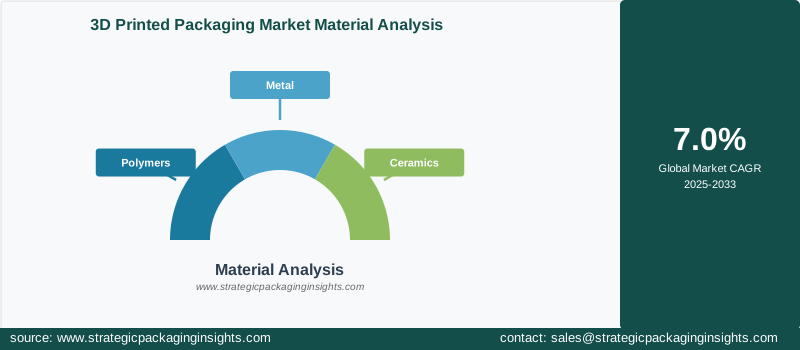
The competition in the material segment is fierce, with companies continuously investing in research and development to develop new materials that enhance the capabilities of 3D printed packaging. The development of eco-friendly and sustainable materials is expected to drive the demand for these materials, as companies seek to align with consumer preferences for sustainable packaging solutions. Additionally, the increasing adoption of 3D printing in emerging economies is expected to drive the demand for these materials, as companies seek to leverage the benefits of 3D printing to enhance their packaging solutions.
End Use Analysis
The 3D Printed Packaging market is segmented by end use into Food, Pharma, Automotive, and Consumer Goods. The food industry is the largest end-user of 3D printed packaging, driven by the increasing demand for customized and sustainable packaging solutions. The demand for 3D printed packaging in the pharma industry is driven by the need for precise and secure packaging solutions to ensure product safety and compliance with regulatory standards. The automotive industry is also witnessing growth, driven by the need for lightweight and durable packaging solutions for automotive components.
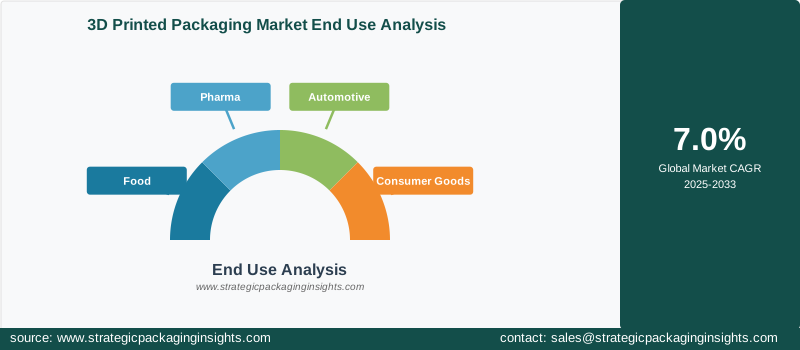
The competition in the end-use segment is intense, with companies continuously investing in research and development to enhance their 3D printing capabilities and expand their product offerings. The increasing adoption of 3D printing in emerging economies is expected to drive the demand for these end-use applications, as companies seek to leverage the benefits of 3D printing to enhance their packaging solutions. Additionally, the development of new materials and the integration of artificial intelligence in 3D printing processes are expected to create new opportunities for market growth.
3D Printed Packaging Market Segments
The 3D Printed Packaging market has been segmented on the basis ofTechnology
- FDM
- SLA
- SLS
Material
- Polymers
- Metal
- Ceramics
End Use
- Food
- Pharma
- Automotive
- Consumer Goods
Region
- Asia Pacific
- North America
- Latin America
- Europe
- Middle East & Africa




