


Biodegradable Films Market Outlook
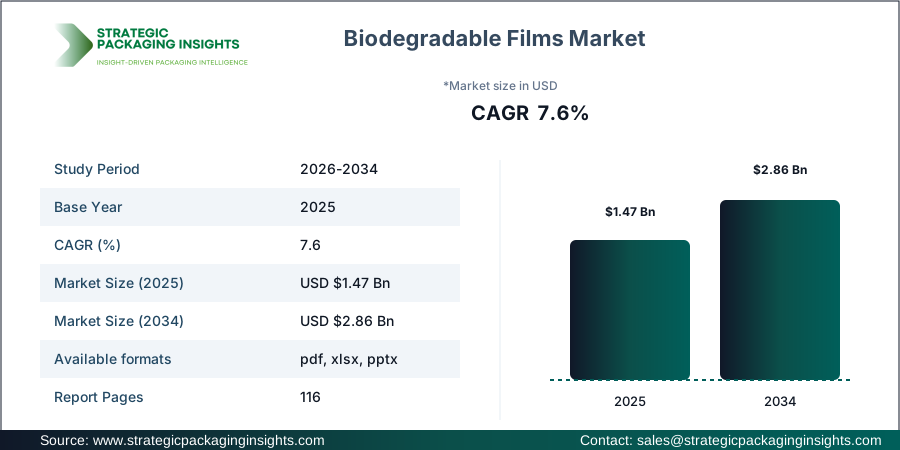
The biodegradable films market was valued at $1.47 billion in 2025 and is projected to reach $2.86 billion by 2034, growing at a CAGR of 7.6% during the forecast period 2026-2034. This market is witnessing significant growth due to increasing environmental concerns and the rising demand for sustainable packaging solutions. The shift towards eco-friendly products is driven by stringent government regulations and consumer awareness about the environmental impact of plastic waste. The demand for biodegradable films is further fueled by advancements in biopolymer technology, which enhance the performance and cost-effectiveness of these films. The market is also benefiting from the growing trend of circular economy practices, where waste is minimized, and resources are reused, thus promoting the use of biodegradable materials.
Despite the promising growth prospects, the biodegradable films market faces challenges such as high production costs and limited availability of raw materials. The cost of biodegradable films is generally higher than conventional plastic films, which can be a deterrent for price-sensitive consumers and industries. Additionally, the production of biodegradable films requires specific conditions and infrastructure, which are not yet widely available in all regions. However, the market holds significant potential for growth as technological advancements continue to reduce production costs and improve the scalability of biodegradable film manufacturing. The increasing investment in research and development by key players is expected to overcome these challenges and drive the market forward.
Report Scope
| Attributes | Details |
| Report Title | Biodegradable Films Market Size, Future Growth and Forecast 2034 |
| By Material Type | PLA, PHA, Starch Blends, PBAT Blends |
| By Film Type | Packaging Film, Agricultural Film, Shopping Bag Film |
| By Application | Food Packaging, Agriculture, Retail, Compost Bags |
| By End Use | Converters, Food Brands, Retailers, Agriculture |
| Region | Asia Pacific, North America, Latin America, Europe, Middle East & Africa |
| Base Year | 2025 |
| Historic Period | 2018-2024 |
| Forecast Period | 2026-2034 |
| Number of Pages | 116 |
| Customization Available | Yes* |
Opportunities & Threats
The biodegradable films market presents numerous opportunities, particularly in the food packaging sector. As consumers become more environmentally conscious, there is a growing demand for sustainable packaging solutions that reduce the carbon footprint. Biodegradable films offer an excellent alternative to traditional plastic packaging, providing the same level of protection and shelf life while being environmentally friendly. This shift is further supported by government regulations that mandate the use of biodegradable materials in packaging, especially in regions like Europe and North America. The agricultural sector also presents significant opportunities, as biodegradable films can be used for mulching and crop protection, reducing plastic waste in farming practices.
Another opportunity lies in the retail sector, where biodegradable films are increasingly being used for shopping bags and other packaging applications. Retailers are adopting these films to align with sustainability goals and meet consumer demand for eco-friendly products. The growing trend of compostable packaging is also driving the demand for biodegradable films, as they can be easily disposed of in composting facilities, reducing landfill waste. Furthermore, advancements in biopolymer technology are opening new avenues for innovation, allowing manufacturers to develop films with enhanced properties such as improved strength, flexibility, and barrier performance.
However, the market also faces threats, primarily from the high cost of biodegradable films compared to conventional plastics. This cost disparity can hinder the widespread adoption of biodegradable films, especially in price-sensitive markets. Additionally, the lack of awareness and understanding of biodegradable films among consumers and industries can pose a challenge to market growth. There is also a risk of greenwashing, where companies falsely claim their products are biodegradable, leading to consumer skepticism and potential regulatory scrutiny. To mitigate these threats, industry players need to focus on educating consumers and stakeholders about the benefits and proper disposal of biodegradable films.
Drivers & Challenges
The biodegradable films market is primarily driven by the increasing environmental concerns and the need for sustainable packaging solutions. Governments worldwide are implementing stringent regulations to reduce plastic waste, which is a significant driver for the adoption of biodegradable films. These films offer an eco-friendly alternative to conventional plastics, as they decompose naturally without leaving harmful residues. The growing consumer awareness about the environmental impact of plastic waste is also driving the demand for biodegradable films, as consumers seek products that align with their sustainability values. Additionally, the rise of the circular economy is promoting the use of biodegradable materials, as they can be easily integrated into waste management systems.
Technological advancements in biopolymer production are another key driver for the biodegradable films market. Innovations in material science have led to the development of biodegradable films with enhanced properties, such as improved strength, flexibility, and barrier performance. These advancements are making biodegradable films more competitive with conventional plastics, driving their adoption across various industries. The increasing investment in research and development by key players is also contributing to market growth, as companies strive to improve the performance and cost-effectiveness of biodegradable films. Furthermore, the growing trend of compostable packaging is driving the demand for biodegradable films, as they can be easily disposed of in composting facilities, reducing landfill waste.
Despite the positive drivers, the biodegradable films market faces several challenges. One of the primary challenges is the high production cost of biodegradable films compared to conventional plastics. This cost disparity can hinder the widespread adoption of biodegradable films, especially in price-sensitive markets. Additionally, the limited availability of raw materials for biopolymer production can pose a challenge to market growth. The production of biodegradable films requires specific conditions and infrastructure, which are not yet widely available in all regions. Furthermore, the lack of awareness and understanding of biodegradable films among consumers and industries can pose a challenge to market growth. To overcome these challenges, industry players need to focus on educating consumers and stakeholders about the benefits and proper disposal of biodegradable films.
Market Share Analysis
The biodegradable films market is characterized by a competitive landscape with several key players striving to gain a significant market share. Companies such as BASF, Novamont, and NatureWorks are leading the market with their extensive product portfolios and strong distribution networks. These companies are focusing on research and development to innovate and improve the performance of biodegradable films, making them more competitive with conventional plastics. The market is also witnessing strategic collaborations and partnerships among key players to expand their market presence and enhance their product offerings. For instance, TotalEnergies Corbion and Danimer Scientific are investing in joint ventures to develop new biopolymer technologies and expand their production capacities.
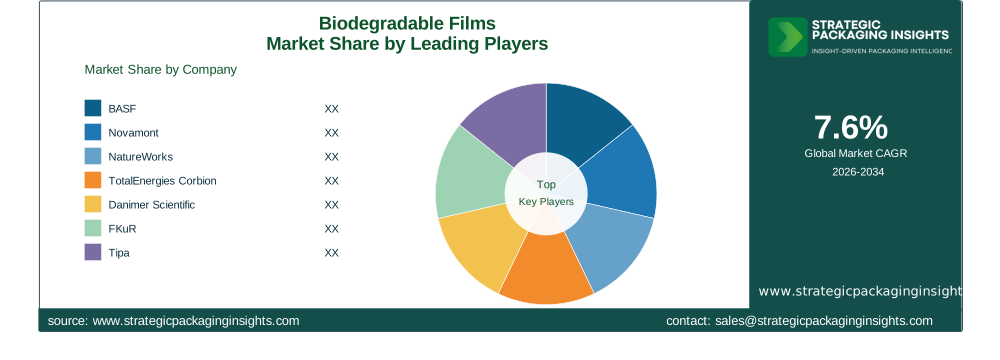
BASF is a prominent player in the biodegradable films market, known for its innovative solutions and sustainable product offerings. The company is focusing on expanding its product portfolio and strengthening its market position through strategic partnerships and collaborations. Novamont is another key player, recognized for its commitment to sustainability and environmental responsibility. The company is investing in research and development to enhance the performance and cost-effectiveness of its biodegradable films. NatureWorks is a leading producer of biopolymers, offering a wide range of biodegradable films for various applications. The company is focusing on expanding its production capacity and developing new technologies to meet the growing demand for sustainable packaging solutions.
Other notable players in the market include TotalEnergies Corbion, Danimer Scientific, and FKuR. TotalEnergies Corbion is known for its innovative biopolymer solutions and strong focus on sustainability. The company is investing in research and development to improve the performance and cost-effectiveness of its biodegradable films. Danimer Scientific is a leading producer of biodegradable films, offering a wide range of products for various applications. The company is focusing on expanding its production capacity and developing new technologies to meet the growing demand for sustainable packaging solutions. FKuR is recognized for its commitment to sustainability and environmental responsibility, offering a wide range of biodegradable films for various applications.
Tipa, Biome Bioplastics, Mitsubishi Chemical, and Toray Industries are also key players in the biodegradable films market. Tipa is known for its innovative solutions and sustainable product offerings, focusing on expanding its product portfolio and strengthening its market position through strategic partnerships and collaborations. Biome Bioplastics is recognized for its commitment to sustainability and environmental responsibility, investing in research and development to enhance the performance and cost-effectiveness of its biodegradable films. Mitsubishi Chemical and Toray Industries are leading producers of biopolymers, offering a wide range of biodegradable films for various applications. These companies are focusing on expanding their production capacities and developing new technologies to meet the growing demand for sustainable packaging solutions.
Key Highlights
- The biodegradable films market is projected to grow at a CAGR of 7.6% from 2026 to 2034.
- Increasing environmental concerns and government regulations are driving the demand for biodegradable films.
- Technological advancements in biopolymer production are enhancing the performance of biodegradable films.
- The food packaging sector presents significant growth opportunities for biodegradable films.
- High production costs and limited raw material availability are key challenges for the market.
- Key players are focusing on research and development to innovate and improve biodegradable film performance.
- The market is witnessing strategic collaborations and partnerships among key players.
- Biodegradable films are gaining traction in the agricultural sector for mulching and crop protection.
- The retail sector is adopting biodegradable films for shopping bags and packaging applications.
- Consumer awareness about the environmental impact of plastic waste is driving the demand for biodegradable films.
Top Countries Insights
In the biodegradable films market, the United States stands out as a key player with a market size of approximately $450 million and a CAGR of 6%. The growth in this region is driven by stringent government regulations aimed at reducing plastic waste and promoting sustainable packaging solutions. The increasing consumer awareness about environmental issues and the demand for eco-friendly products are also significant growth drivers. However, the market faces challenges such as high production costs and the need for infrastructure to support biodegradable film production and disposal.
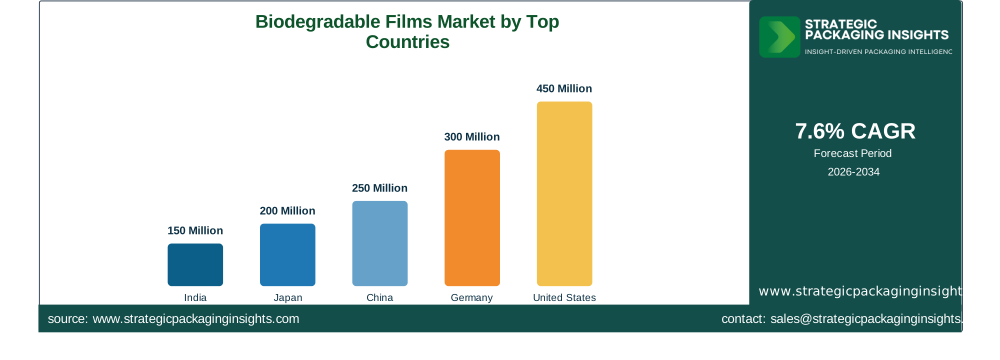
Germany is another prominent market for biodegradable films, with a market size of around $300 million and a CAGR of 7%. The country's strong focus on sustainability and environmental responsibility is driving the demand for biodegradable films. The government has implemented strict regulations to reduce plastic waste, which is encouraging the adoption of biodegradable materials. The market is also benefiting from advancements in biopolymer technology and the growing trend of compostable packaging. However, the high cost of biodegradable films compared to conventional plastics remains a challenge.
China is emerging as a significant market for biodegradable films, with a market size of approximately $250 million and a CAGR of 9%. The country's rapid industrialization and urbanization are driving the demand for sustainable packaging solutions. The government is implementing policies to reduce plastic waste and promote the use of biodegradable materials. The market is also benefiting from the growing consumer awareness about environmental issues and the demand for eco-friendly products. However, the lack of infrastructure for biodegradable film production and disposal poses a challenge to market growth.
In Japan, the biodegradable films market is valued at around $200 million, with a CAGR of 5%. The country's strong focus on sustainability and environmental responsibility is driving the demand for biodegradable films. The government has implemented regulations to reduce plastic waste, which is encouraging the adoption of biodegradable materials. The market is also benefiting from advancements in biopolymer technology and the growing trend of compostable packaging. However, the high cost of biodegradable films compared to conventional plastics remains a challenge.
India is also a growing market for biodegradable films, with a market size of approximately $150 million and a CAGR of 8%. The country's increasing population and rapid urbanization are driving the demand for sustainable packaging solutions. The government is implementing policies to reduce plastic waste and promote the use of biodegradable materials. The market is also benefiting from the growing consumer awareness about environmental issues and the demand for eco-friendly products. However, the lack of infrastructure for biodegradable film production and disposal poses a challenge to market growth.
Biodegradable Films Market Segments Insights

By Material Type Analysis
The biodegradable films market by material type is segmented into PLA, PHA, starch blends, and PBAT blends. PLA (Polylactic Acid) is one of the most widely used materials in biodegradable films due to its excellent biodegradability and mechanical properties. It is derived from renewable resources such as corn starch, making it an eco-friendly alternative to conventional plastics. The demand for PLA-based films is driven by their application in food packaging, where they provide a sustainable solution without compromising on performance. PHA (Polyhydroxyalkanoates) is another promising material, known for its biodegradability and versatility. It is used in various applications, including packaging and agriculture, due to its ability to degrade in both aerobic and anaerobic conditions.

Starch blends are gaining popularity in the biodegradable films market due to their cost-effectiveness and availability. These blends are made by combining starch with other biodegradable polymers, enhancing their mechanical properties and biodegradability. Starch-based films are widely used in packaging applications, particularly in the food industry, where they offer a sustainable alternative to traditional plastic films. PBAT (Polybutylene Adipate Terephthalate) blends are also gaining traction due to their excellent biodegradability and flexibility. These blends are used in various applications, including agricultural films and compost bags, where they provide a sustainable solution for waste management.
By Film Type Analysis
The biodegradable films market by film type is segmented into packaging film, agricultural film, and shopping bag film. Packaging films are the largest segment, driven by the increasing demand for sustainable packaging solutions in the food and beverage industry. These films offer excellent barrier properties and biodegradability, making them an ideal choice for food packaging applications. The growing consumer awareness about environmental issues and the demand for eco-friendly products are driving the adoption of biodegradable packaging films. Agricultural films are another significant segment, used for mulching and crop protection. These films help reduce plastic waste in farming practices and improve crop yield by maintaining soil moisture and temperature.
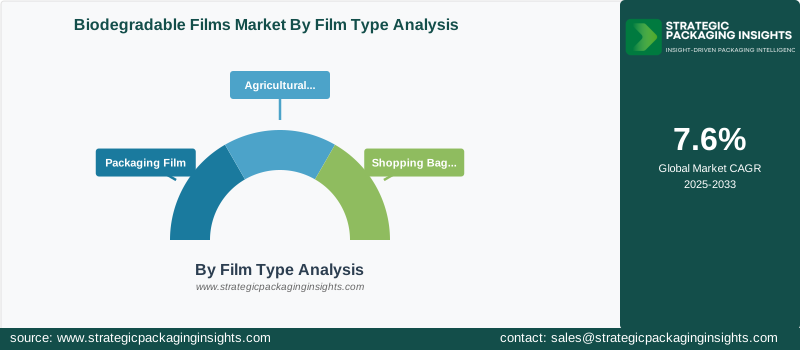
Shopping bag films are gaining popularity due to the increasing demand for sustainable alternatives to traditional plastic bags. These films are used in the retail sector, where they provide a sustainable solution for packaging and carrying goods. The growing trend of compostable packaging is driving the demand for shopping bag films, as they can be easily disposed of in composting facilities, reducing landfill waste. The market is also witnessing innovations in film technology, with manufacturers developing films with enhanced properties such as improved strength, flexibility, and barrier performance. These advancements are making biodegradable films more competitive with conventional plastics, driving their adoption across various industries.
By Application Analysis
The biodegradable films market by application is segmented into food packaging, agriculture, retail, and compost bags. Food packaging is the largest application segment, driven by the increasing demand for sustainable packaging solutions in the food and beverage industry. Biodegradable films offer excellent barrier properties and biodegradability, making them an ideal choice for food packaging applications. The growing consumer awareness about environmental issues and the demand for eco-friendly products are driving the adoption of biodegradable films in food packaging. The agricultural sector is another significant application area, where biodegradable films are used for mulching and crop protection. These films help reduce plastic waste in farming practices and improve crop yield by maintaining soil moisture and temperature.
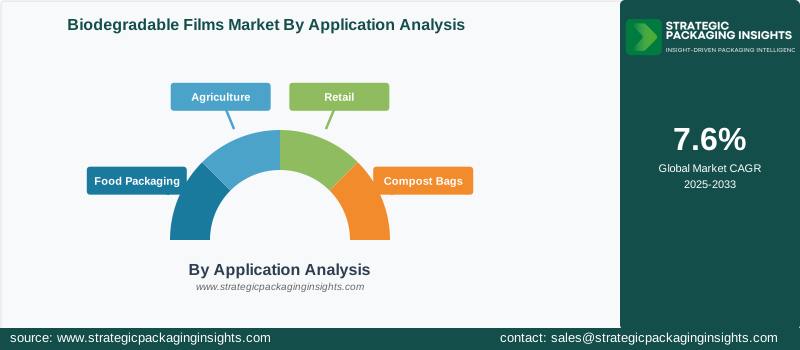
In the retail sector, biodegradable films are used for shopping bags and other packaging applications. Retailers are adopting these films to align with sustainability goals and meet consumer demand for eco-friendly products. The growing trend of compostable packaging is also driving the demand for biodegradable films, as they can be easily disposed of in composting facilities, reducing landfill waste. Compost bags are another application area, where biodegradable films provide a sustainable solution for waste management. These bags are used for collecting and disposing of organic waste, reducing the environmental impact of waste disposal.
By End Use Analysis
The biodegradable films market by end use is segmented into converters, food brands, retailers, and agriculture. Converters are the largest end-use segment, as they play a crucial role in transforming raw materials into finished products. These companies are focusing on developing innovative solutions to meet the growing demand for biodegradable films across various industries. Food brands are another significant end-use segment, driven by the increasing demand for sustainable packaging solutions in the food and beverage industry. These brands are adopting biodegradable films to align with sustainability goals and meet consumer demand for eco-friendly products.
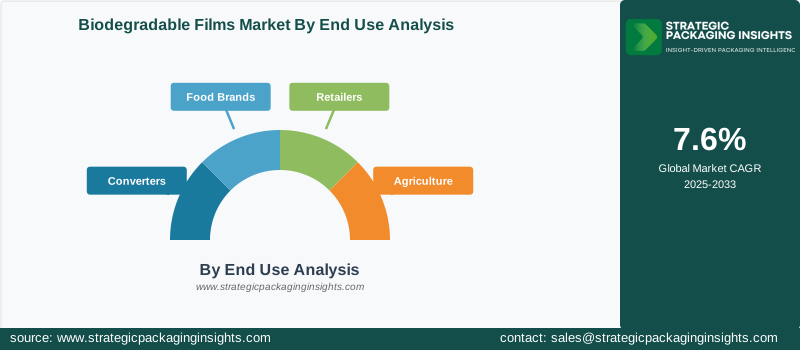
Retailers are also adopting biodegradable films for packaging and carrying goods, as they seek to align with sustainability goals and meet consumer demand for eco-friendly products. The growing trend of compostable packaging is driving the demand for biodegradable films in the retail sector, as they can be easily disposed of in composting facilities, reducing landfill waste. The agricultural sector is another significant end-use segment, where biodegradable films are used for mulching and crop protection. These films help reduce plastic waste in farming practices and improve crop yield by maintaining soil moisture and temperature.
Biodegradable Films Market Segments
The Biodegradable Films market has been segmented on the basis ofBy Material Type
- PLA
- PHA
- Starch Blends
- PBAT Blends
By Film Type
- Packaging Film
- Agricultural Film
- Shopping Bag Film
By Application
- Food Packaging
- Agriculture
- Retail
- Compost Bags
By End Use
- Converters
- Food Brands
- Retailers
- Agriculture
Region
- Asia Pacific
- North America
- Latin America
- Europe
- Middle East & Africa




