
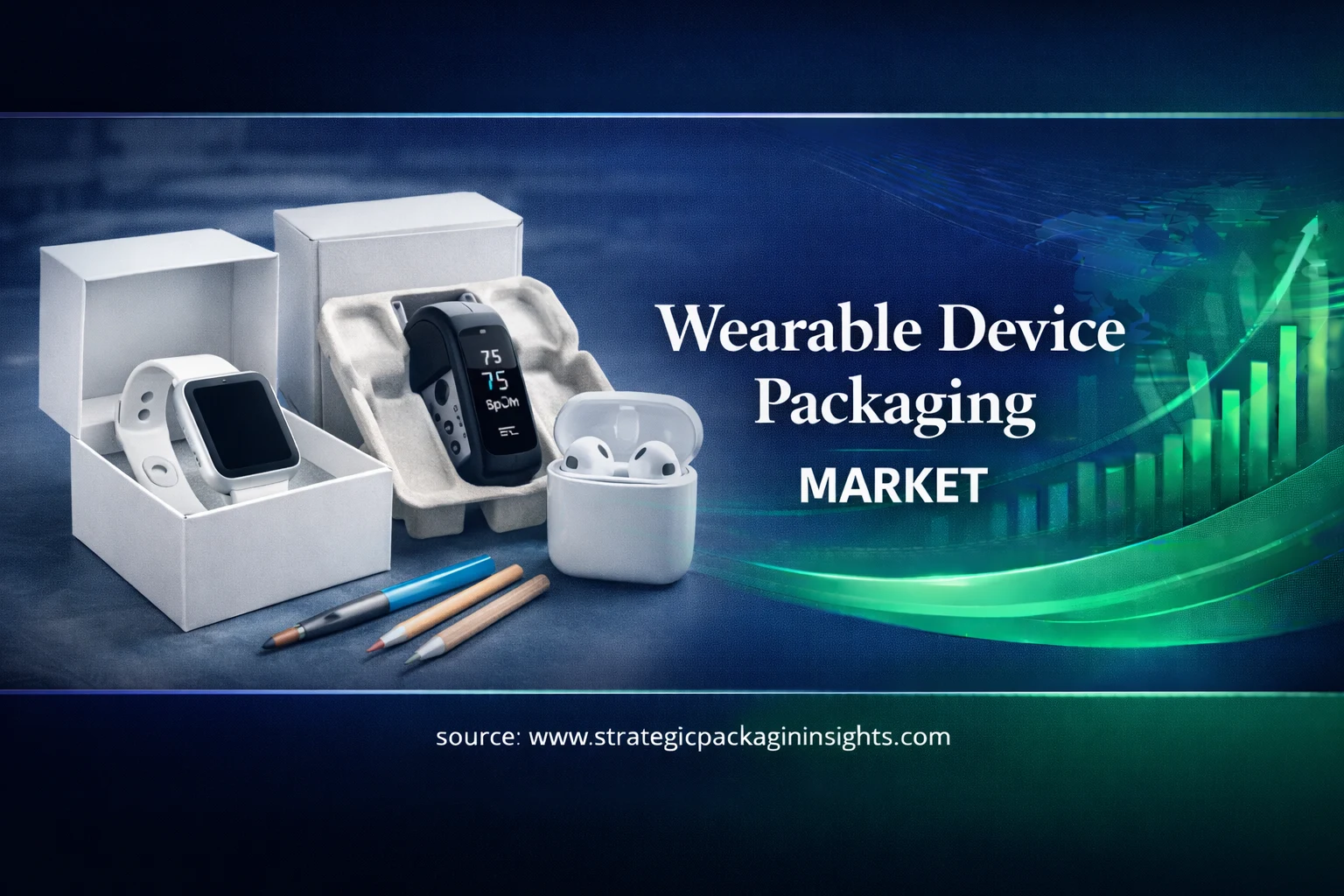
Delve into the Wearable Device Packaging Market's evolution, significance, and future outlook. Understand its segmentation, competitive landscape, and strategic insights for industry leaders.
Executive Market Narrative
The Wearable Device Packaging Market has undergone a significant transformation over the past decade, driven by the rapid proliferation of wearable technology. From its nascent stages in the early 2010s, where packaging was primarily functional, the market has evolved to prioritize sustainability, user experience, and brand differentiation. This evolution mirrors the broader trends in consumer electronics, where the emphasis on aesthetics and environmental responsibility has become paramount. As wearable devices become more integrated into daily life, the packaging that houses these technologies must also adapt, offering protection, convenience, and an extension of the brand's identity.
https://www.strategicpackaginginsights.com/report/wearable-device-packaging-market
Why This Market Matters
The importance of the Wearable Device Packaging Market cannot be overstated. As wearable technology becomes ubiquitous, the packaging serves not only as a protective shell but also as a critical touchpoint for consumer engagement. Effective packaging can enhance user experience, influence purchasing decisions, and reflect a brand's commitment to sustainability. Moreover, as the market for wearables expands into sectors like healthcare and sports, the packaging must meet stringent regulatory standards and cater to diverse consumer needs. This market is a bellwether for broader trends in packaging innovation and consumer electronics.
Market Size & Growth Trajectory
In 2024, the Wearable Device Packaging Market was valued at $2.5 billion. By 2033, it is projected to reach $5.8 billion, reflecting a robust compound annual growth rate (CAGR) of 9.5%. This growth trajectory underscores the increasing demand for wearable devices and the corresponding need for innovative packaging solutions. The market's expansion is fueled by technological advancements, rising consumer awareness, and the growing emphasis on sustainability and user-centric design.
Key Market Segmentation
| Segment | Description |
|---|---|
| Material Type | Includes Plastic, Metal, Paper & Paperboard, and Others, each offering unique benefits in terms of durability, sustainability, and cost-effectiveness. |
| Application | Covers Smartwatches, Fitness Trackers, AR/VR Devices, and Others, highlighting the diverse range of wearable technologies. |
| End-User | Encompasses Consumer Electronics, Healthcare, Sports & Fitness, and Others, reflecting the broad applicability of wearable devices. |
| Region | Spans Asia Pacific, North America, Latin America, Europe, and Middle East & Africa, indicating the global reach and regional nuances of the market. |
Industry Use-Case Mapping
The segmentation of the Wearable Device Packaging Market aligns closely with real-world applications. For instance, plastic packaging is prevalent in consumer electronics due to its lightweight and cost-effective nature, while metal packaging is favored in healthcare for its durability and compliance with hygiene standards. In terms of application, smartwatches and fitness trackers dominate the consumer electronics segment, whereas AR/VR devices are gaining traction in both consumer and professional settings. The regional segmentation highlights Asia Pacific as a burgeoning hub for manufacturing and innovation, while North America and Europe lead in terms of technological adoption and regulatory frameworks.
Competitive & Value Chain Insights
The competitive landscape of the Wearable Device Packaging Market is characterized by a mix of established players and innovative startups. Key players are investing in research and development to enhance packaging materials and designs, focusing on sustainability and user experience. The value chain involves raw material suppliers, packaging manufacturers, and end-users, with a growing emphasis on collaboration and integration to streamline processes and reduce environmental impact. As the market matures, strategic partnerships and mergers are expected to drive innovation and market penetration.
Short SWOT Analysis
| Strengths | Weaknesses | Opportunities | Threats |
|---|---|---|---|
| Strong demand for innovative packaging solutions. | High cost of sustainable materials. | Expansion into emerging markets. | Regulatory challenges and compliance costs. |
| Integration of technology in packaging. | Limited recycling infrastructure. | Technological advancements in materials. | Intense competition and price pressures. |
Future Outlook (2033)
Looking ahead to 2033, the Wearable Device Packaging Market is poised for continued growth and innovation. The emphasis on sustainability will drive the development of biodegradable and recyclable materials, while advancements in smart packaging will enhance user interaction and product security. The integration of IoT and AI technologies in packaging solutions will offer new opportunities for personalization and data collection. As consumer expectations evolve, packaging will play an increasingly critical role in brand differentiation and customer loyalty.
Why This Matters for Packaging Leaders
For packaging leaders, the Wearable Device Packaging Market represents both a challenge and an opportunity. The need to balance functionality, sustainability, and aesthetics requires a strategic approach to innovation and collaboration. By staying ahead of market trends and consumer preferences, packaging leaders can drive growth and differentiation in a competitive landscape. Moreover, as regulatory pressures mount, proactive engagement with stakeholders and investment in sustainable practices will be essential for long-term success. This market is not just about packaging; it's about shaping the future of consumer interaction and brand experience.