
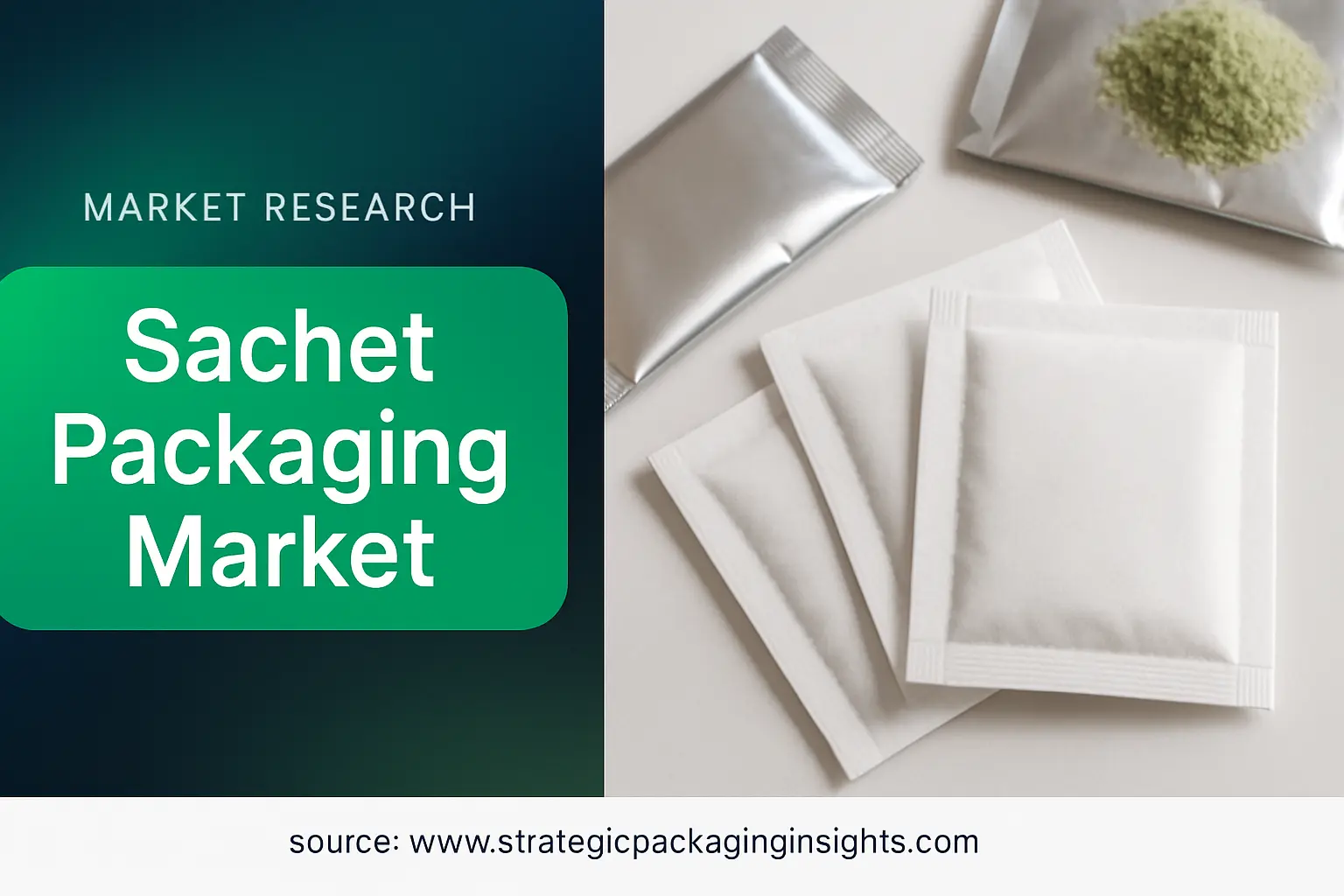
Discover the driving forces behind the Sachet Packaging Market's growth, its diverse segments, regional dynamics, and the challenges and opportunities it presents for stakeholders.
Why This Market Is Gaining Attention
The Sachet Packaging Market is capturing significant attention due to its versatility and cost-effectiveness, which cater to a wide range of industries. As consumer preferences shift towards convenience and sustainability, sachet packaging offers an ideal solution for single-use products, reducing waste and enhancing product accessibility. This market is particularly appealing to industries such as food and beverages, pharmaceuticals, and personal care, where precise portion control and product protection are paramount.
https://www.strategicpackaginginsights.com/report/sachet-packaging-market
Market Scale & Growth Momentum
In 2024, the sachet packaging market was valued at $8.5 billion, and it is projected to reach $12.3 billion by 2033, growing at a compound annual growth rate (CAGR) of 4.2%. This steady growth trajectory underscores the increasing demand for flexible packaging solutions that align with modern consumer lifestyles. The market's expansion is driven by the rising need for lightweight, portable, and eco-friendly packaging options that cater to both urban and rural consumers.
Deep Dive into Segments
| Segment | Description |
|---|---|
| Material | Plastic remains the dominant material due to its durability and cost-effectiveness, while paper and aluminum foil are gaining traction for their eco-friendly and barrier properties, respectively. |
| Application | Food & Beverages lead the application segment, driven by the demand for single-serve products. Pharmaceuticals and personal care are also significant, focusing on hygiene and convenience. |
| Packaging Type | Flat sachets are preferred for their simplicity and cost-effectiveness, whereas stand-up sachets offer better shelf appeal and are increasingly popular in retail settings. |
| Region | Asia Pacific dominates the market due to its large consumer base and rapid urbanization, followed by North America and Europe, where sustainability concerns drive innovation. |
Application & End-Use Relevance
Sachet packaging is particularly relevant in the food and beverage industry, where it facilitates portion control and extends product shelf life. In pharmaceuticals, sachets ensure precise dosage and maintain product integrity. The personal care and cosmetics sector benefits from sachets for sample distribution and travel-friendly packaging. Industrial applications, though smaller in scale, utilize sachets for chemical and lubricant packaging, emphasizing safety and convenience.
Regional & Industry Dynamics
Regionally, the Asia Pacific market is experiencing robust growth due to increasing disposable incomes and a burgeoning middle class. North America and Europe are focusing on sustainable packaging solutions, driving innovation in biodegradable and recyclable materials. Latin America and the Middle East & Africa are emerging markets, with growing demand for affordable and accessible packaging solutions.
Challenges vs Opportunities
The sachet packaging market faces challenges such as environmental concerns over plastic waste and regulatory pressures for sustainable practices. However, these challenges present opportunities for innovation in biodegradable materials and recycling technologies. Companies that can balance cost-effectiveness with sustainability are likely to gain a competitive edge.
SWOT Overview
| Strengths | Weaknesses | Opportunities | Threats |
|---|---|---|---|
| Cost-effective and versatile packaging solutions. | Environmental impact of plastic waste. | Innovation in sustainable materials and recycling. | Regulatory pressures and competition from alternative packaging. |
| Strong demand across multiple industries. | Limited consumer awareness of recycling options. | Expansion in emerging markets. | Volatility in raw material prices. |
Innovation & Sustainability Angle
Innovation in the sachet packaging market is heavily focused on sustainability. Companies are investing in research and development to create biodegradable and compostable sachets that meet consumer demand for eco-friendly products. Advances in material science are enabling the production of high-barrier, lightweight packaging that reduces environmental impact without compromising on performance.
What This Means for Packaging Stakeholders
For stakeholders in the sachet packaging market, the current landscape presents both challenges and opportunities. Embracing sustainable practices and investing in innovative materials can enhance brand reputation and meet regulatory requirements. Collaborating with industry partners to develop recycling infrastructure and consumer education initiatives can further strengthen market position. As the market continues to evolve, stakeholders who prioritize adaptability and sustainability will be well-positioned to capitalize on emerging trends and consumer preferences.