
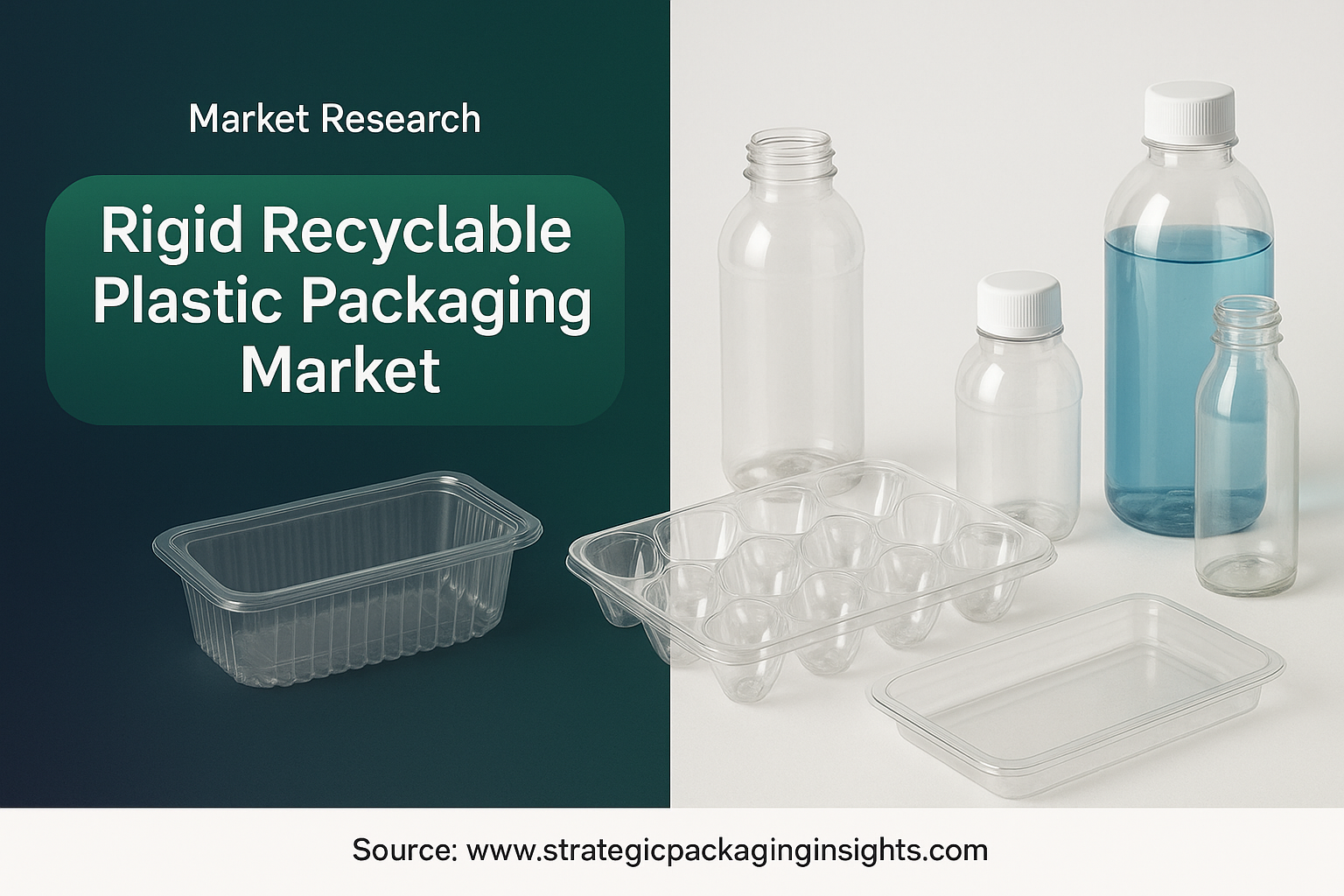
Dive into the Rigid Recyclable Plastic Packaging Market, analyzing its growth from 2017 to 2033. Discover key drivers, market size implications, segment intelligence, and strategic recommendations.
Market Storyline (Historic to Forecast)
The Rigid Recyclable Plastic Packaging Market has undergone significant transformation from 2017 to 2023, driven by increasing environmental awareness and regulatory pressures. As we look towards the forecast period of 2025 to 2033, the market is poised for continued growth, fueled by technological advancements and a shift towards sustainable packaging solutions. The historic period laid the groundwork for innovations that are expected to propel the market forward, with a focus on reducing carbon footprints and enhancing recyclability.
https://www.strategicpackaginginsights.com/report/rigid-recyclable-plastic-packaging-market
What Drives Growth
The growth of the Rigid Recyclable Plastic Packaging Market is primarily driven by the rising demand for sustainable packaging solutions across various industries. Consumer preferences are shifting towards eco-friendly products, prompting manufacturers to adopt recyclable materials. Additionally, stringent government regulations aimed at reducing plastic waste are compelling companies to innovate and invest in recyclable packaging. Technological advancements in material science are also enabling the development of more durable and versatile recyclable plastics, further boosting market growth.
Market Size Interpretation
The base year market size of $120 billion in 2024 indicates a robust foundation for the Rigid Recyclable Plastic Packaging Market. By 2033, the market is projected to reach $180 billion, reflecting a compound annual growth rate (CAGR) of 4.5%. This growth trajectory underscores the increasing adoption of recyclable packaging solutions across various sectors. The expansion in market size signifies not only a growing consumer base but also the potential for significant returns on investment for companies that prioritize sustainability and innovation in their packaging strategies.
Segment Intelligence
| Segment | Strategic Insights |
|---|---|
| Material Type | Polyethylene and Polypropylene are leading the market due to their versatility and recyclability. Polyethylene Terephthalate is gaining traction in the beverage industry for its lightweight and durable properties. |
| Application | The Food & Beverages sector dominates the application segment, driven by the need for safe and sustainable packaging. Healthcare and Personal Care are also significant contributors, with increasing demand for hygienic and recyclable solutions. |
| End-User | Retail and E-commerce are major end-users, leveraging recyclable packaging to enhance brand image and meet consumer expectations. The Healthcare sector is also a key player, focusing on sustainable packaging for medical supplies. |
| Region | Asia Pacific is the fastest-growing region, driven by rapid industrialization and increasing environmental awareness. North America and Europe are mature markets, with established recycling infrastructures supporting growth. |
End-User Implications
For end-users, the shift towards rigid recyclable plastic packaging presents both opportunities and challenges. Companies in the Retail and E-commerce sectors can enhance their brand reputation by adopting sustainable packaging solutions, aligning with consumer preferences for eco-friendly products. In the Healthcare industry, recyclable packaging ensures compliance with regulatory standards while maintaining product integrity. However, end-users must navigate the complexities of integrating new materials into existing supply chains and ensure that their packaging solutions meet both functional and environmental criteria.
Investment & Strategy Lens
Investors and companies looking to capitalize on the growth of the Rigid Recyclable Plastic Packaging Market should focus on innovation and sustainability. Investing in research and development to create advanced recyclable materials can provide a competitive edge. Strategic partnerships with recycling companies and technology providers can enhance supply chain efficiency and sustainability. Additionally, companies should consider expanding their presence in emerging markets, where demand for recyclable packaging is on the rise.
SWOT Matrix
| Strengths | Weaknesses | Opportunities | Threats |
|---|---|---|---|
| Strong regulatory support for recycling initiatives | High initial investment costs for new technologies | Growing consumer demand for sustainable packaging | Volatility in raw material prices |
| Technological advancements in material science | Limited recycling infrastructure in developing regions | Expansion into emerging markets | Intense competition from alternative packaging materials |
Packaging Trends Shaping This Market
Several key trends are shaping the Rigid Recyclable Plastic Packaging Market. The rise of smart packaging, which incorporates technology to enhance functionality and consumer engagement, is gaining momentum. Additionally, the use of bio-based plastics, derived from renewable resources, is becoming more prevalent as companies seek to reduce their environmental impact. The trend towards lightweight packaging is also significant, as it reduces transportation costs and carbon emissions. These trends highlight the industry's commitment to innovation and sustainability.
Outlook & Strategic Recommendations
The outlook for the Rigid Recyclable Plastic Packaging Market is positive, with sustained growth expected over the forecast period. Companies should prioritize sustainability and innovation in their packaging strategies to remain competitive. Investing in advanced materials and technologies will be crucial to meeting consumer demands and regulatory requirements. Additionally, expanding into emerging markets and forming strategic partnerships can provide new growth opportunities. By aligning their strategies with market trends and consumer preferences, companies can position themselves for long-term success in the evolving packaging landscape.