
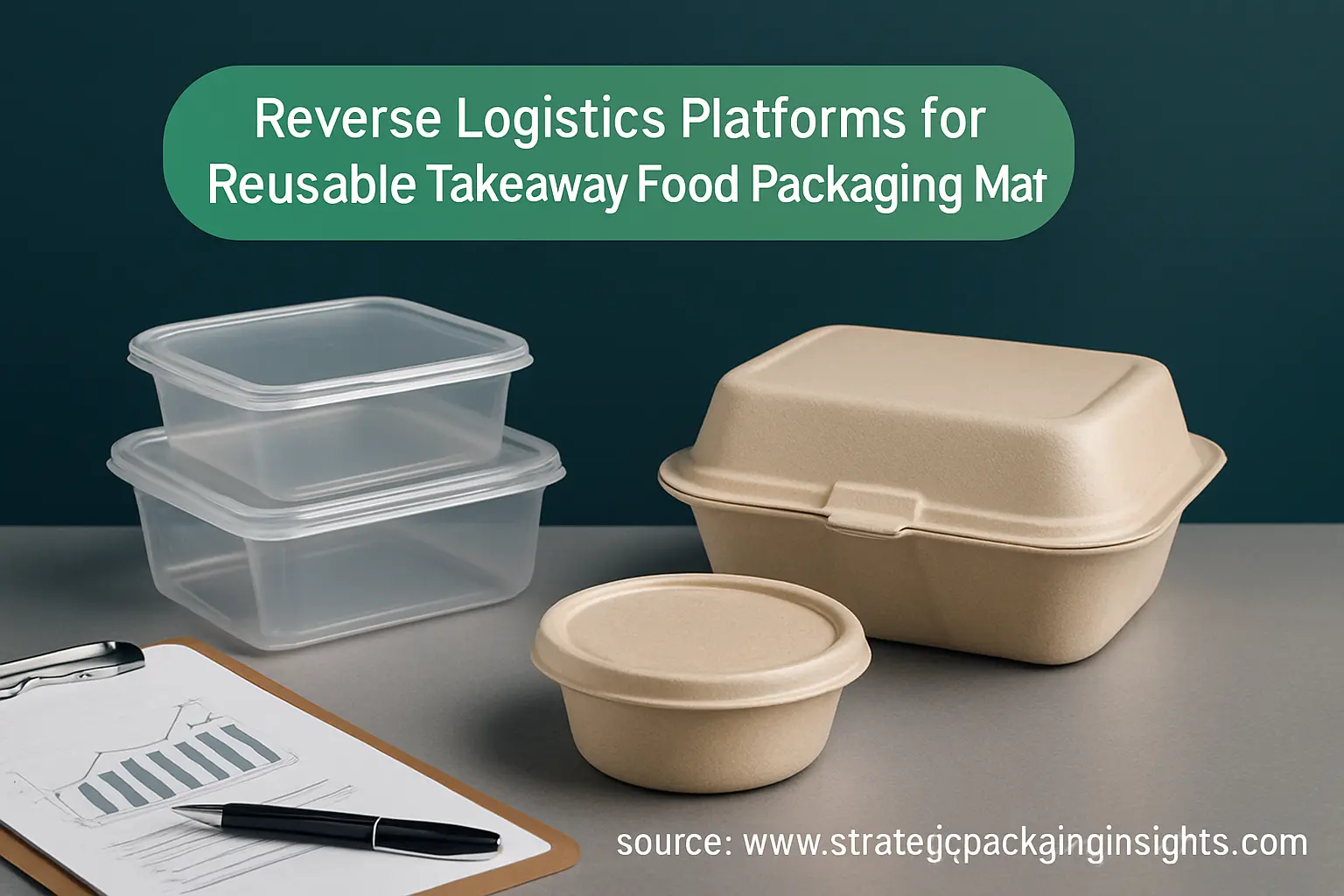
Explore the dynamic growth and strategic opportunities in the Reverse Logistics Platforms for Reusable Takeaway Food Packaging Market from 2018 to 2034, with a focus on market size, CAGR, segment landscape, and stakeholder impact.
Strategic Market Overview
The Reverse Logistics Platforms for Reusable Takeaway Food Packaging Market is emerging as a pivotal component in the sustainable packaging industry. As environmental concerns and regulatory pressures mount, businesses are increasingly adopting reverse logistics solutions to manage reusable takeaway food packaging efficiently. This market is characterized by innovative platforms that facilitate the tracking, collection, and cleaning of reusable packaging, thereby reducing waste and promoting sustainability.
From 2018 to 2034: Evolution of the Market
Between 2018 and 2024, the market witnessed a gradual shift from traditional single-use packaging to reusable alternatives, driven by heightened consumer awareness and stringent environmental regulations. The base year of 2025 marked a significant milestone with a market size of $645.75 million. Looking ahead to the forecast period of 2026 to 2034, the market is poised for robust growth, propelled by technological advancements and increased adoption across various sectors.
Interpreting Market Size & CAGR
In 2025, the Reverse Logistics Platforms for Reusable Takeaway Food Packaging Market was valued at $645.75 million. By 2034, it is projected to reach $1.61 billion, reflecting a compound annual growth rate (CAGR) of 10.7%. This impressive growth trajectory underscores the market's potential as businesses and consumers alike prioritize sustainability and cost-efficiency in packaging solutions.
Segment Landscape
| Segment | Details |
|---|---|
| Platform Type | Tracking Software, Deposit-Return Platforms, Washing-Network Platforms |
| Packaging Type | Reusable Bowls, Cups, Containers, Crates |
| End Use | Restaurants, QSR, Food Delivery, Campuses |
| Deployment | Cloud-Based, App-Based, Integrated POS |
| Region | Asia Pacific, North America, Latin America, Europe, Middle East & Africa |
The segment landscape reveals a diverse array of platforms and packaging types catering to various end-use applications. Tracking software and deposit-return platforms are gaining traction for their ability to streamline operations and enhance user experience. Reusable bowls and containers are particularly popular among restaurants and food delivery services, while cloud-based and app-based deployments offer flexibility and scalability.
Value Chain & Stakeholder Impact
The value chain of the Reverse Logistics Platforms for Reusable Takeaway Food Packaging Market involves multiple stakeholders, including technology providers, packaging manufacturers, logistics companies, and end-users. Each stakeholder plays a crucial role in ensuring the seamless operation of reverse logistics systems. Technology providers are at the forefront, offering innovative solutions that enhance tracking and management capabilities. Packaging manufacturers are adapting to produce durable and sustainable products, while logistics companies facilitate the efficient collection and redistribution of reusable packaging.
Opportunities vs Constraints
Opportunities in this market are abundant, driven by the increasing demand for sustainable packaging solutions and the potential for cost savings through reduced waste. However, constraints such as high initial setup costs, logistical challenges, and the need for consumer education pose significant hurdles. Overcoming these constraints requires strategic investments in technology and infrastructure, as well as collaborative efforts among stakeholders to promote awareness and adoption.
SWOT Analysis
| Strengths | Weaknesses | Opportunities | Threats |
|---|---|---|---|
| Strong demand for sustainable solutions | High initial costs | Expansion into emerging markets | Regulatory changes |
| Technological advancements | Logistical complexities | Partnerships with food service providers | Competition from traditional packaging |
The SWOT analysis highlights the market's strengths in meeting the demand for sustainable solutions and leveraging technological advancements. Weaknesses include high initial costs and logistical complexities, while opportunities lie in expanding into emerging markets and forming strategic partnerships. Threats such as regulatory changes and competition from traditional packaging must be navigated carefully.
Technology, Regulation & Sustainability Impact
Technology plays a pivotal role in the evolution of reverse logistics platforms, with advancements in IoT, AI, and blockchain enhancing tracking and management capabilities. Regulatory frameworks are increasingly supportive of sustainable packaging initiatives, providing incentives for businesses to adopt reusable solutions. Sustainability remains a core focus, with stakeholders committed to reducing environmental impact and promoting circular economy principles.
Strategic Outlook to 2034
Looking ahead to 2034, the Reverse Logistics Platforms for Reusable Takeaway Food Packaging Market is set to experience continued growth and innovation. Strategic priorities for stakeholders include investing in technology, expanding market reach, and fostering collaborations to drive adoption. As sustainability becomes an integral part of business operations, the market is poised to play a crucial role in shaping the future of packaging solutions.