
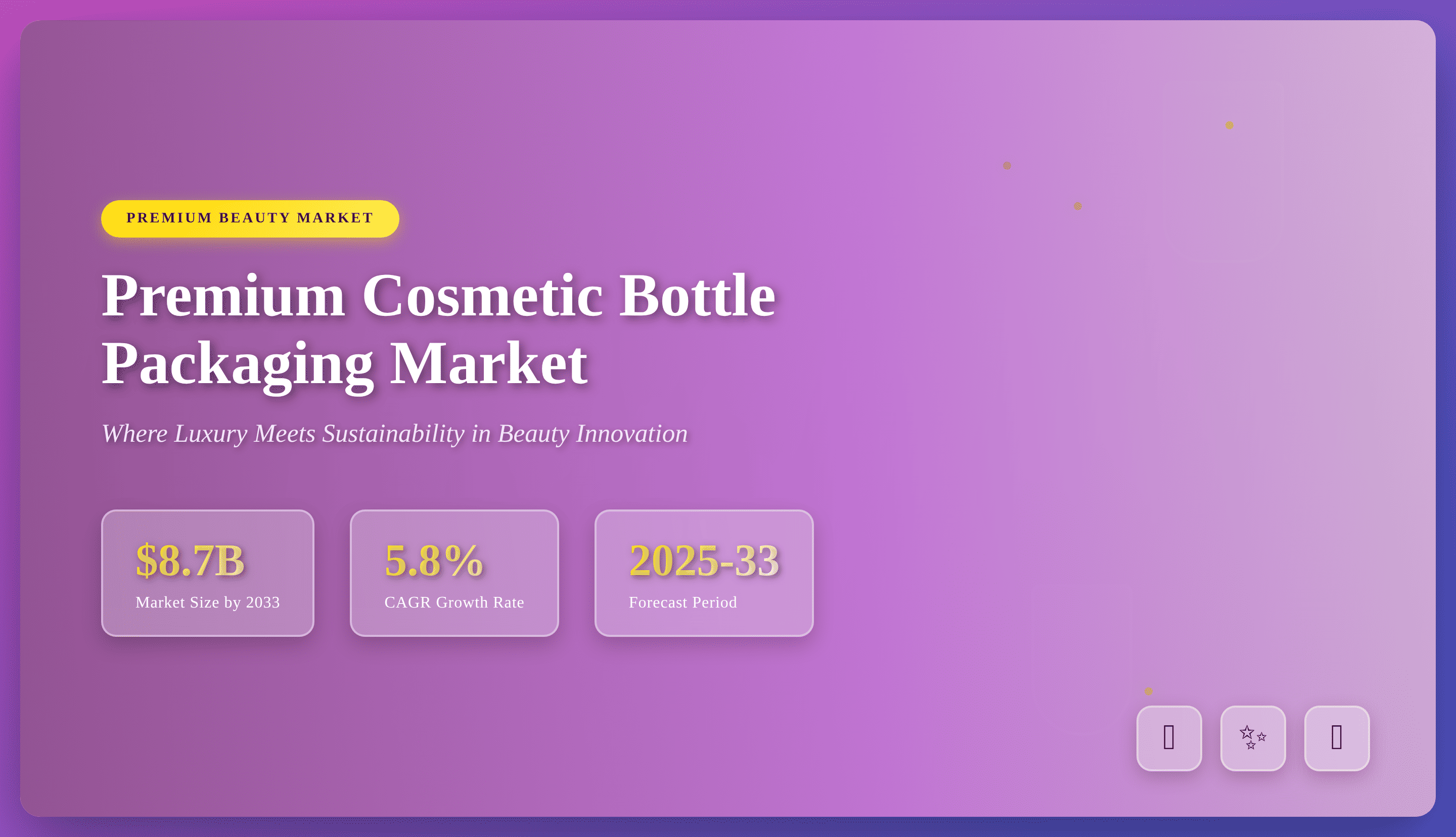
The premium cosmetic bottle packaging market was valued at $5.2 billion in 2024 and is projected to reach $8.7 billion by 2033, growing at a CAGR of 5.8% during the forecast period 2025-2033.
The beauty and cosmetics industry has always been synonymous with elegance, sophistication, and innovation. As consumer preferences evolve and environmental consciousness grows, the premium cosmetic bottle packaging market stands at an exciting crossroads where luxury meets sustainability. Valued at $5.2 billion in 2024 and projected to reach $8.7 billion by 2033, this market is experiencing remarkable growth at a compound annual growth rate of 5.8%, reflecting fundamental shifts in how beauty brands approach packaging design and consumer engagement.
The demand for premium cosmetic bottle packaging extends far beyond mere functionality. In today's competitive marketplace, packaging serves as a critical touchpoint between brands and consumers, communicating brand values, quality standards, and environmental responsibility. As disposable incomes rise globally and consumers become increasingly discerning about the products they purchase, the role of premium packaging in differentiating brands and creating memorable unboxing experiences has never been more important.
https://www.strategicpackaginginsights.com/report/premium-cosmetic-bottle-packaging-market
The Luxury Cosmetics Driving Force
The surge in demand for luxury and high-end cosmetic products represents the primary catalyst driving premium packaging growth. Modern consumers view personal care and grooming as essential investments in their well-being and self-image. This shift in perspective has transformed cosmetics from simple commodities into lifestyle choices that reflect personal values and aspirations. Social media platforms and beauty influencers have amplified this trend, creating unprecedented visibility for premium cosmetic brands and their packaging innovations.
The rise in disposable income, particularly in emerging economies, has expanded the consumer base for luxury cosmetics significantly. Markets that once prioritized affordability now demonstrate growing appetite for premium products that offer superior quality and aesthetic appeal. This economic transformation creates substantial opportunities for packaging manufacturers who can deliver solutions that meet the elevated expectations of this expanding customer segment.
Material Choices Defining Premium Appeal
The material segment of the premium cosmetic bottle packaging market reveals fascinating insights into consumer preferences and brand positioning strategies. Glass remains the material of choice for luxury packaging, offering an unmatched premium aesthetic that communicates quality and sophistication. The recyclability of glass aligns perfectly with growing environmental concerns, making it an ideal choice for brands seeking to balance luxury with sustainability. However, the fragility and higher cost of glass present ongoing challenges that manufacturers must navigate carefully.
Plastic packaging has evolved dramatically, with technological advances enabling the production of high-quality, aesthetically pleasing bottles that rival glass in appearance while offering superior durability and cost-effectiveness. The development of recycled plastics and biodegradable alternatives has further enhanced plastic's appeal, allowing brands to embrace sustainable practices without compromising on visual impact or functionality. Metal packaging, though less common, occupies a unique niche in the premium segment, particularly for perfumes and high-end skincare products where its durability and distinctive appearance create powerful brand differentiation.
Application Diversity Across Beauty Categories
The premium packaging market serves diverse beauty categories, each with distinct requirements and growth trajectories. Skincare products command a significant market share, driven by increasing consumer focus on anti-aging solutions and specialized treatments. Packaging for skincare emphasizes both protection and presentation, with designs that preserve product integrity while creating visually compelling shelf presence. The functionality of skincare packaging often incorporates innovative dispensing mechanisms that enhance user experience and product longevity.
Haircare products represent another substantial segment, with packaging solutions designed to accommodate various product types from shampoos and conditioners to specialized styling products. The diversity of haircare formulations demands versatile packaging that can handle different viscosities and chemical compositions while maintaining premium aesthetics. Perfume packaging occupies a uniquely luxury-oriented space where intricate designs, unique shapes, and premium materials combine to create packaging that serves as both product container and decorative object.
Sustainability Reshaping Industry Standards
Perhaps no trend has impacted the premium cosmetic bottle packaging market more profoundly than the shift toward sustainable and eco-friendly solutions. Environmental consciousness has evolved from niche concern to mainstream priority, with consumers actively seeking products packaged in recyclable, biodegradable, or refillable materials. This transformation presents both challenges and opportunities for packaging manufacturers, requiring significant investment in research and development to create innovative solutions that meet aesthetic standards while adhering to sustainability principles.
Brands are responding with creative approaches including refillable packaging systems that allow consumers to repurchase product refills rather than entirely new containers. This strategy not only reduces environmental impact but also creates ongoing customer engagement and loyalty. The integration of recycled materials into premium packaging demonstrates that sustainability and luxury need not be mutually exclusive, as advanced manufacturing techniques enable the production of high-quality packaging from environmentally responsible sources.
Regional Market Dynamics and Growth Patterns
Geographic analysis reveals distinct regional patterns that shape market development and opportunity. The United States leads with a market size of $1.2 billion and 6% annual growth, driven by strong demand for luxury cosmetics and a well-established e-commerce infrastructure. However, stringent environmental regulations and packaging material requirements create compliance challenges that manufacturers must address proactively.
China emerges as a powerhouse market valued at $1 billion with impressive 8% growth, fueled by an expanding middle class and increasing consumer spending on premium cosmetics. The Chinese government's emphasis on sustainability and environmental protection has accelerated the shift toward eco-friendly packaging solutions, though challenges related to counterfeit products and regulatory compliance persist. Germany represents Europe's leading market at $800 million with 5% growth, where strong emphasis on quality and innovation drives demand for sophisticated packaging solutions.
Japan's market, valued at $700 million with 4% growth, reflects unique demographic trends including an aging population driving demand for anti-aging and specialized skincare products. The country's focus on technological innovation in packaging creates opportunities for advanced solutions that enhance functionality and user experience. The United Arab Emirates rounds out key markets with $500 million in value and 7% growth, benefiting from a thriving tourism industry and strong demand for luxury cosmetics among both residents and visitors.
Customization and Personalization Trends
The growing demand for customization and personalization represents a transformative trend reshaping premium cosmetic packaging. Modern consumers seek products that reflect their individual style and preferences, driving brands to offer customizable packaging options that allow choice in designs, colors, and finishes. Advanced printing technologies and digital platforms enable efficient production of customized packaging solutions that cater to diverse consumer needs while maintaining cost-effectiveness.
This personalization trend extends beyond mere aesthetics to include smart packaging technologies such as QR codes and NFC tags that enhance consumer engagement. These technologies provide opportunities for brands to deliver additional product information, usage instructions, and exclusive content, creating interactive experiences that strengthen customer relationships and brand loyalty. The ability to command premium pricing for personalized products makes this trend particularly attractive for manufacturers seeking to differentiate their offerings.
Navigating Challenges in a Competitive Landscape
Despite promising growth prospects, the premium cosmetic bottle packaging market faces significant challenges that require strategic navigation. Raw material price volatility poses ongoing concerns, with costs for glass, plastic, and metal fluctuating due to supply chain disruptions, geopolitical tensions, and regulatory changes. These fluctuations impact production costs and profit margins, requiring manufacturers to develop flexible pricing strategies and supplier relationships.
The intensely competitive market landscape, characterized by numerous global and regional players, creates pressure on pricing and margins. Companies must continuously innovate to maintain competitive advantages, investing in research and development to create distinctive packaging solutions that justify premium positioning. Stringent regulations governing packaging materials and processes add complexity, requiring careful attention to compliance while maintaining cost-effectiveness and product quality.
Future Outlook and Market Evolution
The premium cosmetic bottle packaging market stands poised for continued expansion through 2033, driven by converging trends favoring luxury, sustainability, and innovation. The integration of advanced technologies, development of novel materials, and growing consumer emphasis on environmental responsibility will shape market evolution in coming years. Success will belong to manufacturers who can balance aesthetic appeal with functional performance and environmental stewardship, creating packaging solutions that resonate with increasingly sophisticated and conscientious consumers. As the beauty industry continues its dynamic evolution, premium packaging will remain essential to brand differentiation and consumer engagement in an ever more competitive marketplace.