
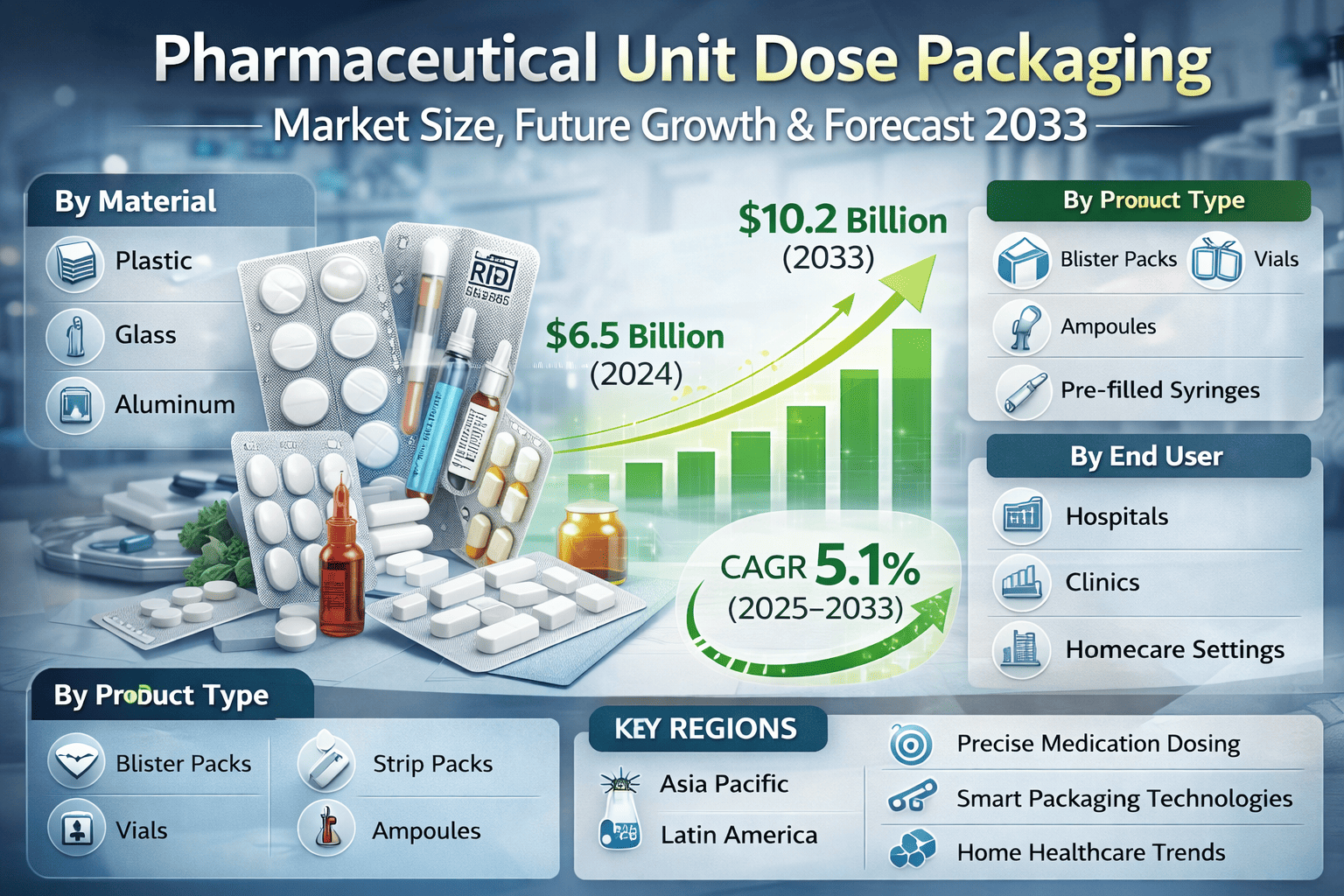
The pharmaceutical unit dose packaging market was valued at $6.5 billion in 2024 and is projected to reach $10.2 billion by 2033, growing at a CAGR of 5.1% during the forecast period 2025-2033.
The pharmaceutical unit dose packaging market is undergoing a substantial transformation, driven by rising demand for patient safety, precision dosing, and advanced packaging technologies. Valued at $6.5 billion in 2024, the market is projected to reach $10.2 billion by 2033, growing at a compound annual growth rate of 5.1% during the forecast period 2025-2033. This steady expansion reflects a broader shift in how healthcare systems around the world approach medication management, from large multi-dose containers to individualized, carefully measured packaging formats.
https://www.strategicpackaginginsights.com/report/pharmaceutical-unit-dose-packaging-market
What is Pharmaceutical Unit Dose Packaging?
Unit dose packaging refers to packaging systems that deliver a single, pre-measured dose of medication per package unit. This format is widely used in hospitals, clinics, long-term care facilities, and increasingly in homecare settings. By eliminating the need for manual measuring or dispensing, unit dose packaging significantly reduces the risk of medication errors, which remain a leading cause of preventable patient harm globally. Whether it is a blister pack containing a single tablet or a pre-filled syringe holding one precise injection dose, these packaging formats are built around the principle of accuracy and safety.
Key Drivers Shaping Market Growth
Several interconnected forces are pushing the pharmaceutical unit dose packaging market forward. The growing prevalence of chronic diseases such as diabetes, cardiovascular conditions, and respiratory disorders has placed complex, multi-medication regimens at the center of patient care. Managing these regimens accurately depends heavily on reliable dosing formats, making unit dose packaging an essential component of modern treatment protocols.
The rising global population of elderly individuals further amplifies this demand. Older patients often manage multiple medications simultaneously and are more susceptible to dosing errors. Unit dose packaging addresses this vulnerability by providing clear, straightforward dosing guidance built into the packaging itself.
Personalized medicine is another powerful driver. As healthcare moves away from one-size-fits-all treatments toward individualized therapy plans, the flexibility of unit dose packaging becomes increasingly valuable. Packaging solutions can be tailored to meet unique patient requirements, accommodating specific dosage strengths, delivery formats, and medication schedules.
Technological Innovation as a Competitive Differentiator
Among the most exciting developments in this market is the integration of smart technologies into packaging solutions. RFID tags, QR codes, and IoT-enabled packaging are transforming unit dose systems into interactive tools for medication management. These technologies allow real-time tracking of medication usage, providing healthcare providers with actionable data on patient adherence and treatment outcomes.
Artificial intelligence is also making inroads, helping to analyze usage patterns and predict adherence issues before they become clinical problems. The development of tamper-evident and child-resistant designs adds another layer of safety and regulatory compliance. As these technologies evolve, they are expected to become standard features across hospital and homecare packaging formats, redefining what a packaging solution can deliver beyond simple containment.
Material Trends: Plastic, Glass, and Aluminum
The choice of packaging material plays a critical role in product protection, cost management, and environmental impact. Plastic remains the dominant material due to its versatility, affordability, and ease of manufacturing. It offers strong barrier properties and can be molded into diverse shapes, making it ideal for high-volume production of blister and strip packs. Growing interest in eco-friendly alternatives is driving innovation in biodegradable and recyclable plastics, aligning the market with broader sustainability goals.
Glass continues to hold a valued position, particularly for sensitive biologic medications that require superior chemical inertness. Despite its higher cost and fragility, glass remains the preferred choice in applications where contamination risk must be minimized. Aluminum is gaining ground steadily, recognized for its excellent barrier properties against moisture, light, and oxygen. Its lightweight nature and recyclability make it increasingly attractive in a market where sustainability credentials are becoming commercially important.
Product Types Driving Demand
Blister packs lead the product type segment, favored for their intuitive design, patient-friendly dispensing, and strong protection against environmental factors. Strip packs offer a more cost-effective alternative for less sensitive medications. Vials and ampoules serve the liquid medication segment effectively, while pre-filled syringes are experiencing accelerating demand as injectable therapies become more prevalent across therapeutic areas such as oncology, immunology, and diabetes management.
End Users and Regional Dynamics
Hospitals account for the largest share of unit dose packaging consumption, driven by the critical need for dosing precision in clinical environments where medication errors carry serious consequences. Clinics follow closely, while homecare settings represent the fastest-growing end-user segment. The trend toward home-based treatment, particularly in developed markets where healthcare costs are high, is increasing demand for user-friendly packaging that empowers patients to manage medications independently and accurately.
Regionally, North America holds the leading market position with the United States contributing a market value of $2.1 billion. Germany anchors the European market at $1.5 billion, supported by strict EU regulatory standards that push manufacturers toward innovative, compliant solutions. Japan's market, valued at $1.2 billion, benefits from one of the world's most rapidly aging populations. China and India are posting some of the highest growth rates globally, at 6% and 7% respectively, as their healthcare infrastructure expands rapidly and demand for advanced pharmaceutical packaging rises accordingly.
Challenges That Manufacturers Must Navigate
Despite positive growth momentum, the market faces real obstacles. The high cost of implementing smart packaging technologies can be prohibitive for smaller manufacturers, creating a gap between large multinational players and regional enterprises. Navigating a complex, fragmented regulatory environment across different countries requires significant investment in compliance and quality assurance, adding to operational costs and development timelines. These challenges are particularly acute in emerging markets where regulatory frameworks are still maturing.
Looking Ahead to 2033
The pharmaceutical unit dose packaging market stands at an inflection point where safety, technology, and sustainability converge. Companies that invest in eco-friendly materials, integrate IoT capabilities into their packaging platforms, and maintain rigorous compliance with evolving regulatory requirements will be best positioned to capture growing market share. The shift toward home healthcare, personalized medicine, and real-time medication monitoring will continue to generate new opportunities for innovation across every product and end-user segment.
As patient-centered care becomes the universal standard in global healthcare, the packaging that delivers medication safely, accurately, and conveniently will play an ever-more central role in treatment success.