
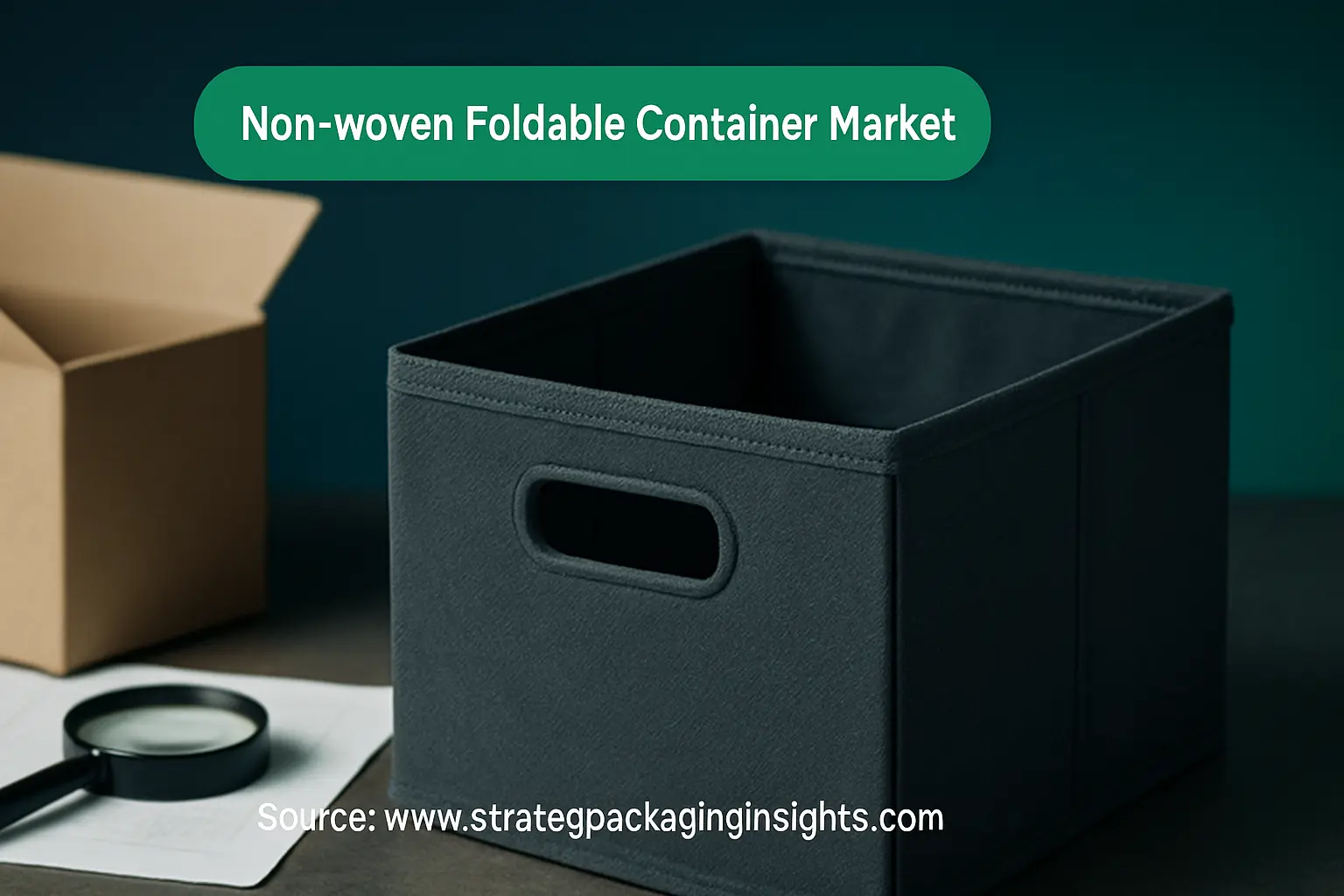
Explore the Non-woven Foldable Container Market from 2018 to 2034, analyzing growth drivers, market size, segment intelligence, and strategic recommendations for stakeholders.
Market Storyline (Historic to Forecast)
The Non-woven Foldable Container Market has experienced significant evolution from 2018 through 2024, setting the stage for robust growth projected through 2034. Initially, the market was driven by the increasing demand for sustainable and reusable packaging solutions. As environmental concerns heightened, the adoption of non-woven materials, known for their durability and eco-friendliness, became more prevalent. By 2025, the market size reached $3.88 billion, reflecting a growing consumer preference for foldable and space-efficient storage solutions.
https://www.strategicpackaginginsights.com/report/non-woven-foldable-container-market
Looking ahead to 2034, the market is expected to expand to $8.18 billion, driven by technological advancements in material production and a broader application scope. The forecast period anticipates a compound annual growth rate (CAGR) of 8.6%, underscoring the market's potential for sustained expansion.
What Drives Growth
The growth of the Non-woven Foldable Container Market is propelled by several key factors. Firstly, the increasing awareness and regulatory push towards sustainable packaging solutions have accelerated the adoption of non-woven materials. Secondly, the rise of e-commerce and the need for efficient logistics solutions have bolstered demand for foldable containers that optimize space and reduce shipping costs. Additionally, innovations in non-woven fabric technology, offering enhanced strength and versatility, have expanded the market's application range, further driving growth.
Market Size Interpretation
The base year market size of $3.88 billion in 2025 indicates a well-established market with significant room for growth. By 2034, the market is projected to reach $8.18 billion, reflecting a CAGR of 8.6%. This growth trajectory suggests a strong market potential, driven by increasing consumer demand for sustainable and versatile storage solutions. The substantial market size expansion highlights opportunities for new entrants and existing players to innovate and capture market share.
Segment Intelligence
| Segment | Strategic Insights |
|---|---|
| By Product Type | Foldable Storage Boxes, Tote Containers, Retail Bins, and Reusable Organizer Containers are witnessing increased demand due to their versatility and space-saving features, appealing to both consumers and businesses. |
| By Material Type | PP Nonwoven, PET Nonwoven, and Laminated Nonwoven materials are favored for their durability and eco-friendliness, with PP Nonwoven leading due to cost-effectiveness and recyclability. |
| By Application | Retail Storage, Home Organization, Logistics, and Promotional Packaging applications are expanding, with logistics and e-commerce driving significant demand for efficient and sustainable packaging solutions. |
| By End Use | Retailers, Households, E-commerce, and Logistics Providers are key end-users, with e-commerce and logistics providers increasingly adopting foldable containers to optimize operations. |
| Region | Asia Pacific, North America, Latin America, Europe, and Middle East & Africa are key regions, with Asia Pacific leading due to manufacturing capabilities and growing consumer markets. |
End-User Implications
For end-users such as retailers and logistics providers, the adoption of non-woven foldable containers offers significant operational efficiencies and cost savings. Retailers benefit from enhanced product display and storage solutions, while logistics providers gain from reduced shipping costs and improved space utilization. Households and e-commerce platforms also stand to benefit from the convenience and sustainability of these containers, aligning with consumer preferences for eco-friendly products.
Investment & Strategy Lens
Investors and businesses should focus on strategic partnerships and technological innovations to capitalize on the market's growth potential. Investing in research and development to enhance material properties and expand application areas can provide a competitive edge. Additionally, exploring regional expansion, particularly in emerging markets like Asia Pacific, can unlock new revenue streams and market opportunities.
SWOT Matrix
| Strengths | Weaknesses | Opportunities | Threats |
|---|---|---|---|
| Eco-friendly and sustainable materials | Higher initial costs compared to traditional materials | Growing demand for sustainable packaging solutions | Intense competition and price sensitivity |
| Versatile and space-saving designs | Limited awareness in certain regions | Expansion in e-commerce and logistics sectors | Regulatory changes and material availability |
Packaging Trends Shaping This Market
Several packaging trends are shaping the Non-woven Foldable Container Market. The shift towards sustainable and recyclable materials is a primary trend, driven by consumer demand and regulatory pressures. Additionally, the integration of smart packaging solutions, such as RFID tags for inventory management, is gaining traction. Customization and personalization of packaging to enhance brand identity and consumer engagement are also emerging trends, offering businesses new avenues for differentiation.
Outlook & Strategic Recommendations
The outlook for the Non-woven Foldable Container Market is positive, with significant growth opportunities driven by sustainability trends and technological advancements. Businesses should focus on innovation and strategic partnerships to enhance product offerings and expand market reach. Emphasizing sustainability and aligning with consumer preferences for eco-friendly solutions will be crucial for long-term success. Additionally, exploring new applications and regional markets can provide a competitive advantage and drive future growth.