
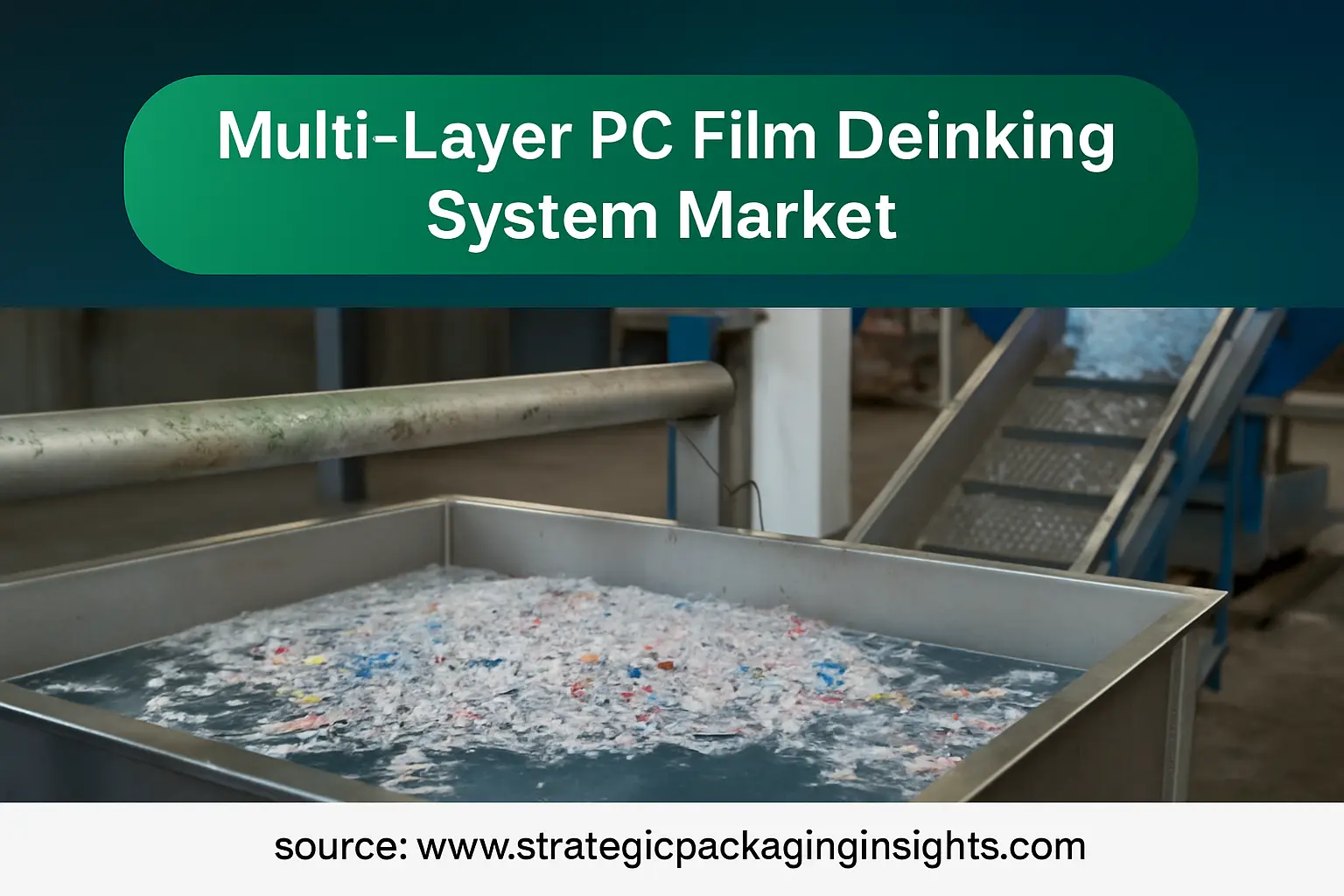
Explore the Multi-Layer PCR Film Deinking System Market with an in-depth analysis of market trends, growth drivers, segment landscape, and strategic outlook from 2025 to 2033.
Strategic Market Overview
The Multi-Layer PCR Film Deinking System Market is poised for significant growth, driven by increasing demand for sustainable packaging solutions and advancements in recycling technologies. As industries worldwide pivot towards eco-friendly practices, the need for efficient deinking systems that can handle complex multi-layer films is becoming more pronounced. This market is characterized by technological innovation, regulatory influences, and a growing emphasis on sustainability, making it a focal point for stakeholders across the value chain.
https://www.strategicpackaginginsights.com/report/multi-layer-pcr-film-deinking-system-market
From 2017 to 2033: Evolution of the Market
Between 2017 and 2023, the market witnessed steady growth, primarily fueled by the rising awareness of environmental issues and the subsequent demand for recycled materials. The introduction of advanced deinking technologies during this period laid the groundwork for future expansion. Looking ahead to 2025-2033, the market is expected to accelerate, driven by technological advancements and increased regulatory support for recycling initiatives. This evolution reflects a broader trend towards circular economies and sustainable industrial practices.
Interpreting Market Size & CAGR
In 2024, the base year, the Multi-Layer PCR Film Deinking System Market was valued at $1.2 billion. By 2033, it is projected to reach $2.8 billion, representing a robust compound annual growth rate (CAGR) of 9.5%. This growth trajectory underscores the market's potential and the increasing adoption of deinking systems across various industries. The substantial CAGR indicates a strong market momentum, driven by both demand-side and supply-side factors, including technological innovations and expanding applications in recycling and packaging.
Segment Landscape
| Component | Application | End-User | Region |
|---|---|---|---|
| Equipment | Recycling | Manufacturing | North America |
| Software | Packaging | Consumer Goods | Europe |
| Services | Printing |
The segment landscape of the market reveals diverse opportunities across components, applications, and regions. Equipment remains the largest component segment, driven by the need for advanced machinery capable of handling complex deinking processes. Software solutions are gaining traction, offering enhanced process control and efficiency. In terms of applications, recycling leads the way, reflecting the global push towards sustainable waste management. The end-user landscape is dominated by manufacturing and consumer goods sectors, both of which are increasingly integrating deinking systems into their operations. Regionally, North America and Europe are at the forefront, driven by stringent environmental regulations and a strong focus on sustainability.
Value Chain & Stakeholder Impact
The value chain of the Multi-Layer PCR Film Deinking System Market is intricate, involving multiple stakeholders from raw material suppliers to end-users. Each stakeholder plays a crucial role in ensuring the efficiency and sustainability of the deinking process. Equipment manufacturers are focusing on innovation to enhance system capabilities, while software providers are developing solutions that improve operational efficiency. Service providers are essential for maintenance and optimization, ensuring that systems operate at peak performance. End-users, particularly in manufacturing and consumer goods, are increasingly adopting these systems to meet regulatory requirements and consumer demand for sustainable products.
Opportunities vs Constraints
The market presents numerous opportunities, particularly in the development of advanced deinking technologies and the expansion of applications in emerging markets. However, constraints such as high initial investment costs and technical challenges in handling complex multi-layer films can impede growth. Overcoming these constraints requires strategic investments in research and development, as well as collaboration across the value chain to enhance system capabilities and reduce costs.
SWOT Analysis
| Strengths | Weaknesses | Opportunities | Threats |
|---|---|---|---|
| Technological innovation | High initial costs | Expansion in emerging markets | Regulatory changes |
| Strong regulatory support | Technical challenges | Growing demand for sustainability | Economic fluctuations |
The SWOT analysis highlights the market's strengths, such as technological innovation and regulatory support, which provide a solid foundation for growth. Weaknesses include high initial costs and technical challenges, which require strategic focus to overcome. Opportunities abound in emerging markets and the increasing demand for sustainable solutions. However, threats such as regulatory changes and economic fluctuations could impact market dynamics, necessitating proactive risk management strategies.
Technology, Regulation & Sustainability Impact
Technological advancements are at the heart of the market's growth, with innovations in deinking processes enhancing efficiency and effectiveness. Regulatory frameworks play a pivotal role, with governments worldwide implementing policies that encourage recycling and sustainable practices. Sustainability is a key driver, as industries seek to reduce their environmental footprint and meet consumer expectations for eco-friendly products. The interplay of technology, regulation, and sustainability is shaping the market's trajectory, creating a dynamic environment for stakeholders.
Strategic Outlook to 2033
Looking ahead to 2033, the Multi-Layer PCR Film Deinking System Market is poised for continued growth, driven by technological advancements, regulatory support, and increasing demand for sustainable solutions. Strategic priorities for stakeholders include investing in research and development, expanding into emerging markets, and enhancing collaboration across the value chain. By addressing challenges and capitalizing on opportunities, stakeholders can position themselves for success in this evolving market landscape.