
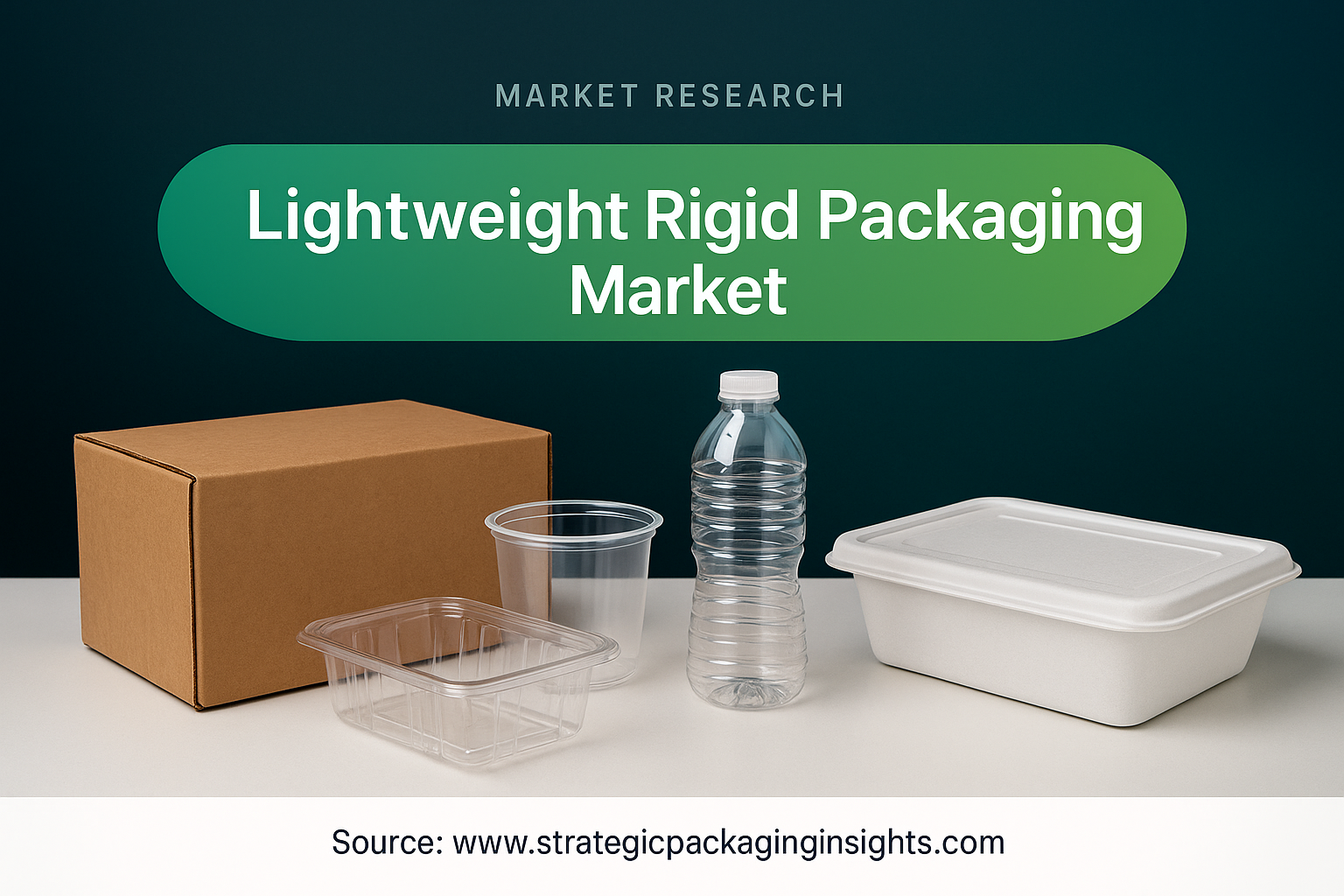
Delve into the evolution, significance, and future trajectory of the Lightweight Rigid Packaging Market, analyzing its growth, segmentation, and strategic insights for industry leaders.
Executive Market Narrative
The Lightweight Rigid Packaging Market has undergone significant transformation over the past decade, driven by technological advancements, evolving consumer preferences, and stringent environmental regulations. Initially dominated by traditional materials and methods, the market has seen a shift towards more sustainable and efficient packaging solutions. This evolution is largely attributed to the increasing demand for eco-friendly packaging options and the need for cost-effective logistics solutions. As industries across the globe strive to reduce their carbon footprint, lightweight rigid packaging has emerged as a pivotal solution, offering both durability and reduced material usage.
https://www.strategicpackaginginsights.com/report/lightweight-rigid-packaging-market
Historically, from 2017 to 2023, the market witnessed steady growth, fueled by the burgeoning e-commerce sector and the rising demand for packaged goods. The integration of innovative materials and designs has further propelled the market, enabling manufacturers to meet the diverse needs of various industries. As we move towards 2025 and beyond, the market is poised to continue its upward trajectory, driven by ongoing innovations and the increasing adoption of sustainable practices.
Why This Market Matters
The significance of the Lightweight Rigid Packaging Market cannot be overstated. It plays a crucial role in enhancing product safety, extending shelf life, and improving the overall consumer experience. In an era where sustainability is paramount, lightweight rigid packaging offers a viable solution to reduce environmental impact while maintaining product integrity. This market is essential for industries such as food and beverages, healthcare, and personal care, where packaging not only serves as a protective barrier but also as a marketing tool that influences consumer purchasing decisions.
Moreover, the market's growth is indicative of broader trends in consumer behavior and industrial practices. As consumers become more environmentally conscious, the demand for sustainable packaging solutions is expected to rise, further driving innovation and growth in this sector.
Market Size & Growth Trajectory
In 2024, the Lightweight Rigid Packaging Market was valued at $45 billion. By 2033, it is projected to reach $68 billion, reflecting a compound annual growth rate (CAGR) of 4.8%. This growth trajectory underscores the increasing demand for lightweight and sustainable packaging solutions across various industries. The market's expansion is driven by factors such as the rising popularity of e-commerce, advancements in material science, and the growing emphasis on reducing packaging waste.
Key Market Segmentation
| Segment | Description |
|---|---|
| Material Type | Includes Plastic, Metal, Glass, and Paperboard, each offering unique benefits in terms of durability, recyclability, and cost-effectiveness. |
| Application | Covers Food & Beverages, Healthcare, Personal Care, and Industrial applications, highlighting the diverse use cases of lightweight rigid packaging. |
| End-User | Encompasses BFSI, Healthcare, Retail and E-commerce, Media and Entertainment, Manufacturing, and IT and Telecommunications sectors. |
| Region | Spans Asia Pacific, North America, Europe, Latin America, and Middle East & Africa, indicating the global reach and regional dynamics of the market. |
Industry Use-Case Mapping
The diverse segments of the Lightweight Rigid Packaging Market find applications across various industries. In the food and beverages sector, lightweight rigid packaging is used to enhance product safety and extend shelf life, while in healthcare, it ensures the integrity and sterility of medical products. Personal care products benefit from aesthetically appealing and durable packaging that attracts consumers and protects contents. Industrial applications leverage the strength and durability of lightweight rigid packaging to safeguard products during transportation and storage.
In the retail and e-commerce sector, lightweight rigid packaging is crucial for reducing shipping costs and minimizing environmental impact. The manufacturing industry utilizes these packaging solutions to streamline logistics and improve operational efficiency. Across all these applications, the emphasis is on balancing functionality with sustainability, a key driver of market growth.
Competitive & Value Chain Insights
The competitive landscape of the Lightweight Rigid Packaging Market is characterized by a mix of established players and emerging innovators. Companies are focusing on developing advanced materials and technologies to enhance the performance and sustainability of their packaging solutions. Strategic partnerships, mergers, and acquisitions are common as firms seek to expand their market presence and capabilities.
The value chain of the market involves raw material suppliers, manufacturers, distributors, and end-users. Each stage of the value chain plays a critical role in ensuring the quality and efficiency of the final product. Innovations in material science and manufacturing processes are key to maintaining competitiveness and meeting the evolving demands of consumers and industries.
Short SWOT Analysis
| Strengths | Weaknesses | Opportunities | Threats |
|---|---|---|---|
| Strong demand for sustainable packaging solutions | High initial investment costs | Growing e-commerce sector | Fluctuating raw material prices |
| Innovative material advancements | Limited recycling infrastructure in some regions | Technological advancements in packaging | Regulatory challenges |
Future Outlook (2033)
Looking ahead to 2033, the Lightweight Rigid Packaging Market is expected to continue its robust growth, driven by ongoing innovations and the increasing adoption of sustainable practices. The market will likely see further advancements in material science, enabling the development of even lighter and more durable packaging solutions. As regulatory pressures mount and consumer preferences shift towards eco-friendly products, companies will need to adapt and innovate to remain competitive.
Emerging markets, particularly in Asia Pacific and Latin America, are expected to offer significant growth opportunities, driven by rising consumer demand and industrial expansion. The focus will be on developing cost-effective and sustainable packaging solutions that meet the diverse needs of these regions.
Why This Matters for Packaging Leaders
For packaging leaders, understanding the dynamics of the Lightweight Rigid Packaging Market is crucial for strategic planning and decision-making. As the market evolves, leaders must stay abreast of technological advancements and regulatory changes to capitalize on emerging opportunities. Investing in research and development, fostering strategic partnerships, and embracing sustainability will be key to maintaining a competitive edge.
Moreover, packaging leaders must recognize the importance of aligning their strategies with consumer preferences and industry trends. By doing so, they can drive innovation, enhance operational efficiency, and contribute to a more sustainable future.