
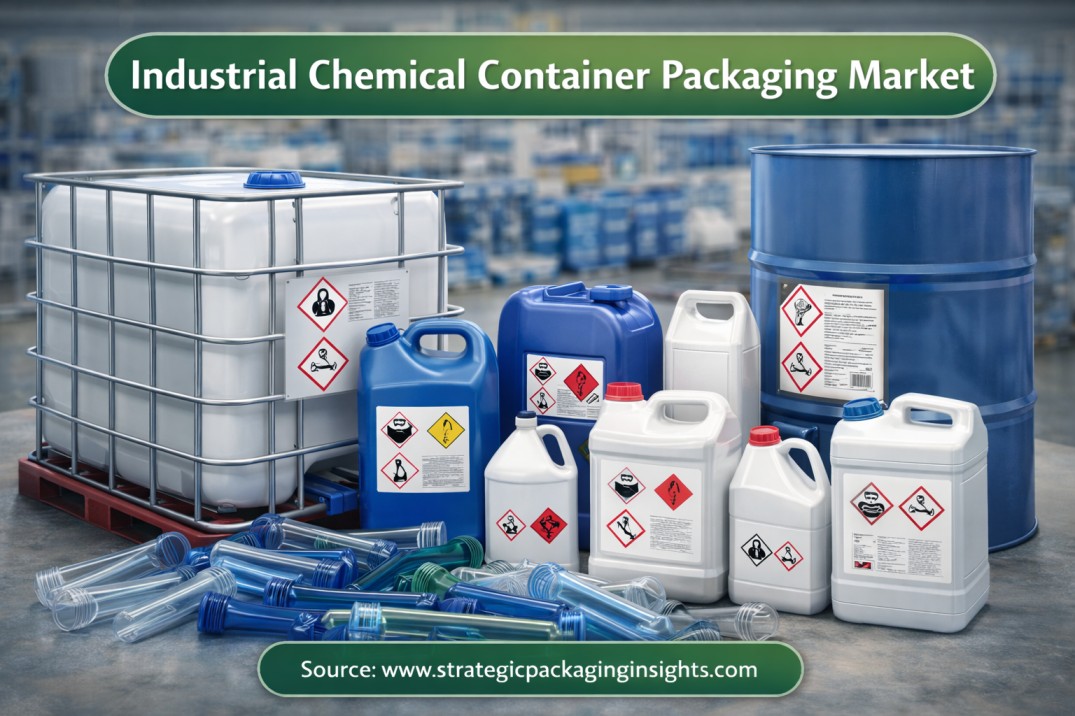
Explore the Industrial Chemical Container Packaging Market from 2017 to 2033, analyzing growth drivers, market size, segment intelligence, and strategic recommendations.
Market Storyline (Historic to Forecast)
The Industrial Chemical Container Packaging Market has undergone significant transformation from 2017 to 2023, driven by technological advancements and evolving industry needs. During this period, the market experienced steady growth, fueled by increased demand for safe and efficient packaging solutions in various industries. As we look towards the forecast period of 2025 to 2033, the market is poised for further expansion, with a projected CAGR of 4.5%. This growth trajectory is indicative of the market's resilience and adaptability to changing economic and environmental conditions.
https://www.strategicpackaginginsights.com/report/industrial-chemical-container-packaging-market
What Drives Growth
Several factors are propelling the growth of the Industrial Chemical Container Packaging Market. Firstly, the rising demand for chemicals and pharmaceuticals necessitates robust packaging solutions that ensure safety and compliance with regulatory standards. Additionally, the increasing focus on sustainability and environmental responsibility is driving innovation in packaging materials and designs. The adoption of advanced technologies, such as smart packaging and IoT-enabled containers, is also enhancing the efficiency and traceability of chemical logistics, further boosting market growth.
Market Size Interpretation
The base year market size of $12.5 billion in 2024 reflects the substantial demand for industrial chemical container packaging solutions. By 2033, the market is expected to reach $18.7 billion, underscoring a healthy CAGR of 4.5%. This growth signifies the market's robust potential and the increasing importance of packaging in ensuring the safe transportation and storage of chemicals. The expanding market size also highlights opportunities for new entrants and existing players to innovate and capture market share through strategic investments and product development.
Segment Intelligence
| Segment | Strategic Insights |
|---|---|
| Material Type | Plastic remains dominant due to its versatility and cost-effectiveness, while metal and glass are preferred for specific applications requiring enhanced durability and chemical resistance. |
| Container Type | Drums and IBCs are widely used for bulk transportation, whereas jerry cans and pails cater to smaller quantities, offering flexibility and ease of handling. |
| End-User Industry | The chemicals and pharmaceuticals sectors are the primary drivers, with food & beverages and oil & gas industries also contributing significantly to demand. |
| Region | Asia Pacific leads the market due to rapid industrialization and urbanization, followed by North America and Europe, where stringent regulations drive innovation. |
End-User Implications
For end-users in the chemicals and pharmaceuticals industries, the emphasis on safety and compliance is paramount. Packaging solutions must not only meet regulatory standards but also enhance operational efficiency and reduce environmental impact. In the food & beverages sector, packaging plays a critical role in maintaining product integrity and extending shelf life. The oil & gas industry requires robust containers that can withstand harsh conditions and prevent leaks, underscoring the need for high-quality materials and designs.
Investment & Strategy Lens
Investors and industry players should focus on strategic partnerships and collaborations to leverage technological advancements and expand their product portfolios. Investing in research and development to create sustainable and innovative packaging solutions will be crucial in gaining a competitive edge. Additionally, exploring emerging markets and diversifying product offerings can help mitigate risks and capitalize on growth opportunities.
SWOT Matrix
| Strengths | Weaknesses | Opportunities | Threats |
|---|---|---|---|
| Strong demand across multiple industries | High initial investment costs | Growing emphasis on sustainability | Stringent regulatory requirements |
| Technological advancements in packaging | Limited recycling infrastructure | Expansion in emerging markets | Volatility in raw material prices |
Packaging Trends Shaping This Market
The Industrial Chemical Container Packaging Market is witnessing several key trends that are shaping its future. The shift towards sustainable packaging solutions is driving the adoption of biodegradable and recyclable materials. Smart packaging technologies, such as RFID tags and sensors, are enhancing supply chain visibility and efficiency. Additionally, customization and personalization of packaging designs are gaining traction, allowing companies to differentiate their products and cater to specific customer needs.
Outlook & Strategic Recommendations
Looking ahead, the Industrial Chemical Container Packaging Market is set to experience continued growth and innovation. Companies should prioritize sustainability and invest in eco-friendly packaging solutions to align with consumer preferences and regulatory requirements. Embracing digital technologies and smart packaging can enhance operational efficiency and provide a competitive advantage. Strategic collaborations and partnerships will be essential in expanding market reach and driving innovation. By focusing on these areas, industry players can position themselves for success in the evolving market landscape.