
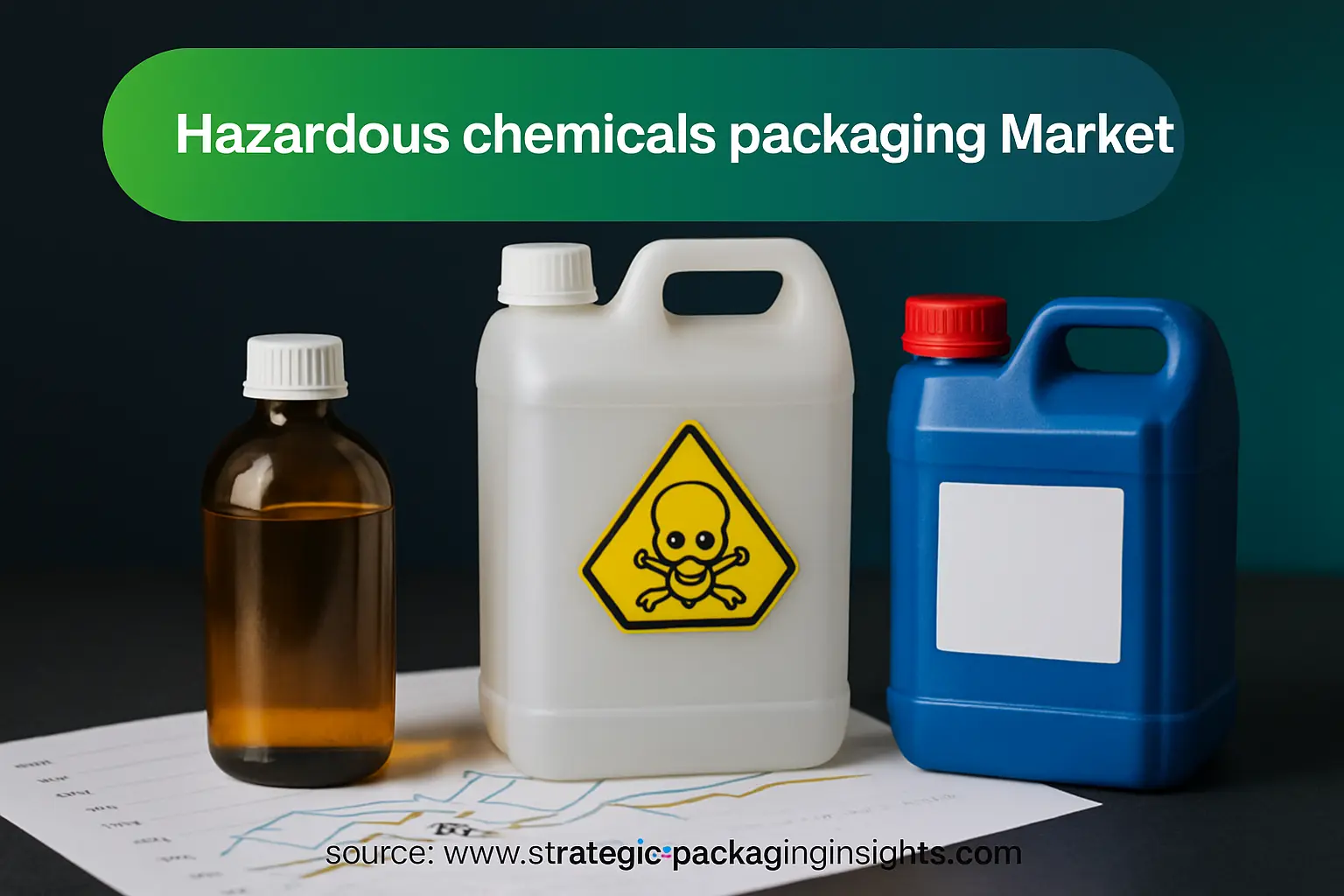
Explore the dynamics of the Hazardous Chemicals Packaging Market, including growth projections, segment analysis, regional insights, and the balance of challenges and opportunities.
Why This Market Is Gaining Attention
The Hazardous chemicals packaging Market is increasingly capturing the attention of industry stakeholders due to the rising global demand for safe and compliant packaging solutions. As industries expand and regulatory frameworks tighten, the need for robust packaging that can safely contain and transport hazardous materials is more critical than ever. This market is pivotal in ensuring environmental safety and compliance with international standards, making it a focal point for innovation and investment.
https://www.strategicpackaginginsights.com/report/hazardous-chemicals-packaging-market
Market Scale & Growth Momentum
The market size for hazardous chemicals packaging was valued at $12.72 billion in 2025 and is projected to reach $24.18 billion by 2034, reflecting a compound annual growth rate (CAGR) of 7.4%. This growth trajectory is indicative of the increasing industrial activities and the stringent regulations governing the transportation and storage of hazardous materials. The market's expansion is driven by the need for enhanced safety measures and the adoption of advanced packaging technologies.
Deep Dive into Segments
| Segment | Description |
|---|---|
| By Packaging Type | Drums, IBCs, Pails, and Jerry Cans are the primary types, each offering unique benefits in terms of capacity, durability, and ease of handling. Drums and IBCs are preferred for bulk storage, while pails and jerry cans are used for smaller quantities. |
| By Material | Steel, Plastic, and Fiberboard are the key materials. Steel offers superior strength and resistance, plastic provides versatility and cost-effectiveness, and fiberboard is favored for its lightweight and eco-friendly properties. |
| By Application | Corrosives, Flammables, and Toxics are the main applications, each requiring specific packaging solutions to prevent leaks and ensure safety during transport and storage. |
| By End Use | Chemical, Industrial, and Logistics sectors are the primary end-users, with each sector demanding tailored packaging solutions to meet their specific operational needs. |
| Region | Asia Pacific, North America, Latin America, Europe, and the Middle East & Africa are the key regions, each with distinct regulatory environments and market dynamics. |
Application & End-Use Relevance
The hazardous chemicals packaging market is crucial for various applications, including the containment of corrosive, flammable, and toxic substances. These applications are vital across multiple industries, such as chemical manufacturing, industrial processing, and logistics. The packaging solutions not only ensure the safe handling and transportation of hazardous materials but also help companies comply with stringent safety regulations, thereby minimizing environmental risks and enhancing operational efficiency.
Regional & Industry Dynamics
Regionally, the Asia Pacific is emerging as a dominant player due to rapid industrialization and increasing regulatory scrutiny. North America and Europe continue to be significant markets, driven by established industrial bases and stringent safety standards. Latin America and the Middle East & Africa are also witnessing growth, albeit at a slower pace, as they gradually adopt more rigorous safety protocols. Industry dynamics are shaped by technological advancements, regulatory changes, and the growing emphasis on sustainability.
Challenges vs Opportunities
The market faces several challenges, including the high cost of compliance with international safety standards and the need for continuous innovation to meet evolving regulatory requirements. However, these challenges also present opportunities for companies to differentiate themselves through innovative packaging solutions and sustainable practices. The increasing demand for eco-friendly materials and the integration of smart technologies in packaging are key opportunities for growth.
SWOT Overview
| Strengths | Weaknesses | Opportunities | Threats |
|---|---|---|---|
| Strong regulatory framework ensuring safety and compliance. | High cost of advanced packaging solutions. | Growing demand for sustainable and eco-friendly packaging. | Stringent regulations and potential penalties for non-compliance. |
| Technological advancements in packaging materials. | Limited awareness in emerging markets. | Integration of smart technologies for enhanced safety. | Volatility in raw material prices. |
Innovation & Sustainability Angle
Innovation in the hazardous chemicals packaging market is primarily focused on developing materials and designs that enhance safety and sustainability. Companies are investing in research and development to create packaging solutions that are not only compliant with safety standards but also environmentally friendly. The use of biodegradable materials and the incorporation of smart technologies, such as sensors for real-time monitoring, are at the forefront of this innovation drive.
What This Means for Packaging Stakeholders
For stakeholders in the hazardous chemicals packaging market, the current landscape presents both challenges and opportunities. Companies that can navigate the complex regulatory environment and invest in innovative, sustainable solutions are likely to gain a competitive edge. Collaboration across the supply chain, from material suppliers to end-users, will be crucial in driving market growth and ensuring safety and compliance. As the market continues to evolve, stakeholders must remain agile and proactive in adapting to new trends and technologies.