


Yogurt Packaging Market Outlook
The Yogurt Packaging market size was valued at USD 8.09 billion in 2025 and is anticipated to reach USD 13.20 billion by 2034, growing at a CAGR of 5.6% during the forecast period according to Strategic Packaging Insights. The market is witnessing significant growth due to the increasing demand for convenient and sustainable packaging solutions. Companies like Amcor and Berry Global are leading the charge by innovating in eco-friendly packaging materials and designs that cater to the evolving consumer preferences. The rise in health-conscious consumers opting for yogurt as a staple in their diet is further propelling the demand for diverse packaging options that maintain product integrity and extend shelf life.
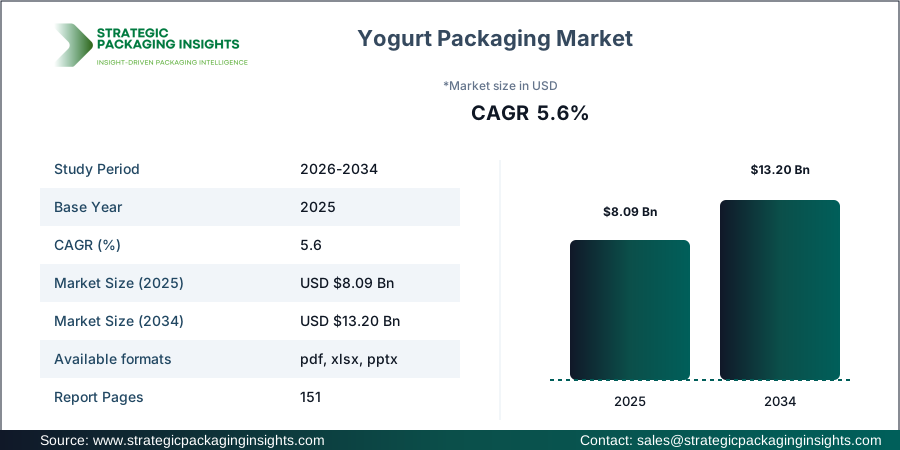
One of the most impactful drivers of the yogurt packaging market is the growing emphasis on sustainability and environmental responsibility. Governments worldwide are implementing stringent regulations to reduce plastic waste, which is pushing manufacturers to adopt recyclable and biodegradable materials. For instance, the European Union's directive on single-use plastics is encouraging companies to innovate in packaging solutions that are both functional and environmentally friendly. This regulatory push, combined with consumer demand for sustainable products, is creating a fertile ground for growth in the yogurt packaging sector.
Report Scope
| Attributes | Details |
| Report Title | Yogurt Packaging Market Size, Future Growth and Forecast 2034 |
| By Packaging Type | Cups, Tubs, Pouches, Bottles |
| By Material Type | PP, PET, Paperboard, Glass |
| By Application | Spoonable Yogurt, Drinkable Yogurt, Greek Yogurt, Plant-Based Yogurt |
| By End Use | Dairy Companies, Retail, Foodservice |
| Region | Asia Pacific, North America, Latin America, Europe, Middle East & Africa |
| Base Year | 2025 |
| Historic Period | 2018-2024 |
| Forecast Period | 2026-2034 |
| Number of Pages | 151 |
| Customization Available | Yes* |
Opportunities & Threats
The yogurt packaging market presents numerous opportunities, particularly in the realm of sustainable packaging solutions. As consumers become more environmentally conscious, there is a growing demand for packaging that minimizes environmental impact. This trend is driving innovation in biodegradable and recyclable materials, offering companies like Huhtamaki and Greiner Packaging a chance to capture market share by developing eco-friendly packaging options. Additionally, the rise of plant-based yogurts is opening new avenues for packaging solutions that cater to this niche market, providing further growth opportunities.
Another significant opportunity lies in the expansion of yogurt consumption in emerging markets. As disposable incomes rise and urbanization increases, particularly in Asia Pacific and Latin America, there is a growing demand for convenient and healthy food options like yogurt. This trend is driving the need for innovative packaging solutions that cater to diverse consumer preferences and lifestyles. Companies that can effectively tap into these markets with tailored packaging solutions stand to gain a competitive edge.
However, the yogurt packaging market also faces certain threats, primarily from the volatility in raw material prices. The cost of materials such as PET and PP can fluctuate significantly due to changes in oil prices and supply chain disruptions. This volatility can impact the profitability of packaging manufacturers and may lead to increased prices for end consumers. Additionally, the stringent regulations on plastic usage and waste management pose a challenge for companies that rely heavily on traditional plastic packaging solutions.
Drivers & Challenges
One of the primary drivers of the yogurt packaging market is the increasing consumer preference for convenience and portability. With busy lifestyles becoming the norm, consumers are seeking packaging solutions that offer ease of use and portability without compromising on product quality. This demand is driving innovation in packaging designs, such as resealable pouches and single-serve cups, which cater to on-the-go consumption. Companies like Sonoco and Pactiv Evergreen are at the forefront of developing such innovative packaging solutions that meet consumer needs.
Another significant driver is the growing focus on product differentiation in the competitive yogurt market. Packaging plays a crucial role in brand recognition and consumer appeal, prompting manufacturers to invest in unique and eye-catching designs. The use of advanced printing technologies and customizable packaging options allows brands to stand out on retail shelves and attract consumer attention. This trend is particularly evident in the premium yogurt segment, where packaging is used as a tool to convey quality and exclusivity.
Despite these drivers, the yogurt packaging market faces challenges, particularly in terms of sustainability. While there is a strong push towards eco-friendly packaging solutions, the transition from traditional materials to sustainable alternatives can be costly and complex. Companies must navigate the challenges of sourcing sustainable materials, adapting manufacturing processes, and ensuring that new packaging solutions meet regulatory standards. Additionally, consumer skepticism about the effectiveness of sustainable packaging can pose a challenge for companies trying to market these solutions.
Market Growth Factors
- The EU Packaging and Packaging Waste Regulation entered into force on February 11, 2025 and generally applies from August 12, 2026. Because it covers all packaging and sets requirements for manufacturing, composition, recoverability and recyclability, it is accelerating redesign of yogurt cups, lids, labels and secondary packs sold into Europe.
- Government-backed manufacturing investment is speeding conversion to recyclable PET and recycled-PET yogurt cups. Danone Canada's June 2025 Boucherville project combines corporate capex with Québec public support to expand production of PET yogurt cups and target 30% recycled PET content.
- New commercially available fiber-based yogurt cup platforms are broadening material choices for brands seeking lower plastic use. Huhtamaki's ProDairy launch introduced a recyclable paper cup for yogurt and dairy with less than 10% plastic content and scale-ready supply.
- U.S. recycling access for polypropylene cup formats is improving. The Recycling Partnership reported that in January 2026 polypropylene cups earned How2Recycle's Widely Recyclable designation, giving more than 60% of U.S. households access through curbside or drop-off programs.
- Recycling system investment is increasingly targeting non-bottle PET formats used in food cups and lids. The PET Recycling Coalition said that from 2025 its work is focused on PET thermoforms, including cups, trays and lids, to improve collection, sortation and end markets. [The Recycling Partnership ]
- Lightweight mono-material pack designs are reducing switching risk for yogurt producers. Amcor's March 2026 UniPak update for the dairy market kept line compatibility and all-PP recycle-ready construction while lowering material use, reinforcing demand for lightweight rigid yogurt tubs and lids. [Amcor ]
Recent Developments
- In February 2025, Huhtamaki launched ProDairy, a recyclable single-coated paper cup designed specifically for yogurt and dairy products. The company said the format cuts plastic content to below 10% while maintaining the barrier and performance needed for refrigerated dairy packaging.
- In June 2025, Danone Canada announced a million investment in its Boucherville plant to start producing PET individual yogurt cups, with an ambition to incorporate 30% recycled PET. The project is supported by the Gouvernement du Québec through Investissement Québec and RECYC-QUÉBEC, and the new Oikos cups were already being deployed nationally.
- In January 2026, Greiner Packaging said Tezza Foods had selected its K3 cardboard-plastic cup for the brand's soy-based yogurt line and was expanding distribution to more than 100 locations across the U.S. West Coast. The commercialization highlights continued adoption of reduced-plastic, shelf-differentiated yogurt cup formats by emerging brands. [Greiner Packaging ]
- In March 2026, Amcor launched a lightweighted version of its UniPak 1 kg pot for the dairy market, citing strong demand in larger yoghurt formats. The all-polypropylene, recycle-ready pack reduces material use and can cut carbon emissions by up to 9% versus Amcor's previous container of the same size while preserving line compatibility. [Amcor ]
Market Share Analysis
The competitive landscape of the yogurt packaging market is characterized by the presence of several key players who are driving innovation and growth. Companies like Amcor, Berry Global, and Huhtamaki hold significant market shares due to their extensive product portfolios and strong focus on sustainability. These companies are investing heavily in research and development to create packaging solutions that meet the evolving needs of consumers and comply with regulatory standards. The market is also witnessing strategic collaborations and partnerships as companies aim to expand their global footprint and enhance their product offerings.
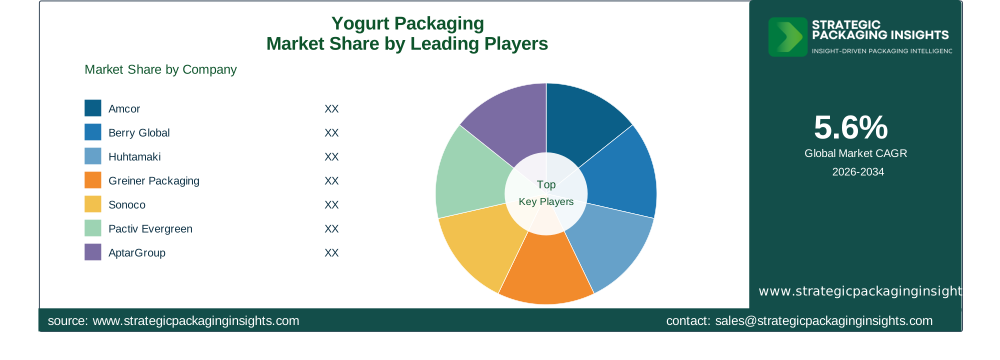
Amcor is a leading player in the yogurt packaging market, known for its innovative and sustainable packaging solutions. The company offers a wide range of packaging options, including flexible and rigid packaging, that cater to various yogurt types. Amcor's commitment to sustainability is evident in its efforts to develop recyclable and biodegradable packaging materials, positioning it as a leader in the eco-friendly packaging segment.
Berry Global is another major player in the market, renowned for its extensive product portfolio and focus on innovation. The company provides a variety of packaging solutions, including cups, tubs, and pouches, that are designed to enhance product shelf life and consumer convenience. Berry Global's emphasis on sustainability is reflected in its initiatives to reduce plastic waste and develop packaging solutions that are both functional and environmentally friendly.
Huhtamaki is a key player in the yogurt packaging market, offering a diverse range of packaging solutions that cater to different consumer preferences. The company's focus on innovation and sustainability has led to the development of packaging options that are not only visually appealing but also environmentally responsible. Huhtamaki's strong global presence and strategic partnerships have enabled it to capture a significant share of the market.
Key Highlights
- The yogurt packaging market is projected to grow from USD 8.09 billion in 2025 to USD 13.20 billion by 2034, at a CAGR of 5.6%.
- Increasing consumer demand for sustainable and eco-friendly packaging solutions is driving market growth.
- Emerging markets in Asia Pacific and Latin America offer significant growth opportunities for yogurt packaging manufacturers.
- Volatility in raw material prices poses a challenge for packaging manufacturers.
- Companies are investing in innovative packaging designs to enhance brand recognition and consumer appeal.
- Regulatory pressures on plastic usage are encouraging the development of biodegradable and recyclable packaging materials.
- The rise of plant-based yogurts is creating new opportunities for specialized packaging solutions.
Top Countries Insights
In the yogurt packaging market, the United States stands out with a market size of approximately USD 2.5 billion and a CAGR of 4%. The country's strong demand for convenient and sustainable packaging solutions, driven by health-conscious consumers, is a key growth driver. The presence of major players like Amcor and Berry Global further strengthens the market.
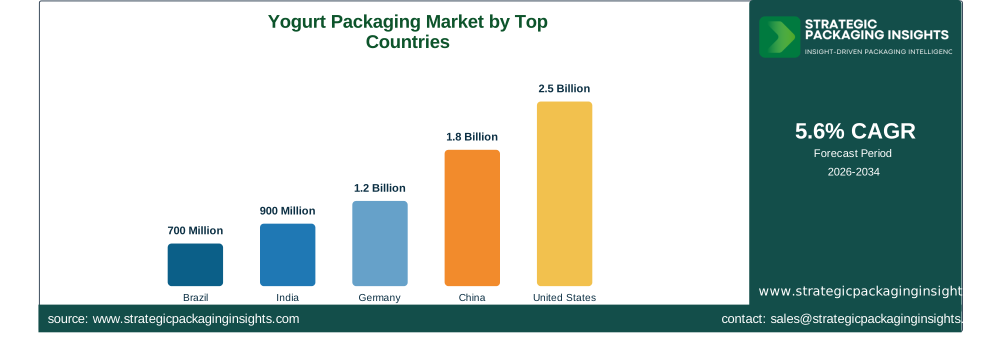
China is another significant market, with a market size of USD 1.8 billion and a CAGR of 6%. The country's rapid urbanization and increasing disposable incomes are driving the demand for yogurt and, consequently, innovative packaging solutions. Government initiatives to promote sustainable packaging are also contributing to market growth.
Germany, with a market size of USD 1.2 billion and a CAGR of 5%, is a key player in the European yogurt packaging market. The country's strong focus on sustainability and stringent regulations on plastic usage are driving the demand for eco-friendly packaging solutions.
India, with a market size of USD 900 million and a CAGR of 7%, is emerging as a lucrative market for yogurt packaging. The growing middle class and increasing health awareness are driving the demand for yogurt, creating opportunities for packaging manufacturers.
Brazil, with a market size of USD 700 million and a CAGR of 5%, is a key market in Latin America. The country's increasing yogurt consumption and demand for convenient packaging solutions are driving market growth.
Yogurt Packaging Market Segments Insights

Packaging Type Analysis
The yogurt packaging market is segmented by packaging type into cups, tubs, pouches, and bottles. Cups and tubs are the most popular packaging types due to their convenience and ability to maintain product freshness. Companies like Pactiv Evergreen and Stanpac are focusing on developing innovative cup designs that enhance consumer experience and product appeal. Pouches are gaining traction as a flexible and lightweight packaging option, particularly for drinkable yogurts. The demand for bottles is also increasing, driven by the growing popularity of drinkable and plant-based yogurts.
Innovation in packaging designs is a key trend in this segment, with manufacturers investing in advanced printing technologies and customizable options to differentiate their products. The rise of single-serve packaging solutions is also driving growth in this segment, as consumers seek convenient and portable options for on-the-go consumption. The focus on sustainability is leading to the development of packaging solutions that are recyclable and biodegradable, catering to the growing demand for eco-friendly products.
Material Type Analysis
The material type segment of the yogurt packaging market includes PP, PET, paperboard, and glass. PET is the most widely used material due to its durability and recyclability, making it a popular choice for both rigid and flexible packaging solutions. Companies like Coveris and RPC Group are investing in PET packaging solutions that offer superior product protection and shelf life. PP is also a popular material, known for its lightweight and cost-effective properties.
Paperboard is gaining popularity as a sustainable packaging option, particularly for spoonable yogurts. The use of glass is limited to premium yogurt products, where packaging is used as a tool to convey quality and exclusivity. The focus on sustainability is driving innovation in material development, with companies exploring biodegradable and compostable options to meet regulatory standards and consumer demand for eco-friendly products.
Application Analysis
The application segment of the yogurt packaging market includes spoonable yogurt, drinkable yogurt, Greek yogurt, and plant-based yogurt. Spoonable yogurt is the largest segment, driven by its widespread popularity and versatility. Companies are focusing on developing packaging solutions that enhance product freshness and consumer convenience. Drinkable yogurt is gaining popularity, particularly among health-conscious consumers seeking convenient and nutritious options.
Greek yogurt is a growing segment, known for its high protein content and health benefits. Packaging solutions for Greek yogurt focus on maintaining product integrity and extending shelf life. The rise of plant-based yogurts is creating new opportunities for packaging manufacturers, as consumers seek dairy-free alternatives. Companies are developing specialized packaging solutions that cater to the unique properties of plant-based yogurts, ensuring product quality and consumer satisfaction.
End Use Analysis
The end-use segment of the yogurt packaging market includes dairy companies, retail, and foodservice. Dairy companies are the largest end-users, driving demand for packaging solutions that enhance product shelf life and consumer appeal. Companies like AptarGroup and Stanpac are focusing on developing innovative packaging solutions that meet the needs of dairy manufacturers.
Retail is a significant end-use segment, driven by the increasing demand for convenient and portable packaging solutions. The rise of e-commerce is also impacting the retail segment, with companies developing packaging solutions that cater to online sales and delivery. The foodservice segment is growing, driven by the increasing popularity of yogurt as a healthy and convenient food option. Packaging solutions for foodservice focus on convenience and portability, catering to the needs of busy consumers seeking on-the-go options.
Yogurt Packaging Market Segments
The Yogurt Packaging market has been segmented on the basis ofBy Packaging Type
- Cups
- Tubs
- Pouches
- Bottles
By Material Type
- PP
- PET
- Paperboard
- Glass
By Application
- Spoonable Yogurt
- Drinkable Yogurt
- Greek Yogurt
- Plant-Based Yogurt
By End Use
- Dairy Companies
- Retail
- Foodservice
Region
- Asia Pacific
- North America
- Latin America
- Europe
- Middle East & Africa




