


Water Indicating Labels Market Outlook
The Water Indicating Labels market size was valued at USD $502.26 Million in 2025 and is anticipated to reach USD $852 Million by 2035, growing at a CAGR of 5.42% % during the forecast period according to Strategic Packaging Insights.
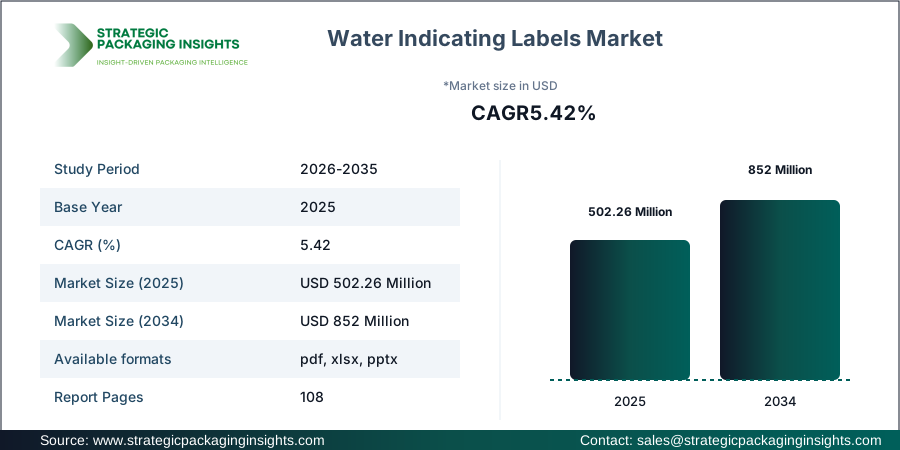
The increasing demand for water indicating labels in consumer electronics and automotive electronics is a significant market driver. These labels are crucial for detecting water exposure in sensitive electronic components, ensuring product reliability and reducing warranty claims. The growing electronics manufacturing sector, particularly in Asia-Pacific, is expected to boost market growth.
Report Scope
| Attributes | Details |
| Report Title | Water Indicating Labels Market Projected to Scale to 852 Million by 2035, Assesses Strategic Packaging Insights |
| By Label Type | Adhesive-Backed Labels, Non-Adhesive Indicators |
| By Functionality | Irreversible Water-Indicating Labels, Reversible Water-Indicating Labels |
| By Material | Paper-Based Labels, Polyester Labels, Plastic Film Labels, Laminated Labels |
| By Application | Consumer Electronics, Home Appliances, Industrial and Medical Equipment, Automotive Electronics |
| By Adhesive Type | Permanent Adhesive, Removable Adhesive, Specialty Adhesive |
| By End User | Electronics Manufacturers, Appliance Manufacturers, Automotive Manufacturers, Medical Equipment Manufacturers, Industrial Equipment Manufacturers |
| By Region | North America, Europe, Asia-Pacific, Latin America, Middle East and Africa |
| Base Year | 2025 |
| Historic Period | 2018-2024 |
| Forecast Period | 2026-2035 |
| Number of Pages | 108 |
| Customization Available | Yes* |
Market Trends Analysis
Water Indicating Labels are witnessing increased adoption due to the rising emphasis on product safety and quality assurance in electronics and automotive industries. The trend towards miniaturization of electronic devices necessitates advanced labeling solutions that can provide accurate water exposure detection without compromising on space. This has led to innovations in label materials and adhesive technologies, enhancing their performance and reliability.
Sustainability is becoming a key focus, with manufacturers exploring eco-friendly materials and recyclable label options. The shift towards sustainable practices is driven by regulatory pressures and consumer demand for environmentally responsible products. This trend is influencing procurement strategies and material selection, impacting the competitive landscape and driving innovation in label design and functionality.
Industry Transformation Analysis
The Water Indicating Labels industry is undergoing significant transformation with advancements in material science and adhesive technologies. Manufacturers are investing in R&D to develop labels that offer enhanced durability and sensitivity to water exposure. The integration of smart technologies, such as RFID and NFC, is also being explored to provide additional functionalities and data tracking capabilities.
Globalization and localization dynamics are influencing the supply chain, with companies optimizing their operations to meet regional demand variations. The focus on operational efficiency and cost reduction is driving automation in label production processes. These changes are expected to enhance production capacity and reduce lead times, providing a competitive edge to market players.
Trends & Disruptions Impacting Customers' Customers
Downstream customers, including electronics and automotive manufacturers, are increasingly prioritizing product reliability and safety. This is driving the demand for advanced water indicating labels that can accurately detect water exposure and prevent damage to sensitive components. The shift towards smart and connected devices is also influencing label requirements, with customers seeking solutions that integrate seamlessly with their products.
These changes are impacting product demand and innovation in the Water Indicating Labels market. Manufacturers are focusing on developing labels with enhanced functionalities and sustainability features to meet evolving customer needs. This is creating opportunities for suppliers to differentiate their offerings and capture market share by aligning with customer priorities and regulatory requirements.
Water Indicating Labels Market Ecosystem
The Water Indicating Labels market ecosystem involves a complex interplay between raw material suppliers, label manufacturers, distributors, and end users. The procurement of high-quality substrates and adhesives is critical for label performance, influencing material flows and supply chain dependencies. Manufacturers are focusing on optimizing production processes to enhance capacity and meet growing demand.
Distribution channels play a vital role in ensuring timely delivery of labels to end users, impacting procurement relationships and capacity constraints. Changes in the ecosystem, such as shifts towards sustainable materials and advanced technologies, are affecting market dynamics and creating opportunities for innovation and growth.
Analyst Perspective
Analyst Perspective: The Water Indicating Labels market is poised for significant growth, driven by increasing demand in electronics and automotive sectors.
The integration of smart technologies and sustainable materials is expected to transform the industry, offering new growth opportunities and competitive advantages. Companies should focus on innovation and sustainability to capture market share.
Market participants should monitor regulatory developments and consumer trends to align their strategies with evolving market dynamics. This will be crucial for maintaining competitiveness and achieving long-term success.
Opportunities & Threats
The Water Indicating Labels market presents significant opportunities for growth, particularly in the Asia-Pacific region, where the electronics manufacturing sector is expanding rapidly. The increasing demand for reliable and durable labels in consumer electronics and automotive applications is driving innovation and investment in advanced materials and technologies.
Technological advancements, such as the integration of smart features and eco-friendly materials, offer opportunities for differentiation and competitive advantage. Companies that can develop innovative solutions that meet regulatory requirements and consumer preferences are likely to capture significant market share.
However, the market also faces challenges, including raw material volatility and supply chain disruptions. The reliance on specific substrates and adhesives can lead to supply constraints and pricing pressures, impacting profitability and operational efficiency.
Regulatory uncertainty and the need for compliance with environmental standards pose additional threats. Companies must navigate complex regulatory landscapes and invest in sustainable practices to mitigate risks and ensure long-term viability.
Drivers & Challenges
The primary driver of the Water Indicating Labels market is the increasing demand for product safety and reliability in electronics and automotive industries. These labels play a crucial role in detecting water exposure, preventing damage to sensitive components, and reducing warranty claims. The growing adoption of smart and connected devices is further driving demand for advanced labeling solutions.
Technological advancements in material science and adhesive technologies are enabling the development of labels with enhanced performance and durability. The shift towards sustainable practices and eco-friendly materials is also driving innovation and influencing procurement strategies.
However, the market faces challenges such as raw material volatility and supply chain disruptions. The reliance on specific substrates and adhesives can lead to supply constraints and pricing pressures, impacting profitability and operational efficiency. Companies must navigate complex regulatory landscapes and invest in sustainable practices to mitigate risks and ensure long-term viability.
Packaging Market Economics
The economics of Water Indicating Labels are influenced by raw material costs, including substrates and adhesives, which are critical for label performance. Conversion costs, energy expenses, and logistics also play a significant role in determining overall production costs. Manufacturers are focusing on optimizing production processes to enhance capacity utilization and reduce lead times.
Pricing strategies are influenced by market demand, competition, and regulatory requirements. Companies are exploring cost-effective materials and technologies to maintain competitive pricing while ensuring product quality and compliance with environmental standards.
Packaging Value Chain & Cost Analysis
The value chain for Water Indicating Labels involves multiple tiers, including resin synthesis, film extrusion, and label converting. Each tier plays a critical role in determining the final product's cost and performance. Resin supply and substrate production are key factors influencing lead times and capacity utilization.
Conversion economics, including printing, lamination, and forming, impact the overall cost structure. Logistics and distribution are essential for ensuring timely delivery to end users, affecting procurement relationships and capacity constraints. Companies are focusing on optimizing their value chains to enhance efficiency and reduce costs.
Unit Economics & Substrate Cost Analysis
The unit economics of Water Indicating Labels are driven by raw material costs, including resin and substrate pricing. Energy expenses, extrusion, and printing costs also contribute to the overall cost structure. Manufacturers are exploring cost-effective materials and technologies to optimize unit economics and maintain competitive pricing.
Labor and logistics expenses are critical factors influencing production costs and profitability. Companies are investing in automation and process optimization to enhance efficiency and reduce labor costs, ensuring sustainable growth and competitiveness in the market.
Packaging Regulatory & Sustainability Analysis
The Water Indicating Labels market is subject to various regulatory requirements, including environmental standards and labeling regulations. Compliance with these standards is essential for market access and competitiveness. Companies must navigate complex regulatory landscapes and invest in sustainable practices to mitigate risks and ensure long-term viability.
Sustainability is a key focus, with manufacturers exploring eco-friendly materials and recyclable label options. The shift towards sustainable practices is driven by regulatory pressures and consumer demand for environmentally responsible products. This trend is influencing procurement strategies and material selection, impacting the competitive landscape and driving innovation in label design and functionality.
Strategic Mergers, Acquisitions & Capacity Expansions
Recent strategic developments in the Water Indicating Labels market include mergers, acquisitions, and capacity expansions aimed at enhancing production capabilities and market reach. Companies are investing in advanced technologies and sustainable materials to differentiate their offerings and capture market share.
Partnerships and collaborations are also being explored to leverage complementary strengths and expand product portfolios. These strategic initiatives are expected to drive innovation and competitiveness, providing opportunities for growth and expansion in the market.
Strategic Action Directives
Brand Packaging Engineers & Sustainability Directors should focus on material selection and recyclability to meet regulatory requirements and consumer preferences. Mono-material qualification and PCR integration are critical for achieving sustainability goals.
Converter Operations & Extrusion Leads should optimize line speed and tooling to enhance capacity utilization and reduce scrap. Investing in automation and process optimization can improve operational efficiency and competitiveness.
Procurement & Material Sourcing Managers should diversify supplier bases and explore resin contracts to mitigate raw material volatility. Price indexing and PCR contracts can help manage costs and ensure supply chain resilience.
Investors should monitor capacity expansions and technology investments to identify growth opportunities and assess market concentration. Understanding margin structures and competitive dynamics is essential for informed decision-making.
Market Share Analysis
The Water Indicating Labels market is characterized by a competitive landscape with several key players, including Brady Corporation, NovaVision Inc., Intertronix, MI Labels, and Rui Labels. These companies are focusing on innovation and sustainability to capture market share and meet evolving customer needs.
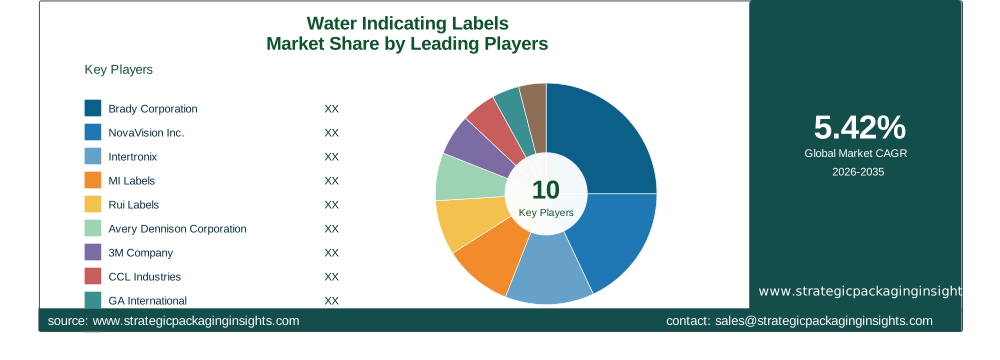
Brady Corporation is a prominent player, offering a wide range of labeling solutions for various applications. The company's focus on product innovation and quality assurance has strengthened its competitive position in the market.
Avery Dennison Corporation is another key player, known for its advanced adhesive technologies and sustainable labeling solutions. The company's global presence and strong distribution network provide a competitive advantage in the market.
3M Company is leveraging its expertise in material science and adhesive technologies to develop innovative labeling solutions. The company's focus on sustainability and regulatory compliance is driving its growth and competitiveness in the market.
Key Highlights
- Largest Region: North America
- Fastest-Growing Region: Asia-Pacific
- Largest Segment: Consumer Electronics
- Fastest-Growing Segment: Automotive Electronics
- Base-year market size: USD 502.26 Million
- Forecast-year market size: USD 852 Million
- CAGR: 5.42%
- Important application: Water exposure detection in electronics
- Major end-use industry: Electronics Manufacturers
- Major market driver: Increasing demand for product safety and reliability
Regional Insights
The Water Indicating Labels market is witnessing significant growth across major regions, with North America being the largest market due to the presence of key electronics and automotive manufacturers. The Asia-Pacific region is expected to be the fastest-growing market, driven by the expanding electronics manufacturing sector and increasing demand for advanced labeling solutions.
North America
North America is the largest market for Water Indicating Labels, driven by the presence of major electronics and automotive manufacturers. The region's focus on product safety and regulatory compliance is driving demand for advanced labeling solutions. The adoption of smart technologies and sustainable practices is also influencing market dynamics and creating opportunities for growth.
The United States is a key contributor to the regional market, with a strong focus on innovation and quality assurance. The presence of leading companies and a well-established supply chain infrastructure provide a competitive advantage in the market.
Europe
Europe is a significant market for Water Indicating Labels, with a strong emphasis on sustainability and regulatory compliance. The region's focus on environmental standards and product safety is driving demand for eco-friendly labeling solutions. The automotive and electronics industries are key end users, contributing to market growth and innovation.
Germany and the United Kingdom are major contributors to the regional market, with a focus on advanced technologies and sustainable practices. The presence of leading companies and a robust supply chain infrastructure provide a competitive advantage in the market.
Asia Pacific
The Asia-Pacific region is expected to be the fastest-growing market for Water Indicating Labels, driven by the expanding electronics manufacturing sector and increasing demand for advanced labeling solutions. The region's focus on product safety and regulatory compliance is driving innovation and investment in sustainable materials and technologies.
China and India are key contributors to the regional market, with a strong focus on innovation and quality assurance. The presence of leading companies and a well-established supply chain infrastructure provide a competitive advantage in the market.
Latin America
Latin America is a growing market for Water Indicating Labels, with a focus on product safety and regulatory compliance. The region's expanding electronics and automotive industries are driving demand for advanced labeling solutions. The adoption of smart technologies and sustainable practices is also influencing market dynamics and creating opportunities for growth.
Brazil and Mexico are key contributors to the regional market, with a focus on innovation and quality assurance. The presence of leading companies and a well-established supply chain infrastructure provide a competitive advantage in the market.
Middle East & Africa
The Middle East & Africa region is witnessing growth in the Water Indicating Labels market, driven by the expanding electronics and automotive industries. The region's focus on product safety and regulatory compliance is driving demand for advanced labeling solutions. The adoption of smart technologies and sustainable practices is also influencing market dynamics and creating opportunities for growth.
South Africa and the United Arab Emirates are key contributors to the regional market, with a focus on innovation and quality assurance. The presence of leading companies and a well-established supply chain infrastructure provide a competitive advantage in the market.
Water Indicating Labels Market Segments Insights

By Label Type Analysis
The Water Indicating Labels market is segmented by label type into adhesive-backed labels and non-adhesive indicators. Adhesive-backed labels are widely used due to their ease of application and strong adhesion properties, making them suitable for various applications in consumer electronics and automotive industries. Non-adhesive indicators are gaining traction for their versatility and ability to provide accurate water exposure detection without leaving residue.
The demand for adhesive-backed labels is driven by their widespread use in electronics and automotive applications, where reliable adhesion and durability are critical. Non-adhesive indicators are preferred in applications where residue-free removal is essential, such as in medical and industrial equipment. The growing emphasis on product safety and reliability is driving innovation in label design and functionality, creating opportunities for growth in both segments.
By Functionality Analysis
The Water Indicating Labels market is segmented by functionality into irreversible and reversible water-indicating labels. Irreversible labels are designed to provide permanent indication of water exposure, making them ideal for applications where tamper-evidence and long-term monitoring are required. Reversible labels offer the advantage of being reusable, allowing for multiple uses and cost savings in certain applications.
The demand for irreversible labels is driven by their use in critical applications where permanent indication is necessary, such as in consumer electronics and automotive electronics. Reversible labels are gaining popularity in applications where cost-effectiveness and reusability are important, such as in industrial and medical equipment. The growing focus on sustainability and cost optimization is driving innovation in label functionality, creating opportunities for growth in both segments.
By Material Analysis
The Water Indicating Labels market is segmented by material into paper-based labels, polyester labels, plastic film labels, and laminated labels. Paper-based labels are widely used due to their cost-effectiveness and ease of printing, making them suitable for various applications. Polyester labels offer enhanced durability and resistance to environmental factors, making them ideal for demanding applications in electronics and automotive industries.
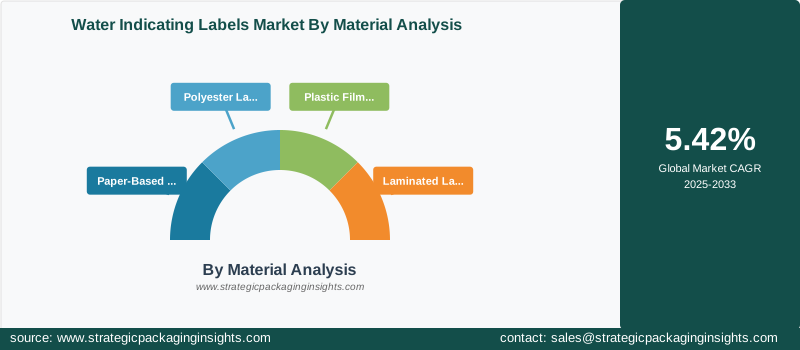
The demand for polyester labels is driven by their superior performance in harsh environments, where durability and resistance to water exposure are critical. Plastic film labels are gaining traction for their flexibility and ability to conform to complex surfaces, making them suitable for applications in consumer electronics and automotive industries. Laminated labels offer additional protection and durability, making them ideal for applications where long-term performance is required.
By Application Analysis
The Water Indicating Labels market is segmented by application into consumer electronics, home appliances, industrial and medical equipment, and automotive electronics. Consumer electronics is the largest segment, driven by the increasing demand for reliable and durable labeling solutions in smartphones, tablets, and other electronic devices. Automotive electronics is the fastest-growing segment, driven by the increasing adoption of advanced technologies and the need for reliable water exposure detection in automotive components.
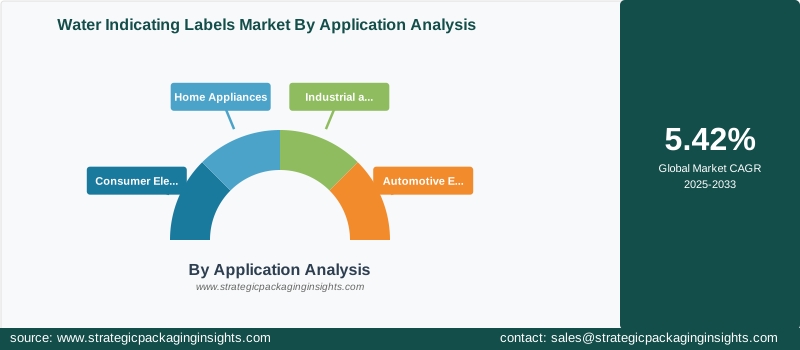
The demand for water indicating labels in consumer electronics is driven by the need for product safety and reliability, as well as the growing trend towards miniaturization of electronic devices. In automotive electronics, the increasing complexity of electronic systems and the need for reliable water exposure detection are driving demand for advanced labeling solutions. The growing focus on product safety and reliability is driving innovation in label design and functionality, creating opportunities for growth in both segments.
By Adhesive Type Analysis
The Water Indicating Labels market is segmented by adhesive type into permanent adhesive, removable adhesive, and specialty adhesive. Permanent adhesive labels are widely used due to their strong adhesion properties and ability to withstand harsh environments, making them suitable for various applications in consumer electronics and automotive industries. Removable adhesive labels offer the advantage of being easily removable without leaving residue, making them ideal for applications where residue-free removal is essential.
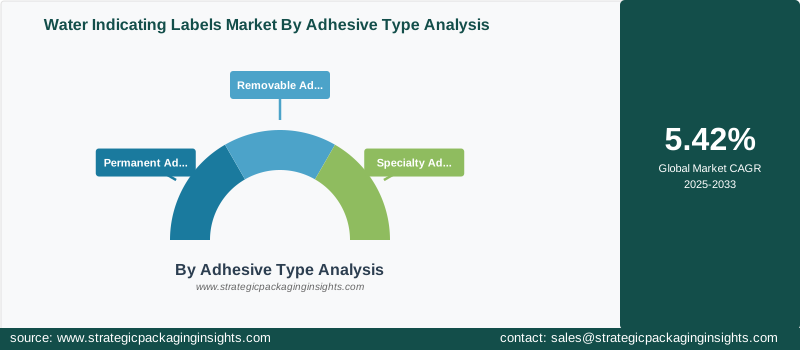
The demand for permanent adhesive labels is driven by their widespread use in electronics and automotive applications, where reliable adhesion and durability are critical. Removable adhesive labels are preferred in applications where residue-free removal is essential, such as in medical and industrial equipment. Specialty adhesive labels are gaining traction for their ability to provide customized solutions for specific applications, creating opportunities for growth in the market.
By End User Analysis
The Water Indicating Labels market is segmented by end user into electronics manufacturers, appliance manufacturers, automotive manufacturers, medical equipment manufacturers, and industrial equipment manufacturers. Electronics manufacturers are the largest end user segment, driven by the increasing demand for reliable and durable labeling solutions in consumer electronics and automotive electronics.
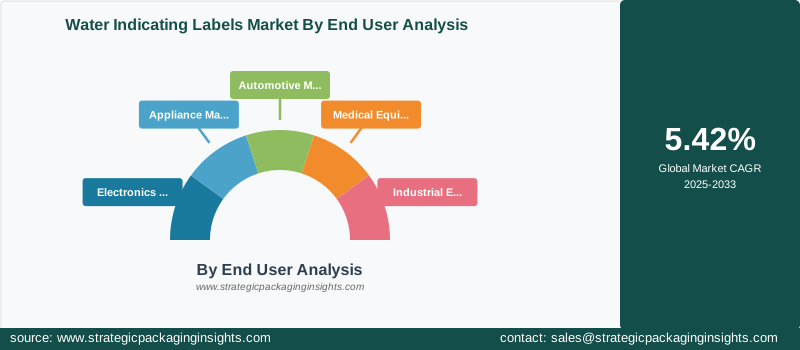
The demand for water indicating labels in electronics manufacturing is driven by the need for product safety and reliability, as well as the growing trend towards miniaturization of electronic devices. In automotive manufacturing, the increasing complexity of electronic systems and the need for reliable water exposure detection are driving demand for advanced labeling solutions. The growing focus on product safety and reliability is driving innovation in label design and functionality, creating opportunities for growth in both segments.
Water Indicating Labels Market Segments
The Water Indicating Labels market has been segmented on the basis ofBy Label Type
- Adhesive-Backed Labels
- Non-Adhesive Indicators
By Functionality
- Irreversible Water-Indicating Labels
- Reversible Water-Indicating Labels
By Material
- Paper-Based Labels
- Polyester Labels
- Plastic Film Labels
- Laminated Labels
By Application
- Consumer Electronics
- Home Appliances
- Industrial and Medical Equipment
- Automotive Electronics
By Adhesive Type
- Permanent Adhesive
- Removable Adhesive
- Specialty Adhesive
By End User
- Electronics Manufacturers
- Appliance Manufacturers
- Automotive Manufacturers
- Medical Equipment Manufacturers
- Industrial Equipment Manufacturers
By Region
- North America
- Europe
- Asia-Pacific
- Latin America
- Middle East and Africa




