


Volumetric filling machines Market Outlook
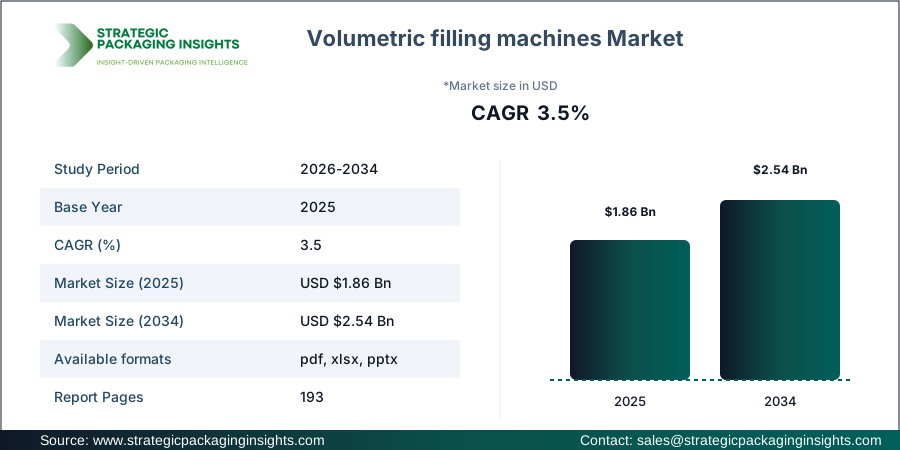
The Volumetric filling machines market size was valued at USD 1.86 billion in 2025 and is anticipated to reach USD 2.54 billion by 2034, growing at a CAGR of 3.5% during the forecast period according to Strategic Packaging Insights. The market is witnessing significant growth due to the increasing demand for efficient and precise filling solutions across various industries. Companies like Syntegon and IMA Group are leading the charge by offering innovative solutions that cater to the diverse needs of the food & beverage, pharmaceuticals, and cosmetics sectors. The growing emphasis on automation and the need for high-speed filling operations are further propelling the market's expansion.
One of the most impactful drivers of the volumetric filling machines market is the rising demand for packaged goods, which is supported by the increasing global population and urbanization. According to a report by the United Nations, the global population is expected to reach 9.7 billion by 2050, leading to a surge in demand for packaged food and beverages. This trend is driving manufacturers to invest in advanced filling technologies to enhance production efficiency and meet consumer demands. Additionally, the growing focus on reducing product wastage and improving filling accuracy is encouraging companies like Krones and Coesia to develop cutting-edge volumetric filling machines that offer precision and reliability.
Report Scope
| Attributes | Details |
| Report Title | Volumetric filling machines Market Size, Future Growth and Forecast 2034 |
| By Machine Type | Piston Fillers, Cup Fillers, Rotary Fillers, Inline Fillers |
| By Automation Level | Manual, Semi-Automatic, Automatic |
| By Application | Liquids, Powders, Granules, Pastes |
| By End Use | Food & Beverage, Pharmaceuticals, Cosmetics, Chemicals |
| Region | Asia Pacific, North America, Latin America, Europe, Middle East & Africa |
| Base Year | 2025 |
| Historic Period | 2018-2024 |
| Forecast Period | 2026-2034 |
| Number of Pages | 193 |
| Customization Available | Yes* |
Sustainability & Circular Economy Analysis
Sustainability initiatives and circular economy practices are increasingly shaping the packaging market, with a strong emphasis on reducing environmental impact. The adoption of recyclable materials and reusable packaging is becoming a norm, as companies strive to meet consumer preferences for eco-friendly products. Volumetric filling machines play a crucial role in this transition by enabling precise filling that minimizes waste and optimizes resource utilization. The integration of lightweight packaging solutions further enhances sustainability efforts, as it reduces transportation emissions and lowers the carbon footprint.
Eco-friendly material innovation is at the forefront of packaging design, with manufacturers investing in research and development to create biodegradable and compostable packaging options. This shift is influencing investment decisions, as companies prioritize sustainable practices to align with regulatory compliance and consumer expectations. Extended producer responsibility (EPR) is also gaining traction, encouraging manufacturers to take accountability for the entire lifecycle of their products, including post-consumer waste management. These trends are driving the demand for advanced volumetric filling machines that support sustainable packaging solutions.
As sustainability becomes a key competitive differentiator, companies are focusing on ESG initiatives to enhance their market position. The implementation of waste reduction strategies and carbon footprint reduction measures is becoming integral to supply chain strategies, ensuring long-term market competitiveness. Regulatory compliance is also a critical factor, with governments worldwide imposing stringent packaging regulations to curb environmental impact. Volumetric filling machines are adapting to these changes by offering flexible and efficient solutions that meet evolving industry standards, thereby supporting manufacturers in achieving their sustainability goals.
Packaging Value Chain & Supply Chain Analysis
The packaging value chain is a complex ecosystem that involves multiple stakeholders, from raw material sourcing to recycling networks. Volumetric filling machines are a critical component of this chain, as they facilitate the efficient conversion of raw materials into finished products. Packaging converters and manufacturers rely on these machines to ensure precise filling and optimal resource utilization. The availability of raw materials and the efficiency of production capabilities significantly influence the overall market performance, as they determine the cost-effectiveness and reliability of packaging solutions.
Logistics and distribution channels play a vital role in the supply chain, ensuring that finished products reach consumers in a timely and efficient manner. The strategic partnerships between brand owners, retailers, and logistics providers are crucial for maintaining supply chain resilience and meeting consumer demands. Localization and global sourcing strategies are also essential, as they enable companies to adapt to regional market dynamics and optimize inventory management. Volumetric filling machines contribute to supply chain efficiency by offering high-speed and accurate filling solutions that enhance production throughput and reduce downtime.
Recycling networks are an integral part of the packaging value chain, as they support the circular economy by facilitating the recovery and reuse of packaging materials. The integration of sustainable practices into the supply chain is becoming increasingly important, as companies strive to meet regulatory requirements and consumer expectations. Volumetric filling machines are evolving to accommodate these changes, offering flexible and adaptable solutions that support the use of recycled materials and reduce environmental impact. This adaptability is crucial for maintaining business competitiveness and ensuring long-term market success.
Opportunities & Threats
The volumetric filling machines market presents numerous opportunities for growth, driven by the increasing demand for automation and precision in packaging processes. The rise of Industry 4.0 and the integration of IoT technologies are creating new avenues for innovation, as manufacturers seek to enhance operational efficiency and reduce production costs. Companies like Accutek and Filamatic are leveraging these technologies to develop smart filling solutions that offer real-time monitoring and data analytics, enabling manufacturers to optimize their production processes and improve product quality.
Emerging markets in Asia Pacific and Latin America offer significant growth potential, as the expanding middle class and rising disposable incomes drive demand for packaged goods. The food & beverage and pharmaceuticals sectors are particularly promising, as they require high-speed and accurate filling solutions to meet consumer demands. Volumetric filling machines are well-positioned to capitalize on these opportunities, as they offer the flexibility and precision needed to cater to diverse industry requirements. Additionally, the growing focus on sustainability and eco-friendly packaging solutions presents opportunities for manufacturers to differentiate themselves in the market.
However, the market also faces several threats, including regulatory challenges and the high cost of advanced filling technologies. Stringent packaging regulations and environmental standards are increasing the complexity of compliance, requiring manufacturers to invest in sustainable practices and technologies. The high initial investment and maintenance costs associated with volumetric filling machines can be a barrier for small and medium-sized enterprises, limiting market penetration. Additionally, the volatility of raw material prices and supply chain disruptions pose risks to market stability, necessitating strategic planning and risk management to mitigate potential impacts.
Drivers & Challenges
The volumetric filling machines market is driven by several key factors, including the increasing demand for packaged goods and the need for efficient and precise filling solutions. The growing global population and urbanization are fueling demand for food & beverage, pharmaceuticals, and cosmetics products, driving manufacturers to invest in advanced filling technologies. Companies like ProMach and Ronchi Mario are at the forefront of this trend, offering innovative solutions that enhance production efficiency and reduce product wastage. The emphasis on automation and high-speed filling operations is also a significant driver, as manufacturers seek to optimize their production processes and meet consumer demands.
Technological advancements and the integration of IoT and Industry 4.0 technologies are further propelling market growth, as they enable manufacturers to enhance operational efficiency and reduce production costs. The development of smart filling solutions that offer real-time monitoring and data analytics is transforming the industry, providing manufacturers with valuable insights to optimize their production processes and improve product quality. Additionally, the growing focus on sustainability and eco-friendly packaging solutions is driving demand for volumetric filling machines that support sustainable practices and reduce environmental impact.
Despite these drivers, the market faces several challenges, including regulatory compliance and the high cost of advanced filling technologies. Stringent packaging regulations and environmental standards are increasing the complexity of compliance, requiring manufacturers to invest in sustainable practices and technologies. The high initial investment and maintenance costs associated with volumetric filling machines can be a barrier for small and medium-sized enterprises, limiting market penetration. Additionally, the volatility of raw material prices and supply chain disruptions pose risks to market stability, necessitating strategic planning and risk management to mitigate potential impacts.
Market Share Analysis
The competitive landscape of the volumetric filling machines market is characterized by the presence of several key players, each striving to enhance their market position through innovation and strategic partnerships. Companies like Syntegon and IMA Group are leading the market, offering a wide range of filling solutions that cater to diverse industry needs. These companies are investing heavily in research and development to create advanced filling technologies that offer precision, efficiency, and sustainability. Their strong global presence and extensive distribution networks enable them to capture significant market share and maintain a competitive edge.
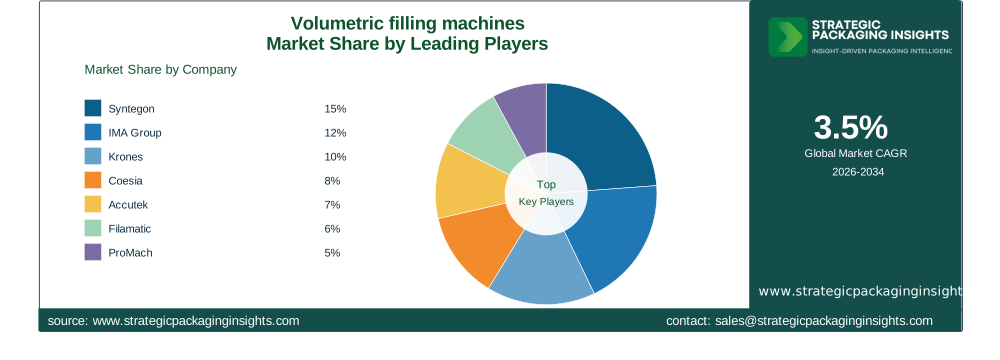
Krones and Coesia are also prominent players in the market, known for their innovative solutions and commitment to sustainability. These companies are focusing on developing eco-friendly filling machines that support the use of recyclable materials and reduce environmental impact. Their strategic partnerships with packaging manufacturers and brand owners further strengthen their market position, enabling them to offer comprehensive solutions that meet evolving industry standards. The emphasis on automation and high-speed filling operations is a key differentiator for these companies, as they strive to enhance production efficiency and meet consumer demands.
Accutek and Filamatic are emerging players in the market, leveraging technological advancements to develop smart filling solutions that offer real-time monitoring and data analytics. These companies are focusing on enhancing operational efficiency and reducing production costs, providing manufacturers with valuable insights to optimize their production processes and improve product quality. Their commitment to innovation and customer-centric solutions is driving their market growth, enabling them to capture a significant share of the volumetric filling machines market.
Other notable players in the market include ProMach, Ronchi Mario, Marchesini Group, and Serac, each offering unique solutions that cater to specific industry requirements. These companies are focusing on expanding their product portfolios and enhancing their global presence through strategic partnerships and acquisitions. Their emphasis on sustainability and eco-friendly packaging solutions is a key differentiator, as they strive to meet regulatory requirements and consumer expectations. The competitive landscape of the volumetric filling machines market is dynamic, with companies continuously innovating to maintain their market position and capitalize on emerging opportunities.
Key Highlights
- Market Size: The volumetric filling machines market was valued at USD 1.86 billion in 2025 and is projected to reach USD 2.54 billion by 2034.
- Growth Rate: The market is expected to grow at a CAGR of 3.5% during the forecast period.
- Leading Companies: Key players include Syntegon, IMA Group, Krones, Coesia, and Accutek.
- Automation Trends: Increasing demand for automatic and semi-automatic machines.
- Regional Growth: Asia Pacific is expected to witness the highest growth rate.
- Application Segments: Significant demand from food & beverage and pharmaceuticals sectors.
- Sustainability Focus: Growing emphasis on eco-friendly and recyclable packaging solutions.
- Technological Advancements: Integration of IoT and Industry 4.0 technologies.
- Regulatory Compliance: Stringent packaging regulations driving innovation.
Volumetric filling machines Market Segments Insights

By Machine Type Analysis
The volumetric filling machines market is segmented by machine type into piston fillers, cup fillers, rotary fillers, and inline fillers. Piston fillers are widely used due to their versatility and ability to handle a variety of products, including liquids, pastes, and semi-solids. These machines are favored in the food & beverage and cosmetics industries for their precision and efficiency. Cup fillers, on the other hand, are ideal for dry products such as powders and granules, making them popular in the pharmaceuticals and chemicals sectors. Rotary fillers offer high-speed filling capabilities, making them suitable for large-scale production environments where efficiency is paramount.
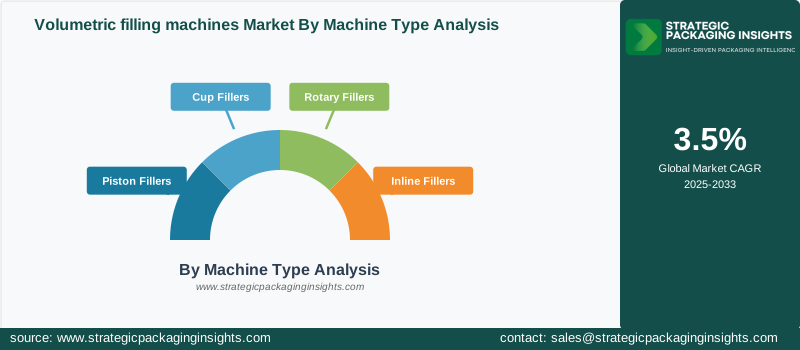
Inline fillers are gaining traction due to their flexibility and ease of integration into existing production lines. These machines are particularly beneficial for small to medium-sized enterprises looking to enhance their production capabilities without significant capital investment. The demand for inline fillers is driven by the growing need for automation and the ability to handle multiple product types with minimal changeover time. As manufacturers continue to seek efficient and cost-effective filling solutions, the demand for advanced machine types is expected to rise, driving innovation and competition in the market.
By Automation Level Analysis
The market is also segmented by automation level into manual, semi-automatic, and automatic machines. Automatic volumetric filling machines are in high demand due to their ability to enhance production efficiency and reduce labor costs. These machines are equipped with advanced features such as real-time monitoring and data analytics, enabling manufacturers to optimize their production processes and improve product quality. The integration of IoT and Industry 4.0 technologies is further driving the adoption of automatic machines, as they offer greater control and flexibility in production operations.

Semi-automatic machines are popular among small and medium-sized enterprises that require a balance between automation and manual intervention. These machines offer the flexibility to handle a variety of products while maintaining cost-effectiveness. Manual machines, although less common, are still used in niche applications where precision and control are paramount. The demand for different automation levels is influenced by factors such as production volume, product type, and budget constraints, with manufacturers seeking solutions that align with their specific operational needs.
By Application Analysis
Volumetric filling machines are used across various applications, including liquids, powders, granules, and pastes. The demand for liquid filling machines is driven by the food & beverage and pharmaceuticals sectors, where precision and hygiene are critical. These machines are designed to handle a wide range of liquid viscosities, ensuring accurate and efficient filling operations. Powder filling machines are essential in the pharmaceuticals and chemicals industries, where precise dosing and contamination prevention are crucial.

Granule filling machines are used in applications such as food processing and agriculture, where bulk handling and high-speed filling are required. Paste filling machines cater to the cosmetics and food industries, where the ability to handle viscous products is essential. The diverse applications of volumetric filling machines highlight their versatility and adaptability, with manufacturers continuously innovating to meet the evolving needs of different industries. As demand for packaged goods continues to rise, the market for volumetric filling machines is expected to grow, driven by the need for efficient and reliable filling solutions.
By End Use Analysis
The end-use segmentation of the volumetric filling machines market includes food & beverage, pharmaceuticals, cosmetics, and chemicals. The food & beverage sector is a major driver of market growth, as manufacturers seek efficient filling solutions to meet the increasing demand for packaged products. The need for high-speed and accurate filling operations is critical in this sector, driving the adoption of advanced volumetric filling machines. The pharmaceuticals industry also presents significant growth opportunities, as precision and hygiene are paramount in filling operations.
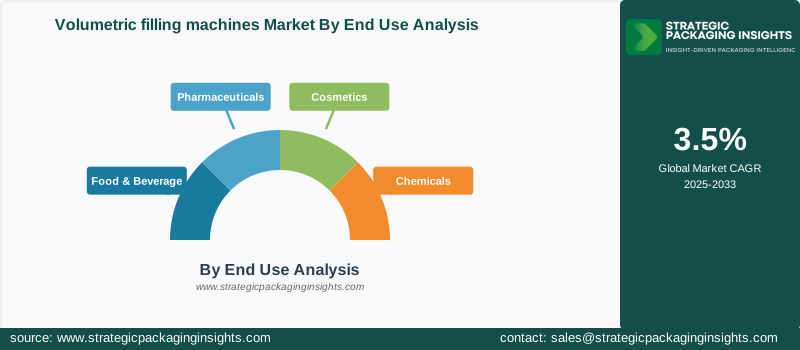
The cosmetics industry is witnessing a surge in demand for volumetric filling machines, driven by the need for precise and efficient filling of a wide range of products, from creams and lotions to gels and serums. The chemicals sector, although smaller, requires robust and reliable filling solutions to handle a variety of products, including hazardous materials. The diverse end-use applications of volumetric filling machines underscore their importance in the packaging industry, with manufacturers continuously innovating to meet the specific needs of different sectors.
Volumetric filling machines Market Segments
The Volumetric filling machines market has been segmented on the basis ofBy Machine Type
- Piston Fillers
- Cup Fillers
- Rotary Fillers
- Inline Fillers
By Automation Level
- Manual
- Semi-Automatic
- Automatic
By Application
- Liquids
- Powders
- Granules
- Pastes
By End Use
- Food & Beverage
- Pharmaceuticals
- Cosmetics
- Chemicals
Region
- Asia Pacific
- North America
- Latin America
- Europe
- Middle East & Africa




