


Vial Box Market Outlook
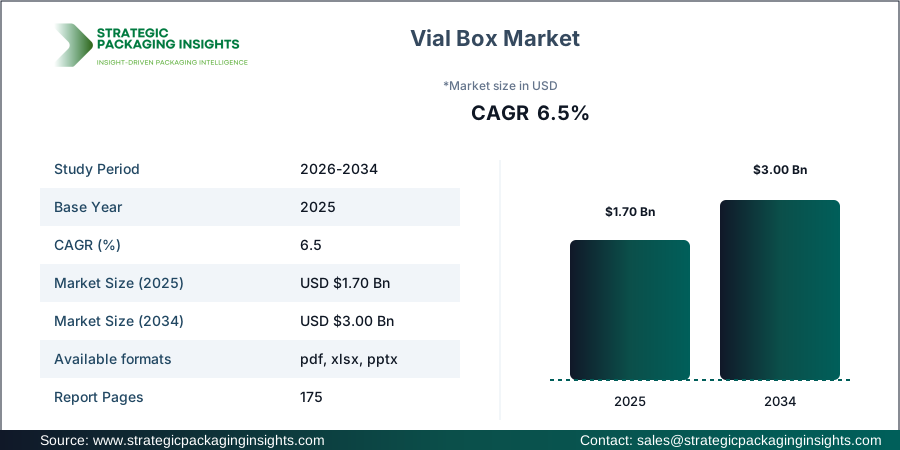
The Vial Box market size was valued at USD 1.70 billion in 2025 and is anticipated to reach USD 3.00 billion by 2034, growing at a CAGR of 6.5% during the forecast period according to Strategic Packaging Insights. The market is witnessing significant growth due to the increasing demand for secure and efficient packaging solutions in the pharmaceutical and healthcare sectors. Companies like WestRock and Graphic Packaging are at the forefront, leveraging advanced materials and innovative designs to cater to the evolving needs of the industry. The rise in pharmaceutical activities, coupled with stringent regulatory requirements for safe drug storage and transportation, is driving the demand for vial boxes globally.
One of the most impactful drivers of the Vial Box market is the growing emphasis on sustainable packaging solutions. As environmental concerns rise, there is a significant shift towards eco-friendly materials and recyclable packaging options. This trend is supported by government regulations and consumer preferences for sustainable products. Companies like Essentra Packaging and Rondo are investing in research and development to create biodegradable and recyclable vial boxes, aligning with global sustainability goals. This focus on sustainability not only enhances brand reputation but also meets the increasing regulatory demands, thus propelling market growth.
Report Scope
| Attributes | Details |
| Report Title | Vial Box Market Size, Future Growth and Forecast 2034 |
| Material Type | Paperboard, Plastic, Corrugated Board, Foam Inserts |
| Product Type | Single Vial Boxes, Multi-Vial Boxes, Cryo Vial Boxes, Pharma Vial Cartons |
| Application | Pharmaceuticals, Diagnostics, Biobanking, Laboratory Storage |
| End Use | Pharma Companies, Hospitals, Laboratories, Research Institutes |
| Region | Asia Pacific, North America, Latin America, Europe, Middle East & Africa |
| Base Year | 2025 |
| Historic Period | 2018-2024 |
| Forecast Period | 2026-2034 |
| Number of Pages | 175 |
| Customization Available | Yes* |
Sustainability & Circular Economy Analysis
Sustainability initiatives are reshaping the packaging industry, with a strong focus on reducing environmental impact through innovative solutions. In the Vial Box market, companies are increasingly adopting recyclable materials and reusable packaging to minimize waste. The use of lightweight packaging not only reduces material consumption but also lowers transportation costs and carbon emissions. Eco-friendly material innovation is becoming a key differentiator, with brands like Faller Packaging leading the charge in developing sustainable vial box solutions.
Extended Producer Responsibility (EPR) is gaining traction, compelling manufacturers to take accountability for the entire lifecycle of their products. This regulatory framework encourages the adoption of waste reduction strategies and the integration of ESG initiatives into business operations. As a result, companies are investing in technologies that enhance the recyclability of packaging materials, thereby reducing their carbon footprint. Consumer preferences are also shifting towards brands that demonstrate a commitment to sustainability, influencing packaging design and manufacturing decisions.
The circular economy model is influencing long-term market competitiveness by promoting resource efficiency and waste minimization. Companies are exploring closed-loop systems where packaging materials are continuously reused, reducing the need for virgin resources. This approach not only supports regulatory compliance but also enhances supply chain resilience by mitigating risks associated with raw material shortages. As sustainability becomes a core business strategy, investment decisions are increasingly aligned with environmental goals, ensuring the Vial Box market remains competitive and future-ready.
Packaging Value Chain & Supply Chain Analysis
The packaging value chain is a complex ecosystem involving multiple stakeholders, from raw material suppliers to end-users. In the Vial Box market, efficient raw material sourcing is crucial for maintaining production capabilities and meeting demand. Packaging converters and manufacturers play a pivotal role in transforming raw materials into finished products, with companies like Edelmann Group and Thermo Fisher Scientific leading the way in innovation and quality assurance. Strategic partnerships with suppliers and logistics providers ensure a seamless flow of materials and products across the supply chain.
Supply chain efficiency is a critical factor influencing market performance and competitiveness. Companies are adopting advanced inventory management systems and procurement strategies to optimize operations and reduce costs. Localization of supply chains is becoming increasingly important to mitigate risks associated with global sourcing and transportation disruptions. By establishing regional production facilities and distribution channels, companies can enhance supply chain resilience and ensure timely delivery of products to customers.
Recycling networks are integral to the packaging value chain, supporting sustainability goals and regulatory compliance. Companies are collaborating with recycling partners to develop closed-loop systems that facilitate the recovery and reuse of packaging materials. This approach not only reduces environmental impact but also creates new business opportunities in the form of recycled material markets. As the Vial Box market continues to evolve, supply chain strategies will play a crucial role in driving innovation, reducing costs, and enhancing customer satisfaction.
Opportunities & Threats
The Vial Box market presents numerous opportunities for growth, driven by the increasing demand for pharmaceutical packaging solutions. The rise in global healthcare expenditure and the expansion of the pharmaceutical industry are creating a robust market for vial boxes. Companies can capitalize on this trend by developing innovative packaging solutions that meet the stringent requirements of the healthcare sector. Additionally, the growing focus on personalized medicine and biologics offers new avenues for product differentiation and market expansion.
Technological advancements in packaging design and materials present significant opportunities for companies to enhance their product offerings. The integration of smart packaging technologies, such as RFID tags and temperature sensors, can improve the functionality and safety of vial boxes. These innovations not only enhance product value but also provide a competitive edge in the market. Furthermore, the increasing adoption of e-commerce and online pharmacies is driving demand for secure and tamper-evident packaging solutions, creating new business opportunities for vial box manufacturers.
Despite the positive outlook, the Vial Box market faces several challenges that could hinder growth. Regulatory compliance is a major concern, with stringent packaging standards and safety requirements posing significant barriers to entry. Companies must navigate complex regulatory landscapes and invest in compliance measures to ensure their products meet industry standards. Additionally, the volatility of raw material prices and supply chain disruptions can impact production costs and profitability. To mitigate these risks, companies must adopt flexible sourcing strategies and build resilient supply chains.
Drivers & Challenges
The primary driver of the Vial Box market is the increasing demand for secure and efficient packaging solutions in the pharmaceutical and healthcare sectors. The rise in pharmaceutical activities, coupled with stringent regulatory requirements for safe drug storage and transportation, is driving the demand for vial boxes globally. Companies like WestRock and Graphic Packaging are at the forefront, leveraging advanced materials and innovative designs to cater to the evolving needs of the industry. The growing emphasis on sustainable packaging solutions is also a significant driver, with companies investing in eco-friendly materials and recyclable packaging options.
Technological advancements in packaging design and materials are further propelling market growth. The integration of smart packaging technologies, such as RFID tags and temperature sensors, can improve the functionality and safety of vial boxes. These innovations not only enhance product value but also provide a competitive edge in the market. Additionally, the increasing adoption of e-commerce and online pharmacies is driving demand for secure and tamper-evident packaging solutions, creating new business opportunities for vial box manufacturers.
However, the Vial Box market faces several challenges that could hinder growth. Regulatory compliance is a major concern, with stringent packaging standards and safety requirements posing significant barriers to entry. Companies must navigate complex regulatory landscapes and invest in compliance measures to ensure their products meet industry standards. Additionally, the volatility of raw material prices and supply chain disruptions can impact production costs and profitability. To mitigate these risks, companies must adopt flexible sourcing strategies and build resilient supply chains.
Market Share Analysis
The Vial Box market is characterized by intense competition, with several key players vying for market share. Companies like WestRock, Graphic Packaging, and Essentra Packaging are leading the market with their innovative product offerings and strong distribution networks. These companies have established themselves as leaders in the industry by focusing on quality, sustainability, and customer satisfaction. Their ability to adapt to changing market dynamics and invest in research and development has enabled them to maintain a competitive edge.
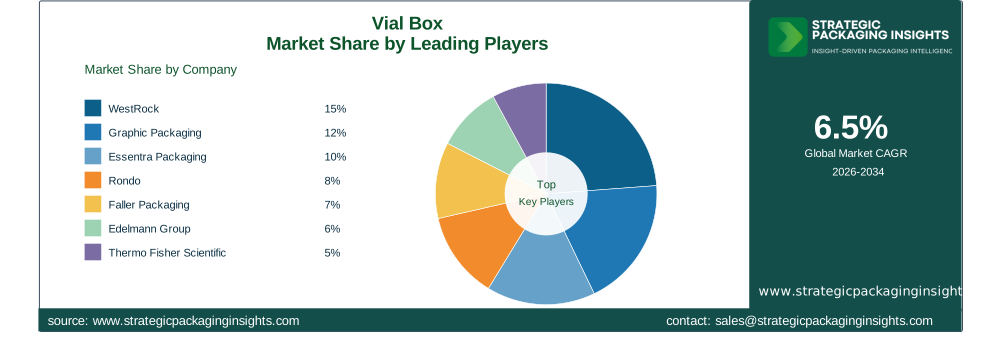
WestRock is a prominent player in the Vial Box market, known for its comprehensive range of packaging solutions and commitment to sustainability. The company has a strong presence in North America and Europe, with a focus on expanding its global footprint through strategic acquisitions and partnerships. Graphic Packaging is another major player, offering a diverse portfolio of packaging products and services. The company's emphasis on innovation and customer-centric solutions has helped it capture a significant share of the market.
Essentra Packaging is recognized for its expertise in developing high-quality, sustainable packaging solutions for the pharmaceutical industry. The company's focus on eco-friendly materials and recyclable packaging options has positioned it as a leader in the market. Rondo and Faller Packaging are also key players, known for their innovative designs and commitment to sustainability. These companies have established strong relationships with pharmaceutical companies and healthcare providers, enabling them to meet the evolving needs of the industry.
Thermo Fisher Scientific, Corning, and Eppendorf are notable players in the Vial Box market, offering specialized packaging solutions for laboratory and research applications. These companies have a strong focus on quality and innovation, with a commitment to meeting the stringent requirements of the healthcare sector. Their global presence and extensive distribution networks have enabled them to capture a significant share of the market. DWK Life Sciences is another key player, known for its expertise in developing high-quality glass and plastic packaging solutions for the pharmaceutical and laboratory sectors.
Key Highlights
- The Vial Box market is projected to grow from USD 1.70 billion in 2025 to USD 3.00 billion by 2034, at a CAGR of 6.5%.
- Key players include WestRock, Graphic Packaging, and Essentra Packaging, leading the market with innovative solutions.
- Increasing demand for sustainable packaging solutions is driving market growth.
- Technological advancements in packaging design and materials are enhancing product offerings.
- Regulatory compliance and raw material price volatility are major challenges for the market.
- North America and Europe are key regions, with significant market share and growth potential.
- Pharmaceuticals and healthcare sectors are the primary end-users of vial boxes.
- Smart packaging technologies, such as RFID tags and temperature sensors, are gaining traction.
- Companies are focusing on eco-friendly materials and recyclable packaging options to meet sustainability goals.
Vial Box Market Segments Insights

Material Type Analysis
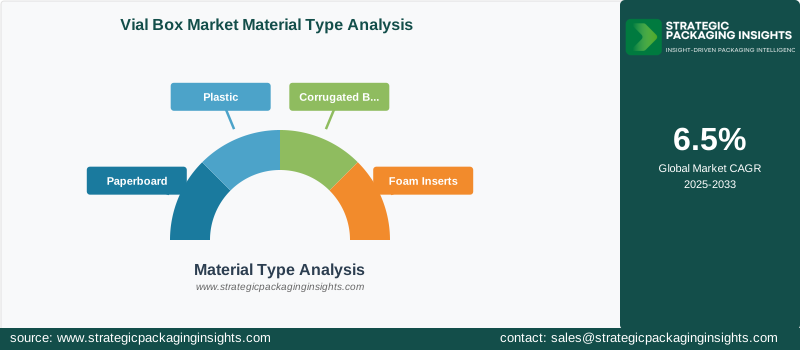
The Vial Box market is segmented by material type, including paperboard, plastic, corrugated board, and foam inserts. Paperboard is a popular choice due to its lightweight nature and recyclability, making it an eco-friendly option for packaging. Companies like WestRock and Graphic Packaging are leveraging paperboard to create sustainable packaging solutions that meet the growing demand for environmentally friendly products. Plastic, while less sustainable, offers durability and protection, making it suitable for high-value pharmaceutical products. Corrugated board and foam inserts provide additional cushioning and protection, catering to the needs of sensitive and fragile vials.
Innovation in material technology is driving the development of new and improved packaging solutions. Companies are investing in research and development to create materials that offer enhanced protection and sustainability. The use of biodegradable plastics and recycled materials is gaining traction, aligning with global sustainability goals. As consumer preferences shift towards eco-friendly products, companies are focusing on developing packaging solutions that minimize environmental impact while maintaining functionality and safety.
Product Type Analysis
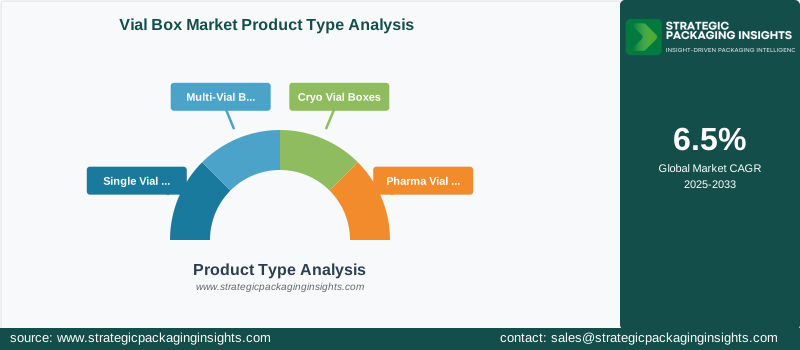
The Vial Box market is also segmented by product type, including single vial boxes, multi-vial boxes, cryo vial boxes, and pharma vial cartons. Single vial boxes are designed for individual vials, providing secure and efficient packaging for small quantities. Multi-vial boxes offer convenience and efficiency for larger quantities, catering to the needs of pharmaceutical companies and healthcare providers. Cryo vial boxes are specifically designed for the storage and transportation of cryogenic vials, ensuring the integrity and safety of temperature-sensitive products.
Pharma vial cartons are gaining popularity due to their versatility and ability to accommodate various vial sizes and configurations. Companies are focusing on developing innovative designs that enhance functionality and user experience. The integration of smart packaging technologies, such as tamper-evident features and RFID tags, is becoming increasingly important, providing additional security and traceability for pharmaceutical products. As the demand for secure and efficient packaging solutions continues to grow, companies are investing in product development to meet the evolving needs of the market.
Application Analysis
The Vial Box market serves a wide range of applications, including pharmaceuticals, diagnostics, biobanking, and laboratory storage. The pharmaceutical sector is the largest end-user, driven by the increasing demand for secure and efficient packaging solutions for drug storage and transportation. Companies like Essentra Packaging and Rondo are focusing on developing packaging solutions that meet the stringent requirements of the pharmaceutical industry, ensuring the safety and integrity of products throughout the supply chain.
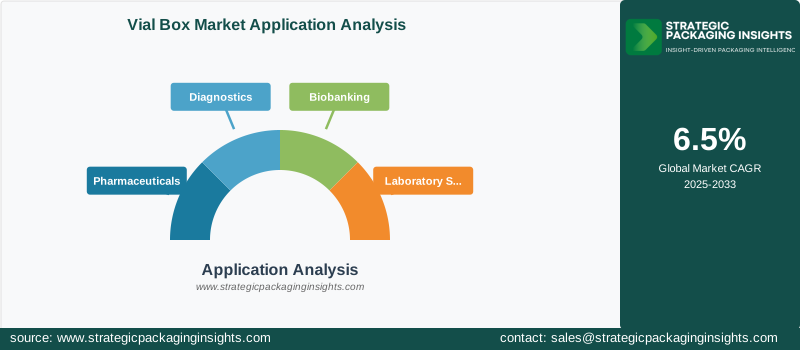
Diagnostics and biobanking are also significant applications, with the growing demand for secure and efficient storage solutions for biological samples and diagnostic reagents. The rise in research and development activities in the healthcare sector is driving demand for vial boxes, with companies investing in innovative packaging solutions that enhance functionality and user experience. Laboratory storage is another key application, with companies focusing on developing packaging solutions that meet the specific needs of laboratory environments, ensuring the safety and integrity of samples and reagents.
End Use Analysis
The Vial Box market is segmented by end use, including pharma companies, hospitals, laboratories, and research institutes. Pharma companies are the largest end-users, driven by the increasing demand for secure and efficient packaging solutions for drug storage and transportation. Companies like WestRock and Graphic Packaging are focusing on developing packaging solutions that meet the specific needs of pharmaceutical companies, ensuring the safety and integrity of products throughout the supply chain.
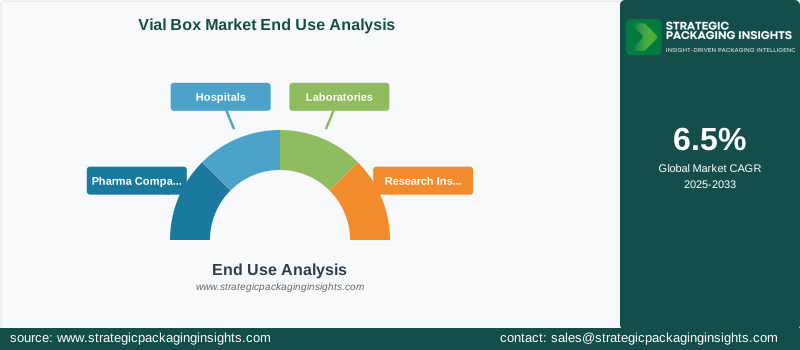
Hospitals and laboratories are also significant end-users, with the growing demand for secure and efficient storage solutions for biological samples and diagnostic reagents. The rise in research and development activities in the healthcare sector is driving demand for vial boxes, with companies investing in innovative packaging solutions that enhance functionality and user experience. Research institutes are another key end-user, with companies focusing on developing packaging solutions that meet the specific needs of research environments, ensuring the safety and integrity of samples and reagents.
Vial Box Market Segments
The Vial Box market has been segmented on the basis ofMaterial Type
- Paperboard
- Plastic
- Corrugated Board
- Foam Inserts
Product Type
- Single Vial Boxes
- Multi-Vial Boxes
- Cryo Vial Boxes
- Pharma Vial Cartons
Application
- Pharmaceuticals
- Diagnostics
- Biobanking
- Laboratory Storage
End Use
- Pharma Companies
- Hospitals
- Laboratories
- Research Institutes
Region
- Asia Pacific
- North America
- Latin America
- Europe
- Middle East & Africa




