


Vacuum Thermoformed Packaging Market Outlook
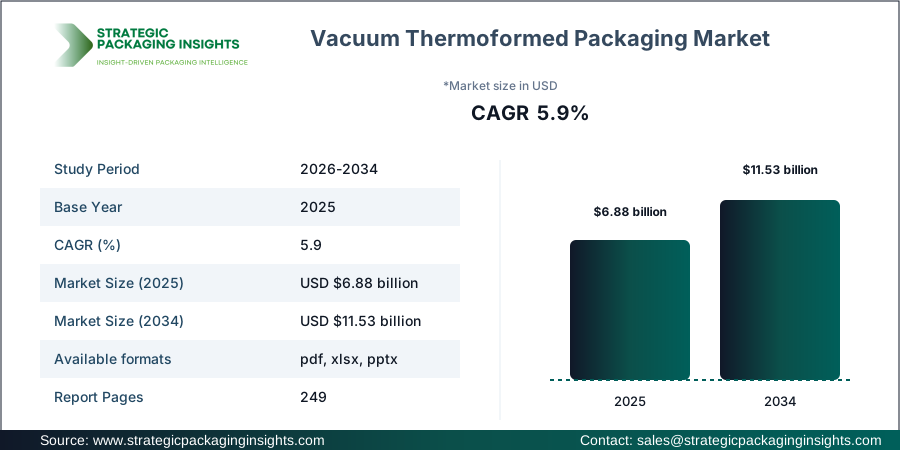
The Vacuum Thermoformed Packaging market was valued at $6.88 billion in 2025 and is projected to reach $11.53 billion by 2034, growing at a CAGR of 5.9% during the forecast period 2026-2034. This market is experiencing robust growth driven by the increasing demand for lightweight and cost-effective packaging solutions across various industries. The food and beverage sector, in particular, is a significant contributor to this growth, as vacuum thermoformed packaging offers superior protection and extends the shelf life of perishable goods. Additionally, the healthcare industry is adopting these packaging solutions for medical devices and pharmaceuticals due to their ability to maintain sterility and integrity. The rise in e-commerce and the need for efficient packaging solutions that ensure product safety during transit further bolster the market's expansion.
However, the market faces certain restraints, including stringent environmental regulations regarding plastic usage and disposal. The increasing focus on sustainability and the demand for eco-friendly packaging solutions are pushing manufacturers to innovate and develop biodegradable and recyclable materials. Despite these challenges, the market holds significant growth potential, particularly in emerging economies where the demand for packaged food and healthcare products is rising. The ongoing advancements in thermoforming technology, coupled with the development of new materials, are expected to create lucrative opportunities for market players in the coming years.
Report Scope
| Attributes | Details |
| Report Title | Vacuum Thermoformed Packaging Market Size, Future Growth and Forecast 2034 |
| By Material Type | PET, PP, PVC, PA/EVOH, PE |
| By Application | Meat Packaging, Cheese Packaging, Medical Packaging, Industrial Components |
| By Packaging Type | Vacuum Packs, Skin Packs, Rigid Trays, Flexible Packs |
| By End Use | Food Processors, Healthcare, Industrial Goods, Packaging Converters |
| Region | Asia Pacific, North America, Latin America, Europe, Middle East & Africa |
| Base Year | 2025 |
| Historic Period | 2018-2024 |
| Forecast Period | 2026-2034 |
| Number of Pages | 249 |
| Customization Available | Yes* |
Opportunities & Threats
The Vacuum Thermoformed Packaging market presents numerous opportunities, particularly in the realm of sustainable packaging solutions. As consumers become more environmentally conscious, there is a growing demand for packaging materials that are not only effective but also eco-friendly. This shift in consumer preference is driving manufacturers to explore biodegradable and recyclable materials, which can significantly reduce the environmental impact of packaging waste. Additionally, the rise of e-commerce and online retailing is creating a need for innovative packaging solutions that can ensure product safety and integrity during transit. This trend is expected to drive the demand for vacuum thermoformed packaging, which offers superior protection and durability.
Another opportunity lies in the healthcare sector, where the demand for sterile and secure packaging solutions is on the rise. Vacuum thermoformed packaging is increasingly being used for medical devices and pharmaceuticals, as it provides an effective barrier against contamination and ensures product integrity. The growing focus on healthcare infrastructure development in emerging economies is expected to further boost the demand for these packaging solutions. Moreover, advancements in thermoforming technology are enabling manufacturers to produce more complex and customized packaging designs, catering to the specific needs of various industries.
Despite the promising opportunities, the Vacuum Thermoformed Packaging market faces certain threats, primarily related to environmental concerns and regulatory challenges. The increasing scrutiny on plastic usage and disposal is pushing manufacturers to comply with stringent regulations, which can increase production costs and impact profitability. Additionally, the volatility in raw material prices, particularly petroleum-based plastics, poses a significant challenge for market players. To mitigate these threats, companies are investing in research and development to create sustainable and cost-effective packaging solutions that align with regulatory requirements and consumer expectations.
Drivers & Challenges
The Vacuum Thermoformed Packaging market is driven by several key factors, including the growing demand for lightweight and cost-effective packaging solutions. The food and beverage industry, in particular, is a major driver of this market, as vacuum thermoformed packaging offers superior protection and extends the shelf life of perishable goods. Additionally, the increasing popularity of ready-to-eat meals and convenience foods is boosting the demand for efficient packaging solutions that can maintain product freshness and quality. The healthcare sector is also a significant driver, as vacuum thermoformed packaging is widely used for medical devices and pharmaceuticals due to its ability to maintain sterility and integrity.
Another important driver is the rise of e-commerce and online retailing, which is creating a need for innovative packaging solutions that can ensure product safety and integrity during transit. Vacuum thermoformed packaging is well-suited for this purpose, as it offers superior protection and durability. Furthermore, advancements in thermoforming technology are enabling manufacturers to produce more complex and customized packaging designs, catering to the specific needs of various industries. These technological advancements are expected to drive the market's growth in the coming years.
Despite the positive drivers, the Vacuum Thermoformed Packaging market faces several challenges, including environmental concerns and regulatory pressures. The increasing focus on sustainability and the demand for eco-friendly packaging solutions are pushing manufacturers to innovate and develop biodegradable and recyclable materials. However, complying with stringent environmental regulations can increase production costs and impact profitability. Additionally, the volatility in raw material prices, particularly petroleum-based plastics, poses a significant challenge for market players. To overcome these challenges, companies are investing in research and development to create sustainable and cost-effective packaging solutions that align with regulatory requirements and consumer expectations.
Market Share Analysis
The Vacuum Thermoformed Packaging market is characterized by a competitive landscape with several key players vying for market share. Among the leading companies are Amcor, Sealed Air, Klöckner Pentaplast, Berry Global, Winpak, Coveris, TekniPlex, Multivac, SÜDPACK, and Nelipak Healthcare Packaging. These companies are at the forefront of innovation, continuously investing in research and development to enhance their product offerings and meet the evolving demands of consumers. The competitive rivalry in this market is intense, with players focusing on strategic partnerships, mergers, and acquisitions to expand their market presence and gain a competitive edge.
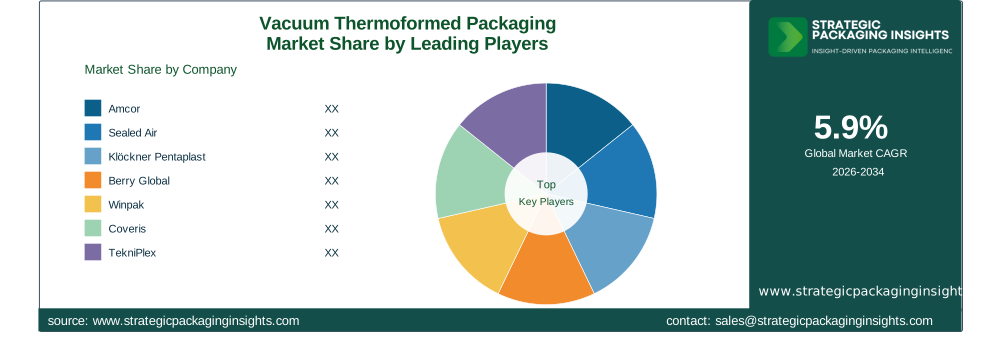
Amcor is a prominent player in the Vacuum Thermoformed Packaging market, known for its innovative packaging solutions and commitment to sustainability. The company has a strong global presence and offers a wide range of packaging products catering to various industries, including food and beverage, healthcare, and industrial goods. Sealed Air is another key player, renowned for its advanced packaging technologies and focus on enhancing product safety and shelf life. The company's diverse product portfolio and strong distribution network have helped it maintain a significant market share.
Klöckner Pentaplast is a leading provider of plastic packaging solutions, with a strong emphasis on sustainability and innovation. The company offers a comprehensive range of vacuum thermoformed packaging products, catering to the needs of the food, healthcare, and consumer goods industries. Berry Global is also a major player in this market, known for its extensive product portfolio and focus on delivering high-quality packaging solutions. The company's commitment to sustainability and innovation has helped it maintain a competitive position in the market.
Winpak, Coveris, and TekniPlex are other notable players in the Vacuum Thermoformed Packaging market, each with a strong focus on innovation and customer satisfaction. These companies are continuously investing in research and development to enhance their product offerings and meet the evolving demands of consumers. Multivac, SÜDPACK, and Nelipak Healthcare Packaging are also key players, known for their advanced packaging technologies and commitment to sustainability. These companies are well-positioned to capitalize on the growing demand for vacuum thermoformed packaging solutions across various industries.
Key Highlights
- The Vacuum Thermoformed Packaging market is projected to grow at a CAGR of 5.9% from 2026 to 2034.
- Increasing demand for lightweight and cost-effective packaging solutions is driving market growth.
- The food and beverage industry is a major contributor to the market's expansion.
- Advancements in thermoforming technology are enabling more complex and customized packaging designs.
- Environmental concerns and regulatory pressures are pushing manufacturers to develop sustainable packaging solutions.
- The healthcare sector is increasingly adopting vacuum thermoformed packaging for medical devices and pharmaceuticals.
- The rise of e-commerce is creating a need for innovative packaging solutions that ensure product safety during transit.
- Key players in the market include Amcor, Sealed Air, Klöckner Pentaplast, Berry Global, and Winpak.
- Emerging economies present significant growth opportunities for market players.
Top Countries Insights
In the Vacuum Thermoformed Packaging market, the United States stands out as a key player, with a market size of approximately $2.5 billion and a CAGR of 6%. The country's robust food and beverage industry, coupled with the growing demand for convenient and sustainable packaging solutions, drives this growth. The presence of major market players and continuous technological advancements further bolster the market's expansion in the U.S.
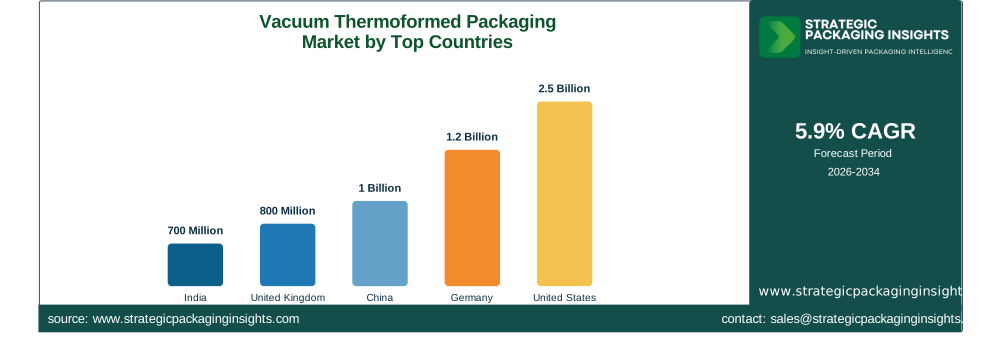
Germany is another significant market, with a market size of around $1.2 billion and a CAGR of 5%. The country's strong manufacturing sector and focus on sustainability are key growth drivers. Germany's stringent environmental regulations push manufacturers to innovate and develop eco-friendly packaging solutions, contributing to the market's growth.
China, with a market size of approximately $1 billion and a CAGR of 7%, is a rapidly growing market for vacuum thermoformed packaging. The country's expanding food processing industry and increasing consumer demand for packaged goods drive this growth. Additionally, the government's focus on improving healthcare infrastructure presents significant opportunities for market players.
In the United Kingdom, the market size is estimated at $800 million, with a CAGR of 4%. The country's strong retail sector and growing demand for sustainable packaging solutions are key growth drivers. The UK's focus on reducing plastic waste and promoting recycling further supports the market's expansion.
India, with a market size of around $700 million and a CAGR of 8%, is an emerging market for vacuum thermoformed packaging. The country's growing middle class and increasing demand for packaged food and healthcare products drive this growth. The government's initiatives to promote manufacturing and improve infrastructure also present significant opportunities for market players.
Vacuum Thermoformed Packaging Market Segments Insights

By Material Type Analysis
The Vacuum Thermoformed Packaging market is segmented by material type, including PET, PP, PVC, PA/EVOH, and PE. PET is a widely used material due to its excellent clarity, strength, and recyclability, making it a preferred choice for food and beverage packaging. The demand for PET is driven by its ability to provide a strong barrier against moisture and oxygen, ensuring product freshness and extending shelf life. PP is another popular material, known for its versatility and resistance to chemicals and heat. It is commonly used in medical and industrial packaging applications, where durability and protection are paramount.
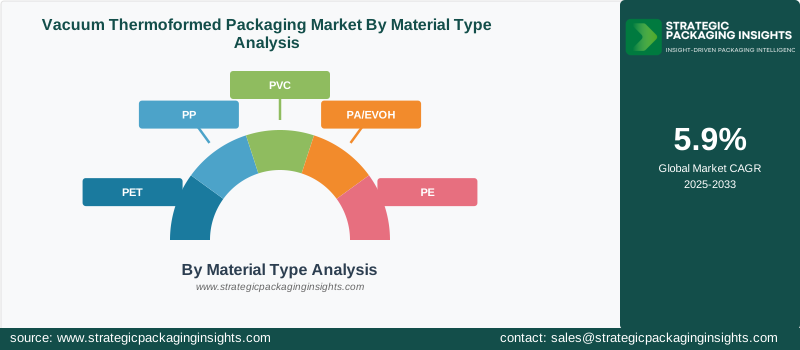
PVC, although facing environmental scrutiny, remains a significant material in the market due to its cost-effectiveness and ease of processing. It is often used in applications where transparency and flexibility are required. PA/EVOH is gaining traction as a high-barrier material, particularly in food packaging, where it provides excellent protection against oxygen and moisture. PE, known for its flexibility and toughness, is widely used in flexible packaging applications, offering a cost-effective solution for various industries.
By Application Analysis
The application segment of the Vacuum Thermoformed Packaging market includes meat packaging, cheese packaging, medical packaging, and industrial components. Meat packaging is a major application, driven by the need for packaging solutions that can extend shelf life and maintain product freshness. Vacuum thermoformed packaging provides an effective barrier against oxygen and moisture, making it ideal for preserving the quality of meat products. Cheese packaging is another significant application, where the demand for packaging solutions that prevent spoilage and maintain flavor is high.
Medical packaging is a growing segment, as vacuum thermoformed packaging offers superior protection and sterility for medical devices and pharmaceuticals. The increasing focus on healthcare infrastructure development in emerging economies is expected to drive the demand for these packaging solutions. Industrial components packaging is also gaining traction, as manufacturers seek durable and cost-effective solutions to protect their products during transit and storage.
By Packaging Type Analysis
The Vacuum Thermoformed Packaging market is segmented by packaging type, including vacuum packs, skin packs, rigid trays, and flexible packs. Vacuum packs are widely used in the food industry, offering an effective solution for preserving the freshness and quality of perishable goods. Skin packs, known for their ability to conform to the shape of the product, provide excellent protection and are commonly used for meat and seafood packaging. Rigid trays are popular in both food and non-food applications, offering a sturdy and reliable packaging solution.
Flexible packs are gaining popularity due to their lightweight and cost-effective nature. They are widely used in various industries, including food, healthcare, and industrial goods, offering a versatile packaging solution that can be customized to meet specific needs. The demand for flexible packs is driven by the increasing focus on sustainability and the need for packaging solutions that reduce material usage and waste.
By End Use Analysis
The end-use segment of the Vacuum Thermoformed Packaging market includes food processors, healthcare, industrial goods, and packaging converters. Food processors are a major end-user, as vacuum thermoformed packaging offers an effective solution for preserving the freshness and quality of food products. The healthcare sector is also a significant end-user, as these packaging solutions provide superior protection and sterility for medical devices and pharmaceuticals.
Industrial goods manufacturers are increasingly adopting vacuum thermoformed packaging to protect their products during transit and storage. Packaging converters, who specialize in transforming raw materials into finished packaging products, are also key end-users, as they seek innovative and cost-effective solutions to meet the evolving demands of their customers. The demand for vacuum thermoformed packaging in these end-use segments is driven by the need for efficient and sustainable packaging solutions that ensure product safety and integrity.
Vacuum Thermoformed Packaging Market Segments
The Vacuum Thermoformed Packaging market has been segmented on the basis ofBy Material Type
- PET
- PP
- PVC
- PA/EVOH
- PE
By Application
- Meat Packaging
- Cheese Packaging
- Medical Packaging
- Industrial Components
By Packaging Type
- Vacuum Packs
- Skin Packs
- Rigid Trays
- Flexible Packs
By End Use
- Food Processors
- Healthcare
- Industrial Goods
- Packaging Converters
Region
- Asia Pacific
- North America
- Latin America
- Europe
- Middle East & Africa




