


Vacuum-Refill Units Market Outlook
The Vacuum-Refill Units market was valued at $1.55 billion in 2025 and is projected to reach $3.67 billion by 2034, growing at a CAGR of 10.0% during the forecast period 2026-2034. This market is experiencing significant growth due to the increasing demand for sustainable packaging solutions. As consumers become more environmentally conscious, the need for refillable packaging options that reduce waste is on the rise. The market is also driven by technological advancements in refill units, which enhance user convenience and efficiency. The integration of smart dispensing technologies is further propelling market growth, as it offers precise and controlled dispensing, minimizing product wastage.
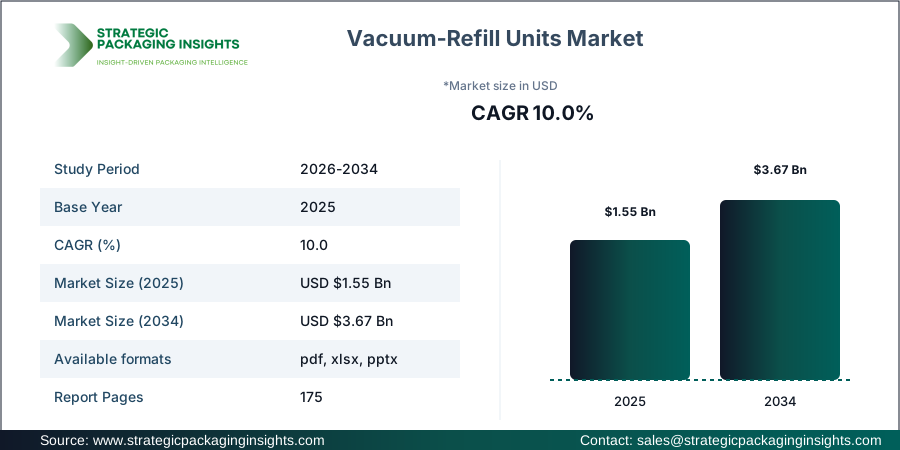
Despite the promising growth prospects, the Vacuum-Refill Units market faces certain challenges. Regulatory constraints related to packaging materials and environmental standards can pose hurdles for market players. Additionally, the initial investment required for setting up refill stations can be a deterrent for small and medium enterprises. However, the potential for growth remains substantial, especially with the increasing adoption of refill units by major FMCG brands and retailers. The market is also witnessing a shift towards automated refill stations, which offer enhanced efficiency and user experience. As the market continues to evolve, companies are focusing on innovation and strategic partnerships to capitalize on emerging opportunities.
Report Scope
| Attributes | Details |
| Report Title | Vacuum-Refill Units Market Size, Future Growth and Forecast 2034 |
| Product Type | Countertop Refill Units, Wall-Mounted Refill Units, Automated Refill Stations |
| Application | Personal Care, Home Care, Foodservice |
| Technology | Vacuum Filling, Pump Filling, Smart Dispensing |
| End Use | Retailers, FMCG Brands, Hospitality, Refill Stores |
| Region | Asia Pacific, North America, Latin America, Europe, Middle East & Africa |
| Base Year | 2025 |
| Historic Period | 2018-2024 |
| Forecast Period | 2026-2034 |
| Number of Pages | 175 |
| Customization Available | Yes* |
Opportunities & Threats
The Vacuum-Refill Units market presents numerous opportunities for growth, particularly in the realm of sustainability. As environmental concerns continue to rise, consumers are increasingly seeking eco-friendly packaging solutions. This shift in consumer preference is driving demand for refillable units, which significantly reduce packaging waste. Companies that can innovate and offer sustainable solutions stand to gain a competitive edge in the market. Additionally, the integration of smart technologies in refill units presents a lucrative opportunity. Smart dispensing systems not only enhance user convenience but also provide valuable data insights for companies, enabling them to optimize their supply chains and improve customer satisfaction.
Another opportunity lies in the expansion of refill units into new application areas. While personal care and home care are the primary applications, there is potential for growth in the foodservice sector. As consumers become more health-conscious, the demand for refillable units for food and beverage products is expected to rise. This presents an opportunity for companies to diversify their product offerings and tap into new markets. Furthermore, the increasing adoption of refill units by major retailers and FMCG brands is expected to drive market growth. These companies are recognizing the benefits of refill units in terms of cost savings and environmental impact, leading to increased investment in this area.
However, the market is not without its threats. One of the primary challenges is the regulatory landscape, which can be complex and vary significantly across regions. Companies must navigate these regulations carefully to ensure compliance and avoid potential penalties. Additionally, the initial cost of setting up refill stations can be a barrier for smaller companies, limiting their ability to compete with larger players. The market is also susceptible to economic fluctuations, which can impact consumer spending and demand for refill units. Despite these challenges, the overall outlook for the Vacuum-Refill Units market remains positive, with significant growth potential in the coming years.
Drivers & Challenges
The Vacuum-Refill Units market is primarily driven by the growing consumer demand for sustainable packaging solutions. As awareness of environmental issues increases, consumers are seeking alternatives to traditional single-use packaging. Refillable units offer a viable solution, reducing packaging waste and promoting sustainability. This shift in consumer preference is a major driver of market growth, as companies strive to meet the demand for eco-friendly packaging options. Additionally, technological advancements in refill units are driving market expansion. The integration of smart dispensing technologies enhances user convenience and efficiency, making refill units more appealing to consumers and businesses alike.
Another key driver of the Vacuum-Refill Units market is the increasing adoption of refill units by major retailers and FMCG brands. These companies are recognizing the benefits of refill units in terms of cost savings and environmental impact. By investing in refill stations, they can reduce packaging costs and enhance their sustainability credentials. This trend is expected to continue, driving further market growth. Additionally, the expansion of refill units into new application areas, such as foodservice, presents a significant growth opportunity. As consumers become more health-conscious, the demand for refillable units for food and beverage products is expected to rise, further driving market expansion.
Despite the positive growth drivers, the Vacuum-Refill Units market faces several challenges. One of the primary challenges is the regulatory landscape, which can be complex and vary significantly across regions. Companies must navigate these regulations carefully to ensure compliance and avoid potential penalties. Additionally, the initial cost of setting up refill stations can be a barrier for smaller companies, limiting their ability to compete with larger players. The market is also susceptible to economic fluctuations, which can impact consumer spending and demand for refill units. Despite these challenges, the overall outlook for the Vacuum-Refill Units market remains positive, with significant growth potential in the coming years.
Market Share Analysis
The competitive landscape of the Vacuum-Refill Units market is characterized by the presence of several key players who are driving innovation and growth. Companies such as Algramo, Loop, and TerraCycle are at the forefront of the market, offering innovative refill solutions that cater to the growing demand for sustainable packaging. These companies are leveraging technology to enhance the functionality and efficiency of their refill units, providing a competitive edge in the market. Additionally, major FMCG brands like Unilever and Procter & Gamble are investing in refill units as part of their sustainability initiatives, further driving market growth.

Algramo is a notable player in the market, known for its innovative approach to refillable packaging. The company offers a range of refill units that are designed to reduce packaging waste and promote sustainability. Loop, another key player, has partnered with major brands to offer a circular shopping platform that allows consumers to purchase products in reusable packaging. TerraCycle is also making significant strides in the market, offering a range of refill solutions that cater to various industries, including personal care and home care.
Unilever and Procter & Gamble are major FMCG brands that are investing in refill units as part of their sustainability initiatives. These companies are recognizing the benefits of refill units in terms of cost savings and environmental impact, leading to increased investment in this area. Replenish is another key player in the market, offering innovative refill solutions that cater to the growing demand for sustainable packaging. The company is known for its patented refill system that allows consumers to mix concentrates with water, reducing packaging waste and promoting sustainability.
EcoSPIRITS, Sidel, Krones, and Tetra Pak are also notable players in the market, offering a range of refill solutions that cater to various industries. These companies are leveraging technology to enhance the functionality and efficiency of their refill units, providing a competitive edge in the market. As the market continues to evolve, companies are focusing on innovation and strategic partnerships to capitalize on emerging opportunities. The competitive landscape is expected to remain dynamic, with companies striving to meet the growing demand for sustainable packaging solutions.
Key Highlights
- The Vacuum-Refill Units market is projected to grow at a CAGR of 10.0% from 2026 to 2034.
- Technological advancements in refill units are driving market growth.
- Increasing consumer demand for sustainable packaging solutions is a major market driver.
- Regulatory constraints pose challenges for market players.
- Major FMCG brands are investing in refill units as part of their sustainability initiatives.
- The market is witnessing a shift towards automated refill stations.
- Expansion into new application areas, such as foodservice, presents growth opportunities.
- Smart dispensing technologies are enhancing user convenience and efficiency.
- Initial investment costs can be a barrier for smaller companies.
- The competitive landscape is characterized by the presence of several key players driving innovation.
Top Countries Insights
In the Vacuum-Refill Units market, the United States stands out as a key player, with a market size of approximately $1.2 billion and a CAGR of 8%. The country's strong focus on sustainability and environmental responsibility is driving demand for refillable packaging solutions. Government policies promoting eco-friendly practices and consumer awareness campaigns are further boosting market growth. However, regulatory challenges related to packaging materials remain a concern for market players.
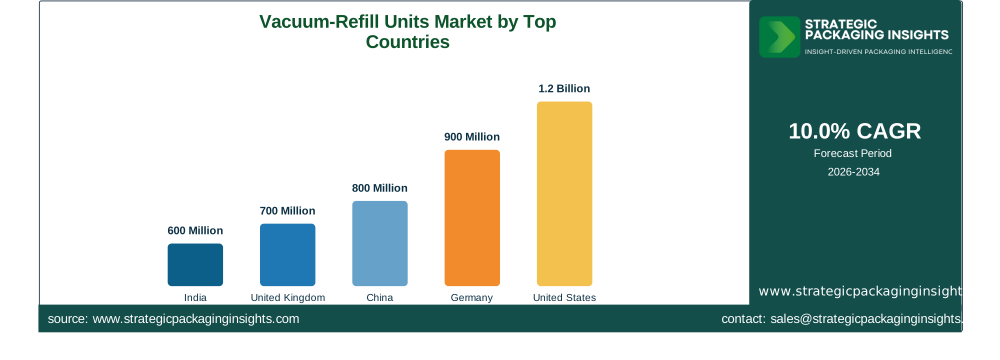
Germany is another significant market, with a market size of around $900 million and a CAGR of 7%. The country's robust manufacturing sector and emphasis on innovation are key growth drivers. The German government's commitment to reducing plastic waste and promoting sustainable packaging solutions is also contributing to market expansion. However, the high cost of implementing refill stations can be a barrier for smaller companies.
China is experiencing rapid growth in the Vacuum-Refill Units market, with a market size of $800 million and a CAGR of 12%. The country's large population and increasing consumer awareness of environmental issues are driving demand for refillable packaging solutions. Government initiatives to reduce plastic waste and promote sustainable practices are further supporting market growth. However, regulatory complexities and economic fluctuations pose challenges for market players.
In the United Kingdom, the Vacuum-Refill Units market is valued at $700 million, with a CAGR of 6%. The country's strong focus on sustainability and consumer demand for eco-friendly packaging solutions are key growth drivers. Government policies promoting waste reduction and recycling are also contributing to market expansion. However, the regulatory landscape can be complex, posing challenges for companies operating in the market.
India is emerging as a promising market for Vacuum-Refill Units, with a market size of $600 million and a CAGR of 10%. The country's growing middle class and increasing consumer awareness of environmental issues are driving demand for refillable packaging solutions. Government initiatives to promote sustainable practices and reduce plastic waste are further supporting market growth. However, the high cost of implementing refill stations can be a barrier for smaller companies.
Vacuum-Refill Units Market Segments Insights

Product Type Analysis
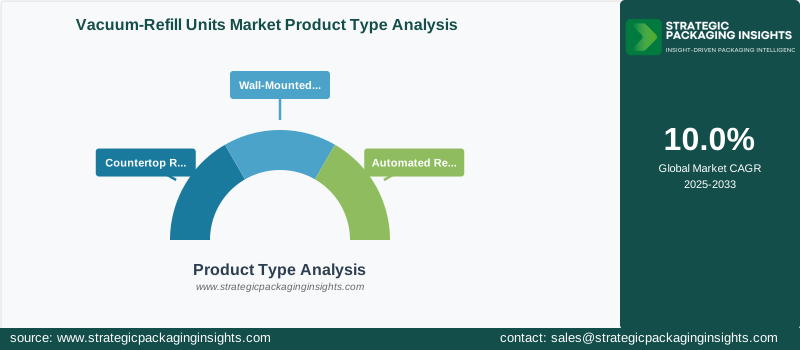
The Vacuum-Refill Units market is segmented by product type into countertop refill units, wall-mounted refill units, and automated refill stations. Countertop refill units are popular in retail and hospitality settings due to their ease of use and convenience. These units are designed to be placed on countertops, making them accessible to consumers and easy to integrate into existing store layouts. Wall-mounted refill units, on the other hand, are ideal for locations with limited space. These units can be mounted on walls, freeing up valuable floor space and providing a sleek, modern look. Automated refill stations are gaining traction due to their efficiency and user-friendly design. These stations offer a seamless refill experience, with automated dispensing and payment systems that enhance user convenience.
The demand for automated refill stations is expected to grow significantly during the forecast period, driven by advancements in technology and increasing consumer preference for convenience. These stations are equipped with smart dispensing systems that offer precise and controlled dispensing, minimizing product wastage. Additionally, the integration of digital payment systems and data analytics capabilities is enhancing the functionality of automated refill stations, making them an attractive option for retailers and FMCG brands. As the market continues to evolve, companies are focusing on innovation and strategic partnerships to capitalize on emerging opportunities in the product type segment.
Application Analysis
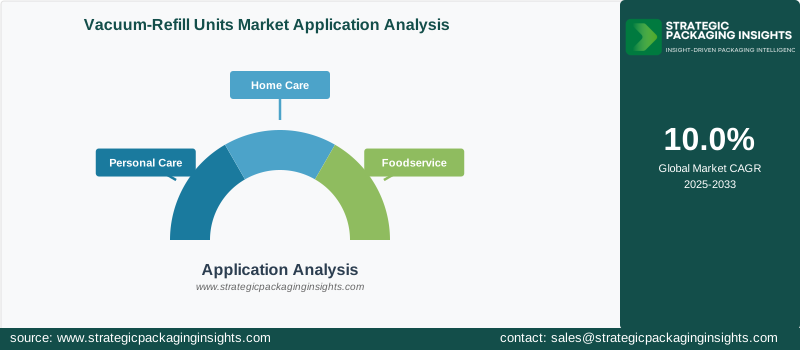
The Vacuum-Refill Units market is segmented by application into personal care, home care, and foodservice. The personal care segment is a major driver of market growth, as consumers increasingly seek sustainable packaging solutions for products such as shampoos, conditioners, and lotions. Refillable units offer a convenient and eco-friendly alternative to traditional packaging, reducing waste and promoting sustainability. The home care segment is also experiencing growth, with refill units being used for products such as cleaning solutions and detergents. These units offer a cost-effective and environmentally friendly solution for consumers, driving demand in the home care segment.
The foodservice segment presents a significant growth opportunity for the Vacuum-Refill Units market. As consumers become more health-conscious, the demand for refillable units for food and beverage products is expected to rise. Refillable units offer a convenient and hygienic solution for dispensing food and beverages, making them an attractive option for foodservice providers. Additionally, the integration of smart dispensing technologies in refill units is enhancing their functionality and appeal, further driving demand in the foodservice segment. As the market continues to expand, companies are focusing on innovation and strategic partnerships to capitalize on emerging opportunities in the application segment.
Technology Analysis
The Vacuum-Refill Units market is segmented by technology into vacuum filling, pump filling, and smart dispensing. Vacuum filling technology is widely used in refill units due to its efficiency and precision. This technology allows for the quick and accurate filling of containers, minimizing product wastage and enhancing user convenience. Pump filling technology is also popular, particularly in applications where precise dosing is required. This technology offers a reliable and consistent filling solution, making it ideal for products such as personal care and home care items.
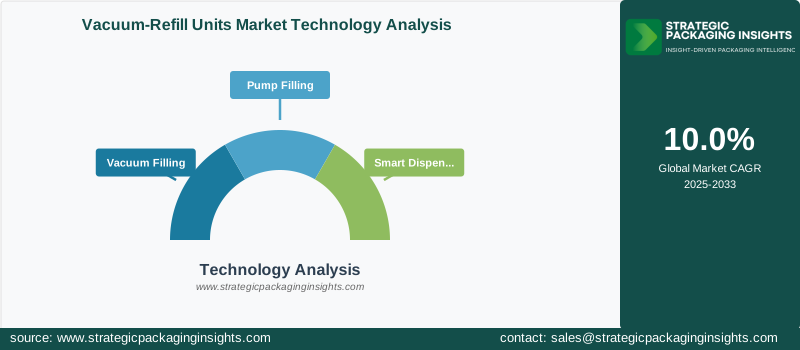
Smart dispensing technology is a key driver of market growth, offering enhanced functionality and user convenience. This technology integrates digital payment systems and data analytics capabilities, providing valuable insights for companies and enhancing the user experience. Smart dispensing systems offer precise and controlled dispensing, minimizing product wastage and reducing costs. As the market continues to evolve, companies are focusing on innovation and strategic partnerships to capitalize on emerging opportunities in the technology segment. The integration of smart technologies in refill units is expected to drive significant growth during the forecast period.
End Use Analysis
The Vacuum-Refill Units market is segmented by end use into retailers, FMCG brands, hospitality, and refill stores. Retailers are a major driver of market growth, as they increasingly adopt refill units to enhance their sustainability credentials and reduce packaging costs. Refill units offer a convenient and eco-friendly solution for retailers, allowing them to offer a wide range of products in refillable packaging. FMCG brands are also investing in refill units as part of their sustainability initiatives, recognizing the benefits of refillable packaging in terms of cost savings and environmental impact.
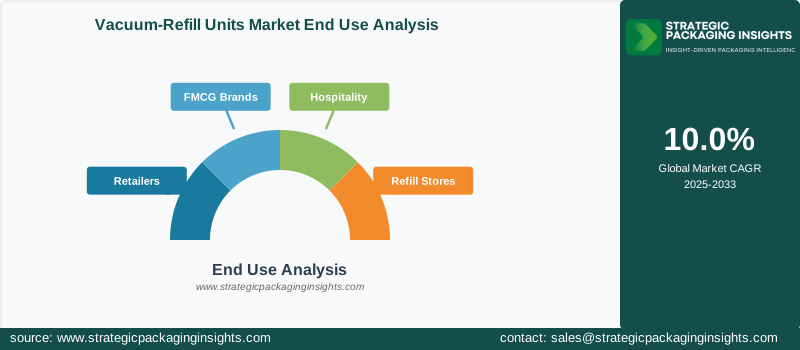
The hospitality sector presents a significant growth opportunity for the Vacuum-Refill Units market. As consumers become more environmentally conscious, the demand for sustainable packaging solutions in the hospitality sector is expected to rise. Refill units offer a convenient and hygienic solution for dispensing personal care and home care products, making them an attractive option for hotels and resorts. Refill stores are also gaining traction, offering consumers a convenient and eco-friendly alternative to traditional packaging. As the market continues to expand, companies are focusing on innovation and strategic partnerships to capitalize on emerging opportunities in the end use segment.
Vacuum-Refill Units Market Segments
The Vacuum-Refill Units market has been segmented on the basis ofProduct Type
- Countertop Refill Units
- Wall-Mounted Refill Units
- Automated Refill Stations
Application
- Personal Care
- Home Care
- Foodservice
Technology
- Vacuum Filling
- Pump Filling
- Smart Dispensing
End Use
- Retailers
- FMCG Brands
- Hospitality
- Refill Stores
Region
- Asia Pacific
- North America
- Latin America
- Europe
- Middle East & Africa




