


Vaccine Vial Rubber Stopper Market Outlook
The Vaccine Vial Rubber Stopper market was valued at $1.95 billion in 2025 and is projected to reach $3.84 billion by 2034, growing at a CAGR of 7.8% during the forecast period 2026-2034. This market is driven by the increasing demand for vaccines and biologics, which necessitates reliable and safe packaging solutions. The rise in global vaccination programs, especially in emerging economies, has significantly boosted the demand for vaccine vial rubber stoppers. Additionally, the growing pharmaceutical industry, coupled with advancements in drug delivery systems, is further propelling market growth. The need for high-quality, contamination-free packaging solutions is paramount, and rubber stoppers play a crucial role in maintaining the integrity of the vial contents.
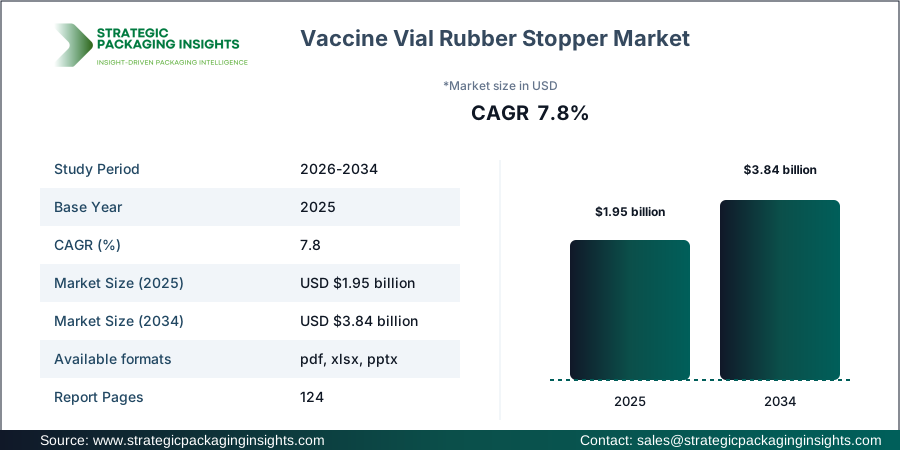
However, the market faces certain restraints, including stringent regulatory requirements and the high cost of raw materials. Regulatory bodies across the globe have set rigorous standards for the materials used in pharmaceutical packaging, which can pose challenges for manufacturers. Despite these challenges, the market holds significant growth potential due to the ongoing research and development activities aimed at improving the quality and performance of rubber stoppers. Innovations in material science and coating technologies are expected to open new avenues for market expansion. Moreover, the increasing focus on sustainable and eco-friendly packaging solutions is likely to drive future growth in this market.
Report Scope
| Attributes | Details |
| Report Title | Vaccine Vial Rubber Stopper Market Size, Future Growth and Forecast 2034 |
| By Product Type | Butyl Rubber Stoppers, Bromobutyl Stoppers, Chlorobutyl Stoppers, Coated Stoppers |
| By Vial Size | 2 ml, 5 ml, 10 ml, 20 ml |
| By Application | Vaccines, Biologics, Injectables, Lyophilized Drugs |
| By End Use | Pharma Companies, Vaccine Manufacturers, CDMOs, Hospitals |
| Region | Asia Pacific, North America, Latin America, Europe, Middle East & Africa |
| Base Year | 2025 |
| Historic Period | 2018-2024 |
| Forecast Period | 2026-2034 |
| Number of Pages | 124 |
| Customization Available | Yes* |
Opportunities & Threats
The Vaccine Vial Rubber Stopper market presents numerous opportunities, particularly in the realm of technological advancements and material innovations. The development of advanced rubber materials that offer enhanced chemical resistance and reduced extractables and leachables is a key area of focus. These innovations are crucial for maintaining the efficacy and safety of vaccines and biologics, thereby driving demand. Additionally, the increasing adoption of coated stoppers, which provide an extra layer of protection against contamination, is expected to create significant growth opportunities. The rise in personalized medicine and biologics also presents a lucrative opportunity for market players to expand their product offerings and cater to the evolving needs of the pharmaceutical industry.
Another opportunity lies in the expansion of manufacturing capabilities in emerging markets. Countries in Asia Pacific and Latin America are witnessing rapid growth in their pharmaceutical sectors, driven by increasing healthcare expenditure and government initiatives to boost local manufacturing. This trend is expected to create a favorable environment for the growth of the vaccine vial rubber stopper market. Furthermore, strategic collaborations and partnerships between key players and pharmaceutical companies can lead to the development of innovative solutions and enhance market penetration.
On the flip side, the market faces threats from the volatility in raw material prices and the availability of alternative packaging solutions. The cost of raw materials, such as butyl rubber, can fluctuate due to changes in supply and demand dynamics, impacting the overall production costs. Additionally, the emergence of alternative packaging solutions, such as plastic and glass vials with integrated closures, poses a threat to the traditional rubber stopper market. These alternatives offer benefits such as reduced risk of contamination and improved product stability, which could potentially limit the growth of the rubber stopper market.
Drivers & Challenges
The primary drivers of the Vaccine Vial Rubber Stopper market include the increasing demand for vaccines and biologics, driven by the rise in infectious diseases and the need for immunization programs. The COVID-19 pandemic has further accelerated the demand for vaccines, leading to a surge in the production of vaccine vials and, consequently, rubber stoppers. Additionally, the growing pharmaceutical industry, with its focus on developing new and innovative drug delivery systems, is driving the demand for high-quality packaging solutions. The emphasis on maintaining the sterility and integrity of vial contents is a critical factor propelling market growth.
Another significant driver is the advancements in material science and coating technologies. Manufacturers are investing in research and development to create rubber stoppers with improved chemical resistance and reduced extractables and leachables. These advancements are crucial for ensuring the safety and efficacy of vaccines and biologics, thereby boosting market demand. Furthermore, the increasing focus on sustainable and eco-friendly packaging solutions is driving innovation in the market, with companies exploring the use of biodegradable materials and environmentally friendly manufacturing processes.
Despite these drivers, the market faces several challenges, including stringent regulatory requirements and the high cost of raw materials. Regulatory bodies across the globe have established rigorous standards for the materials used in pharmaceutical packaging, which can pose challenges for manufacturers in terms of compliance and cost. Additionally, the volatility in raw material prices, particularly butyl rubber, can impact production costs and profitability. The availability of alternative packaging solutions, such as plastic and glass vials with integrated closures, also presents a challenge to the traditional rubber stopper market. These alternatives offer benefits such as reduced risk of contamination and improved product stability, which could potentially limit the growth of the rubber stopper market.
Market Share Analysis
The Vaccine Vial Rubber Stopper market is characterized by a competitive landscape with several key players vying for market share. West Pharmaceutical Services is a leading player in the market, known for its innovative solutions and extensive product portfolio. The company holds a significant market share due to its strong focus on research and development and its ability to offer customized solutions to meet the specific needs of its clients. Datwyler is another major player, renowned for its high-quality rubber stoppers and its commitment to sustainability and environmental responsibility.
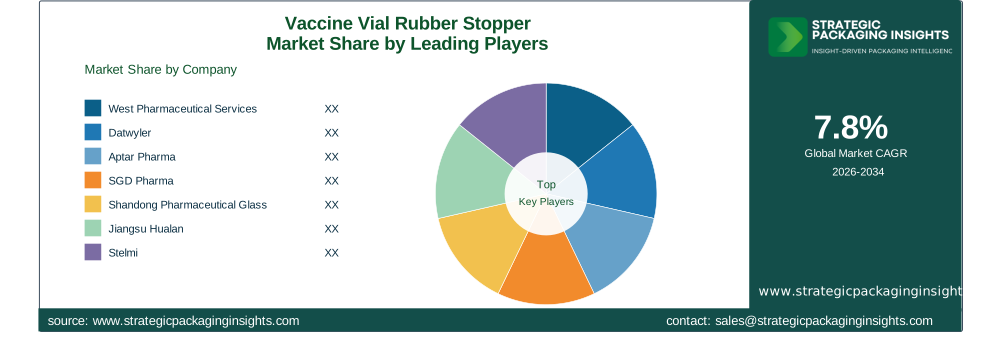
Aptar Pharma is a prominent player in the market, offering a wide range of rubber stoppers and closures for pharmaceutical applications. The company's focus on innovation and its strategic partnerships with leading pharmaceutical companies have helped it maintain a strong market position. SGD Pharma, a global leader in glass packaging solutions, also holds a notable market share in the rubber stopper segment, leveraging its expertise in pharmaceutical packaging to offer integrated solutions.
Shandong Pharmaceutical Glass and Jiangsu Hualan are key players in the Asia Pacific region, capitalizing on the growing demand for pharmaceutical packaging solutions in emerging markets. These companies have invested in expanding their manufacturing capabilities and enhancing their product offerings to cater to the evolving needs of the pharmaceutical industry. Stelmi, Daikyo Seiko, DWK Life Sciences, and Nipro are other significant players in the market, each with a strong focus on quality and innovation.
West Pharmaceutical Services, with its extensive product portfolio and strong focus on innovation, holds a significant market share. The company's commitment to research and development and its ability to offer customized solutions have helped it maintain a competitive edge. Datwyler, known for its high-quality rubber stoppers and sustainability initiatives, is another major player in the market. Aptar Pharma, with its focus on innovation and strategic partnerships, has also established a strong market presence. SGD Pharma, leveraging its expertise in pharmaceutical packaging, holds a notable market share in the rubber stopper segment.
Key Highlights
- The Vaccine Vial Rubber Stopper market is projected to grow at a CAGR of 7.8% from 2026 to 2034.
- Increasing demand for vaccines and biologics is driving market growth.
- Advancements in material science and coating technologies are key drivers.
- Stringent regulatory requirements pose challenges for manufacturers.
- Emerging markets in Asia Pacific and Latin America offer significant growth opportunities.
- Volatility in raw material prices is a major threat to market stability.
- Alternative packaging solutions present a challenge to traditional rubber stoppers.
- Key players include West Pharmaceutical Services, Datwyler, and Aptar Pharma.
- Focus on sustainable and eco-friendly packaging solutions is driving innovation.
- Strategic collaborations and partnerships are crucial for market expansion.
Top Countries Insights
In the Vaccine Vial Rubber Stopper market, the United States holds a significant market share, driven by its well-established pharmaceutical industry and the increasing demand for vaccines and biologics. The market in the U.S. is expected to grow at a CAGR of 6%, supported by government initiatives to boost local manufacturing and the presence of key market players. The stringent regulatory environment, however, poses challenges for manufacturers in terms of compliance and cost.
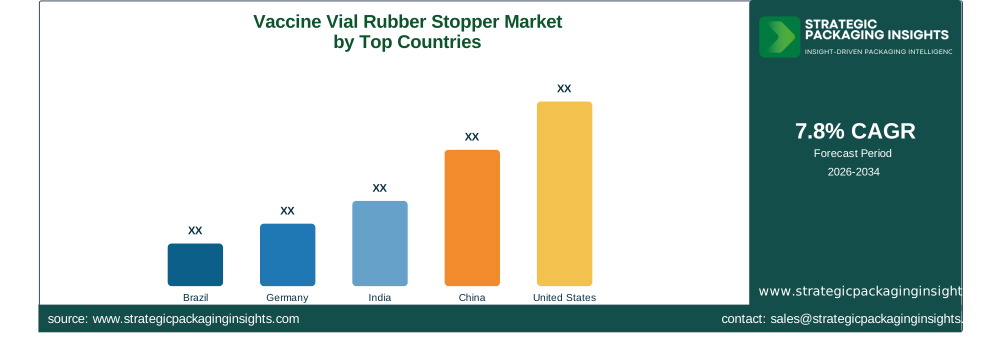
China is another major market for vaccine vial rubber stoppers, with a projected CAGR of 9%. The country's rapidly growing pharmaceutical sector, coupled with increasing healthcare expenditure, is driving demand for high-quality packaging solutions. Government initiatives to promote local manufacturing and the expansion of healthcare infrastructure are key growth drivers. However, the market faces challenges from the volatility in raw material prices and the availability of alternative packaging solutions.
India is witnessing significant growth in the vaccine vial rubber stopper market, with a CAGR of 8%. The country's expanding pharmaceutical industry and the increasing focus on vaccination programs are driving demand. Government initiatives to boost local manufacturing and the presence of a large number of pharmaceutical companies are key growth drivers. However, the market faces challenges from regulatory requirements and the high cost of raw materials.
Germany is a key market in Europe, with a projected CAGR of 5%. The country's well-established pharmaceutical industry and the increasing demand for biologics are driving market growth. The presence of key market players and the focus on innovation and sustainability are key growth drivers. However, the market faces challenges from stringent regulatory requirements and the availability of alternative packaging solutions.
Brazil is a significant market in Latin America, with a CAGR of 7%. The country's growing pharmaceutical sector and the increasing focus on vaccination programs are driving demand for vaccine vial rubber stoppers. Government initiatives to boost local manufacturing and the expansion of healthcare infrastructure are key growth drivers. However, the market faces challenges from the volatility in raw material prices and the availability of alternative packaging solutions.
Vaccine Vial Rubber Stopper Market Segments Insights

Product Type Analysis
The Vaccine Vial Rubber Stopper market is segmented by product type into Butyl Rubber Stoppers, Bromobutyl Stoppers, Chlorobutyl Stoppers, and Coated Stoppers. Butyl rubber stoppers are widely used due to their excellent chemical resistance and low permeability to gases and moisture, making them ideal for preserving the integrity of vial contents. Bromobutyl and chlorobutyl stoppers offer enhanced chemical resistance and are preferred for sensitive formulations. Coated stoppers, which provide an additional layer of protection against contamination, are gaining popularity due to their ability to maintain the sterility of the vial contents.
The demand for coated stoppers is expected to grow significantly during the forecast period, driven by the increasing focus on maintaining the safety and efficacy of vaccines and biologics. Manufacturers are investing in research and development to create advanced coatings that offer improved chemical resistance and reduced extractables and leachables. The growing emphasis on sustainable and eco-friendly packaging solutions is also driving innovation in this segment, with companies exploring the use of biodegradable materials and environmentally friendly manufacturing processes.
Vial Size Analysis
The market is also segmented by vial size into 2 ml, 5 ml, 10 ml, and 20 ml. The demand for smaller vial sizes, such as 2 ml and 5 ml, is increasing due to the rise in personalized medicine and the need for precise dosing. These smaller vials are preferred for vaccines and biologics, where maintaining the integrity of the vial contents is crucial. The 10 ml and 20 ml vial sizes are commonly used for larger volume formulations, such as injectables and lyophilized drugs.
The increasing demand for personalized medicine and biologics is driving the growth of the smaller vial size segment. Manufacturers are focusing on developing innovative solutions to cater to the evolving needs of the pharmaceutical industry. The growing emphasis on maintaining the sterility and integrity of vial contents is a key driver for this segment. Additionally, the rise in global vaccination programs is expected to boost demand for smaller vial sizes, as they offer precise dosing and reduced risk of contamination.
Application Analysis
The Vaccine Vial Rubber Stopper market is segmented by application into Vaccines, Biologics, Injectables, and Lyophilized Drugs. The demand for rubber stoppers in the vaccine segment is driven by the increasing focus on immunization programs and the rise in infectious diseases. The COVID-19 pandemic has further accelerated the demand for vaccines, leading to a surge in the production of vaccine vials and, consequently, rubber stoppers. The biologics segment is also witnessing significant growth, driven by the increasing demand for advanced therapies and personalized medicine.
The injectables segment is expected to grow at a steady pace, driven by the increasing prevalence of chronic diseases and the need for effective drug delivery systems. The lyophilized drugs segment is also witnessing growth, driven by the need for stable and long-lasting formulations. Manufacturers are focusing on developing innovative solutions to cater to the evolving needs of the pharmaceutical industry. The growing emphasis on maintaining the sterility and integrity of vial contents is a key driver for this segment.
End Use Analysis
The market is segmented by end use into Pharma Companies, Vaccine Manufacturers, CDMOs, and Hospitals. Pharma companies are the largest end users of vaccine vial rubber stoppers, driven by the increasing demand for vaccines and biologics. The rise in global vaccination programs and the focus on developing new and innovative drug delivery systems are key drivers for this segment. Vaccine manufacturers are also significant end users, driven by the increasing focus on immunization programs and the rise in infectious diseases.
CDMOs (Contract Development and Manufacturing Organizations) are witnessing significant growth, driven by the increasing outsourcing of pharmaceutical manufacturing activities. The need for high-quality, contamination-free packaging solutions is a key driver for this segment. Hospitals are also significant end users, driven by the increasing demand for vaccines and biologics. The growing emphasis on maintaining the sterility and integrity of vial contents is a key driver for this segment. Manufacturers are focusing on developing innovative solutions to cater to the evolving needs of the pharmaceutical industry.
Vaccine Vial Rubber Stopper Market Segments
The Vaccine Vial Rubber Stopper market has been segmented on the basis ofBy Product Type
- Butyl Rubber Stoppers
- Bromobutyl Stoppers
- Chlorobutyl Stoppers
- Coated Stoppers
By Vial Size
- 2 ml
- 5 ml
- 10 ml
- 20 ml
By Application
- Vaccines
- Biologics
- Injectables
- Lyophilized Drugs
By End Use
- Pharma Companies
- Vaccine Manufacturers
- CDMOs
- Hospitals
Region
- Asia Pacific
- North America
- Latin America
- Europe
- Middle East & Africa




