


Vaccine Transport Carrier Market Outlook
The Vaccine Transport Carrier market was valued at $1.27 billion in 2025 and is projected to reach $2.66 billion by 2034, growing at a CAGR of 8.5% during the forecast period 2026-2034. This market is witnessing significant growth due to the increasing demand for efficient vaccine distribution systems, especially in the wake of global immunization programs and the COVID-19 pandemic. The need for maintaining the cold chain integrity of vaccines is driving the adoption of advanced transport carriers. Additionally, technological advancements in vaccine carriers, such as the integration of IoT for real-time temperature monitoring, are further propelling market growth. The market is also benefiting from increased government investments in healthcare infrastructure and the expansion of pharmaceutical distribution networks.
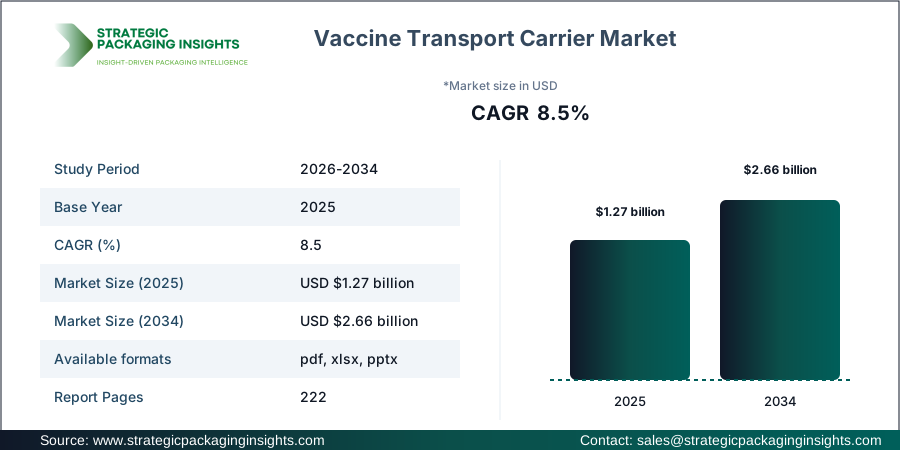
However, the market faces challenges such as high initial costs and the need for specialized handling and storage conditions. Regulatory constraints and the requirement for compliance with stringent standards also pose significant barriers. Despite these challenges, the market holds immense potential for growth, driven by the rising demand for vaccines in emerging economies and the ongoing development of new vaccines. The increasing focus on sustainable and eco-friendly transport solutions is also expected to create new opportunities for market players.
Report Scope
| Attributes | Details |
| Report Title | Vaccine Transport Carrier Market Size, Future Growth and Forecast 2034 |
| Product Type | Passive Vaccine Carriers, Active Vaccine Carriers, Cold Boxes, Portable Refrigerated Carriers |
| Temperature Range | 2–8°C, Frozen, Ultra-Low Temperature |
| Application | Immunization Programs, Clinical Trials, Pharma Distribution, Emergency Response |
| End Use | Hospitals, Government Health Agencies, Pharma Companies, NGOs |
| Region | Asia Pacific, North America, Latin America, Europe, Middle East & Africa |
| Base Year | 2025 |
| Historic Period | 2018-2024 |
| Forecast Period | 2026-2034 |
| Number of Pages | 222 |
| Customization Available | Yes* |
Opportunities & Threats
The Vaccine Transport Carrier market presents numerous opportunities, particularly in emerging economies where healthcare infrastructure is rapidly developing. The growing emphasis on immunization programs by governments and international organizations is driving demand for efficient vaccine transport solutions. Additionally, the increasing prevalence of infectious diseases and the need for timely vaccine distribution are creating significant growth opportunities. The market is also witnessing a surge in demand for portable and user-friendly vaccine carriers, which can be easily deployed in remote and rural areas. Furthermore, advancements in technology, such as the integration of IoT and AI for real-time monitoring and data analytics, are opening new avenues for innovation and growth in the market.
Another opportunity lies in the development of eco-friendly and sustainable vaccine transport solutions. With increasing awareness about environmental sustainability, there is a growing demand for carriers that minimize carbon footprint and reduce waste. Companies are investing in research and development to create biodegradable and reusable carriers, which not only meet regulatory standards but also appeal to environmentally conscious consumers. The expansion of pharmaceutical distribution networks and the rise of e-commerce in the healthcare sector are also expected to drive demand for advanced vaccine transport solutions.
Despite the promising opportunities, the Vaccine Transport Carrier market faces several threats. One of the primary challenges is the high cost associated with advanced vaccine carriers, which can be a significant barrier for small and medium-sized enterprises. Additionally, the market is subject to stringent regulatory requirements, which can increase operational costs and limit market entry for new players. The need for specialized handling and storage conditions also poses a challenge, as it requires skilled personnel and infrastructure, which may not be readily available in all regions. Furthermore, the market is highly competitive, with numerous players vying for market share, which can lead to price wars and reduced profit margins.
Drivers & Challenges
The Vaccine Transport Carrier market is primarily driven by the increasing demand for vaccines worldwide, particularly in the wake of the COVID-19 pandemic. The need for efficient and reliable vaccine distribution systems has become more critical than ever, as governments and healthcare organizations strive to ensure timely and safe delivery of vaccines to populations. The growing emphasis on immunization programs and the expansion of pharmaceutical distribution networks are also significant drivers of market growth. Additionally, technological advancements in vaccine carriers, such as the integration of IoT and AI for real-time monitoring and data analytics, are enhancing the efficiency and reliability of vaccine transport solutions.
Another key driver is the increasing focus on cold chain logistics, which is essential for maintaining the efficacy of vaccines. The development of advanced cold chain solutions, such as portable refrigerated carriers and cold boxes, is enabling the safe and efficient transport of vaccines across long distances and challenging environments. The rising demand for eco-friendly and sustainable transport solutions is also driving innovation in the market, as companies invest in research and development to create biodegradable and reusable carriers. Furthermore, government investments in healthcare infrastructure and the expansion of pharmaceutical distribution networks are expected to boost market growth.
Despite the positive drivers, the Vaccine Transport Carrier market faces several challenges. One of the primary challenges is the high cost associated with advanced vaccine carriers, which can be a significant barrier for small and medium-sized enterprises. Additionally, the market is subject to stringent regulatory requirements, which can increase operational costs and limit market entry for new players. The need for specialized handling and storage conditions also poses a challenge, as it requires skilled personnel and infrastructure, which may not be readily available in all regions. Furthermore, the market is highly competitive, with numerous players vying for market share, which can lead to price wars and reduced profit margins.
Market Share Analysis
The Vaccine Transport Carrier market is characterized by a highly competitive landscape, with several key players dominating the market. Companies such as B Medical Systems, Haier Biomedical, and Dometic hold significant market shares due to their extensive product portfolios and strong distribution networks. These companies have established themselves as leaders in the market by offering innovative and reliable vaccine transport solutions that meet the stringent requirements of the healthcare industry. Additionally, their focus on research and development has enabled them to introduce advanced technologies, such as IoT and AI, into their products, further enhancing their market position.
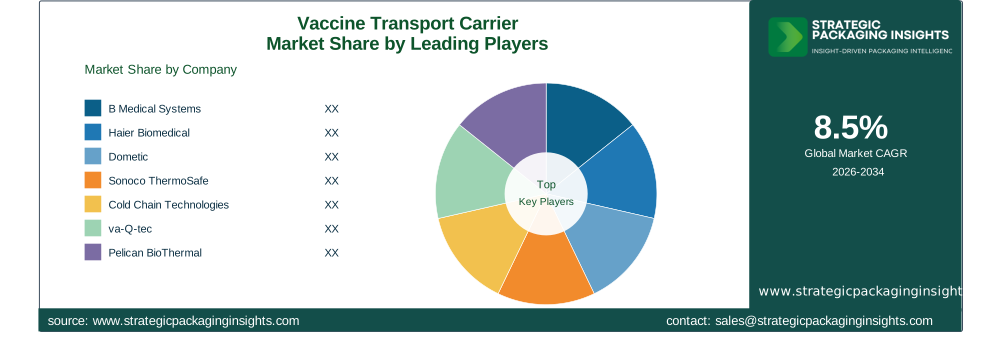
Other notable players in the market include Sonoco ThermoSafe, Cold Chain Technologies, and va-Q-tec, which have also made significant contributions to the market. These companies have leveraged their expertise in cold chain logistics to develop efficient and cost-effective vaccine transport solutions. Their strong focus on customer satisfaction and quality assurance has helped them build a loyal customer base and expand their market presence. Furthermore, their strategic partnerships and collaborations with healthcare organizations and government agencies have enabled them to tap into new markets and increase their market share.
Pelican BioThermal, Cryopak, Envirotainer, and Softbox Systems are also key players in the Vaccine Transport Carrier market. These companies have gained a competitive edge by offering a wide range of products that cater to different temperature requirements and applications. Their commitment to sustainability and environmental responsibility has also resonated with customers, further strengthening their market position. Additionally, their investments in research and development have allowed them to introduce innovative solutions that address the evolving needs of the healthcare industry.
Overall, the competitive landscape of the Vaccine Transport Carrier market is characterized by a mix of established players and emerging companies, each vying for market share through product innovation, strategic partnerships, and customer-centric approaches. The market is expected to witness further consolidation as companies seek to expand their product offerings and strengthen their distribution networks to meet the growing demand for vaccine transport solutions.
Key Highlights
- The Vaccine Transport Carrier market is projected to grow at a CAGR of 8.5% from 2026 to 2034.
- Technological advancements, such as IoT integration, are enhancing vaccine carrier efficiency.
- Eco-friendly and sustainable transport solutions are gaining traction in the market.
- Government investments in healthcare infrastructure are boosting market growth.
- Emerging economies present significant growth opportunities for market players.
- Stringent regulatory requirements pose challenges for new market entrants.
- High initial costs of advanced carriers can be a barrier for SMEs.
- Strong competition among key players is leading to price wars and reduced margins.
- Expansion of pharmaceutical distribution networks is driving demand for vaccine carriers.
- Focus on cold chain logistics is essential for maintaining vaccine efficacy.
Top Countries Insights
In the Vaccine Transport Carrier market, the United States holds a significant share, driven by its robust healthcare infrastructure and strong focus on immunization programs. The market in the U.S. is valued at approximately $650 million, with a CAGR of 7%. The country's emphasis on technological advancements and innovation in vaccine transport solutions is a key growth driver. Additionally, government initiatives to enhance healthcare infrastructure and expand vaccine distribution networks are contributing to market growth. However, the high cost of advanced carriers and stringent regulatory requirements pose challenges for market players.
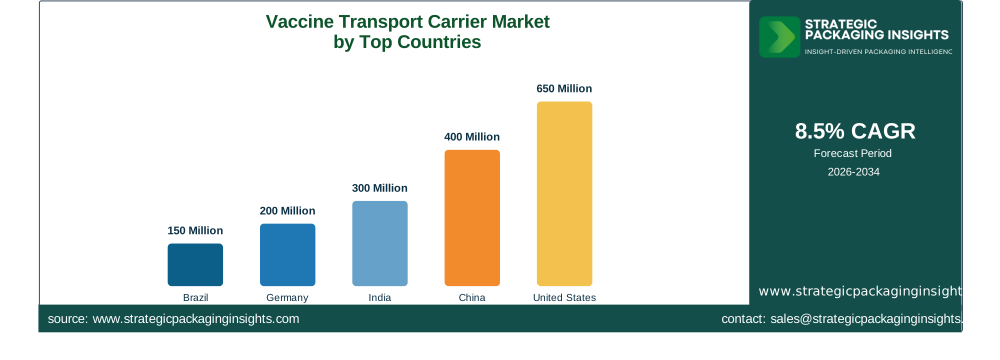
China is another major player in the Vaccine Transport Carrier market, with a market size of around $400 million and a CAGR of 10%. The country's large population and increasing demand for vaccines are driving market growth. The Chinese government's focus on expanding healthcare infrastructure and improving vaccine distribution systems is also contributing to the market's expansion. However, challenges such as regulatory constraints and the need for specialized handling and storage conditions remain.
India is experiencing rapid growth in the Vaccine Transport Carrier market, with a market size of approximately $300 million and a CAGR of 12%. The country's growing emphasis on immunization programs and the expansion of pharmaceutical distribution networks are key growth drivers. Additionally, government investments in healthcare infrastructure and the development of eco-friendly transport solutions are contributing to market growth. However, the high cost of advanced carriers and the need for skilled personnel pose challenges for market players.
Germany is a significant player in the European Vaccine Transport Carrier market, with a market size of around $200 million and a CAGR of 8%. The country's strong focus on innovation and technological advancements in vaccine transport solutions is driving market growth. Additionally, government initiatives to enhance healthcare infrastructure and expand vaccine distribution networks are contributing to market growth. However, challenges such as regulatory constraints and the high cost of advanced carriers remain.
Brazil is a key player in the Latin American Vaccine Transport Carrier market, with a market size of approximately $150 million and a CAGR of 9%. The country's growing emphasis on immunization programs and the expansion of pharmaceutical distribution networks are key growth drivers. Additionally, government investments in healthcare infrastructure and the development of eco-friendly transport solutions are contributing to market growth. However, challenges such as regulatory constraints and the need for specialized handling and storage conditions remain.
Vaccine Transport Carrier Market Segments Insights

Product Type Analysis
The Vaccine Transport Carrier market is segmented by product type into Passive Vaccine Carriers, Active Vaccine Carriers, Cold Boxes, and Portable Refrigerated Carriers. Passive Vaccine Carriers are widely used due to their cost-effectiveness and ease of use, making them ideal for remote and rural areas. These carriers rely on insulation and phase change materials to maintain the required temperature range, making them suitable for short-term transport. Active Vaccine Carriers, on the other hand, are equipped with refrigeration units and are used for long-distance transport and storage. They offer precise temperature control and are ideal for transporting temperature-sensitive vaccines.

Cold Boxes are another important segment, offering a larger capacity for vaccine storage and transport. They are commonly used in immunization programs and emergency response situations where large quantities of vaccines need to be transported. Portable Refrigerated Carriers are gaining popularity due to their versatility and ability to maintain ultra-low temperatures, making them suitable for transporting specialized vaccines. The increasing demand for advanced and reliable vaccine transport solutions is driving innovation in this segment, with companies investing in research and development to create more efficient and user-friendly products.
Temperature Range Analysis
The Vaccine Transport Carrier market is also segmented by temperature range into 2-8°C, Frozen, and Ultra-Low Temperature. The 2-8°C segment is the largest, as most vaccines require storage and transport within this temperature range to maintain their efficacy. This segment is driven by the increasing demand for vaccines and the need for reliable cold chain solutions. The Frozen segment is also significant, as certain vaccines require storage at sub-zero temperatures. The development of advanced cold chain solutions, such as portable refrigerated carriers and cold boxes, is enabling the safe and efficient transport of frozen vaccines.
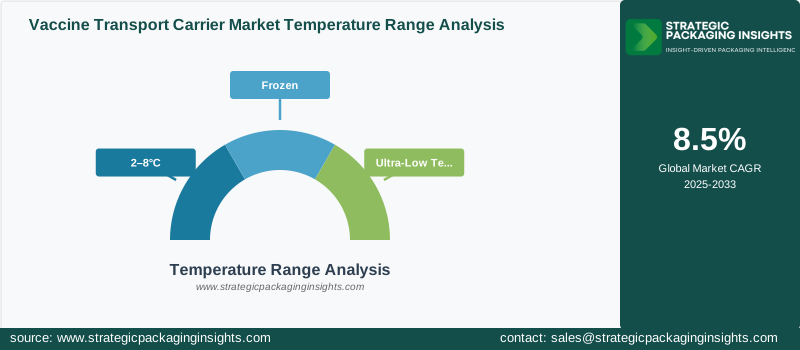
The Ultra-Low Temperature segment is gaining traction due to the increasing demand for specialized vaccines that require storage at extremely low temperatures. This segment is driven by the development of new vaccines and the need for advanced transport solutions that can maintain ultra-low temperatures. Companies are investing in research and development to create innovative solutions that address the unique challenges of transporting ultra-low temperature vaccines. The increasing focus on cold chain logistics and the expansion of pharmaceutical distribution networks are expected to drive growth in this segment.
Application Analysis
The Vaccine Transport Carrier market is segmented by application into Immunization Programs, Clinical Trials, Pharma Distribution, and Emergency Response. Immunization Programs are the largest segment, driven by the increasing demand for vaccines and the need for efficient distribution systems. The expansion of immunization programs by governments and international organizations is creating significant growth opportunities for market players. Clinical Trials are another important segment, as the development of new vaccines requires reliable transport solutions to ensure the integrity of the vaccines during trials.
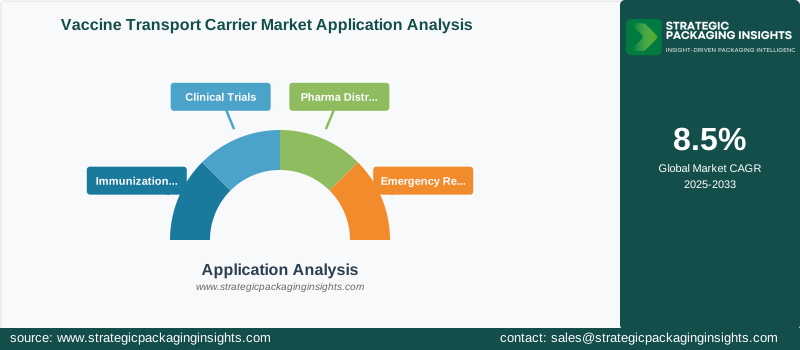
Pharma Distribution is a growing segment, driven by the expansion of pharmaceutical distribution networks and the increasing demand for vaccines. The need for reliable and efficient transport solutions is critical in this segment, as it ensures the timely delivery of vaccines to healthcare facilities. Emergency Response is also a significant segment, as the need for rapid vaccine distribution during outbreaks and emergencies is critical. The development of advanced transport solutions that can be quickly deployed in emergency situations is driving growth in this segment.
End Use Analysis
The Vaccine Transport Carrier market is segmented by end use into Hospitals, Government Health Agencies, Pharma Companies, and NGOs. Hospitals are the largest segment, as they are the primary recipients of vaccines and require reliable transport solutions to ensure the timely delivery of vaccines. Government Health Agencies are also significant, as they are responsible for the distribution of vaccines in immunization programs and emergency response situations. The increasing focus on healthcare infrastructure and the expansion of immunization programs are driving growth in this segment.
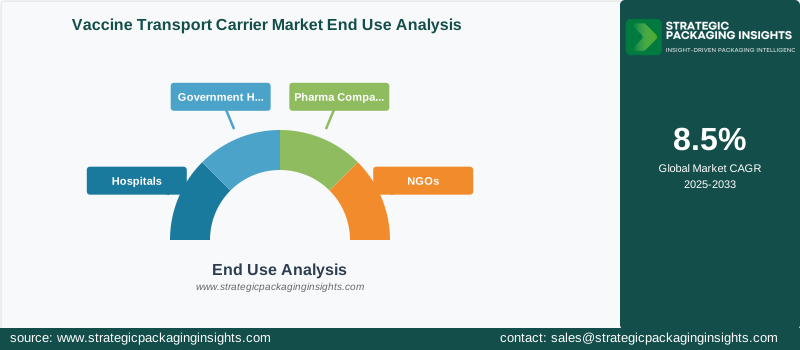
Pharma Companies are a growing segment, as they are responsible for the production and distribution of vaccines. The need for reliable and efficient transport solutions is critical in this segment, as it ensures the timely delivery of vaccines to healthcare facilities. NGOs are also a significant segment, as they play a critical role in the distribution of vaccines in remote and rural areas. The increasing focus on healthcare infrastructure and the expansion of immunization programs are driving growth in this segment.
Vaccine Transport Carrier Market Segments
The Vaccine Transport Carrier market has been segmented on the basis ofProduct Type
- Passive Vaccine Carriers
- Active Vaccine Carriers
- Cold Boxes
- Portable Refrigerated Carriers
Temperature Range
- 2–8°C
- Frozen
- Ultra-Low Temperature
Application
- Immunization Programs
- Clinical Trials
- Pharma Distribution
- Emergency Response
End Use
- Hospitals
- Government Health Agencies
- Pharma Companies
- NGOs
Region
- Asia Pacific
- North America
- Latin America
- Europe
- Middle East & Africa




