


UV-Blocking Transparent Film Market Outlook
The UV-Blocking Transparent Film market was valued at $991.25 million in 2025 and is projected to reach $1.81 billion by 2034, growing at a CAGR of 6.9% during the forecast period 2026-2034. This market is witnessing significant growth due to the increasing demand for UV protection in various applications such as automotive, architecture, and electronics. The rising awareness about the harmful effects of UV radiation on health and materials is driving the adoption of UV-blocking films. Additionally, advancements in film technology and the development of high-performance materials are further propelling market growth. The market is also benefiting from the growing trend of energy-efficient buildings and vehicles, where UV-blocking films play a crucial role in reducing heat gain and improving energy efficiency.
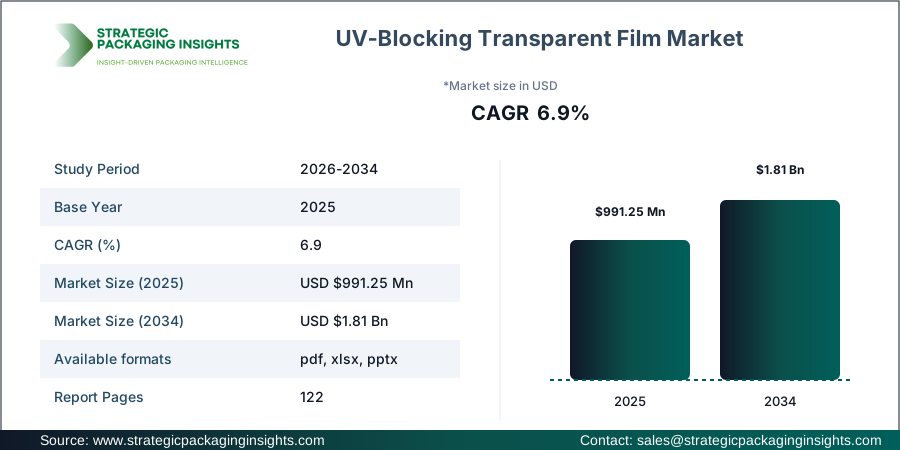
Despite the promising growth prospects, the UV-Blocking Transparent Film market faces certain challenges. Regulatory restrictions on the use of certain chemicals in film production and the high cost of advanced UV-blocking films are some of the key restraints. However, the market holds significant growth potential, driven by the increasing demand for eco-friendly and sustainable solutions. The development of bio-based and recyclable UV-blocking films is expected to create new opportunities for market players. Moreover, the expanding applications of UV-blocking films in emerging markets and the growing focus on research and development activities are likely to drive market growth in the coming years.
Report Scope
| Attributes | Details |
| Report Title | UV-Blocking Transparent Film Market Size, Future Growth and Forecast 2034 |
| Film Type | PET, PC, Acrylic |
| Application | Windows, Displays, Greenhouse |
| End Use | Automotive, Architecture, Electronics |
| Protection Level | Standard, High, Premium |
| Region | Asia Pacific, North America, Latin America, Europe, Middle East & Africa |
| Base Year | 2025 |
| Historic Period | 2018-2024 |
| Forecast Period | 2026-2034 |
| Number of Pages | 122 |
| Customization Available | Yes* |
Opportunities & Threats
The UV-Blocking Transparent Film market presents numerous opportunities for growth, primarily driven by the increasing demand for UV protection across various industries. The automotive sector, in particular, is witnessing a surge in demand for UV-blocking films due to the growing emphasis on enhancing vehicle aesthetics and passenger comfort. These films not only protect the vehicle interiors from UV damage but also contribute to energy efficiency by reducing the need for air conditioning. Additionally, the architectural sector is increasingly adopting UV-blocking films to enhance the energy efficiency of buildings and protect interiors from UV-induced fading and damage. The rising trend of smart and energy-efficient buildings is expected to further boost the demand for UV-blocking films in the construction industry.
Another significant opportunity lies in the electronics industry, where UV-blocking films are used to protect sensitive electronic components and displays from UV damage. The growing demand for high-performance electronic devices and displays is driving the adoption of UV-blocking films in this sector. Furthermore, the increasing focus on sustainability and environmental protection is creating opportunities for the development of eco-friendly UV-blocking films. Manufacturers are investing in research and development to create bio-based and recyclable films that meet the growing demand for sustainable solutions. These innovations are expected to open new avenues for growth in the UV-Blocking Transparent Film market.
However, the market also faces certain threats that could hinder its growth. One of the major challenges is the stringent regulatory environment governing the use of chemicals in film production. Regulations aimed at reducing the environmental impact of chemical processes can increase production costs and limit the availability of certain raw materials. Additionally, the high cost of advanced UV-blocking films can be a barrier to adoption, particularly in price-sensitive markets. Market players need to focus on cost-effective production methods and innovative solutions to overcome these challenges and capitalize on the growth opportunities in the UV-Blocking Transparent Film market.
Drivers & Challenges
The UV-Blocking Transparent Film market is driven by several key factors, including the increasing awareness of the harmful effects of UV radiation and the growing demand for UV protection across various industries. The automotive industry, in particular, is a major driver of market growth, as UV-blocking films are increasingly used to enhance vehicle aesthetics and passenger comfort. These films protect vehicle interiors from UV damage and contribute to energy efficiency by reducing the need for air conditioning. Additionally, the architectural sector is witnessing a surge in demand for UV-blocking films, driven by the growing trend of energy-efficient buildings. These films help reduce heat gain and protect interiors from UV-induced fading and damage, making them an essential component of modern construction projects.
Technological advancements and the development of high-performance materials are also driving the growth of the UV-Blocking Transparent Film market. Manufacturers are investing in research and development to create films with enhanced UV-blocking capabilities and improved durability. The introduction of innovative products, such as multi-layered films and films with self-healing properties, is expected to further boost market growth. Moreover, the increasing focus on sustainability and environmental protection is driving the demand for eco-friendly UV-blocking films. The development of bio-based and recyclable films is creating new opportunities for market players and contributing to the overall growth of the market.
Despite the positive growth drivers, the UV-Blocking Transparent Film market faces several challenges that could hinder its expansion. One of the major challenges is the high cost of advanced UV-blocking films, which can be a barrier to adoption in price-sensitive markets. Additionally, the stringent regulatory environment governing the use of chemicals in film production poses a challenge for manufacturers. Regulations aimed at reducing the environmental impact of chemical processes can increase production costs and limit the availability of certain raw materials. Market players need to focus on cost-effective production methods and innovative solutions to overcome these challenges and capitalize on the growth opportunities in the UV-Blocking Transparent Film market.
Market Share Analysis
The UV-Blocking Transparent Film market is characterized by a competitive landscape with several key players vying for market share. Companies such as Eastman, 3M, Saint-Gobain, Toray, LG Chem, Covestro, SABIC, Kuraray, Mitsubishi Chemical, and Sekisui are some of the prominent players in this market. These companies are focusing on product innovation, strategic partnerships, and mergers and acquisitions to strengthen their market position and expand their product offerings. The competitive landscape is further intensified by the presence of regional players who are leveraging their local expertise and distribution networks to gain a competitive edge.
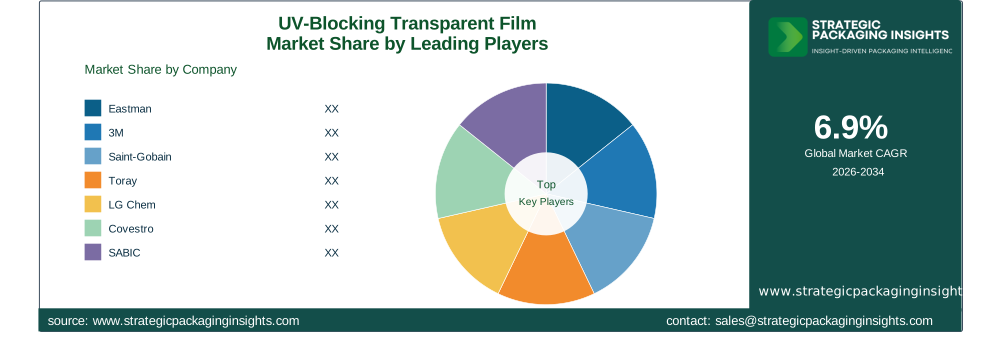
Eastman is a leading player in the UV-Blocking Transparent Film market, known for its innovative product offerings and strong focus on research and development. The company has a diverse portfolio of UV-blocking films that cater to various applications, including automotive, architecture, and electronics. Eastman's commitment to sustainability and environmental protection is evident in its efforts to develop eco-friendly and recyclable films, which are gaining traction in the market.
3M is another major player in the market, renowned for its cutting-edge technology and high-performance products. The company's UV-blocking films are widely used in the automotive and architectural sectors, where they provide superior UV protection and energy efficiency. 3M's strong global presence and extensive distribution network enable it to effectively cater to the growing demand for UV-blocking films across different regions.
Saint-Gobain, a global leader in building materials, is also a key player in the UV-Blocking Transparent Film market. The company's innovative solutions and focus on sustainability have positioned it as a preferred choice for UV-blocking films in the construction industry. Saint-Gobain's extensive research and development capabilities allow it to continuously enhance its product offerings and meet the evolving needs of its customers.
Key Highlights
- The UV-Blocking Transparent Film market is projected to grow at a CAGR of 6.9% from 2026 to 2034.
- The market was valued at $991.25 million in 2025 and is expected to reach $1.81 billion by 2034.
- Key drivers include the increasing demand for UV protection in automotive, architecture, and electronics sectors.
- Technological advancements and the development of high-performance materials are propelling market growth.
- The market faces challenges such as regulatory restrictions and the high cost of advanced films.
- Opportunities exist in the development of eco-friendly and recyclable UV-blocking films.
- Key players include Eastman, 3M, Saint-Gobain, Toray, LG Chem, Covestro, SABIC, Kuraray, Mitsubishi Chemical, and Sekisui.
Top Countries Insights
In the UV-Blocking Transparent Film market, the United States is a leading player, with a market size of approximately $300 million and a CAGR of 5%. The country's strong automotive and construction industries drive the demand for UV-blocking films, as these sectors prioritize energy efficiency and UV protection. Government regulations promoting energy-efficient buildings further support market growth.
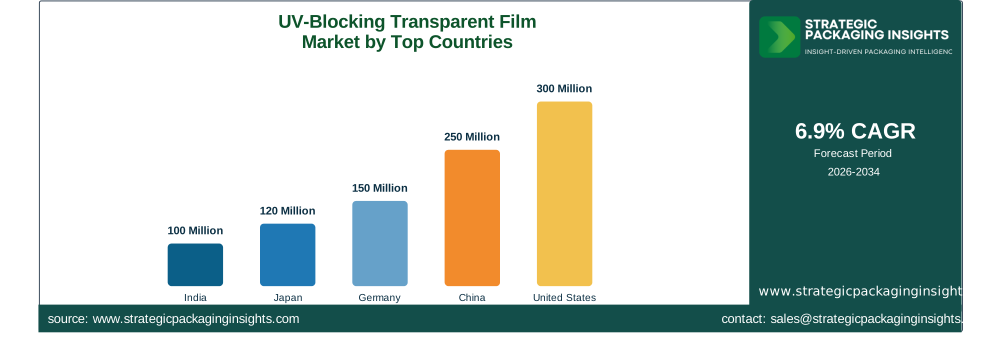
China is another significant market, with a market size of around $250 million and a CAGR of 8%. The country's booming construction industry and increasing vehicle production are key growth drivers. The Chinese government's focus on sustainable development and energy efficiency is also boosting the demand for UV-blocking films.
Germany, with a market size of $150 million and a CAGR of 6%, is a prominent player in the European market. The country's strong automotive industry and emphasis on energy-efficient buildings contribute to the demand for UV-blocking films. Germany's commitment to environmental protection and sustainability further supports market growth.
Japan, with a market size of $120 million and a CAGR of 4%, is a key market in the Asia Pacific region. The country's advanced electronics industry and focus on innovative technologies drive the demand for UV-blocking films. Japan's stringent environmental regulations also encourage the adoption of eco-friendly films.
India, with a market size of $100 million and a CAGR of 7%, is an emerging market with significant growth potential. The country's expanding construction and automotive industries are key drivers of market growth. Government initiatives promoting energy efficiency and sustainable development further support the demand for UV-blocking films.
UV-Blocking Transparent Film Market Segments Insights

Film Type Analysis
The UV-Blocking Transparent Film market is segmented by film type into PET, PC, and acrylic films. PET films are widely used due to their excellent UV-blocking properties and durability. These films are favored in the automotive and architectural sectors for their ability to provide superior UV protection and energy efficiency. The growing demand for energy-efficient buildings and vehicles is driving the adoption of PET films in the market. PC films, known for their high impact resistance and optical clarity, are gaining traction in the electronics industry. These films are used to protect sensitive electronic components and displays from UV damage, contributing to their growing popularity. Acrylic films, with their excellent weatherability and optical properties, are also witnessing increased demand in various applications, including displays and greenhouse coverings.
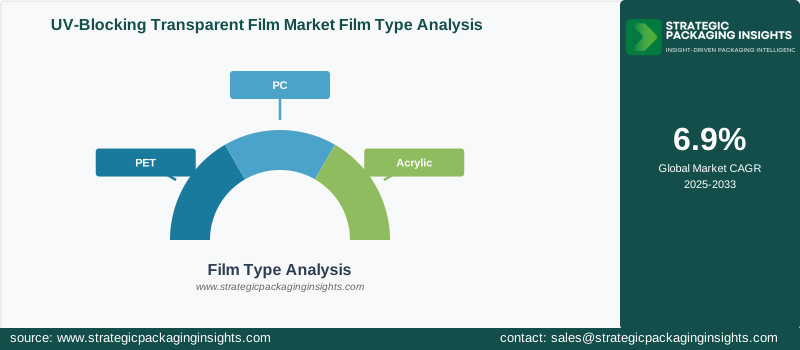
The competition in the film type segment is intense, with manufacturers focusing on product innovation and technological advancements to gain a competitive edge. Companies are investing in research and development to create films with enhanced UV-blocking capabilities and improved durability. The introduction of multi-layered films and films with self-healing properties is expected to further boost market growth. Additionally, the increasing focus on sustainability and environmental protection is driving the demand for eco-friendly films. Manufacturers are developing bio-based and recyclable films to meet the growing demand for sustainable solutions, creating new opportunities for growth in the film type segment.
Application Analysis
The UV-Blocking Transparent Film market is segmented by application into windows, displays, and greenhouse coverings. The windows segment is a major driver of market growth, as UV-blocking films are increasingly used to enhance the energy efficiency of buildings and protect interiors from UV-induced fading and damage. The growing trend of smart and energy-efficient buildings is expected to further boost the demand for UV-blocking films in the construction industry. The displays segment is also witnessing significant growth, driven by the increasing demand for high-performance electronic devices and displays. UV-blocking films are used to protect sensitive electronic components and displays from UV damage, contributing to their growing popularity in the electronics industry.
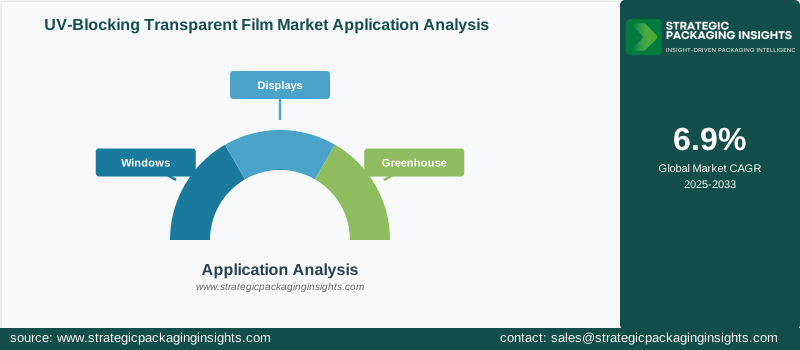
The greenhouse segment is experiencing steady growth, as UV-blocking films are used to protect plants from harmful UV radiation while allowing optimal light transmission for photosynthesis. The increasing focus on sustainable agriculture and the growing demand for high-quality crops are driving the adoption of UV-blocking films in greenhouse applications. The competition in the application segment is intense, with manufacturers focusing on product innovation and technological advancements to gain a competitive edge. Companies are investing in research and development to create films with enhanced UV-blocking capabilities and improved durability, catering to the evolving needs of various applications.
End Use Analysis
The UV-Blocking Transparent Film market is segmented by end use into automotive, architecture, and electronics. The automotive sector is a major driver of market growth, as UV-blocking films are increasingly used to enhance vehicle aesthetics and passenger comfort. These films protect vehicle interiors from UV damage and contribute to energy efficiency by reducing the need for air conditioning. The growing emphasis on enhancing vehicle aesthetics and passenger comfort is driving the adoption of UV-blocking films in the automotive industry. The architecture sector is also witnessing a surge in demand for UV-blocking films, driven by the growing trend of energy-efficient buildings. These films help reduce heat gain and protect interiors from UV-induced fading and damage, making them an essential component of modern construction projects.
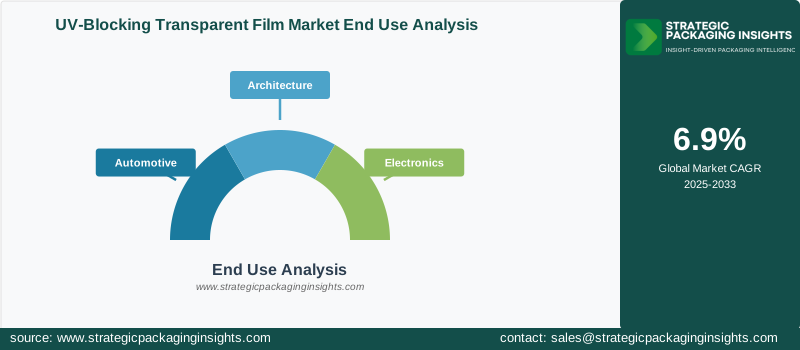
The electronics sector is experiencing significant growth, as UV-blocking films are used to protect sensitive electronic components and displays from UV damage. The growing demand for high-performance electronic devices and displays is driving the adoption of UV-blocking films in this sector. The competition in the end-use segment is intense, with manufacturers focusing on product innovation and technological advancements to gain a competitive edge. Companies are investing in research and development to create films with enhanced UV-blocking capabilities and improved durability, catering to the evolving needs of various end-use applications.
Protection Level Analysis
The UV-Blocking Transparent Film market is segmented by protection level into standard, high, and premium films. Standard films offer basic UV protection and are widely used in applications where cost-effectiveness is a priority. These films are favored in price-sensitive markets and applications where moderate UV protection is sufficient. High protection films offer enhanced UV-blocking capabilities and are used in applications where superior UV protection is required. These films are gaining popularity in the automotive and architectural sectors, where they provide superior UV protection and energy efficiency.
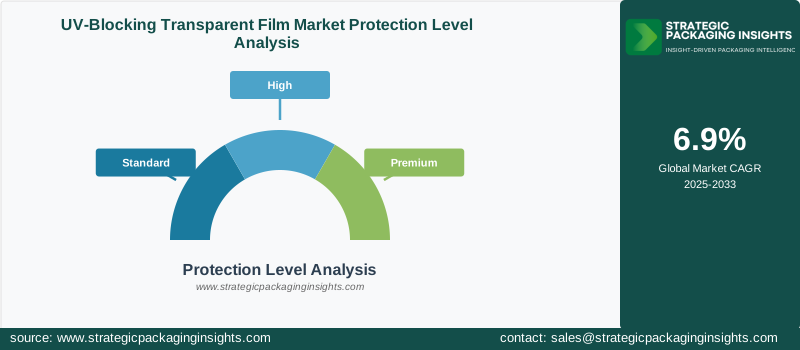
Premium films offer the highest level of UV protection and are used in applications where maximum UV protection is essential. These films are favored in high-end applications, such as luxury vehicles and premium architectural projects, where superior performance and aesthetics are a priority. The competition in the protection level segment is intense, with manufacturers focusing on product innovation and technological advancements to gain a competitive edge. Companies are investing in research and development to create films with enhanced UV-blocking capabilities and improved durability, catering to the evolving needs of various protection level applications.
UV-Blocking Transparent Film Market Segments
The UV-Blocking Transparent Film market has been segmented on the basis ofFilm Type
- PET
- PC
- Acrylic
Application
- Windows
- Displays
- Greenhouse
End Use
- Automotive
- Architecture
- Electronics
Protection Level
- Standard
- High
- Premium
Region
- Asia Pacific
- North America
- Latin America
- Europe
- Middle East & Africa




