


Unmanned Underwater Vehicle (UUV) Market Outlook
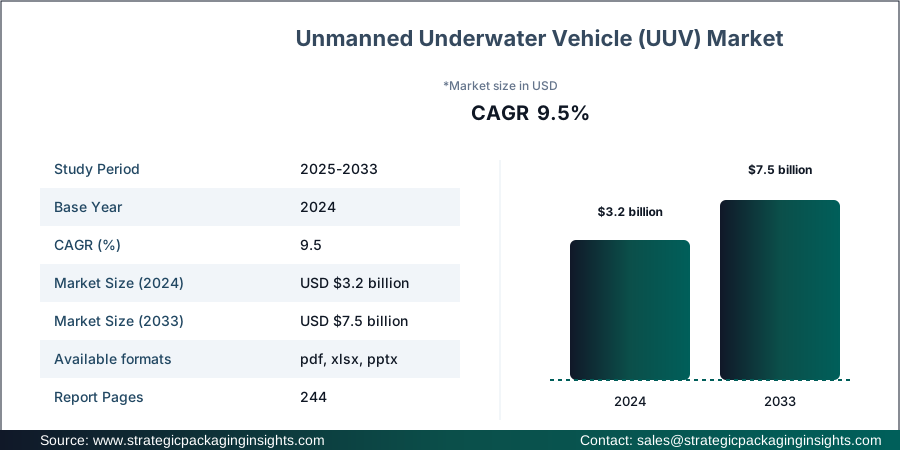
The Unmanned Underwater Vehicle (UUV) market was valued at $3.2 billion in 2024 and is projected to reach $7.5 billion by 2033, growing at a CAGR of 9.5% during the forecast period 2025-2033. This market is experiencing significant growth due to the increasing demand for underwater exploration and surveillance activities. The defense sector is a major driver, with countries investing heavily in UUVs for naval operations and intelligence gathering. Additionally, the commercial sector is leveraging UUVs for oil and gas exploration, contributing to the market's expansion. Technological advancements, such as improved battery life and enhanced sensor capabilities, are further propelling the market forward.
Despite the promising growth, the UUV market faces several challenges. High initial costs and maintenance expenses are significant barriers for new entrants and smaller companies. Regulatory constraints and environmental concerns also pose challenges, as governments impose strict guidelines on underwater operations to protect marine ecosystems. However, the market holds substantial growth potential, driven by innovations in autonomous technology and increasing applications in scientific research. The development of hybrid propulsion systems and AI integration are expected to open new avenues for market expansion, offering opportunities for companies to differentiate their offerings and capture a larger market share.
Report Scope
| Attributes | Details |
| Report Title | Unmanned Underwater Vehicle (UUV) Market Size, Future Growth and Forecast 2033 |
| Type | Remotely Operated Vehicles, Autonomous Underwater Vehicles |
| Application | Commercial Exploration, Defense, Scientific Research |
| Propulsion System | Electric, Mechanical, Hybrid |
| Region | North America, Europe, Asia Pacific, Latin America, Middle East & Africa |
| Base Year | 2024 |
| Historic Period | 2017-2023 |
| Forecast Period | 2025-2033 |
| Number of Pages | 244 |
| Customization Available | Yes* |
Opportunities & Threats
The Unmanned Underwater Vehicle (UUV) market presents numerous opportunities, particularly in the realm of technological advancements. The integration of artificial intelligence and machine learning into UUV systems is a significant opportunity, enabling these vehicles to perform complex tasks autonomously. This advancement not only enhances operational efficiency but also reduces the need for human intervention, thereby lowering operational risks. Furthermore, the growing interest in deep-sea exploration for resource extraction presents a lucrative opportunity for UUV manufacturers. As traditional resources become scarce, the demand for UUVs capable of operating in extreme underwater environments is expected to rise, driving market growth.
Another opportunity lies in the expansion of UUV applications in environmental monitoring and marine conservation. With increasing awareness of climate change and its impact on marine ecosystems, there is a growing demand for UUVs equipped with advanced sensors to monitor ocean health and collect critical data. This application not only supports environmental conservation efforts but also opens new revenue streams for UUV manufacturers. Additionally, the defense sector continues to be a significant opportunity, with governments worldwide investing in UUVs for surveillance, mine countermeasures, and anti-submarine warfare, further bolstering market growth.
However, the UUV market is not without its threats. One of the primary restrainers is the high cost associated with the development and deployment of UUVs. The sophisticated technology and materials required for UUV construction lead to substantial initial investments, which can be a deterrent for potential buyers. Moreover, the market faces regulatory challenges, as stringent government regulations regarding underwater operations can hinder market expansion. Environmental concerns also pose a threat, as the deployment of UUVs in sensitive marine areas may lead to ecological disturbances, prompting stricter regulations and potential backlash from environmental groups.
Market Share Analysis
The competitive landscape of the Unmanned Underwater Vehicle (UUV) market is characterized by the presence of several key players, each striving to enhance their market position through innovation and strategic partnerships. The market is moderately consolidated, with a few dominant players holding significant market shares. These companies are focusing on expanding their product portfolios and enhancing their technological capabilities to maintain a competitive edge. The market is also witnessing increased collaboration between companies and research institutions to develop advanced UUV technologies, further intensifying competition.
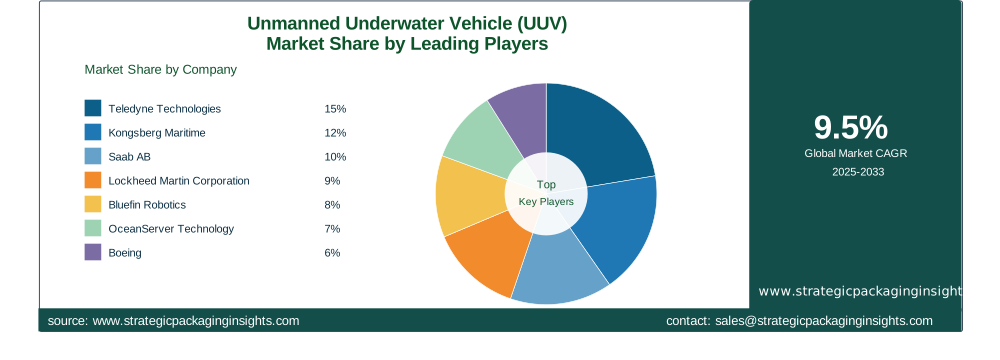
Among the leading companies in the UUV market is Teledyne Technologies, which holds a substantial market share due to its extensive range of UUV products and strong global presence. The company is known for its innovative solutions and continuous investment in research and development, which has enabled it to maintain a competitive advantage. Another major player is Kongsberg Maritime, renowned for its advanced UUV systems and strong focus on customer satisfaction. The company's strategic partnerships and collaborations have further strengthened its market position.
Saab AB is another key player in the UUV market, offering a diverse range of UUVs for various applications, including defense and commercial exploration. The company's commitment to innovation and quality has earned it a significant market share. Additionally, Lockheed Martin Corporation is a prominent player, leveraging its expertise in defense technology to develop cutting-edge UUV solutions. The company's strong focus on research and development and strategic acquisitions have bolstered its market presence.
Other notable companies in the UUV market include Bluefin Robotics, a subsidiary of General Dynamics, which is known for its advanced autonomous underwater vehicles. The company's strong focus on innovation and customer-centric approach has helped it capture a significant market share. Furthermore, OceanServer Technology, a subsidiary of L3Harris Technologies, is recognized for its cost-effective UUV solutions and strong customer base. The company's strategic partnerships and focus on expanding its product offerings have contributed to its market success.
Key Highlights
- The UUV market is projected to grow at a CAGR of 9.5% from 2025 to 2033.
- Technological advancements in AI and machine learning are driving market growth.
- High initial costs and regulatory constraints are significant market challenges.
- The defense sector remains a major driver of UUV demand.
- Environmental monitoring and marine conservation present new market opportunities.
- Hybrid propulsion systems and AI integration are key trends in the market.
- Collaboration between companies and research institutions is intensifying competition.
- Teledyne Technologies and Kongsberg Maritime are leading players in the market.
- Deep-sea exploration for resource extraction is a growing application area.
- Environmental concerns may lead to stricter regulations on UUV deployment.
Top Countries Insights
In the Unmanned Underwater Vehicle (UUV) market, the United States holds a significant position, with a market size of $1.2 billion and a CAGR of 8%. The country's strong defense sector and substantial investments in UUV technology drive market growth. Government initiatives to enhance naval capabilities and the presence of leading UUV manufacturers further bolster the market. However, regulatory challenges and environmental concerns pose potential obstacles.
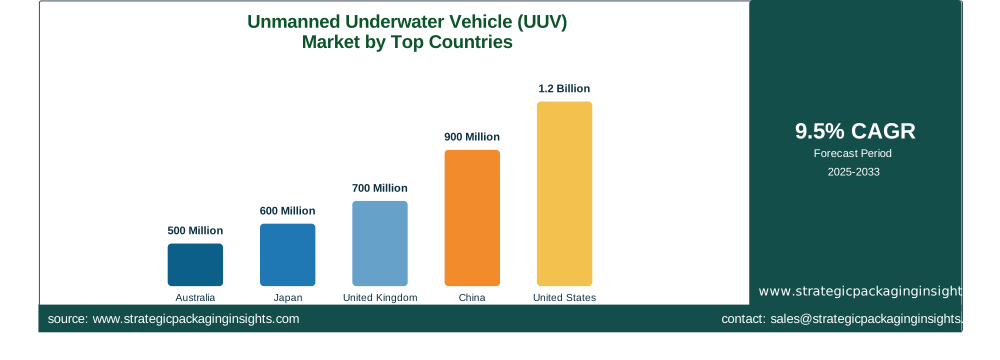
China is another key player in the UUV market, with a market size of $900 million and a CAGR of 10%. The country's focus on expanding its naval capabilities and increasing investments in UUV technology are major growth drivers. Additionally, China's growing interest in deep-sea exploration and resource extraction presents significant opportunities for UUV manufacturers. However, geopolitical tensions and regulatory constraints may impact market growth.
In Europe, the United Kingdom is a prominent market, with a market size of $700 million and a CAGR of 7%. The country's strong focus on defense and security, coupled with government support for UUV technology development, drives market growth. The presence of leading UUV manufacturers and research institutions further strengthens the market. However, Brexit-related uncertainties and regulatory challenges may pose risks.
Japan is also a significant player in the UUV market, with a market size of $600 million and a CAGR of 9%. The country's focus on technological innovation and increasing investments in UUV technology are major growth drivers. Japan's interest in environmental monitoring and marine conservation presents new opportunities for UUV manufacturers. However, high costs and regulatory constraints may hinder market growth.
Australia is an emerging market in the UUV sector, with a market size of $500 million and a CAGR of 6%. The country's focus on enhancing its naval capabilities and increasing investments in UUV technology drive market growth. Government initiatives to support UUV development and the presence of leading manufacturers further bolster the market. However, regulatory challenges and environmental concerns may pose potential obstacles.
Evolving Market Dynamics (2018-2024) and Strategic Foresight (2025-2033)
| Metrics | 2018-2024 | 2025-2033 |
|---|---|---|
| CAGR | 7.5% | 9.5% |
| Market Size Evolution | $2.5 billion to $3.2 billion | $3.2 billion to $7.5 billion |
| Segment Distribution Shifts | Defense Dominance | Increased Commercial Applications |
| Regional Contribution Changes | North America Leading | Asia Pacific Growth |
| Technological Impact Factors | Basic Automation | AI and Machine Learning Integration |
| Client Demand Transformations | Defense Focus | Environmental and Commercial Expansion |
Unmanned Underwater Vehicle (UUV) Market Segments Insights

Type Analysis
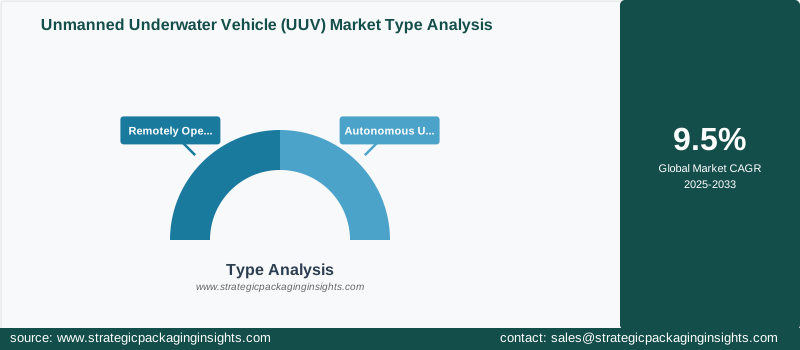
The Unmanned Underwater Vehicle (UUV) market is segmented by type into Remotely Operated Vehicles (ROVs) and Autonomous Underwater Vehicles (AUVs). ROVs are widely used in the defense sector for surveillance and reconnaissance missions, owing to their ability to be controlled remotely and perform complex tasks. The demand for ROVs is driven by their versatility and capability to operate in challenging underwater environments. However, AUVs are gaining traction due to their autonomous capabilities, which allow them to perform tasks without human intervention. The increasing adoption of AUVs in scientific research and commercial exploration is expected to drive market growth, as these vehicles offer enhanced operational efficiency and cost-effectiveness.
Technological advancements in sensor technology and battery life are key drivers for the growth of both ROVs and AUVs. The integration of AI and machine learning into AUV systems is a significant trend, enabling these vehicles to perform complex tasks autonomously and adapt to changing underwater conditions. The competition in this segment is intense, with companies focusing on developing advanced UUVs with enhanced capabilities to gain a competitive edge. Customer demand for efficient and reliable UUVs is driving manufacturers to invest in research and development, leading to the introduction of innovative products in the market.
Application Analysis
The application segment of the UUV market is categorized into commercial exploration, defense, and scientific research. The defense sector is the largest application segment, driven by the increasing demand for UUVs in naval operations and intelligence gathering. Governments worldwide are investing heavily in UUV technology to enhance their naval capabilities and maintain a strategic advantage. The commercial exploration segment is also witnessing significant growth, with UUVs being used for oil and gas exploration, underwater infrastructure inspection, and resource extraction. The demand for UUVs in this segment is driven by the need for efficient and cost-effective solutions for underwater operations.
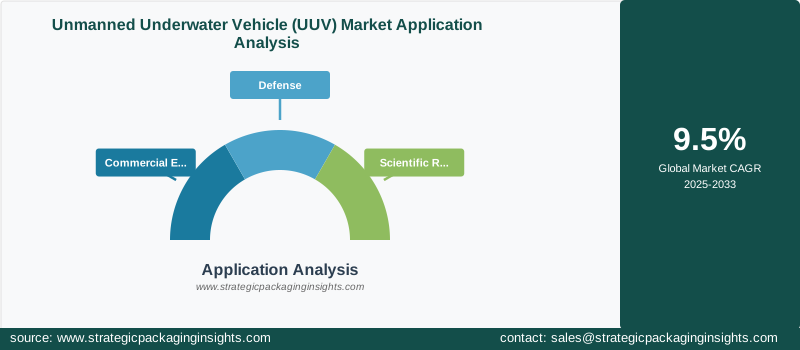
Scientific research is another important application area for UUVs, with these vehicles being used for oceanographic studies, environmental monitoring, and marine conservation. The increasing awareness of climate change and its impact on marine ecosystems is driving the demand for UUVs equipped with advanced sensors to collect critical data. The competition in this segment is fierce, with companies focusing on developing UUVs with enhanced capabilities to meet the specific needs of different applications. The growing demand for UUVs in various applications is expected to drive market growth, as manufacturers continue to innovate and introduce new products to meet customer requirements.
Propulsion System Analysis
The propulsion system segment of the UUV market is divided into electric, mechanical, and hybrid systems. Electric propulsion systems are widely used in UUVs due to their efficiency and environmental friendliness. The demand for electric propulsion systems is driven by the increasing focus on reducing carbon emissions and the need for sustainable solutions. Mechanical propulsion systems are also used in UUVs, offering high power and reliability for demanding underwater operations. However, hybrid propulsion systems are gaining popularity due to their ability to combine the advantages of both electric and mechanical systems, offering enhanced performance and operational flexibility.
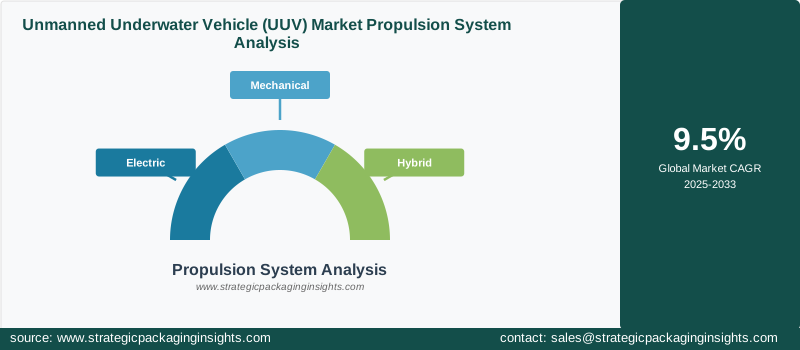
Technological advancements in propulsion systems are a key driver for the growth of the UUV market. The development of advanced battery technologies and energy-efficient propulsion systems is expected to drive market growth, as manufacturers focus on enhancing the performance and efficiency of UUVs. The competition in this segment is intense, with companies investing in research and development to develop innovative propulsion systems that meet the specific needs of different applications. Customer demand for efficient and reliable propulsion systems is driving manufacturers to introduce new products with enhanced capabilities, further fueling market growth.
Region Analysis
The Unmanned Underwater Vehicle (UUV) market is segmented by region into North America, Europe, Asia Pacific, Latin America, and the Middle East & Africa. North America is the largest market for UUVs, driven by the strong presence of leading manufacturers and significant investments in UUV technology. The region's focus on enhancing naval capabilities and the increasing demand for UUVs in defense applications are major growth drivers. Europe is another significant market, with countries like the United Kingdom and Germany investing heavily in UUV technology for defense and commercial applications.
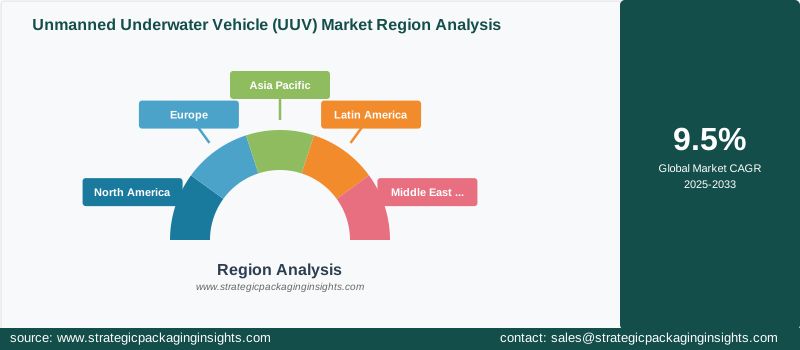
Asia Pacific is expected to witness significant growth in the UUV market, driven by the increasing focus on naval modernization and the growing demand for UUVs in commercial exploration. Countries like China and Japan are investing heavily in UUV technology to enhance their naval capabilities and support their growing interest in deep-sea exploration. Latin America and the Middle East & Africa are emerging markets for UUVs, with increasing investments in UUV technology and growing demand for efficient and cost-effective solutions for underwater operations. The competition in these regions is expected to intensify as manufacturers focus on expanding their presence and capturing a larger market share.
Unmanned Underwater Vehicle (UUV) Market Segments
The Unmanned Underwater Vehicle (UUV) market has been segmented on the basis ofType
- Remotely Operated Vehicles
- Autonomous Underwater Vehicles
Application
- Commercial Exploration
- Defense
- Scientific Research
Propulsion System
- Electric
- Mechanical
- Hybrid
Region
- North America
- Europe
- Asia Pacific
- Latin America
- Middle East & Africa




