


Uncoated Woodfree Paper (UWF) Market Outlook
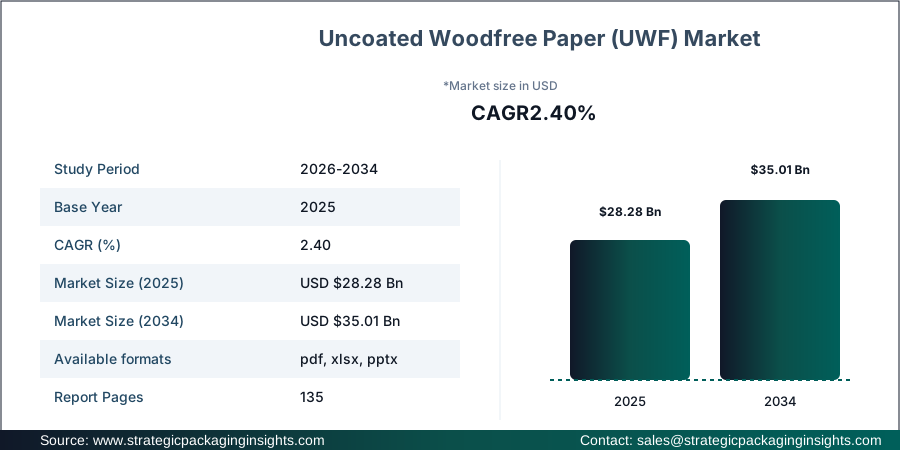
The Uncoated Woodfree Paper (UWF) market was valued at $28.28 billion in 2025 and is projected to reach $35.01 billion by 2034, growing at a CAGR of 2.40% during the forecast period 2026-2034. This market is driven by the increasing demand for high-quality printing and writing paper, which is essential for various applications such as commercial printing, publishing, and educational purposes. The UWF paper is preferred due to its superior printability and brightness, making it a popular choice in the office and educational sectors. The market is also witnessing a shift towards sustainable and eco-friendly paper products, which is further propelling the demand for UWF paper.
Despite the positive growth trajectory, the UWF market faces challenges such as the increasing digitization of media and communication, which reduces the demand for traditional paper products. Additionally, the market is subject to stringent environmental regulations aimed at reducing deforestation and promoting sustainable forestry practices. However, the potential for growth remains significant, particularly in emerging markets where the demand for educational and office supplies continues to rise. The market is also exploring innovations in paper production technology to enhance the quality and sustainability of UWF products.
Report Scope
| Attributes | Details |
| Report Title | Uncoated Woodfree Paper (UWF) Market Size, Future Growth and Forecast 2034 |
| Product Type | Printing Paper, Writing Paper, Copy Paper, Offset Paper |
| End Use | Commercial Printing, Publishing, Education, Office Use |
| Basis Weight | Lightweight, Standard, Heavyweight, Premium |
| Distribution Channel | Direct Mill Supply, Merchant Distributors, Office Supply Retail, E-commerce |
| Region | Asia Pacific, North America, Latin America, Europe, Middle East & Africa |
| Base Year | 2025 |
| Historic Period | 2018-2024 |
| Forecast Period | 2026-2034 |
| Number of Pages | 135 |
| Customization Available | Yes* |
Opportunities & Threats
The UWF market presents numerous opportunities, particularly in the realm of sustainable and eco-friendly paper products. As consumers and businesses become more environmentally conscious, there is a growing demand for paper products that are produced using sustainable practices. This trend is encouraging manufacturers to invest in eco-friendly production processes and raw materials, which not only helps in reducing the environmental impact but also enhances brand reputation and customer loyalty. Additionally, the rise of e-commerce platforms offers a new distribution channel for UWF products, allowing manufacturers to reach a broader audience and tap into new markets.
Another significant opportunity lies in the educational sector, where the demand for high-quality writing and printing paper remains robust. As educational institutions continue to expand and modernize, there is a consistent need for reliable paper products that can support various educational activities. This demand is particularly strong in developing regions where educational infrastructure is rapidly growing. Furthermore, the commercial printing sector continues to rely on UWF paper for producing high-quality printed materials, providing a steady stream of demand for these products.
However, the UWF market is not without its threats. One of the primary challenges is the increasing digitization of media and communication, which has led to a decline in the use of traditional paper products. As more businesses and consumers shift towards digital platforms, the demand for paper-based communication and documentation is decreasing. Additionally, the market faces regulatory challenges related to environmental sustainability, as governments worldwide implement stricter regulations to curb deforestation and promote sustainable forestry practices. These regulations can increase production costs and limit the availability of raw materials, posing a threat to market growth.
Drivers & Challenges
The UWF market is driven by several key factors, including the growing demand for high-quality printing and writing paper in various sectors. The commercial printing industry, in particular, relies heavily on UWF paper for producing brochures, catalogs, and other printed materials that require superior print quality and brightness. Additionally, the educational sector continues to be a significant driver of demand, as schools and universities require reliable paper products for textbooks, notebooks, and other educational materials. The office sector also contributes to market growth, with businesses requiring high-quality paper for documentation and communication purposes.
Another important driver is the increasing focus on sustainability and eco-friendly products. As consumers become more environmentally conscious, there is a growing demand for paper products that are produced using sustainable practices. This trend is encouraging manufacturers to adopt eco-friendly production processes and invest in sustainable raw materials, which not only helps in reducing the environmental impact but also enhances brand reputation and customer loyalty. Furthermore, advancements in paper production technology are enabling manufacturers to produce higher quality and more sustainable UWF products, further driving market growth.
Despite these drivers, the UWF market faces several challenges that could hinder its growth. One of the primary challenges is the increasing digitization of media and communication, which has led to a decline in the use of traditional paper products. As more businesses and consumers shift towards digital platforms, the demand for paper-based communication and documentation is decreasing. Additionally, the market faces regulatory challenges related to environmental sustainability, as governments worldwide implement stricter regulations to curb deforestation and promote sustainable forestry practices. These regulations can increase production costs and limit the availability of raw materials, posing a threat to market growth.
Market Share Analysis
The competitive landscape of the Uncoated Woodfree Paper (UWF) market is characterized by the presence of several key players who dominate the market. These companies are engaged in strategic initiatives such as mergers and acquisitions, partnerships, and product innovations to strengthen their market position and expand their product offerings. The market is highly competitive, with companies focusing on enhancing their production capabilities and investing in sustainable practices to meet the growing demand for eco-friendly paper products.
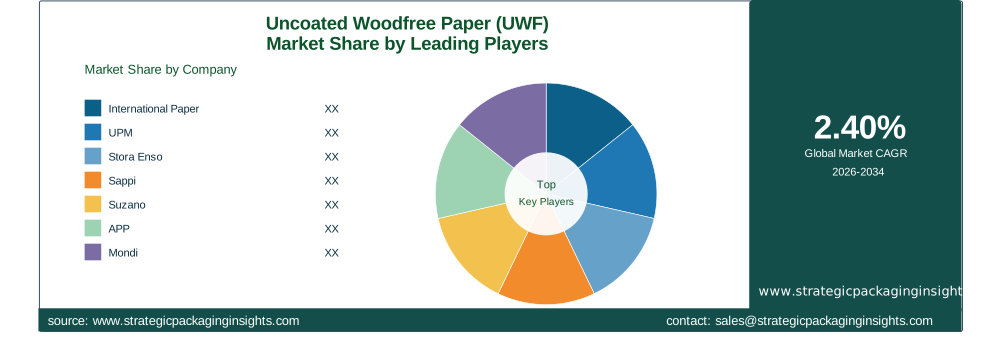
International Paper is one of the leading players in the UWF market, known for its extensive product portfolio and strong distribution network. The company holds a significant market share and is focused on expanding its presence in emerging markets through strategic partnerships and acquisitions. UPM is another major player, recognized for its commitment to sustainability and innovation in paper production. The company has a strong presence in Europe and is actively expanding its operations in Asia and other regions.
Stora Enso and Sappi are also prominent players in the UWF market, with a strong focus on sustainable forestry practices and eco-friendly production processes. These companies are investing in research and development to enhance the quality and sustainability of their paper products. Suzano, a leading player in the Latin American market, is known for its extensive product range and commitment to sustainable practices. The company is actively expanding its operations in North America and Europe to tap into new growth opportunities.
Other key players in the UWF market include APP, Mondi, Nippon Paper, Oji Holdings, and Domtar. These companies are focused on enhancing their production capabilities and expanding their product offerings to meet the growing demand for high-quality and sustainable paper products. The competitive landscape is expected to remain dynamic, with companies investing in innovation and sustainability to maintain their market position and capitalize on emerging opportunities.
Key Highlights
- The UWF market is projected to grow from $28.28 billion in 2025 to $35.01 billion by 2034, at a CAGR of 2.40%.
- Increasing demand for high-quality printing and writing paper is driving market growth.
- Sustainability and eco-friendly production practices are key trends in the market.
- The educational sector remains a significant driver of demand for UWF paper.
- Digitization of media and communication poses a challenge to market growth.
- Key players are focusing on strategic initiatives to strengthen their market position.
- Emerging markets offer significant growth opportunities for UWF products.
- Advancements in paper production technology are enhancing product quality and sustainability.
- Regulatory challenges related to environmental sustainability are impacting market dynamics.
- The competitive landscape is characterized by the presence of several key players with a focus on innovation and sustainability.
Top Countries Insights
In the Uncoated Woodfree Paper (UWF) market, the United States holds a significant market share, driven by the strong demand for high-quality printing and writing paper in the commercial and educational sectors. The market in the U.S. is expected to grow at a CAGR of 2%, supported by the increasing focus on sustainability and eco-friendly products. Government policies promoting sustainable forestry practices and the use of recycled materials are also contributing to market growth.
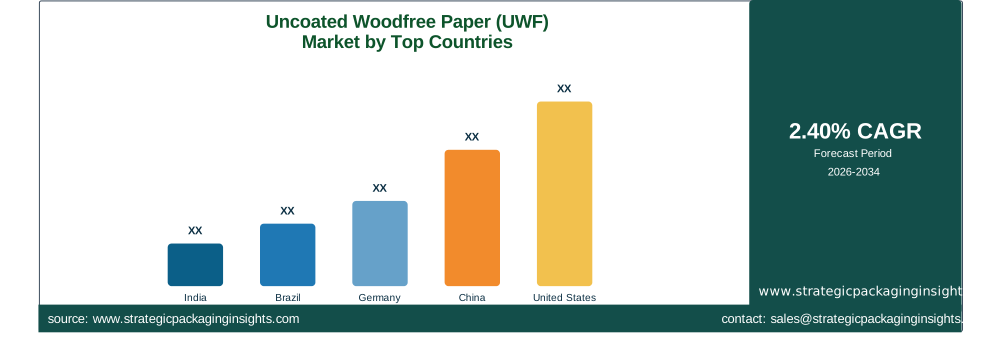
China is another major player in the UWF market, with a rapidly growing demand for paper products in the educational and office sectors. The market in China is projected to grow at a CAGR of 4%, driven by the expansion of educational infrastructure and the increasing adoption of sustainable paper products. The government's focus on environmental sustainability and the promotion of eco-friendly practices are key growth drivers in the region.
Germany is a leading market for UWF paper in Europe, with a strong demand for high-quality paper products in the commercial printing and publishing sectors. The market in Germany is expected to grow at a CAGR of 3%, supported by the increasing focus on sustainability and the adoption of advanced paper production technologies. Government initiatives promoting sustainable forestry practices and the use of recycled materials are also contributing to market growth.
Brazil is a significant market for UWF paper in Latin America, driven by the growing demand for educational and office supplies. The market in Brazil is projected to grow at a CAGR of 3%, supported by the expansion of educational infrastructure and the increasing focus on sustainability. Government policies promoting sustainable forestry practices and the use of recycled materials are key growth drivers in the region.
India is an emerging market for UWF paper, with a rapidly growing demand for paper products in the educational and office sectors. The market in India is expected to grow at a CAGR of 5%, driven by the expansion of educational infrastructure and the increasing adoption of sustainable paper products. The government's focus on environmental sustainability and the promotion of eco-friendly practices are key growth drivers in the region.
Uncoated Woodfree Paper (UWF) Market Segments Insights

Product Type Analysis
The Uncoated Woodfree Paper (UWF) market is segmented by product type into printing paper, writing paper, copy paper, and offset paper. Printing paper holds a significant share in the market due to its widespread use in commercial printing applications. The demand for high-quality printing paper is driven by the need for superior printability and brightness, which are essential for producing brochures, catalogs, and other printed materials. Writing paper is also a key segment, with strong demand from the educational and office sectors. The increasing focus on sustainability and eco-friendly products is encouraging manufacturers to invest in sustainable production processes and raw materials, further driving the growth of this segment.
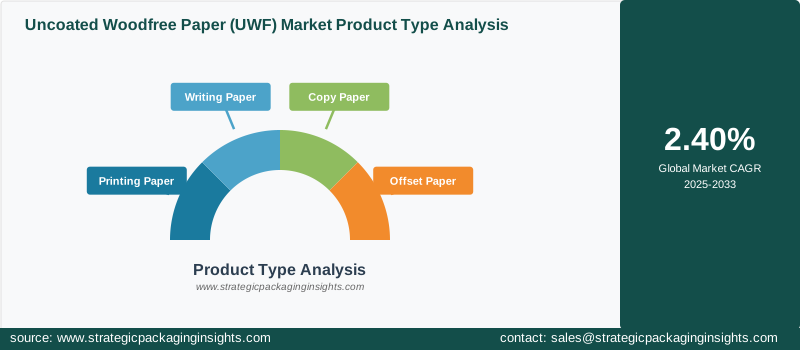
Copy paper is another important segment in the UWF market, with a steady demand from the office sector. The need for reliable and high-quality paper for documentation and communication purposes is driving the demand for copy paper. Offset paper, used primarily in the printing industry, is also witnessing growth due to the increasing demand for high-quality printed materials. The market is characterized by the presence of several key players who are investing in research and development to enhance the quality and sustainability of their paper products.
End Use Analysis
The UWF market is segmented by end use into commercial printing, publishing, education, and office use. The commercial printing sector is a major driver of demand for UWF paper, as it requires high-quality paper for producing brochures, catalogs, and other printed materials. The publishing sector also relies heavily on UWF paper for producing books, magazines, and other publications. The educational sector is another significant driver of demand, with schools and universities requiring reliable paper products for textbooks, notebooks, and other educational materials.
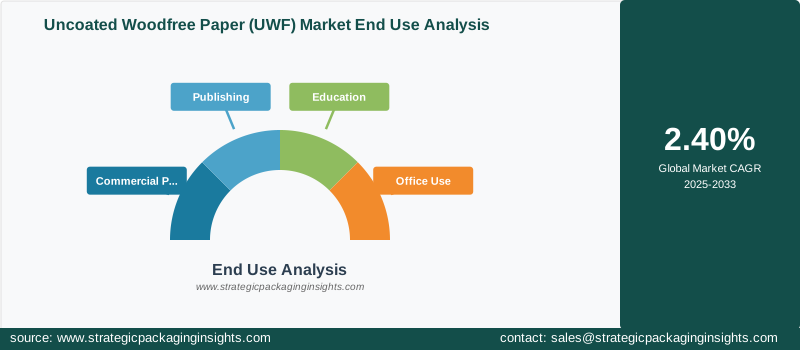
The office sector is also a key end-use segment, with businesses requiring high-quality paper for documentation and communication purposes. The increasing focus on sustainability and eco-friendly products is encouraging manufacturers to invest in sustainable production processes and raw materials, further driving the growth of this segment. The market is characterized by the presence of several key players who are investing in research and development to enhance the quality and sustainability of their paper products.
Basis Weight Analysis
The UWF market is segmented by basis weight into lightweight, standard, heavyweight, and premium. Lightweight paper is preferred for applications where cost-effectiveness and ease of handling are important, such as in educational and office settings. Standard weight paper is widely used in commercial printing and publishing applications, where high-quality printability and brightness are essential. Heavyweight paper is used for applications that require durability and strength, such as in packaging and specialty printing.
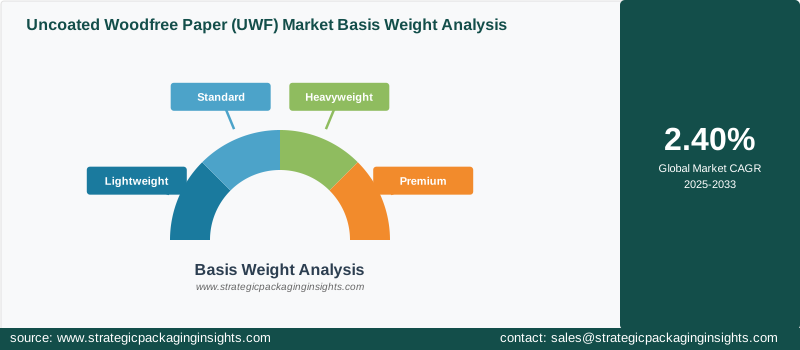
Premium paper is a niche segment, with demand driven by the need for high-quality and aesthetically pleasing paper products. The increasing focus on sustainability and eco-friendly products is encouraging manufacturers to invest in sustainable production processes and raw materials, further driving the growth of this segment. The market is characterized by the presence of several key players who are investing in research and development to enhance the quality and sustainability of their paper products.
Distribution Channel Analysis
The UWF market is segmented by distribution channel into direct mill supply, merchant distributors, office supply retail, and e-commerce. Direct mill supply is a significant distribution channel, with manufacturers supplying paper products directly to large commercial printing and publishing companies. Merchant distributors play a key role in the market, providing a wide range of paper products to various end-use sectors.
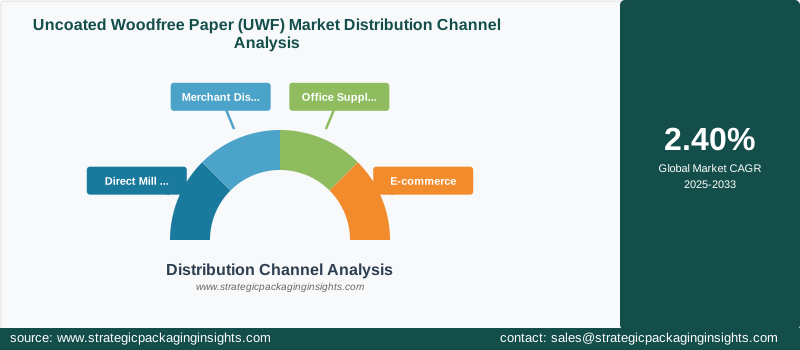
Office supply retail is another important distribution channel, with retailers offering a wide range of paper products to businesses and consumers. The rise of e-commerce platforms is providing a new distribution channel for UWF products, allowing manufacturers to reach a broader audience and tap into new markets. The market is characterized by the presence of several key players who are investing in research and development to enhance the quality and sustainability of their paper products.
Uncoated Woodfree Paper (UWF) Market Segments
The Uncoated Woodfree Paper (UWF) market has been segmented on the basis ofProduct Type
- Printing Paper
- Writing Paper
- Copy Paper
- Offset Paper
End Use
- Commercial Printing
- Publishing
- Education
- Office Use
Basis Weight
- Lightweight
- Standard
- Heavyweight
- Premium
Distribution Channel
- Direct Mill Supply
- Merchant Distributors
- Office Supply Retail
- E-commerce
Region
- Asia Pacific
- North America
- Latin America
- Europe
- Middle East & Africa




