


Treaty-Aligned Low-Additive Flexible Plastic Packaging Market Outlook
The Treaty-Aligned Low-Additive Flexible Plastic Packaging market was valued at $1.27 billion in 2025 and is projected to reach $2.59 billion by 2034, growing at a CAGR of 8.2% during the forecast period 2026-2034. This market is driven by the increasing demand for sustainable packaging solutions that align with international treaties aimed at reducing plastic waste. The shift towards low-additive flexible plastic packaging is gaining momentum as industries seek to minimize environmental impact while maintaining product integrity and shelf life. The market's growth is further fueled by advancements in material science, enabling the development of innovative packaging solutions that meet stringent environmental standards.
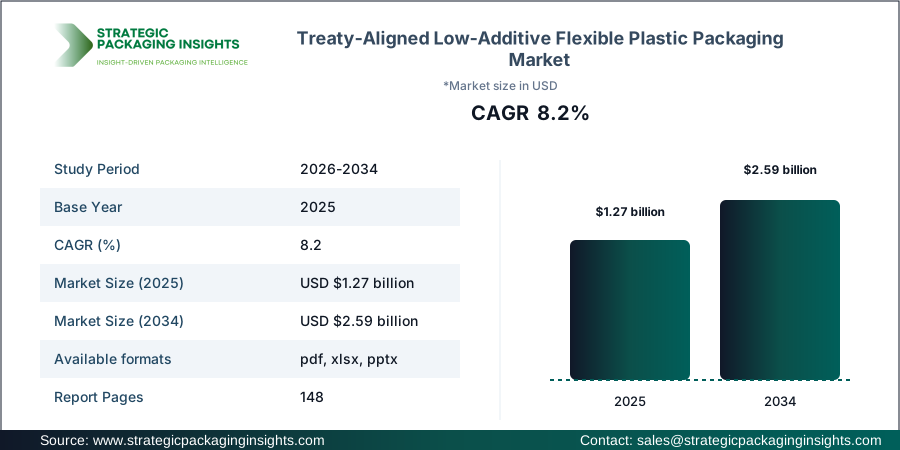
Despite the promising growth trajectory, the market faces challenges such as regulatory constraints and the high cost of raw materials. Regulatory bodies across the globe are imposing strict guidelines on plastic usage, which could potentially hinder market expansion. However, these regulations also present opportunities for innovation and the development of eco-friendly alternatives. The market's potential is underscored by the increasing consumer awareness and demand for sustainable packaging options, which are expected to drive significant investments in research and development. As companies strive to meet these evolving consumer preferences, the Treaty-Aligned Low-Additive Flexible Plastic Packaging market is poised for substantial growth.
Report Scope
| Attributes | Details |
| Report Title | Treaty-Aligned Low-Additive Flexible Plastic Packaging Market Size, Future Growth and Forecast 2034 |
| By Material Type | mono-PE, mono-PP, low-additive laminates |
| By Packaging Type | films, pouches, sachets, wraps |
| By Application | food, personal care, household products |
| By End Use | brand owners, converters, retailers |
| Region | Asia Pacific, North America, Latin America, Europe, Middle East & Africa |
| Base Year | 2025 |
| Historic Period | 2018-2024 |
| Forecast Period | 2026-2034 |
| Number of Pages | 148 |
| Customization Available | Yes* |
Opportunities & Threats
The Treaty-Aligned Low-Additive Flexible Plastic Packaging market presents numerous opportunities, particularly in the realm of sustainability. As global awareness of environmental issues rises, consumers and businesses alike are seeking packaging solutions that reduce ecological footprints. This shift in consumer behavior is driving demand for low-additive flexible plastic packaging, which offers a more sustainable alternative to traditional packaging materials. Companies that can innovate and provide eco-friendly packaging solutions stand to gain a competitive edge in this evolving market landscape. Additionally, the alignment with international treaties focused on reducing plastic waste opens up opportunities for businesses to expand their market reach and enhance their brand reputation.
Another significant opportunity lies in technological advancements. The development of new materials and manufacturing processes is enabling the production of high-quality, low-additive flexible plastic packaging that meets both environmental and functional requirements. These innovations are not only enhancing the performance of packaging solutions but also reducing production costs, making them more accessible to a broader range of industries. As technology continues to evolve, companies that invest in research and development are likely to benefit from increased market share and profitability.
However, the market is not without its threats. One of the primary challenges is the stringent regulatory environment governing plastic usage. Governments worldwide are implementing policies aimed at reducing plastic waste, which could limit the use of certain materials and increase compliance costs for manufacturers. Additionally, the high cost of raw materials used in the production of low-additive flexible plastic packaging poses a threat to market growth. Companies must navigate these challenges by investing in sustainable practices and exploring alternative materials to remain competitive in the market.
Drivers & Challenges
The Treaty-Aligned Low-Additive Flexible Plastic Packaging market is driven by several key factors, including the growing demand for sustainable packaging solutions. As consumers become more environmentally conscious, there is an increasing preference for packaging that minimizes environmental impact. This trend is encouraging companies to adopt low-additive flexible plastic packaging, which offers a more sustainable alternative to traditional materials. Additionally, the alignment with international treaties focused on reducing plastic waste is driving demand for eco-friendly packaging solutions, further propelling market growth.
Another significant driver is the advancement in material science and technology. Innovations in the development of new materials and manufacturing processes are enabling the production of high-quality, low-additive flexible plastic packaging that meets both environmental and functional requirements. These advancements are not only enhancing the performance of packaging solutions but also reducing production costs, making them more accessible to a broader range of industries. As technology continues to evolve, companies that invest in research and development are likely to benefit from increased market share and profitability.
Despite these drivers, the market faces several challenges. One of the primary challenges is the stringent regulatory environment governing plastic usage. Governments worldwide are implementing policies aimed at reducing plastic waste, which could limit the use of certain materials and increase compliance costs for manufacturers. Additionally, the high cost of raw materials used in the production of low-additive flexible plastic packaging poses a threat to market growth. Companies must navigate these challenges by investing in sustainable practices and exploring alternative materials to remain competitive in the market.
Market Share Analysis
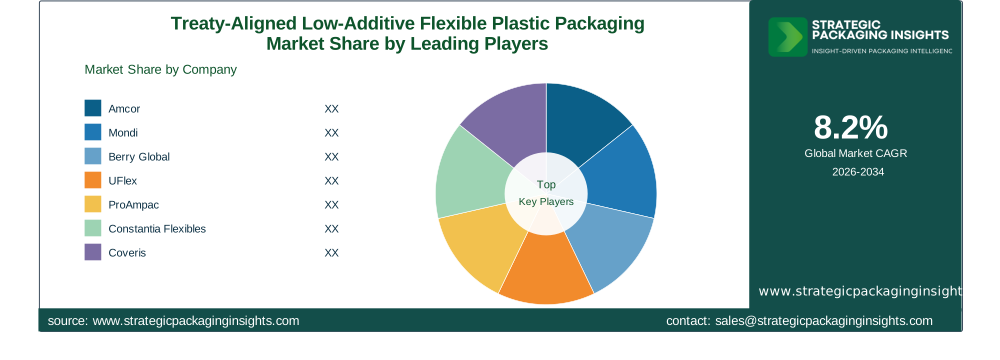
The Treaty-Aligned Low-Additive Flexible Plastic Packaging market is characterized by a competitive landscape with several key players vying for market share. Companies such as Amcor, Mondi, Berry Global, UFlex, ProAmpac, Constantia Flexibles, Coveris, Huhtamaki, Sealed Air, and Winpak are at the forefront of this market, leveraging their expertise and resources to develop innovative packaging solutions. These companies are focusing on expanding their product portfolios and enhancing their production capabilities to meet the growing demand for sustainable packaging solutions.
Amcor, a leading player in the market, is known for its commitment to sustainability and innovation. The company has been actively investing in research and development to create eco-friendly packaging solutions that align with international treaties aimed at reducing plastic waste. Similarly, Mondi is focusing on developing sustainable packaging solutions that meet the evolving needs of consumers and businesses. The company's emphasis on innovation and sustainability has helped it maintain a strong position in the market.
Berry Global, another major player, is leveraging its extensive manufacturing capabilities and global presence to expand its market share. The company is committed to providing high-quality, low-additive flexible plastic packaging solutions that meet the stringent environmental standards set by regulatory bodies. UFlex, a leading flexible packaging company, is also focusing on sustainability and innovation to enhance its market position. The company's efforts to develop eco-friendly packaging solutions have been well-received by consumers and businesses alike.
ProAmpac, Constantia Flexibles, and Coveris are also key players in the market, each with a strong focus on sustainability and innovation. These companies are investing in research and development to create packaging solutions that meet the growing demand for eco-friendly alternatives. Huhtamaki, Sealed Air, and Winpak are also making significant strides in the market, leveraging their expertise and resources to develop innovative packaging solutions that align with international treaties and consumer preferences.
Key Highlights
- The market is projected to grow at a CAGR of 8.2% from 2026 to 2034.
- Increasing demand for sustainable packaging solutions is driving market growth.
- Technological advancements are enabling the development of innovative packaging solutions.
- Regulatory constraints pose a challenge to market expansion.
- Key players are focusing on sustainability and innovation to enhance market position.
- Consumer awareness of environmental issues is driving demand for eco-friendly packaging.
- High cost of raw materials is a significant challenge for manufacturers.
- Alignment with international treaties is opening up new market opportunities.
- Investments in research and development are crucial for market success.
- Companies are expanding their product portfolios to meet evolving consumer preferences.
Top Countries Insights
In the Treaty-Aligned Low-Additive Flexible Plastic Packaging market, the United States stands out as a key player, with a market size of approximately $500 million and a CAGR of 7%. The country's strong regulatory framework and consumer demand for sustainable packaging solutions are driving market growth. The U.S. government has implemented policies aimed at reducing plastic waste, encouraging companies to adopt eco-friendly packaging solutions. Additionally, technological advancements and a focus on innovation are further propelling market growth in the region.
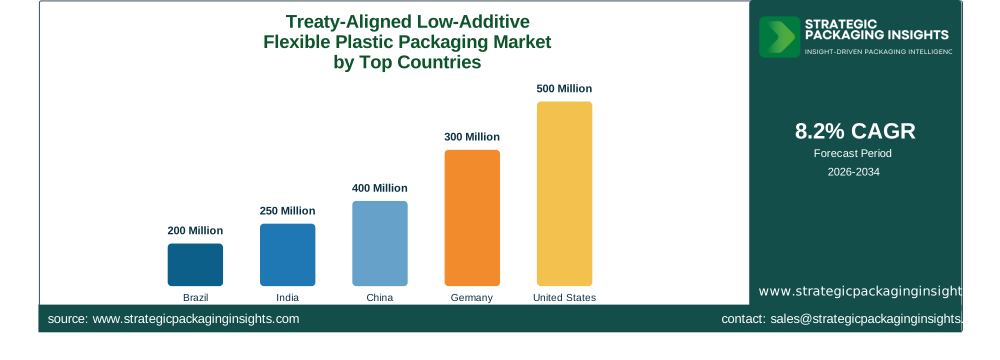
Germany is another significant market, with a market size of around $300 million and a CAGR of 6%. The country's strong emphasis on sustainability and environmental protection is driving demand for low-additive flexible plastic packaging. Germany's regulatory environment is supportive of eco-friendly packaging solutions, and companies are investing in research and development to meet these stringent standards. The country's focus on innovation and sustainability is expected to drive market growth in the coming years.
China, with a market size of approximately $400 million and a CAGR of 9%, is a rapidly growing market for low-additive flexible plastic packaging. The country's large population and increasing consumer awareness of environmental issues are driving demand for sustainable packaging solutions. The Chinese government is also implementing policies aimed at reducing plastic waste, further supporting market growth. Additionally, advancements in material science and technology are enabling the development of innovative packaging solutions in the region.
India, with a market size of around $250 million and a CAGR of 10%, is another key market for low-additive flexible plastic packaging. The country's growing middle class and increasing consumer awareness of environmental issues are driving demand for sustainable packaging solutions. The Indian government is also implementing policies aimed at reducing plastic waste, encouraging companies to adopt eco-friendly packaging solutions. Additionally, technological advancements and a focus on innovation are further propelling market growth in the region.
Brazil, with a market size of approximately $200 million and a CAGR of 8%, is a significant market for low-additive flexible plastic packaging. The country's strong regulatory framework and consumer demand for sustainable packaging solutions are driving market growth. The Brazilian government has implemented policies aimed at reducing plastic waste, encouraging companies to adopt eco-friendly packaging solutions. Additionally, technological advancements and a focus on innovation are further propelling market growth in the region.
Treaty-Aligned Low-Additive Flexible Plastic Packaging Market Segments Insights

By Material Type Analysis
The Treaty-Aligned Low-Additive Flexible Plastic Packaging market is segmented by material type into mono-PE, mono-PP, and low-additive laminates. Mono-PE is gaining traction due to its recyclability and lower environmental impact compared to traditional materials. The demand for mono-PE is driven by its ability to meet stringent environmental standards while maintaining product integrity. Companies are investing in research and development to enhance the performance of mono-PE packaging solutions, making them more appealing to environmentally conscious consumers.
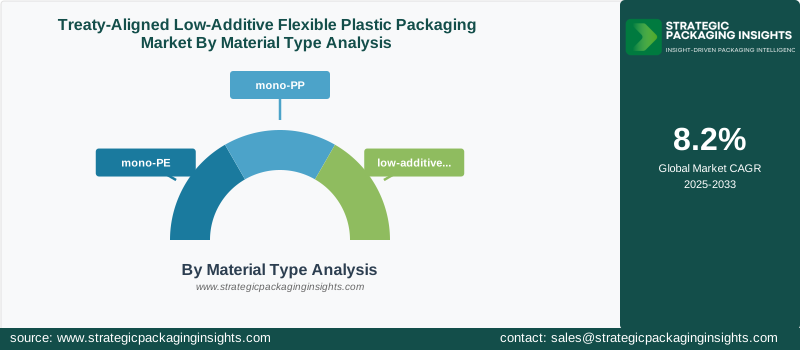
Mono-PP is another significant segment, offering benefits such as high clarity and excellent barrier properties. The demand for mono-PP is driven by its versatility and ability to meet the diverse needs of various industries. Companies are focusing on developing innovative mono-PP packaging solutions that align with international treaties aimed at reducing plastic waste. Low-additive laminates are also gaining popularity due to their ability to provide enhanced protection and shelf life for packaged products. The demand for low-additive laminates is driven by the increasing need for sustainable packaging solutions that offer superior performance.
By Packaging Type Analysis
The market is segmented by packaging type into films, pouches, sachets, and wraps. Films are the most widely used packaging type, offering benefits such as flexibility, durability, and cost-effectiveness. The demand for films is driven by their ability to provide excellent protection and shelf life for packaged products. Companies are focusing on developing innovative film packaging solutions that align with international treaties aimed at reducing plastic waste.
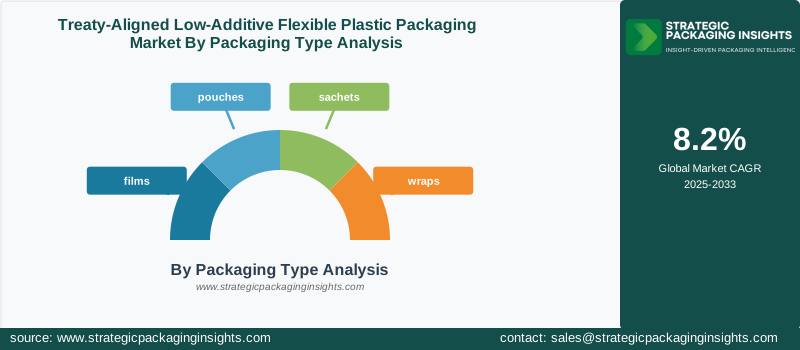
Pouches are another significant segment, offering benefits such as convenience and ease of use. The demand for pouches is driven by their versatility and ability to meet the diverse needs of various industries. Companies are focusing on developing innovative pouch packaging solutions that offer enhanced protection and shelf life for packaged products. Sachets and wraps are also gaining popularity due to their ability to provide convenient and cost-effective packaging solutions. The demand for sachets and wraps is driven by the increasing need for sustainable packaging solutions that offer superior performance.
By Application Analysis
The market is segmented by application into food, personal care, and household products. The food segment is the largest, driven by the increasing demand for sustainable packaging solutions in the food industry. Companies are focusing on developing innovative packaging solutions that offer enhanced protection and shelf life for food products. The demand for sustainable packaging solutions in the food industry is driven by the increasing consumer awareness of environmental issues and the need for eco-friendly alternatives.
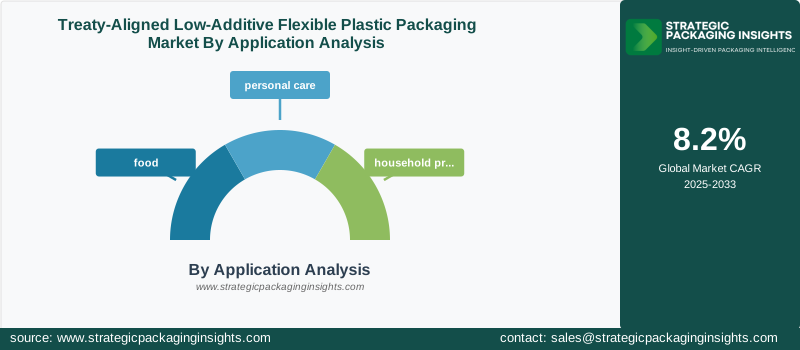
The personal care segment is another significant market, driven by the increasing demand for sustainable packaging solutions in the personal care industry. Companies are focusing on developing innovative packaging solutions that offer enhanced protection and shelf life for personal care products. The demand for sustainable packaging solutions in the personal care industry is driven by the increasing consumer awareness of environmental issues and the need for eco-friendly alternatives. The household products segment is also gaining traction, driven by the increasing demand for sustainable packaging solutions in the household products industry.
By End Use Analysis
The market is segmented by end use into brand owners, converters, and retailers. Brand owners are the largest segment, driven by the increasing demand for sustainable packaging solutions that align with their brand values. Companies are focusing on developing innovative packaging solutions that offer enhanced protection and shelf life for their products. The demand for sustainable packaging solutions among brand owners is driven by the increasing consumer awareness of environmental issues and the need for eco-friendly alternatives.
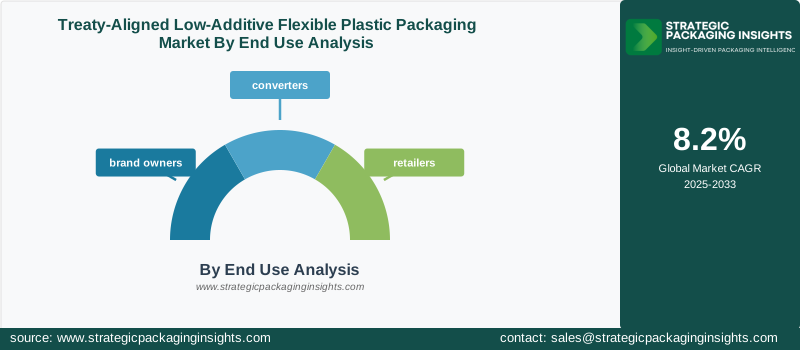
Converters are another significant segment, driven by the increasing demand for sustainable packaging solutions that offer superior performance. Companies are focusing on developing innovative packaging solutions that meet the diverse needs of converters. The demand for sustainable packaging solutions among converters is driven by the increasing need for eco-friendly alternatives and the alignment with international treaties aimed at reducing plastic waste. Retailers are also gaining traction, driven by the increasing demand for sustainable packaging solutions that offer enhanced protection and shelf life for their products.
Treaty-Aligned Low-Additive Flexible Plastic Packaging Market Segments
The Treaty-Aligned Low-Additive Flexible Plastic Packaging market has been segmented on the basis ofBy Material Type
- mono-PE
- mono-PP
- low-additive laminates
By Packaging Type
- films
- pouches
- sachets
- wraps
By Application
- food
- personal care
- household products
By End Use
- brand owners
- converters
- retailers
Region
- Asia Pacific
- North America
- Latin America
- Europe
- Middle East & Africa




