


Tray Sealer Machines Market Outlook
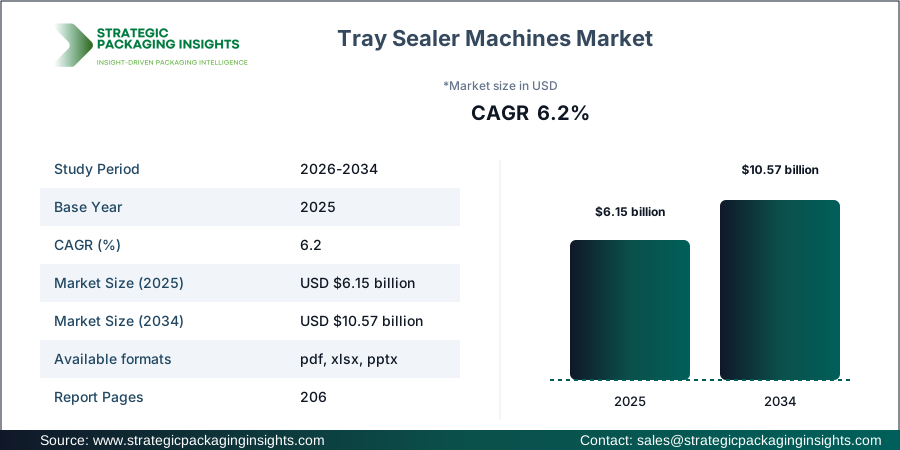
The Tray Sealer Machines market was valued at $6.15 billion in 2025 and is projected to reach $10.57 billion by 2034, growing at a CAGR of 6.2% during the forecast period 2026-2034. This growth is driven by the increasing demand for efficient packaging solutions in the food industry, where tray sealers are essential for maintaining product freshness and extending shelf life. The market is also benefiting from technological advancements in sealing technologies, such as Modified Atmosphere Packaging (MAP) and vacuum skin packaging, which enhance product preservation. Additionally, the rising trend of ready-to-eat meals and convenience foods is propelling the demand for tray sealer machines, as these products require reliable and efficient packaging solutions.
Despite the promising growth prospects, the tray sealer machines market faces certain challenges. Regulatory constraints related to food safety and packaging standards can pose significant hurdles for manufacturers. Moreover, the high initial investment required for advanced sealing technologies may deter small and medium-sized enterprises from adopting these solutions. However, the market holds substantial growth potential, particularly in emerging economies where the food processing industry is expanding rapidly. The increasing focus on sustainable packaging solutions is also expected to create new opportunities for market players, as consumers and regulatory bodies alike demand eco-friendly packaging options.
Report Scope
| Attributes | Details |
| Report Title | Tray Sealer Machines Market Size, Future Growth and Forecast 2034 |
| By Machine Type | manual tray sealers, semi-automatic tray sealers, automatic tray sealers |
| By Application | fresh foods, ready meals, meat & poultry, medical trays |
| By Technology | MAP sealing, vacuum skin packaging, heat sealing |
| By End Use | food processors, supermarkets, co-packers, medical packers |
| Region | Asia Pacific, North America, Latin America, Europe, Middle East & Africa |
| Base Year | 2025 |
| Historic Period | 2018-2024 |
| Forecast Period | 2026-2034 |
| Number of Pages | 206 |
| Customization Available | Yes* |
Opportunities & Threats
The tray sealer machines market presents numerous opportunities, particularly in the realm of technological innovation. As consumer preferences shift towards convenience and sustainability, there is a growing demand for advanced packaging solutions that can extend shelf life while minimizing environmental impact. This trend is driving the development of new sealing technologies, such as vacuum skin packaging and Modified Atmosphere Packaging (MAP), which offer superior product preservation and reduced packaging waste. Additionally, the increasing popularity of ready-to-eat meals and convenience foods is creating a surge in demand for efficient and reliable tray sealing solutions, providing ample growth opportunities for market players.
Another significant opportunity lies in the expansion of the food processing industry in emerging economies. As disposable incomes rise and urbanization accelerates, there is a growing demand for packaged foods, which in turn drives the need for advanced packaging solutions. This trend is particularly pronounced in regions such as Asia Pacific and Latin America, where the food processing industry is experiencing rapid growth. By capitalizing on these opportunities, manufacturers of tray sealer machines can expand their market presence and tap into new revenue streams.
However, the market is not without its threats. One of the primary challenges facing the tray sealer machines market is the stringent regulatory environment surrounding food safety and packaging standards. Compliance with these regulations can be costly and time-consuming, particularly for small and medium-sized enterprises. Additionally, the high initial investment required for advanced sealing technologies may deter some companies from adopting these solutions, limiting market growth. To overcome these challenges, market players must focus on developing cost-effective and compliant solutions that meet the evolving needs of consumers and regulatory bodies alike.
Drivers & Challenges
The tray sealer machines market is driven by several key factors, including the growing demand for packaged foods and the need for efficient packaging solutions that extend product shelf life. As consumers increasingly seek convenience and quality, the demand for ready-to-eat meals and fresh foods packaged in trays is on the rise. This trend is particularly evident in urban areas, where busy lifestyles drive the need for quick and easy meal solutions. Additionally, advancements in sealing technologies, such as Modified Atmosphere Packaging (MAP) and vacuum skin packaging, are enhancing the appeal of tray sealer machines by offering superior product preservation and reduced packaging waste.
Another significant driver of market growth is the increasing focus on sustainability in packaging. As environmental concerns gain prominence, consumers and regulatory bodies are demanding eco-friendly packaging solutions that minimize waste and reduce carbon footprints. This trend is encouraging manufacturers to develop innovative sealing technologies that not only preserve product quality but also align with sustainability goals. By investing in research and development, market players can capitalize on this growing demand for sustainable packaging solutions and gain a competitive edge in the market.
Despite these drivers, the tray sealer machines market faces several challenges that could hinder its growth. One of the primary challenges is the high cost of advanced sealing technologies, which may deter small and medium-sized enterprises from adopting these solutions. Additionally, the stringent regulatory environment surrounding food safety and packaging standards can pose significant hurdles for manufacturers, particularly in terms of compliance costs and time. To address these challenges, market players must focus on developing cost-effective and compliant solutions that meet the evolving needs of consumers and regulatory bodies alike.
Market Share Analysis
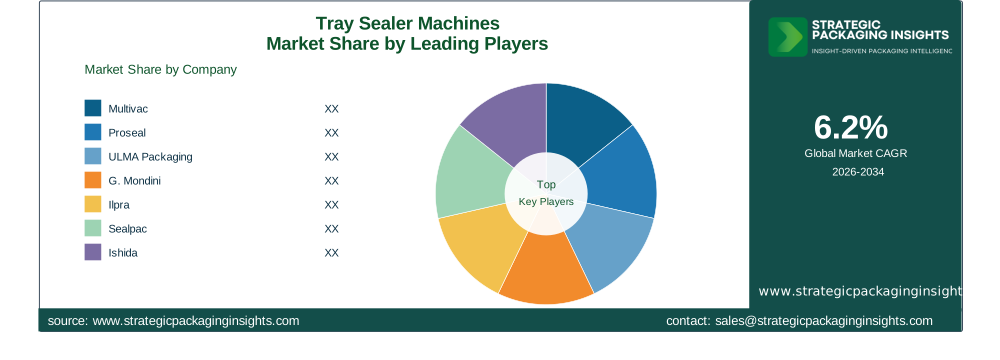
The tray sealer machines market is characterized by a competitive landscape with several key players vying for market share. Companies such as Multivac, Proseal, ULMA Packaging, G. Mondini, Ilpra, Sealpac, Ishida, Reepack, Harpak-ULMA, and Cima-Pak are among the leading players in the market, each offering a range of innovative sealing solutions to meet the diverse needs of their customers. These companies are focused on expanding their product portfolios and enhancing their technological capabilities to maintain a competitive edge in the market.
Multivac is a prominent player in the tray sealer machines market, known for its comprehensive range of packaging solutions that cater to various industries, including food, medical, and consumer goods. The company is committed to innovation and sustainability, continuously developing new technologies to meet the evolving needs of its customers. Proseal, another leading player, specializes in the design and manufacture of high-quality tray sealing machines, with a strong focus on customer service and support.
ULMA Packaging is a global leader in the packaging industry, offering a wide range of tray sealing solutions that are designed to enhance product preservation and extend shelf life. The company is known for its commitment to quality and innovation, continuously investing in research and development to stay ahead of market trends. G. Mondini is another key player, renowned for its advanced sealing technologies and commitment to sustainability. The company offers a range of innovative solutions that cater to the diverse needs of its customers, from food processors to medical packers.
Ilpra and Sealpac are also significant players in the tray sealer machines market, each offering a range of high-quality sealing solutions that are designed to meet the specific needs of their customers. Both companies are focused on innovation and sustainability, continuously developing new technologies to enhance product preservation and reduce packaging waste. Ishida, Reepack, Harpak-ULMA, and Cima-Pak are also key players in the market, each offering a range of innovative sealing solutions that cater to the diverse needs of their customers.
Key Highlights
- The tray sealer machines market is projected to grow from $6.15 billion in 2025 to $10.57 billion by 2034, at a CAGR of 6.2%.
- Technological advancements in sealing technologies, such as MAP and vacuum skin packaging, are driving market growth.
- The increasing demand for ready-to-eat meals and convenience foods is propelling the demand for tray sealer machines.
- Emerging economies, particularly in Asia Pacific and Latin America, present significant growth opportunities for market players.
- Stringent regulatory requirements related to food safety and packaging standards pose challenges for manufacturers.
- The high initial investment required for advanced sealing technologies may deter small and medium-sized enterprises.
- Key players in the market include Multivac, Proseal, ULMA Packaging, G. Mondini, Ilpra, Sealpac, Ishida, Reepack, Harpak-ULMA, and Cima-Pak.
- The focus on sustainable packaging solutions is creating new opportunities for market players.
- Innovation and technological advancements are critical for maintaining a competitive edge in the market.
Top Countries Insights
In the tray sealer machines market, the United States stands out as a key player, with a market size of approximately $2.5 billion and a CAGR of 5%. The country's robust food processing industry and the increasing demand for convenience foods are major growth drivers. Additionally, the focus on sustainable packaging solutions is encouraging manufacturers to adopt advanced sealing technologies, further boosting market growth. However, regulatory challenges related to food safety and packaging standards remain a significant hurdle for market players.
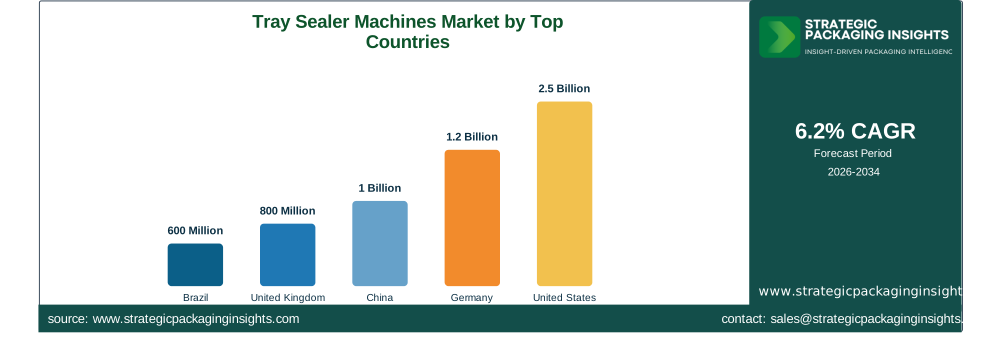
Germany is another significant market for tray sealer machines, with a market size of around $1.2 billion and a CAGR of 4%. The country's strong emphasis on quality and innovation in packaging solutions is driving demand for advanced sealing technologies. Additionally, the growing trend of ready-to-eat meals and convenience foods is contributing to market growth. However, the stringent regulatory environment and high initial investment costs pose challenges for manufacturers.
China is emerging as a major player in the tray sealer machines market, with a market size of approximately $1 billion and a CAGR of 8%. The country's rapidly expanding food processing industry and increasing disposable incomes are driving demand for packaged foods, which in turn is boosting the demand for tray sealer machines. However, the market faces challenges related to regulatory compliance and the need for cost-effective solutions.
In the United Kingdom, the tray sealer machines market is valued at around $800 million, with a CAGR of 3%. The country's focus on sustainability and innovation in packaging solutions is driving demand for advanced sealing technologies. Additionally, the increasing popularity of convenience foods is contributing to market growth. However, regulatory challenges and high initial investment costs remain significant hurdles for market players.
Brazil is also a key market for tray sealer machines, with a market size of approximately $600 million and a CAGR of 6%. The country's growing food processing industry and increasing demand for packaged foods are major growth drivers. However, the market faces challenges related to regulatory compliance and the need for cost-effective solutions.
Tray Sealer Machines Market Segments Insights

Machine Type Analysis
The tray sealer machines market is segmented by machine type into manual tray sealers, semi-automatic tray sealers, and automatic tray sealers. Manual tray sealers are typically used in small-scale operations where flexibility and cost-effectiveness are key considerations. These machines are favored by small food processors and local supermarkets that require simple and reliable sealing solutions. However, the demand for manual tray sealers is limited by their lower efficiency and higher labor requirements compared to automated solutions.
Semi-automatic tray sealers offer a balance between cost and efficiency, making them popular among medium-sized enterprises and co-packers. These machines provide greater flexibility and control over the sealing process, allowing operators to adjust settings based on specific product requirements. The growing demand for semi-automatic tray sealers is driven by the need for efficient and reliable packaging solutions that can handle a variety of products and packaging materials.
Automatic tray sealers represent the largest segment in the market, driven by their high efficiency and ability to handle large volumes of products with minimal labor input. These machines are widely used by large food processors and supermarkets that require fast and reliable sealing solutions to meet high production demands. The increasing focus on automation and efficiency in the food processing industry is driving the demand for automatic tray sealers, as they offer significant cost savings and improved product quality.
Application Analysis
The tray sealer machines market is segmented by application into fresh foods, ready meals, meat & poultry, and medical trays. The fresh foods segment is a major driver of market growth, as consumers increasingly seek convenient and high-quality packaging solutions that preserve product freshness and extend shelf life. Tray sealers are essential for packaging fresh produce, dairy products, and other perishable items, ensuring that they remain fresh and appealing to consumers.
The ready meals segment is also experiencing significant growth, driven by the increasing demand for convenience foods and the growing trend of on-the-go lifestyles. Tray sealers are used to package a wide range of ready-to-eat meals, from pasta dishes to salads, providing a reliable and efficient packaging solution that maintains product quality and extends shelf life. The meat & poultry segment is another key application area, as tray sealers are used to package fresh and processed meats, ensuring that they remain fresh and safe for consumption.
The medical trays segment represents a niche but growing market for tray sealer machines. These machines are used to package medical devices and supplies, ensuring that they remain sterile and protected from contamination. The increasing demand for medical packaging solutions is driven by the growing healthcare industry and the need for reliable and efficient packaging solutions that meet stringent regulatory requirements.
Technology Analysis
The tray sealer machines market is segmented by technology into MAP sealing, vacuum skin packaging, and heat sealing. MAP sealing is a popular technology that involves modifying the atmosphere inside the packaging to extend product shelf life and maintain freshness. This technology is widely used in the food industry, particularly for packaging fresh produce, meats, and ready meals, as it offers superior product preservation and reduced packaging waste.
Vacuum skin packaging is another advanced sealing technology that is gaining popularity in the market. This technology involves removing air from the packaging and sealing it tightly around the product, creating a vacuum effect that extends shelf life and enhances product presentation. Vacuum skin packaging is particularly popular for packaging high-value products, such as meats and seafood, as it offers superior product protection and a premium appearance.
Heat sealing is a traditional sealing technology that is widely used in the tray sealer machines market. This technology involves applying heat and pressure to seal the packaging, creating a strong and reliable seal that protects the product from contamination. Heat sealing is a cost-effective and versatile solution that is suitable for a wide range of products and packaging materials, making it a popular choice among manufacturers.
End Use Analysis
The tray sealer machines market is segmented by end use into food processors, supermarkets, co-packers, and medical packers. Food processors represent the largest end-use segment, as they require efficient and reliable packaging solutions to meet high production demands and ensure product quality. Tray sealers are essential for packaging a wide range of food products, from fresh produce to ready meals, ensuring that they remain fresh and appealing to consumers.
Supermarkets are another key end-use segment, as they require efficient and reliable packaging solutions to meet the demands of their customers. Tray sealers are used to package a wide range of products, from fresh produce to ready meals, ensuring that they remain fresh and appealing to consumers. The growing trend of convenience foods and on-the-go lifestyles is driving the demand for tray sealer machines in supermarkets, as they offer a reliable and efficient packaging solution that maintains product quality and extends shelf life.
Co-packers are also a significant end-use segment, as they provide packaging services to a wide range of industries, from food to medical. Tray sealers are essential for co-packers, as they offer a reliable and efficient packaging solution that meets the diverse needs of their customers. The medical packers segment represents a niche but growing market for tray sealer machines, as they require reliable and efficient packaging solutions to meet stringent regulatory requirements and ensure product safety.
Tray Sealer Machines Market Segments
The Tray Sealer Machines market has been segmented on the basis ofBy Machine Type
- manual tray sealers
- semi-automatic tray sealers
- automatic tray sealers
By Application
- fresh foods
- ready meals
- meat & poultry
- medical trays
By Technology
- MAP sealing
- vacuum skin packaging
- heat sealing
By End Use
- food processors
- supermarkets
- co-packers
- medical packers
Region
- Asia Pacific
- North America
- Latin America
- Europe
- Middle East & Africa




