


Transparent Paper Market Outlook
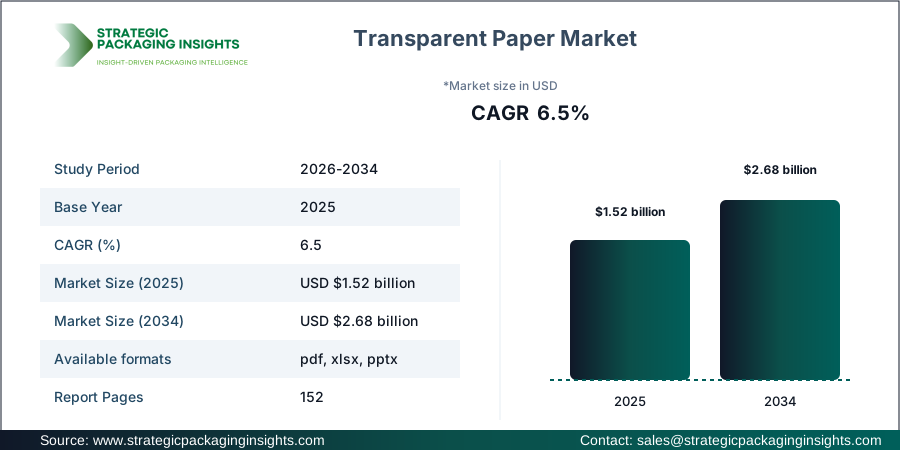
The transparent paper market was valued at $1.52 billion in 2025 and is projected to reach $2.68 billion by 2034, growing at a CAGR of 6.5% during the forecast period 2026-2034. Transparent paper, known for its unique properties such as translucency and strength, is gaining traction across various industries. The demand is primarily driven by the packaging sector, where the need for sustainable and eco-friendly materials is on the rise. The food industry, in particular, is a significant consumer of transparent paper for wrapping and packaging purposes, as it offers a biodegradable alternative to plastic. Additionally, the stationery and labeling sectors are also contributing to the market growth, leveraging the aesthetic and functional benefits of transparent paper.
Despite the promising growth trajectory, the transparent paper market faces certain challenges. The high cost of production and the availability of cheaper alternatives like plastic and other synthetic materials pose significant restraints. Moreover, stringent environmental regulations regarding deforestation and paper production processes could impact the market dynamics. However, the increasing consumer awareness about environmental sustainability and the push for green packaging solutions present substantial growth potential. Innovations in production technology and the development of cost-effective manufacturing processes are expected to mitigate some of these challenges, paving the way for market expansion.
Report Scope
| Attributes | Details |
| Report Title | Transparent Paper Market Size, Future Growth and Forecast 2034 |
| By Product Type | Glassine Paper, Translucent Paper, Vegetable Parchment |
| By Application | Food Wrapping, Envelopes, Labels, Stationery |
| By Basis Weight | Low, Medium, High |
| By End Use | Food, Retail, Printing, Packaging Converters |
| Region | Asia Pacific, North America, Latin America, Europe, Middle East & Africa |
| Base Year | 2025 |
| Historic Period | 2018-2024 |
| Forecast Period | 2026-2034 |
| Number of Pages | 152 |
| Customization Available | Yes* |
Opportunities & Threats
The transparent paper market is poised for significant opportunities, particularly in the realm of sustainable packaging. As consumers and businesses alike become more environmentally conscious, the demand for eco-friendly packaging solutions is on the rise. Transparent paper, being biodegradable and recyclable, fits perfectly into this trend. The food industry, in particular, is a major opportunity area, as it seeks alternatives to plastic packaging to reduce environmental impact. Additionally, the rise of e-commerce and the need for secure yet visually appealing packaging solutions further bolster the demand for transparent paper. The market also sees potential in the stationery and labeling sectors, where the aesthetic appeal of transparent paper can be leveraged for premium product offerings.
Another opportunity lies in technological advancements in paper manufacturing. Innovations that enhance the strength, durability, and clarity of transparent paper can open new application areas and increase its competitiveness against synthetic alternatives. The development of cost-effective production techniques can also make transparent paper more accessible to a broader range of industries. Furthermore, the growing trend of personalization and customization in packaging offers a niche market for transparent paper, as it allows for unique and creative designs that can enhance brand identity and consumer engagement.
However, the market is not without its threats. The high production costs associated with transparent paper can be a deterrent for widespread adoption, especially in price-sensitive markets. Additionally, the availability of cheaper synthetic alternatives poses a significant threat, as they offer similar functional benefits at a lower cost. Environmental regulations concerning paper production and deforestation also present challenges, as compliance can increase operational costs and impact supply chains. Moreover, the market faces competition from digital solutions in the stationery and labeling sectors, where digital labels and e-stationery are gaining popularity.
Drivers & Challenges
The transparent paper market is driven by several key factors, with sustainability being at the forefront. The increasing consumer preference for eco-friendly products is a major driver, as transparent paper offers a biodegradable and recyclable alternative to traditional packaging materials. The food industry, in particular, is a significant driver, as it seeks to reduce its environmental footprint by adopting sustainable packaging solutions. Additionally, the rise of e-commerce has increased the demand for secure and visually appealing packaging, further driving the market for transparent paper. The aesthetic appeal and functional benefits of transparent paper also make it a popular choice in the stationery and labeling sectors, where it is used for premium product offerings.
Technological advancements in paper manufacturing are another key driver of the market. Innovations that enhance the strength, durability, and clarity of transparent paper can open new application areas and increase its competitiveness against synthetic alternatives. The development of cost-effective production techniques can also make transparent paper more accessible to a broader range of industries. Furthermore, the growing trend of personalization and customization in packaging offers a niche market for transparent paper, as it allows for unique and creative designs that can enhance brand identity and consumer engagement.
Despite these drivers, the transparent paper market faces several challenges. The high production costs associated with transparent paper can be a deterrent for widespread adoption, especially in price-sensitive markets. Additionally, the availability of cheaper synthetic alternatives poses a significant threat, as they offer similar functional benefits at a lower cost. Environmental regulations concerning paper production and deforestation also present challenges, as compliance can increase operational costs and impact supply chains. Moreover, the market faces competition from digital solutions in the stationery and labeling sectors, where digital labels and e-stationery are gaining popularity.
Market Share Analysis
The transparent paper market is characterized by a competitive landscape with several key players vying for market share. Companies such as Ahlstrom, Sappi, Mondi, Koehler Paper, and Nordic Paper are some of the prominent players in the market. These companies have established themselves as leaders through strategic initiatives such as mergers and acquisitions, product innovations, and expansions into new markets. Ahlstrom, for instance, is known for its focus on sustainability and innovation, offering a range of eco-friendly paper products. Sappi, on the other hand, has a strong presence in the global market, with a diverse product portfolio that caters to various industries.
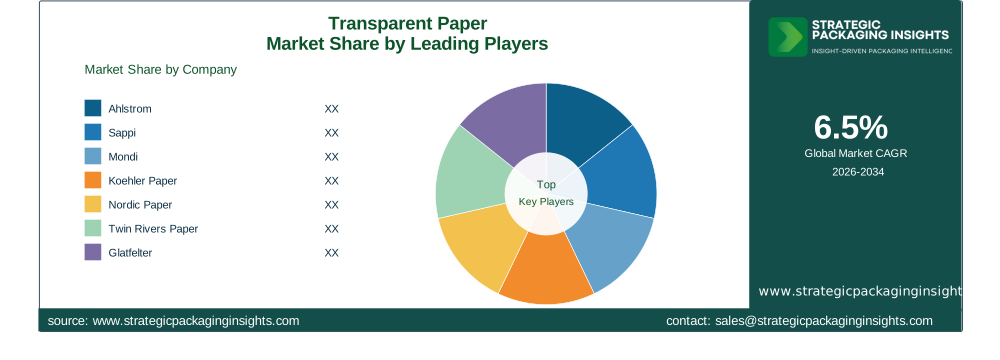
Mondi is another major player in the transparent paper market, known for its commitment to sustainability and innovation. The company has a strong focus on research and development, continuously working to enhance the quality and performance of its paper products. Koehler Paper, with its extensive experience in the paper industry, has carved a niche for itself in the transparent paper market. The company is known for its high-quality products and customer-centric approach, which has helped it maintain a strong market position.
Nordic Paper, Twin Rivers Paper, and Glatfelter are also significant players in the market, each with its unique strengths and strategies. Nordic Paper is known for its focus on sustainability and innovation, offering a range of eco-friendly paper products. Twin Rivers Paper, on the other hand, has a strong presence in the North American market, with a diverse product portfolio that caters to various industries. Glatfelter, with its extensive experience in the paper industry, has carved a niche for itself in the transparent paper market.
Nippon Paper, Oji Holdings, and Domtar are other notable players in the market. Nippon Paper is known for its commitment to sustainability and innovation, offering a range of eco-friendly paper products. Oji Holdings, with its strong presence in the Asian market, has a diverse product portfolio that caters to various industries. Domtar, on the other hand, has a strong focus on research and development, continuously working to enhance the quality and performance of its paper products. These companies, with their strategic initiatives and focus on sustainability, are expected to play a significant role in shaping the future of the transparent paper market.
Key Highlights
- The transparent paper market is projected to grow from $1.52 billion in 2025 to $2.68 billion by 2034, at a CAGR of 6.5%.
- Key drivers include the increasing demand for sustainable packaging solutions and the rise of e-commerce.
- Challenges include high production costs and competition from cheaper synthetic alternatives.
- Technological advancements in paper manufacturing present significant growth opportunities.
- The food industry is a major consumer of transparent paper, driven by the need for eco-friendly packaging.
- Key players in the market include Ahlstrom, Sappi, Mondi, Koehler Paper, and Nordic Paper.
- Environmental regulations and deforestation concerns pose challenges to market growth.
- The market sees potential in the stationery and labeling sectors, leveraging the aesthetic appeal of transparent paper.
- Personalization and customization in packaging offer niche market opportunities for transparent paper.
Top Countries Insights
In the transparent paper market, the United States stands out as a key player, with a market size of approximately $450 million and a CAGR of 5%. The country's strong focus on sustainability and eco-friendly packaging solutions drives demand. Government policies promoting green packaging and consumer awareness about environmental issues further bolster market growth. However, challenges such as high production costs and competition from synthetic alternatives persist.
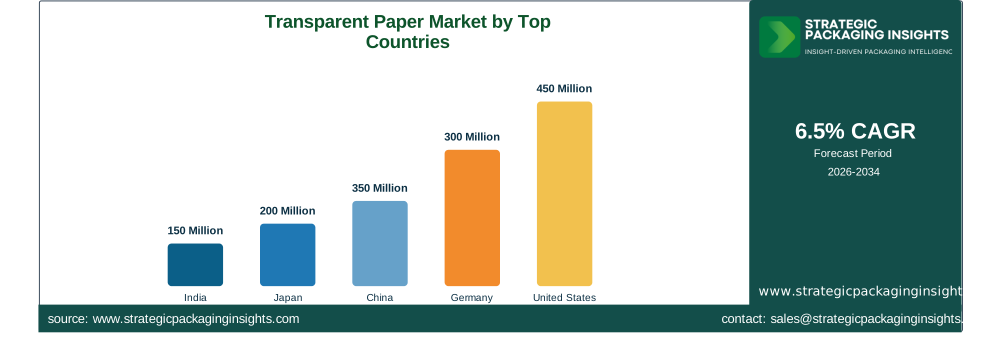
Germany is another significant market, with a market size of around $300 million and a CAGR of 6%. The country's robust manufacturing sector and emphasis on sustainable practices contribute to the demand for transparent paper. Innovations in paper manufacturing and the development of cost-effective production techniques are key growth drivers. However, stringent environmental regulations and competition from digital solutions pose challenges.
China, with a market size of approximately $350 million and a CAGR of 8%, is a rapidly growing market for transparent paper. The country's booming e-commerce sector and increasing consumer preference for eco-friendly products drive demand. Government initiatives promoting sustainable packaging solutions further support market growth. However, the availability of cheaper synthetic alternatives and regulatory challenges remain concerns.
Japan, with a market size of around $200 million and a CAGR of 4%, is a mature market for transparent paper. The country's strong focus on quality and innovation drives demand, particularly in the food and packaging sectors. However, high production costs and competition from synthetic alternatives pose challenges. The market also faces competition from digital solutions in the stationery and labeling sectors.
India, with a market size of approximately $150 million and a CAGR of 7%, is an emerging market for transparent paper. The country's growing middle class and increasing consumer awareness about environmental issues drive demand. Government initiatives promoting sustainable packaging solutions further support market growth. However, challenges such as high production costs and competition from cheaper alternatives persist.
Transparent Paper Market Segments Insights

Product Type Analysis
The transparent paper market is segmented by product type into glassine paper, translucent paper, and vegetable parchment. Glassine paper, known for its smooth and glossy finish, is widely used in food wrapping and packaging applications. Its resistance to grease and moisture makes it an ideal choice for the food industry. Translucent paper, on the other hand, is favored in the stationery and labeling sectors for its aesthetic appeal and versatility. Vegetable parchment, with its high strength and durability, is used in various industrial applications, including baking and cooking. The demand for these product types is driven by the increasing need for sustainable and eco-friendly packaging solutions across industries.
Glassine paper holds a significant share of the market, driven by its widespread use in the food industry. The growing demand for biodegradable and recyclable packaging materials is a key driver for this segment. Translucent paper is also gaining traction, particularly in the stationery and labeling sectors, where its aesthetic appeal and versatility are highly valued. Vegetable parchment, although a smaller segment, is expected to see steady growth due to its unique properties and applications in the food and industrial sectors. The development of cost-effective production techniques and innovations in paper manufacturing are expected to further boost the growth of these product types.
Application Analysis
The transparent paper market is segmented by application into food wrapping, envelopes, labels, and stationery. Food wrapping is the largest application segment, driven by the increasing demand for sustainable and eco-friendly packaging solutions in the food industry. Transparent paper offers a biodegradable alternative to plastic, making it an ideal choice for food wrapping and packaging. The envelopes segment is also significant, with transparent paper being used for its aesthetic appeal and functional benefits. Labels and stationery are other key application areas, where the versatility and aesthetic appeal of transparent paper are highly valued.
The food wrapping segment is expected to see significant growth, driven by the increasing consumer preference for eco-friendly packaging solutions. The rise of e-commerce and the need for secure and visually appealing packaging further bolster the demand for transparent paper in this segment. The envelopes segment is also expected to see steady growth, with transparent paper being used for its aesthetic appeal and functional benefits. Labels and stationery, although smaller segments, are expected to see steady growth due to the increasing demand for premium and personalized products. The development of cost-effective production techniques and innovations in paper manufacturing are expected to further boost the growth of these application segments.
Basis Weight Analysis
The transparent paper market is segmented by basis weight into low, medium, and high. Low basis weight paper is favored for its lightweight and cost-effectiveness, making it an ideal choice for applications such as food wrapping and envelopes. Medium basis weight paper offers a balance between strength and cost, making it suitable for a wide range of applications, including labels and stationery. High basis weight paper, with its superior strength and durability, is used in industrial applications where performance is critical.
The low basis weight segment holds a significant share of the market, driven by its widespread use in the food and packaging industries. The increasing demand for cost-effective and eco-friendly packaging solutions is a key driver for this segment. Medium basis weight paper is also gaining traction, particularly in the labels and stationery sectors, where its balance of strength and cost is highly valued. High basis weight paper, although a smaller segment, is expected to see steady growth due to its unique properties and applications in the industrial sector. The development of cost-effective production techniques and innovations in paper manufacturing are expected to further boost the growth of these basis weight segments.
End Use Analysis
The transparent paper market is segmented by end use into food, retail, printing, and packaging converters. The food industry is the largest end-use segment, driven by the increasing demand for sustainable and eco-friendly packaging solutions. Transparent paper offers a biodegradable alternative to plastic, making it an ideal choice for food packaging and wrapping. The retail sector is also significant, with transparent paper being used for its aesthetic appeal and functional benefits. Printing and packaging converters are other key end-use areas, where the versatility and aesthetic appeal of transparent paper are highly valued.
The food segment is expected to see significant growth, driven by the increasing consumer preference for eco-friendly packaging solutions. The rise of e-commerce and the need for secure and visually appealing packaging further bolster the demand for transparent paper in this segment. The retail sector is also expected to see steady growth, with transparent paper being used for its aesthetic appeal and functional benefits. Printing and packaging converters, although smaller segments, are expected to see steady growth due to the increasing demand for premium and personalized products. The development of cost-effective production techniques and innovations in paper manufacturing are expected to further boost the growth of these end-use segments.
Transparent Paper Market Segments
The Transparent Paper market has been segmented on the basis ofBy Product Type
- Glassine Paper
- Translucent Paper
- Vegetable Parchment
By Application
- Food Wrapping
- Envelopes
- Labels
- Stationery
By Basis Weight
- Low
- Medium
- High
By End Use
- Food
- Retail
- Printing
- Packaging Converters
Region
- Asia Pacific
- North America
- Latin America
- Europe
- Middle East & Africa




