


Transparent Barrier Film Packaging Market Outlook
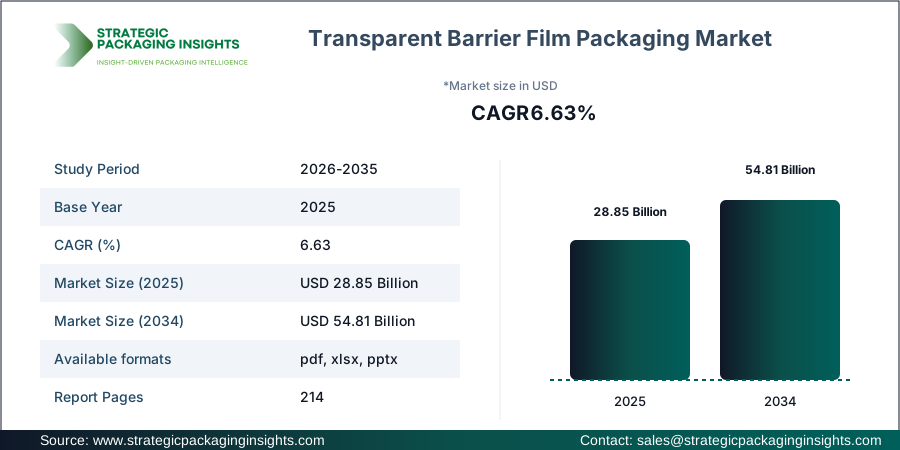
The Transparent Barrier Film Packaging market size was valued at USD $28.85 Billion in 2025 and is anticipated to reach USD $54.81 Billion by 2035, growing at a CAGR of 6.63% % during the forecast period according to Strategic Packaging Insights.
The increasing demand for extended shelf-life and product protection in the food and beverage industry is a significant driver for the Transparent Barrier Film Packaging market. The adoption of advanced barrier technologies such as EVOH and PVDC is enhancing the performance of packaging films, meeting the stringent requirements of food safety and quality. Regulatory bodies like the FDA and EFSA are emphasizing the need for improved packaging solutions, further propelling market growth.
Report Scope
| Attributes | Details |
| Report Title | Transparent Barrier Film Packaging Market Projected to Scale to 54.81 Billion by 2035, Assesses Strategic Packaging Insights |
| By Material | Polyethylene (PE), Polypropylene (PP), Polyethylene Terephthalate (PET), Ethylene Vinyl Alcohol (EVOH), Polyamide (PA), Polyvinylidene Chloride (PVDC), Biaxially Oriented Polypropylene (BOPP), Other Materials |
| By Film Structure | Single-Layer Films, Multi-Layer Films, Coextruded Films, Laminated Films |
| By Barrier Technology | EVOH Barrier, PVDC Barrier, Silicon Oxide (SiOx) Coating, Aluminum Oxide (AlOx) Coating, Acrylic Coating, Ceramic Coating |
| By Packaging Format | Pouches, Bags, Blister Packs, Lidding Films, Wraps, Sachets, Laminates, Other Formats |
| By Thickness | Below 20 Microns, 20–50 Microns, 51–100 Microns, Above 100 Microns |
| By Application | Food and Beverage Packaging, Pharmaceutical Packaging, Personal Care Packaging, Household Packaging, Electronics Packaging, Industrial Packaging, Other Applications |
| By End Use Industry | Food and Beverage, Healthcare and Pharmaceuticals, Personal Care and Cosmetics, Home Care, Electronics, Consumer Goods, Industrial |
| By Region | North America, Europe, Asia-Pacific, Latin America, Middle East and Africa |
| Base Year | 2025 |
| Historic Period | 2018-2024 |
| Forecast Period | 2026-2035 |
| Number of Pages | 214 |
| Customization Available | Yes* |
Market Trends Analysis
Transparent Barrier Film Packaging is witnessing a shift towards sustainable materials, driven by consumer demand for eco-friendly packaging solutions. The integration of post-consumer recycled (PCR) content in film production is gaining traction, aligning with brand owners' sustainability goals. This trend is influencing procurement strategies and material selection, as companies aim to reduce their carbon footprint and comply with environmental regulations.
Technological advancements in film extrusion and coating processes are enhancing the barrier properties of transparent films. The development of multi-layer and coextruded films is providing superior protection against moisture, oxygen, and light, catering to the needs of various industries such as pharmaceuticals and electronics. These innovations are fostering competitive differentiation and expanding application possibilities, thereby driving market growth.
Industry Transformation Analysis
The Transparent Barrier Film Packaging industry is undergoing significant transformation with the adoption of automation and digitalization in manufacturing processes. Automation is improving operational efficiency, reducing production costs, and enhancing product quality. The integration of Industry 4.0 technologies is enabling real-time monitoring and control, optimizing production workflows and minimizing waste.
Globalization of supply chains is being balanced with localization strategies to mitigate risks associated with geopolitical tensions and trade barriers. Companies are investing in regional production facilities to ensure supply chain resilience and meet local demand efficiently. This shift is influencing procurement practices and capacity planning, as firms aim to enhance their market presence and responsiveness to customer needs.
Trends & Disruptions Impacting Customers' Customers
Downstream customers, particularly in the food and beverage sector, are increasingly prioritizing packaging solutions that offer extended shelf-life and product safety. The demand for transparent barrier films is rising as these films provide excellent protection against external contaminants while maintaining product visibility. This trend is driven by consumer preferences for fresh and safe products, influencing packaging design and material selection.
The shift towards e-commerce and online retailing is impacting packaging requirements, with a focus on lightweight, durable, and tamper-evident solutions. Transparent barrier films are being optimized for these applications, offering enhanced protection during transit and storage. This evolution is creating new opportunities for innovation and product development, as companies strive to meet the changing needs of end-users and enhance their competitive positioning.
Transparent Barrier Film Packaging Market Ecosystem
The Transparent Barrier Film Packaging ecosystem involves a complex interplay of raw material suppliers, film producers, converters, and distributors. Raw materials such as polyethylene, polypropylene, and specialty coatings are sourced from global suppliers, ensuring the availability of high-quality inputs for film production. Film producers utilize advanced extrusion and coating technologies to manufacture barrier films with superior performance characteristics.
Converters play a crucial role in transforming films into various packaging formats, catering to the diverse needs of end-use industries. Distribution networks ensure the timely delivery of packaging solutions to customers across regions. The recycling stage is gaining importance as sustainability becomes a key focus, with efforts to enhance material recovery and reduce environmental impact.
Analyst Perspective
Analyst Perspective: The Transparent Barrier Film Packaging market is poised for robust growth, driven by advancements in barrier technologies and increasing demand for sustainable packaging solutions.
The integration of post-consumer recycled content and the development of high-performance films are key trends shaping the market. Companies are investing in R&D to enhance film properties and meet evolving customer expectations, creating opportunities for innovation and competitive differentiation.
Market participants should focus on expanding their regional presence and optimizing supply chain operations to capitalize on growth opportunities. Monitoring regulatory developments and aligning with sustainability goals will be crucial for long-term success in this dynamic market.
Opportunities & Threats
The Transparent Barrier Film Packaging market presents significant opportunities for growth, driven by the increasing demand for high-performance packaging solutions in the food and beverage industry. The adoption of advanced barrier technologies and sustainable materials is creating new avenues for product innovation and differentiation. Companies that invest in R&D and expand their product portfolios are well-positioned to capture market share and meet evolving customer needs.
Emerging markets in Asia Pacific and Latin America offer substantial growth potential, as rising consumer incomes and changing lifestyles drive demand for packaged goods. The expansion of e-commerce and online retailing is further boosting the need for durable and protective packaging solutions, providing opportunities for market expansion and revenue growth.
However, the market faces challenges related to raw material price volatility and supply chain disruptions. Fluctuations in the prices of polymers and specialty coatings can impact production costs and profit margins. Companies need to adopt effective procurement strategies and build resilient supply chains to mitigate these risks and ensure business continuity.
Regulatory pressures and environmental concerns are also posing challenges, as governments and industry bodies impose stricter requirements on packaging materials and waste management. Compliance with these regulations requires significant investment in technology and infrastructure, which can strain resources and affect competitiveness. Companies must navigate these challenges to maintain their market position and achieve sustainable growth.
Drivers & Challenges
The Transparent Barrier Film Packaging market is driven by the growing demand for packaging solutions that offer superior barrier properties and product protection. The food and beverage industry, in particular, is a major driver, as manufacturers seek to extend the shelf-life of products and ensure safety and quality. The adoption of advanced barrier technologies such as EVOH and PVDC is enhancing the performance of packaging films, meeting the stringent requirements of food safety and quality.
Regulatory bodies like the FDA and EFSA are emphasizing the need for improved packaging solutions, further propelling market growth. The shift towards sustainable packaging is also driving demand, as companies aim to reduce their environmental impact and comply with regulations. The integration of post-consumer recycled content in film production is gaining traction, aligning with brand owners' sustainability goals.
However, the market faces challenges related to raw material price volatility and supply chain disruptions. Fluctuations in the prices of polymers and specialty coatings can impact production costs and profit margins. Companies need to adopt effective procurement strategies and build resilient supply chains to mitigate these risks and ensure business continuity.
Packaging Market Economics
The economics of Transparent Barrier Film Packaging are influenced by raw material costs, conversion expenses, and energy consumption. The prices of polymers such as polyethylene and polypropylene are subject to market fluctuations, impacting the overall cost structure. Conversion costs, including extrusion and coating processes, are significant, as they determine the quality and performance of the final product.
Energy costs also play a crucial role, as film production is energy-intensive. Companies are investing in energy-efficient technologies to reduce operational expenses and enhance competitiveness. The integration of post-consumer recycled content is gaining traction, as it offers cost advantages and aligns with sustainability goals. Procurement strategies and capacity utilization are critical factors in optimizing production economics and achieving profitability.
Packaging Value Chain & Cost Analysis
The value chain for Transparent Barrier Film Packaging involves multiple tiers, from raw material suppliers to end-users. Tier-3 includes resin synthesis and additive production, providing the essential inputs for film manufacturing. Tier-2 encompasses film extrusion and substrate production, where raw materials are transformed into barrier films with specific properties.
Tier-1 involves converting, printing, and lamination processes, where films are processed into various packaging formats. Downstream activities include co-packing, filling, and distribution, ensuring the delivery of packaging solutions to end-users. The value chain is characterized by complex interactions and dependencies, with each stage contributing to the overall cost structure and value creation.
Unit Economics & Substrate Cost Analysis
The unit economics of Transparent Barrier Film Packaging are influenced by several factors, including raw material costs, energy consumption, and conversion expenses. The cost of polymers and specialty coatings is a significant component, as it determines the base price of the films. Energy costs are also critical, as film production is energy-intensive and requires efficient management to optimize expenses.
Conversion costs, including extrusion, printing, and lamination, are essential in determining the quality and performance of the final product. Companies are investing in advanced technologies to enhance efficiency and reduce waste, thereby improving unit economics. The integration of post-consumer recycled content offers cost advantages and aligns with sustainability goals, providing opportunities for cost optimization and competitive differentiation.
Packaging Regulatory & Sustainability Analysis
The Transparent Barrier Film Packaging market is subject to various regulatory requirements and sustainability initiatives. Regulatory bodies such as the FDA and EFSA impose strict guidelines on packaging materials, ensuring safety and quality standards are met. Compliance with these regulations is essential for market entry and competitiveness.
Sustainability is a key focus, with companies striving to reduce their environmental impact and align with global initiatives. The integration of post-consumer recycled content and the development of recyclable packaging solutions are gaining traction, driven by consumer demand and regulatory pressures. Extended Producer Responsibility (EPR) and Packaging Waste Regulations (PPWR) are influencing packaging design and material selection, as companies aim to meet sustainability targets and enhance brand reputation.
Strategic Mergers, Acquisitions & Capacity Expansions
Recent strategic developments in the Transparent Barrier Film Packaging market include mergers, acquisitions, and capacity expansions. Companies are investing in new technologies and expanding their production capabilities to meet growing demand and enhance competitiveness. For instance, Amcor plc has announced the expansion of its production facilities to increase capacity and improve supply chain efficiency.
Partnerships and collaborations are also prevalent, as companies seek to leverage complementary strengths and enhance their market presence. The focus on sustainability is driving investments in recycling facilities and the development of eco-friendly packaging solutions. These strategic initiatives are shaping the competitive landscape and creating opportunities for growth and innovation.
Strategic Action Directives
Brand Packaging Engineers & Sustainability Directors: Focus on material selection and mono-material qualification to enhance recyclability and barrier performance. Integrate PCR content to meet sustainability goals.
Converter Operations & Extrusion Leads: Optimize line speed and tooling to improve efficiency and reduce scrap. Manage PCR variability and enhance capacity utilization to meet demand.
Procurement & Material Sourcing Managers: Secure resin contracts and price indexing to mitigate raw material volatility. Diversify suppliers and manage EPR exposure to ensure supply chain resilience.
Investors: Monitor capacity expansions and M&A activities to identify growth opportunities. Evaluate market concentration and technology advancements to inform investment decisions.
Market Share Analysis
The Transparent Barrier Film Packaging market is characterized by a competitive landscape with several key players vying for market share. Companies such as Amcor plc, Mondi Group, and Klöckner Pentaplast are prominent in the market, offering a wide range of products and technologies. These companies have a strong presence in multiple regions, leveraging their extensive distribution networks and production capabilities to meet global demand.
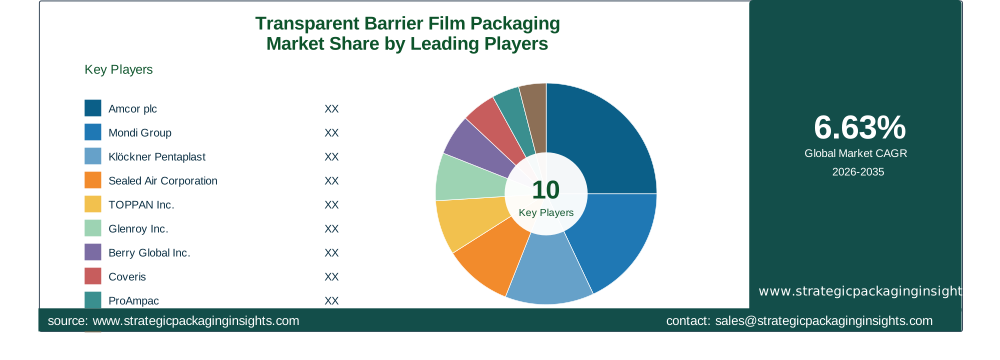
Amcor plc is a leading player, known for its innovative packaging solutions and commitment to sustainability. The company has invested in advanced technologies and expanded its production facilities to enhance its market position. Mondi Group is another key player, offering a diverse portfolio of barrier films and focusing on sustainable packaging solutions. The company's strategic acquisitions and partnerships have strengthened its competitive position and expanded its market reach.
Klöckner Pentaplast is recognized for its expertise in high-performance films and coatings, catering to various industries such as food and pharmaceuticals. The company's focus on R&D and product innovation has enabled it to maintain a competitive edge in the market. Sealed Air Corporation is also a significant player, known for its protective packaging solutions and commitment to sustainability. The company's investments in recycling technologies and eco-friendly materials are driving its growth and market presence.
Other notable companies in the market include TOPPAN Inc., Glenroy Inc., and Berry Global Inc., each offering unique products and technologies to meet diverse customer needs. These companies are focusing on expanding their product portfolios and enhancing their production capabilities to capture market share and drive growth. The competitive landscape is dynamic, with companies continuously innovating and adapting to changing market conditions and customer preferences.
Key Highlights
- Largest Region: North America
- Fastest-Growing Region: Asia Pacific
- Largest Segment: Food and Beverage Packaging
- Fastest-Growing Segment: Electronics Packaging
- Base-year market size: USD 28.85 Billion
- Forecast-year market size: USD 54.81 Billion
- CAGR: 6.63%
- Important application: Food and Beverage Packaging
- Major end-use industry: Food and Beverage
- Major market driver: Demand for extended shelf-life and product protection
Regional Insights
The Transparent Barrier Film Packaging market is witnessing significant growth across major regions, with North America being the largest market and Asia Pacific emerging as the fastest-growing region. The demand for high-performance packaging solutions is driven by the food and beverage industry, which is a major consumer of barrier films.
North America
North America is the largest market for Transparent Barrier Film Packaging, driven by the strong presence of key players and the high demand for packaged goods. The region's well-established food and beverage industry is a major contributor to market growth, with companies focusing on innovative packaging solutions to meet consumer preferences for convenience and safety.
The regulatory environment in North America is supportive of sustainable packaging initiatives, with government bodies encouraging the use of eco-friendly materials and recycling practices. This is driving the adoption of advanced barrier technologies and sustainable materials, enhancing the market's growth prospects.
Europe
Europe is a significant market for Transparent Barrier Film Packaging, characterized by a strong focus on sustainability and regulatory compliance. The region's stringent packaging regulations and environmental standards are driving the demand for recyclable and eco-friendly packaging solutions.
The food and beverage industry is a major driver of market growth in Europe, with companies investing in advanced packaging technologies to enhance product protection and shelf-life. The region's emphasis on sustainability is influencing material selection and packaging design, creating opportunities for innovation and differentiation.
Asia Pacific
Asia Pacific is the fastest-growing region for Transparent Barrier Film Packaging, driven by rising consumer incomes and changing lifestyles. The region's expanding food and beverage industry is a major contributor to market growth, with increasing demand for packaged goods and convenience products.
The rapid growth of e-commerce and online retailing in Asia Pacific is also boosting the demand for durable and protective packaging solutions. Companies are investing in regional production facilities to meet local demand and enhance supply chain efficiency, creating opportunities for market expansion and revenue growth.
Latin America
Latin America is experiencing steady growth in the Transparent Barrier Film Packaging market, driven by the increasing demand for packaged goods and the expansion of the food and beverage industry. The region's growing middle class and changing consumer preferences are influencing packaging design and material selection.
The focus on sustainability and environmental responsibility is driving the adoption of eco-friendly packaging solutions in Latin America. Companies are investing in advanced technologies and sustainable materials to meet regulatory requirements and enhance their market presence.
Middle East & Africa
The Middle East & Africa region is witnessing moderate growth in the Transparent Barrier Film Packaging market, driven by the increasing demand for packaged goods and the expansion of the food and beverage industry. The region's growing population and urbanization are contributing to market growth, with companies focusing on innovative packaging solutions to meet consumer needs.
The regulatory environment in the Middle East & Africa is evolving, with governments emphasizing the importance of sustainable packaging practices. This is driving the adoption of advanced barrier technologies and eco-friendly materials, enhancing the market's growth prospects.
Transparent Barrier Film Packaging Market Segments Insights

By Material Analysis
The Transparent Barrier Film Packaging market is segmented by material, with polyethylene (PE), polypropylene (PP), and polyethylene terephthalate (PET) being the most commonly used materials. These materials offer excellent barrier properties and are widely used in food and beverage packaging applications. The demand for ethylene vinyl alcohol (EVOH) and polyvinylidene chloride (PVDC) is also increasing, driven by their superior barrier performance and compatibility with various packaging formats.
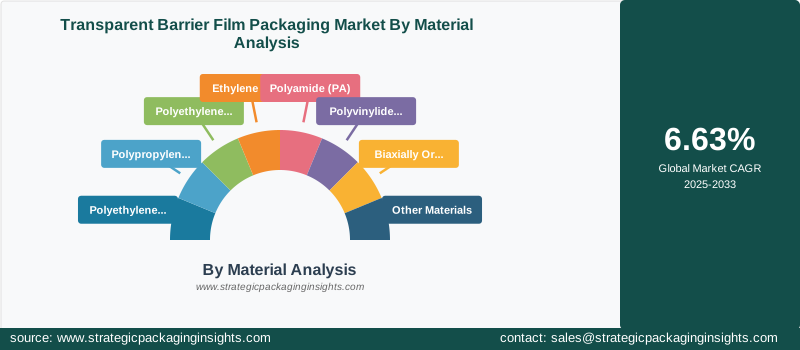
The market is witnessing a shift towards sustainable materials, with companies exploring alternatives such as biodegradable and compostable films. The integration of post-consumer recycled content is gaining traction, aligning with sustainability goals and regulatory requirements. This trend is influencing material selection and procurement strategies, as companies aim to reduce their environmental impact and enhance brand reputation.
By Film Structure Analysis
The market is segmented by film structure, with single-layer, multi-layer, coextruded, and laminated films being the primary categories. Multi-layer and coextruded films are gaining popularity due to their superior barrier properties and versatility in packaging applications. These films offer enhanced protection against moisture, oxygen, and light, making them ideal for food and pharmaceutical packaging.
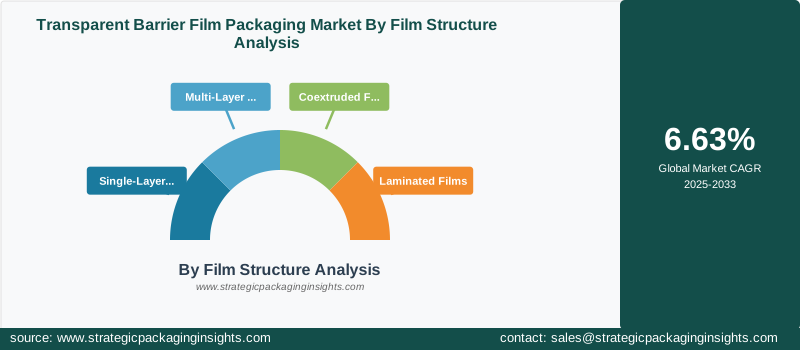
Laminated films are also in demand, as they provide excellent mechanical strength and durability. The development of advanced lamination technologies is enhancing film performance and expanding application possibilities. Companies are investing in R&D to optimize film structures and meet the evolving needs of end-users, driving market growth and innovation.
By Barrier Technology Analysis
The market is segmented by barrier technology, with EVOH, PVDC, and silicon oxide (SiOx) coatings being the most commonly used. EVOH and PVDC are preferred for their excellent barrier properties and compatibility with various packaging formats. These technologies are widely used in food and beverage packaging, where product protection and shelf-life extension are critical.
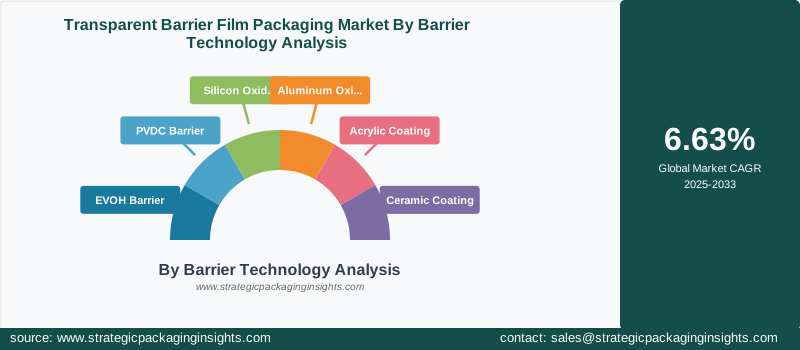
Silicon oxide and aluminum oxide (AlOx) coatings are gaining traction, offering transparent barrier solutions with high performance. These coatings are ideal for applications where product visibility is important, such as in consumer goods and electronics packaging. The development of advanced coating technologies is enhancing barrier performance and expanding application possibilities, driving market growth and innovation.
By Packaging Format Analysis
The market is segmented by packaging format, with pouches, bags, and blister packs being the most commonly used. Pouches are gaining popularity due to their convenience, lightweight, and versatility in packaging applications. They are widely used in food and beverage packaging, where product protection and shelf-life extension are critical.
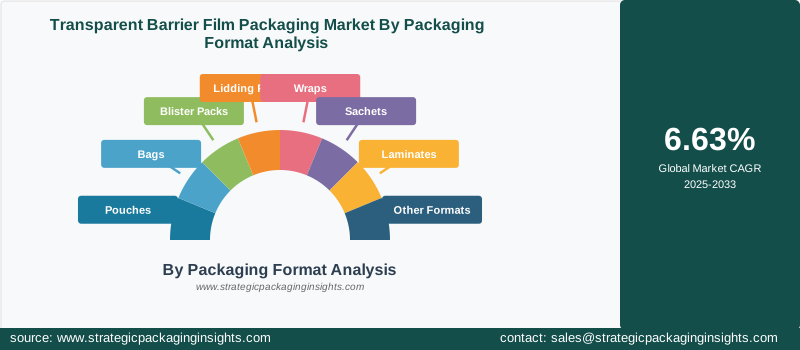
Blister packs and lidding films are also in demand, offering excellent protection and product visibility. These formats are ideal for pharmaceutical and consumer goods packaging, where product safety and tamper-evidence are important. Companies are investing in advanced packaging technologies to enhance format performance and meet the evolving needs of end-users, driving market growth and innovation.
By Thickness Analysis
The market is segmented by thickness, with films below 20 microns, 20-50 microns, 51-100 microns, and above 100 microns being the primary categories. Films in the 20-50 microns range are the most commonly used, offering a balance between barrier performance and cost-effectiveness. These films are widely used in food and beverage packaging, where product protection and shelf-life extension are critical.
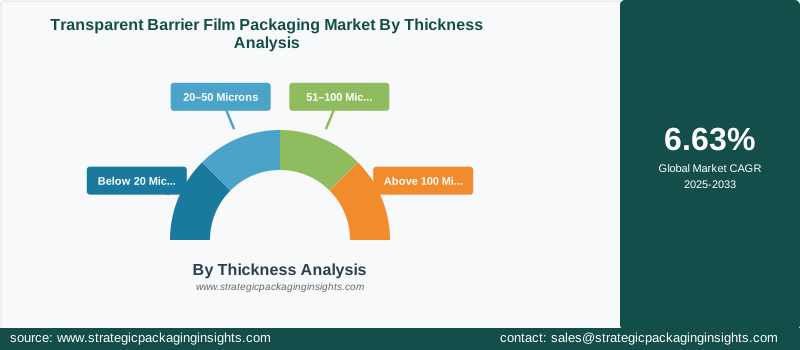
Films below 20 microns are gaining popularity, driven by the demand for lightweight and cost-effective packaging solutions. These films are ideal for applications where weight reduction and material savings are important, such as in e-commerce and online retailing. Companies are investing in advanced technologies to optimize film thickness and meet the evolving needs of end-users, driving market growth and innovation.
By Application Analysis
The market is segmented by application, with food and beverage packaging being the largest segment. The demand for high-performance packaging solutions in this industry is driven by the need for extended shelf-life and product protection. Transparent barrier films offer excellent protection against external contaminants while maintaining product visibility, making them ideal for food and beverage packaging.
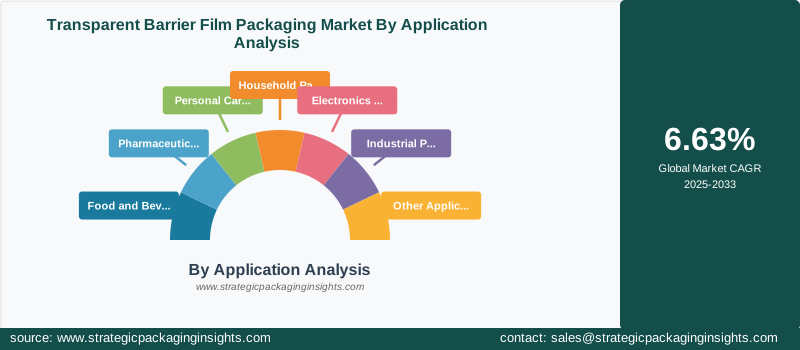
Pharmaceutical packaging is also a significant segment, with the demand for protective and tamper-evident solutions driving market growth. Transparent barrier films are widely used in pharmaceutical packaging, where product safety and regulatory compliance are critical. Companies are investing in advanced technologies to enhance film performance and meet the evolving needs of end-users, driving market growth and innovation.
By End Use Industry Analysis
The market is segmented by end-use industry, with food and beverage being the largest segment. The demand for high-performance packaging solutions in this industry is driven by the need for extended shelf-life and product protection. Transparent barrier films offer excellent protection against external contaminants while maintaining product visibility, making them ideal for food and beverage packaging.
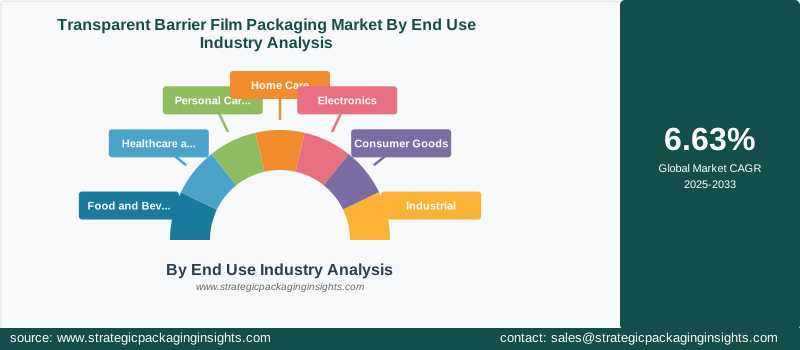
Healthcare and pharmaceuticals are also significant segments, with the demand for protective and tamper-evident solutions driving market growth. Transparent barrier films are widely used in pharmaceutical packaging, where product safety and regulatory compliance are critical. Companies are investing in advanced technologies to enhance film performance and meet the evolving needs of end-users, driving market growth and innovation.
Transparent Barrier Film Packaging Market Segments
The Transparent Barrier Film Packaging market has been segmented on the basis ofBy Material
- Polyethylene (PE)
- Polypropylene (PP)
- Polyethylene Terephthalate (PET)
- Ethylene Vinyl Alcohol (EVOH)
- Polyamide (PA)
- Polyvinylidene Chloride (PVDC)
- Biaxially Oriented Polypropylene (BOPP)
- Other Materials
By Film Structure
- Single-Layer Films
- Multi-Layer Films
- Coextruded Films
- Laminated Films
By Barrier Technology
- EVOH Barrier
- PVDC Barrier
- Silicon Oxide (SiOx) Coating
- Aluminum Oxide (AlOx) Coating
- Acrylic Coating
- Ceramic Coating
By Packaging Format
- Pouches
- Bags
- Blister Packs
- Lidding Films
- Wraps
- Sachets
- Laminates
- Other Formats
By Thickness
- Below 20 Microns
- 20–50 Microns
- 51–100 Microns
- Above 100 Microns
By Application
- Food and Beverage Packaging
- Pharmaceutical Packaging
- Personal Care Packaging
- Household Packaging
- Electronics Packaging
- Industrial Packaging
- Other Applications
By End Use Industry
- Food and Beverage
- Healthcare and Pharmaceuticals
- Personal Care and Cosmetics
- Home Care
- Electronics
- Consumer Goods
- Industrial
By Region
- North America
- Europe
- Asia-Pacific
- Latin America
- Middle East and Africa




