


Tracing Paper Market Outlook
The Tracing Paper market size was valued at USD 588.46 million in 2025 and is anticipated to reach USD 783.68 million by 2034, growing at a CAGR of 3.2% during the forecast period according to Strategic Packaging Insights. The market is witnessing a steady demand driven by the increasing use of tracing paper in various applications such as architecture, printing, and design. Companies like Canson and Strathmore are at the forefront, leveraging their extensive product portfolios to cater to diverse consumer needs. The growing trend of DIY crafts and the rising popularity of tracing paper in educational institutions further bolster market growth.

One of the most impactful drivers of the tracing paper market is the surge in demand from the architecture and design sectors. As urbanization and infrastructure development continue to rise globally, the need for precise and reliable tracing paper for technical drawings and blueprints becomes more pronounced. According to government reports, the construction industry is expected to grow significantly, which in turn fuels the demand for tracing paper. Companies like Mondi and Sappi are capitalizing on this trend by offering high-quality tracing paper that meets the stringent requirements of architects and designers.
Report Scope
| Attributes | Details |
| Report Title | Tracing Paper Market Size, Future Growth and Forecast 2034 |
| Product Type | Rolls, Sheets, Pads |
| Grade | Standard Tracing Paper, Translucent Paper, Technical Drawing Paper |
| Application | Architecture, Printing, Design, Crafts |
| End Use | Students, Designers, Printing Houses, Offices |
| Region | Asia Pacific, North America, Latin America, Europe, Middle East & Africa |
| Base Year | 2025 |
| Historic Period | 2018-2024 |
| Forecast Period | 2026-2034 |
| Number of Pages | 207 |
| Customization Available | Yes* |
Sustainability & Circular Economy Analysis
Sustainability initiatives are increasingly shaping the tracing paper market, with a strong emphasis on eco-friendly material innovation and waste reduction strategies. Companies are investing in recyclable materials and lightweight packaging to minimize their carbon footprint. For instance, brands like Stora Enso and Fedrigoni are leading the charge by developing tracing paper products that are not only high in quality but also environmentally sustainable. These efforts align with the growing consumer preference for sustainable products, thereby enhancing brand loyalty and market competitiveness.
The circular economy practices are also influencing the packaging design and manufacturing processes within the tracing paper market. By adopting extended producer responsibility (EPR) and focusing on reusable packaging, companies are able to reduce waste and improve resource efficiency. This shift towards a circular economy is not only beneficial for the environment but also offers cost savings and operational efficiencies for manufacturers. As a result, companies like Neenah Paper and Koehler Paper are seeing increased investment in sustainable practices, which is expected to drive long-term growth and profitability.
Regulatory compliance and ESG initiatives are further propelling the adoption of sustainable practices in the tracing paper market. Governments worldwide are implementing stricter packaging regulations to curb environmental impact, prompting companies to innovate and adapt. This regulatory push is encouraging the use of eco-friendly materials and sustainable supply chain strategies, ensuring that companies remain competitive in the global market. As a result, the tracing paper market is witnessing a transformation towards more sustainable and responsible business practices.
Packaging Value Chain & Supply Chain Analysis
The tracing paper market's value chain is a complex ecosystem involving raw material sourcing, packaging converters, manufacturers, and logistics providers. Efficient raw material sourcing is crucial for maintaining product quality and cost-effectiveness. Companies like Asia Pulp & Paper and Mitsubishi Paper Mills are focusing on sustainable procurement strategies to ensure a steady supply of high-quality raw materials. This approach not only supports environmental goals but also enhances supply chain resilience and reduces dependency on volatile global markets.
Manufacturers and packaging converters play a pivotal role in the tracing paper market by transforming raw materials into finished products. The use of advanced packaging machinery and innovative production techniques is essential for maintaining competitive advantage. Companies are investing in state-of-the-art facilities to enhance production capabilities and meet the growing demand for tracing paper. Strategic partnerships and collaborations with logistics providers further streamline distribution channels, ensuring timely delivery and customer satisfaction.
Supply chain efficiency is a key determinant of market performance and business competitiveness in the tracing paper industry. Effective inventory management and localization strategies help companies mitigate risks associated with transportation and raw material availability. By optimizing logistics and distribution networks, companies can reduce lead times and improve service levels. This focus on supply chain optimization is crucial for maintaining market share and driving growth in an increasingly competitive landscape.
Opportunities & Threats
The tracing paper market presents numerous opportunities for growth, particularly in emerging markets where urbanization and infrastructure development are on the rise. The increasing demand for tracing paper in architecture and design applications offers significant potential for market expansion. Companies can capitalize on this trend by developing innovative products that cater to the specific needs of architects and designers. Additionally, the growing popularity of DIY crafts and educational applications presents new avenues for market growth, as consumers seek high-quality tracing paper for creative projects.
Technological advancements in manufacturing processes and material innovation also present opportunities for companies to differentiate themselves in the tracing paper market. By investing in research and development, companies can create unique products that offer superior performance and sustainability. This focus on innovation not only enhances product offerings but also strengthens brand reputation and customer loyalty. As a result, companies that prioritize technological advancements are well-positioned to capture a larger share of the market.
However, the tracing paper market also faces certain threats, such as the increasing competition from digital alternatives. As technology continues to evolve, digital tools and software are becoming more prevalent in design and architecture, potentially reducing the demand for traditional tracing paper. Companies must adapt to these changes by diversifying their product portfolios and exploring new market segments. Additionally, fluctuations in raw material prices and supply chain disruptions pose challenges for manufacturers, necessitating effective risk management strategies to ensure business continuity.
Drivers & Challenges
One of the primary drivers of the tracing paper market is the growing demand from the architecture and design sectors. As urbanization and infrastructure development continue to accelerate globally, the need for precise and reliable tracing paper for technical drawings and blueprints becomes increasingly important. Companies like Canson and Strathmore are leveraging this demand by offering high-quality tracing paper that meets the stringent requirements of architects and designers. This trend is further supported by government initiatives aimed at promoting sustainable construction practices, which in turn drive the demand for eco-friendly tracing paper products.
Another significant driver of the tracing paper market is the rising popularity of DIY crafts and educational applications. As consumers become more interested in creative projects and hands-on learning experiences, the demand for tracing paper in these segments is expected to grow. Companies can capitalize on this trend by developing innovative products that cater to the specific needs of DIY enthusiasts and educational institutions. This focus on consumer preferences and market trends is crucial for maintaining competitiveness and driving growth in the tracing paper market.
Despite these drivers, the tracing paper market faces several challenges, including the increasing competition from digital alternatives. As technology continues to advance, digital tools and software are becoming more prevalent in design and architecture, potentially reducing the demand for traditional tracing paper. Companies must adapt to these changes by diversifying their product portfolios and exploring new market segments. Additionally, fluctuations in raw material prices and supply chain disruptions pose challenges for manufacturers, necessitating effective risk management strategies to ensure business continuity.
Market Share Analysis
The tracing paper market is characterized by a competitive landscape with several key players vying for market share. Companies like Canson, Strathmore, and Mondi are leading the market with their extensive product portfolios and strong brand presence. These companies have established themselves as leaders in the tracing paper industry by consistently delivering high-quality products that meet the diverse needs of consumers. Their focus on innovation and sustainability has further strengthened their market position, allowing them to capture a significant share of the market.
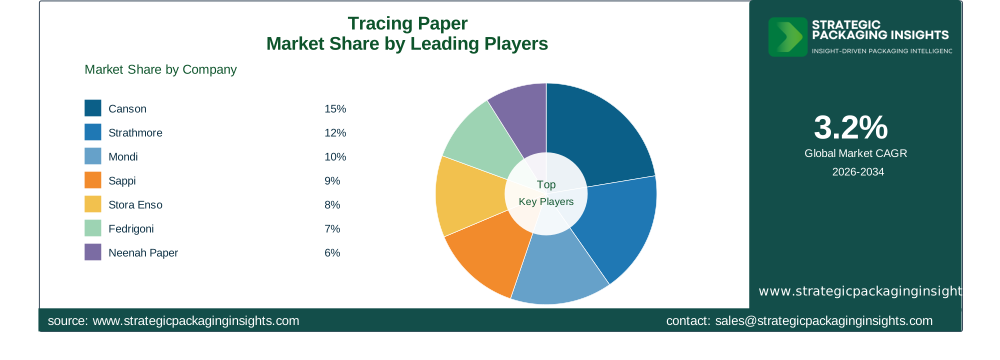
Other notable players in the tracing paper market include Sappi, Stora Enso, and Fedrigoni. These companies have made significant investments in research and development to create innovative products that cater to the evolving needs of consumers. Their commitment to sustainability and eco-friendly practices has also contributed to their success in the market. By leveraging their expertise and resources, these companies have been able to maintain a competitive edge and expand their market presence.
Neenah Paper, Koehler Paper, and Asia Pulp & Paper are also key players in the tracing paper market, known for their high-quality products and strong distribution networks. These companies have established themselves as reliable suppliers of tracing paper, catering to a wide range of applications and end-use segments. Their focus on customer satisfaction and operational efficiency has enabled them to build long-lasting relationships with clients and maintain a strong market position.
Mitsubishi Paper Mills is another prominent player in the tracing paper market, known for its innovative products and commitment to sustainability. The company's focus on research and development has allowed it to create unique products that offer superior performance and environmental benefits. By prioritizing sustainability and customer satisfaction, Mitsubishi Paper Mills has been able to differentiate itself in the competitive tracing paper market.
Key Highlights
- Market Size: The tracing paper market was valued at USD 588.46 million in 2025 and is projected to reach USD 783.68 million by 2034.
- Growth Rate: The market is expected to grow at a CAGR of 3.2% during the forecast period.
- Leading Companies: Key players include Canson, Strathmore, Mondi, and Sappi.
- Product Segments: The market is segmented by product type, grade, application, and end use.
- Regional Insights: Asia Pacific is expected to witness significant growth due to rising demand in architecture and design applications.
- Sustainability Focus: Companies are investing in eco-friendly materials and sustainable practices.
- Technological Advancements: Innovation in manufacturing processes and material development is driving market growth.
Tracing Paper Market Segments Insights

Product Type Analysis
The tracing paper market is segmented by product type into rolls, sheets, and pads. Each product type caters to different consumer needs and applications, offering versatility and convenience. Rolls are particularly popular in large-scale architectural and design projects, where continuous sheets of tracing paper are required for technical drawings and blueprints. Companies like Canson and Strathmore offer high-quality rolls that meet the stringent requirements of architects and designers, ensuring precision and reliability in their work.

Sheets, on the other hand, are favored by students and DIY enthusiasts for their ease of use and accessibility. They are commonly used in educational settings and creative projects, where smaller quantities of tracing paper are needed. Companies are focusing on developing innovative sheet products that cater to the specific needs of these consumer segments, offering a wide range of sizes and thicknesses to suit different applications. This focus on consumer preferences and market trends is crucial for maintaining competitiveness and driving growth in the tracing paper market.
Pads are another popular product type in the tracing paper market, offering convenience and portability for on-the-go use. They are commonly used by designers and artists who require a compact and easy-to-carry solution for their creative projects. Companies are investing in the development of high-quality pads that offer superior performance and durability, ensuring customer satisfaction and brand loyalty. By catering to the diverse needs of consumers, companies can capture a larger share of the market and drive long-term growth.
Grade Analysis
The tracing paper market is segmented by grade into standard tracing paper, translucent paper, and technical drawing paper. Each grade offers unique properties and benefits, catering to different consumer needs and applications. Standard tracing paper is widely used in educational settings and DIY projects, offering a cost-effective solution for basic tracing needs. Companies are focusing on developing high-quality standard tracing paper that meets the specific requirements of these consumer segments, ensuring customer satisfaction and brand loyalty.

Translucent paper, on the other hand, is favored by designers and artists for its superior clarity and smooth surface. It is commonly used in creative projects and design applications, where precision and detail are essential. Companies are investing in the development of innovative translucent paper products that offer enhanced performance and durability, ensuring customer satisfaction and brand loyalty. This focus on consumer preferences and market trends is crucial for maintaining competitiveness and driving growth in the tracing paper market.
Technical drawing paper is another popular grade in the tracing paper market, offering superior performance and reliability for architectural and design applications. It is commonly used by architects and designers who require high-quality tracing paper for technical drawings and blueprints. Companies are investing in the development of high-quality technical drawing paper that meets the stringent requirements of these consumer segments, ensuring precision and reliability in their work. By catering to the diverse needs of consumers, companies can capture a larger share of the market and drive long-term growth.
Application Analysis
The tracing paper market is segmented by application into architecture, printing, design, and crafts. Each application offers unique opportunities and challenges, catering to different consumer needs and preferences. Architecture is a major application segment in the tracing paper market, driven by the increasing demand for precise and reliable tracing paper for technical drawings and blueprints. Companies like Mondi and Sappi are capitalizing on this trend by offering high-quality tracing paper that meets the stringent requirements of architects and designers.

Printing is another significant application segment in the tracing paper market, offering opportunities for growth and innovation. Companies are investing in the development of high-quality tracing paper that offers superior performance and durability for printing applications, ensuring customer satisfaction and brand loyalty. This focus on consumer preferences and market trends is crucial for maintaining competitiveness and driving growth in the tracing paper market.
Design and crafts are also important application segments in the tracing paper market, offering opportunities for growth and innovation. Companies are investing in the development of innovative tracing paper products that cater to the specific needs of designers and DIY enthusiasts, offering a wide range of sizes and thicknesses to suit different applications. By catering to the diverse needs of consumers, companies can capture a larger share of the market and drive long-term growth.
End Use Analysis
The tracing paper market is segmented by end use into students, designers, printing houses, and offices. Each end-use segment offers unique opportunities and challenges, catering to different consumer needs and preferences. Students are a major end-use segment in the tracing paper market, driven by the increasing demand for tracing paper in educational settings and creative projects. Companies are focusing on developing high-quality tracing paper that meets the specific requirements of students, ensuring customer satisfaction and brand loyalty.

Designers are another significant end-use segment in the tracing paper market, offering opportunities for growth and innovation. Companies are investing in the development of high-quality tracing paper that offers superior performance and durability for design applications, ensuring customer satisfaction and brand loyalty. This focus on consumer preferences and market trends is crucial for maintaining competitiveness and driving growth in the tracing paper market.
Printing houses and offices are also important end-use segments in the tracing paper market, offering opportunities for growth and innovation. Companies are investing in the development of innovative tracing paper products that cater to the specific needs of these consumer segments, offering a wide range of sizes and thicknesses to suit different applications. By catering to the diverse needs of consumers, companies can capture a larger share of the market and drive long-term growth.
Tracing Paper Market Segments
The Tracing Paper market has been segmented on the basis ofProduct Type
- Rolls
- Sheets
- Pads
Grade
- Standard Tracing Paper
- Translucent Paper
- Technical Drawing Paper
Application
- Architecture
- Printing
- Design
- Crafts
End Use
- Students
- Designers
- Printing Houses
- Offices
Region
- Asia Pacific
- North America
- Latin America
- Europe
- Middle East & Africa




