


Toy Packaging Market Outlook
The Toy Packaging market size was valued at USD 3.2 billion in 2025 and is anticipated to reach USD 4.8 billion by 2034, growing at a CAGR of 4.50% during the forecast period according to Strategic Packaging Insights. The market is driven by the increasing demand for innovative and sustainable packaging solutions that cater to the diverse needs of the toy industry. Companies like Smurfit Westrock and International Paper are at the forefront, offering eco-friendly and customizable packaging options that enhance product appeal and consumer engagement. The rise in e-commerce and the growing popularity of educational and STEM toys are further propelling the demand for specialized packaging solutions that ensure product safety and visibility.
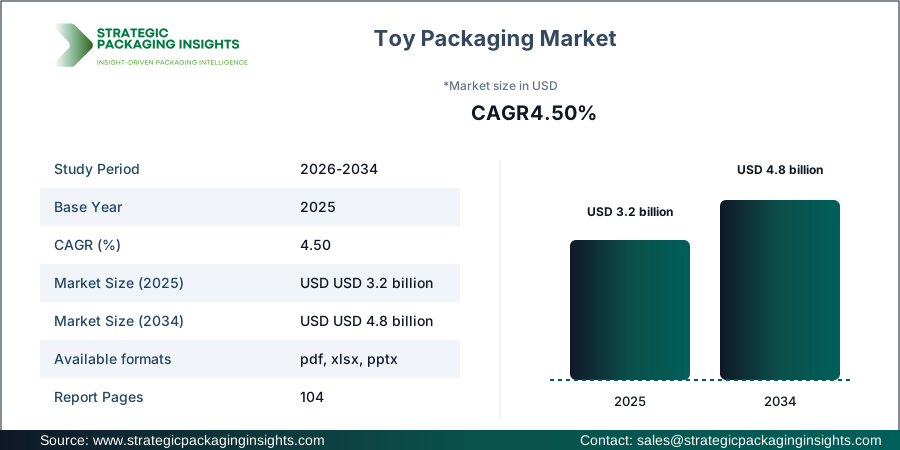
One of the most impactful drivers of the Toy Packaging market is the increasing emphasis on sustainability and environmental responsibility. Governments and consumers alike are pushing for packaging solutions that minimize environmental impact, leading to a surge in demand for recyclable and biodegradable materials. According to recent reports, the implementation of stringent packaging regulations and extended producer responsibility (EPR) initiatives are compelling manufacturers to adopt sustainable practices. Companies like Huhtamaki and ePac Flexibles are investing in R&D to develop innovative packaging materials that reduce carbon footprint and align with consumer preferences for eco-friendly products.
Report Scope
| Attributes | Details |
| Report Title | Toy Packaging Market Size, Future Growth and Forecast 2034 |
| By Material | Corrugated & Paperboard, Plastic (Blister, Clamshell, Windows), Flexible Films, Molded Pulp Inserts |
| By Packaging Type | Boxes with Window, Blister & Clamshell, Open-Face Try-Me Packs, Bags & Pouches, Tubes & Cylinders |
| By Toy Category | Action Figures & Dolls, Building Sets, Educational & STEM, Plush, Outdoor & Sports, Games & Puzzles |
| By End Use | Mass Retail, E-commerce, Specialty Toy Stores |
| By Region | North America (U.S., Canada, Mexico), Europe (Germany, UK, France, Italy, Spain, Rest of Europe), Asia Pacific (China, India, Japan, South Korea, Australia, Rest of Asia Pacific), Latin America (Brazil, Argentina, Rest of Latin America), Middle East & Africa (GCC Countries, South Africa, Rest of MEA) |
| Base Year | 2025 |
| Historic Period | 2018-2024 |
| Forecast Period | 2026-2034 |
| Number of Pages | 104 |
| Customization Available | Yes* |
Sustainability & Circular Economy Analysis
Sustainability initiatives are reshaping the Toy Packaging market, with a strong focus on reducing environmental impact through the use of recyclable and biodegradable materials. Companies are increasingly adopting eco-friendly material innovations, such as molded pulp inserts and flexible films, to meet consumer demand for sustainable packaging. These materials not only reduce waste but also enhance the aesthetic appeal of toy packaging, making them a preferred choice for brand owners and retailers. The shift towards lightweight packaging is also gaining traction, as it reduces transportation costs and carbon emissions, contributing to a more sustainable supply chain.
The circular economy is influencing packaging design and manufacturing processes, encouraging companies to implement waste reduction strategies and ESG initiatives. Extended producer responsibility (EPR) regulations are prompting manufacturers to take accountability for the entire lifecycle of their packaging products, from production to disposal. This has led to increased investment in recycling networks and the development of reusable packaging solutions. As a result, companies like Sonoco and Graphic Packaging are focusing on creating packaging that not only protects the product but also aligns with sustainability goals, ensuring long-term market competitiveness.
Consumer preferences for sustainable packaging are driving regulatory compliance and investment decisions in the Toy Packaging market. Packaging regulations are becoming more stringent, requiring manufacturers to adhere to environmental standards and reduce their carbon footprint. This has led to a surge in demand for eco-friendly packaging solutions that comply with these regulations while meeting consumer expectations. Companies are leveraging these trends to enhance their brand image and gain a competitive edge in the market. As sustainability becomes a key differentiator, packaging manufacturers, brand owners, and retailers are prioritizing eco-friendly practices to remain relevant and competitive in the evolving market landscape.
Packaging Value Chain & Supply Chain Analysis
The Toy Packaging market's value chain is a complex ecosystem involving raw material sourcing, packaging converters, manufacturers, and logistics providers. Efficient raw material sourcing is crucial for maintaining cost-effectiveness and ensuring the availability of high-quality materials like corrugated paperboard and plastic. Packaging converters play a vital role in transforming these materials into finished products, with companies like Dordan and PakFactory leading the way in innovative packaging solutions. The integration of advanced packaging machinery and technology is enhancing production capabilities, enabling manufacturers to meet the growing demand for customized and sustainable packaging solutions.
Supply chain efficiency is a critical factor influencing the overall performance of the Toy Packaging market. Strategic partnerships and collaborations between manufacturers, logistics providers, and retailers are essential for optimizing distribution channels and ensuring timely delivery of products. Companies are adopting localization strategies to reduce transportation costs and enhance supply chain resilience, particularly in regions like Asia Pacific and North America. The availability of raw materials and the ability to quickly adapt to changing market demands are key determinants of business competitiveness in this dynamic market.
Recycling networks and procurement strategies are integral components of the Toy Packaging market's supply chain. Companies are investing in recycling infrastructure to support the circular economy and meet regulatory requirements for sustainable packaging. Inventory management and global sourcing strategies are also evolving to address the challenges of fluctuating raw material prices and supply chain disruptions. By focusing on supply chain optimization and sustainability, packaging manufacturers and brand owners can enhance their market position and drive long-term growth in the competitive Toy Packaging market.
Opportunities & Threats
The Toy Packaging market presents significant opportunities for growth, driven by the increasing demand for innovative and sustainable packaging solutions. The rise of e-commerce and the growing popularity of educational and STEM toys are creating new avenues for packaging manufacturers to develop specialized solutions that cater to these segments. Companies can capitalize on the trend towards eco-friendly packaging by investing in research and development to create materials that are both sustainable and visually appealing. The expansion of the toy industry in emerging markets, particularly in Asia Pacific and Latin America, offers further growth potential for packaging manufacturers looking to expand their global footprint.
Another opportunity lies in the development of smart packaging solutions that enhance consumer engagement and product safety. The integration of technology into packaging, such as QR codes and augmented reality, can provide consumers with interactive experiences and valuable product information. This trend is particularly relevant in the toy industry, where packaging plays a crucial role in attracting consumers and differentiating products on the shelf. By leveraging these technological advancements, packaging manufacturers can create value-added solutions that meet the evolving needs of consumers and retailers.
Despite the opportunities, the Toy Packaging market faces several threats, including regulatory challenges and fluctuating raw material prices. Stringent packaging regulations and extended producer responsibility (EPR) initiatives require manufacturers to comply with environmental standards, which can increase production costs and impact profitability. Additionally, the volatility of raw material prices, particularly for plastic and paperboard, can pose challenges for manufacturers in maintaining cost-effectiveness and ensuring a stable supply chain. Companies must navigate these challenges by adopting sustainable practices and optimizing their procurement strategies to remain competitive in the market.
Drivers & Challenges
The Toy Packaging market is driven by several key factors, including the increasing demand for sustainable and innovative packaging solutions. Consumers are becoming more environmentally conscious, leading to a surge in demand for eco-friendly packaging materials such as molded pulp inserts and recyclable plastics. Companies like Huhtamaki and ePac Flexibles are at the forefront of this trend, investing in research and development to create packaging solutions that align with consumer preferences and regulatory requirements. The rise of e-commerce and the growing popularity of educational and STEM toys are also driving demand for specialized packaging solutions that ensure product safety and visibility.
Technological advancements in packaging design and manufacturing are further driving the Toy Packaging market. The integration of smart packaging solutions, such as QR codes and augmented reality, is enhancing consumer engagement and providing valuable product information. This trend is particularly relevant in the toy industry, where packaging plays a crucial role in attracting consumers and differentiating products on the shelf. Companies are leveraging these technological advancements to create value-added solutions that meet the evolving needs of consumers and retailers, driving growth and competitiveness in the market.
However, the Toy Packaging market also faces several challenges, including regulatory compliance and fluctuating raw material prices. Stringent packaging regulations and extended producer responsibility (EPR) initiatives require manufacturers to adhere to environmental standards, which can increase production costs and impact profitability. Additionally, the volatility of raw material prices, particularly for plastic and paperboard, can pose challenges for manufacturers in maintaining cost-effectiveness and ensuring a stable supply chain. Companies must navigate these challenges by adopting sustainable practices and optimizing their procurement strategies to remain competitive in the market.
Market Share Analysis
The Toy Packaging market is characterized by a competitive landscape with several key players vying for market share. Companies like Smurfit Westrock, International Paper, and Graphic Packaging are leading the market with their innovative and sustainable packaging solutions. These companies have established a strong presence in the market by focusing on eco-friendly materials and customizable packaging options that cater to the diverse needs of the toy industry. Their commitment to sustainability and innovation has enabled them to capture a significant share of the market and maintain a competitive edge.
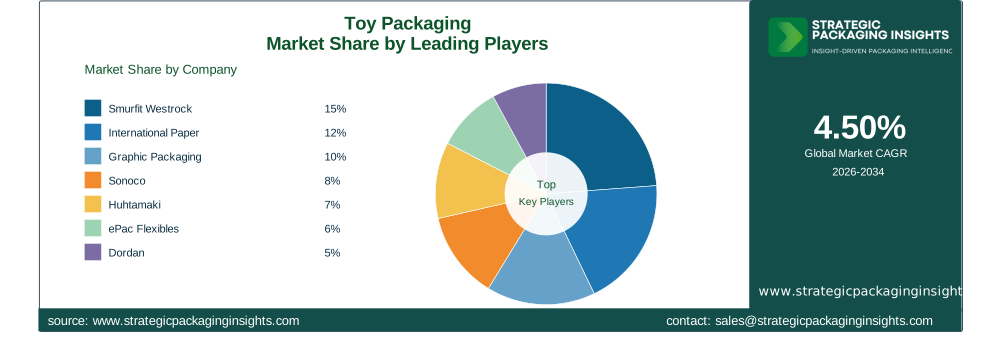
Smurfit Westrock is a prominent player in the Toy Packaging market, known for its sustainable packaging solutions and commitment to environmental responsibility. The company offers a wide range of packaging options, including corrugated and paperboard materials, that are both eco-friendly and visually appealing. International Paper is another key player, specializing in the production of recyclable and biodegradable packaging materials that align with consumer preferences for sustainable products. The company's focus on innovation and sustainability has enabled it to capture a significant share of the market and maintain a competitive edge.
Graphic Packaging is a leading provider of packaging solutions for the toy industry, offering a diverse range of products that cater to the unique needs of toy manufacturers and retailers. The company's commitment to sustainability and innovation has enabled it to capture a significant share of the market and maintain a competitive edge. Sonoco is another key player, known for its innovative packaging solutions and focus on sustainability. The company's investment in research and development has enabled it to create packaging materials that are both eco-friendly and visually appealing, enhancing its market position and competitiveness.
Huhtamaki is a leading provider of molded pulp inserts and other sustainable packaging solutions for the toy industry. The company's focus on eco-friendly materials and innovative design has enabled it to capture a significant share of the market and maintain a competitive edge. ePac Flexibles is another key player, specializing in the production of flexible films and other sustainable packaging materials that align with consumer preferences for eco-friendly products. The company's commitment to sustainability and innovation has enabled it to capture a significant share of the market and maintain a competitive edge.
Key Highlights
- The Toy Packaging market size was valued at USD 3.2 billion in 2025.
- Forecasted to reach USD 4.8 billion by 2034, growing at a CAGR of 4.50%.
- Increasing demand for sustainable and innovative packaging solutions.
- Rise of e-commerce and educational toys driving market growth.
- Asia Pacific and Latin America offer significant growth potential.
- Key players include Smurfit Westrock, International Paper, and Graphic Packaging.
- Technological advancements in smart packaging enhancing consumer engagement.
Toy Packaging Market Segments Insights

By Material Analysis
The Toy Packaging market is segmented by material, with options including corrugated & paperboard, plastic (blister, clamshell, windows), flexible films, and molded pulp inserts. Corrugated & paperboard materials are favored for their durability and eco-friendliness, making them a popular choice among environmentally conscious consumers. Companies like Smurfit Westrock and International Paper are leading the way in offering sustainable packaging solutions that align with consumer preferences. The demand for plastic packaging, particularly blister and clamshell types, remains strong due to their ability to provide product visibility and protection. However, the increasing focus on sustainability is driving manufacturers to explore alternative materials that reduce environmental impact.
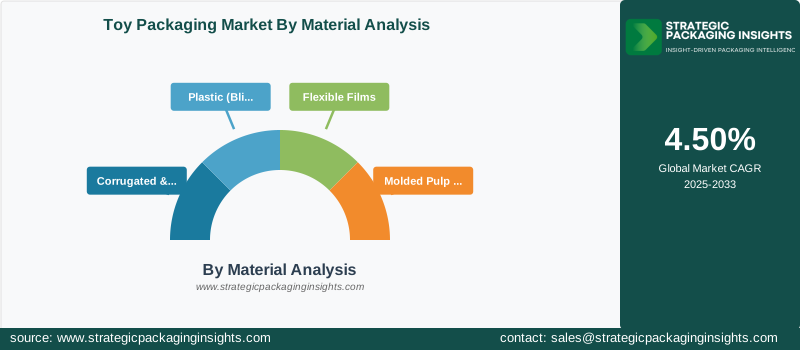
Flexible films are gaining traction in the Toy Packaging market due to their versatility and lightweight nature. These materials offer cost-effective solutions for packaging a wide range of toy products, from action figures to educational kits. Companies like ePac Flexibles are investing in research and development to create innovative flexible film solutions that meet the evolving needs of the toy industry. Molded pulp inserts are also becoming increasingly popular, particularly for their eco-friendly properties and ability to provide cushioning and protection for delicate toys. As sustainability becomes a key differentiator in the market, manufacturers are prioritizing the development of packaging materials that are both functional and environmentally responsible.
By Packaging Type Analysis
The Toy Packaging market is also segmented by packaging type, including boxes with window, blister & clamshell, open-face try-me packs, bags & pouches, and tubes & cylinders. Boxes with windows are a popular choice for toy packaging, offering a combination of protection and product visibility that appeals to both consumers and retailers. Companies like Graphic Packaging are leading the way in offering customizable box solutions that enhance product appeal and consumer engagement. Blister & clamshell packaging remains a staple in the toy industry, providing a secure and tamper-proof solution for a wide range of products.
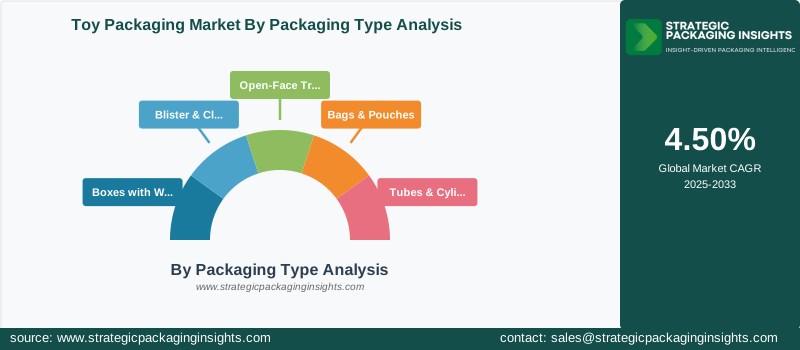
Open-face try-me packs are gaining popularity in the Toy Packaging market, particularly for their ability to enhance consumer interaction and product engagement. These packaging solutions allow consumers to experience the product before purchase, increasing the likelihood of conversion. Bags & pouches offer a versatile and cost-effective packaging solution for a variety of toy products, from plush toys to building sets. Tubes & cylinders are also becoming increasingly popular, particularly for their ability to provide a unique and visually appealing packaging solution that stands out on the shelf. As consumer preferences continue to evolve, manufacturers are focusing on developing packaging solutions that meet the diverse needs of the toy industry.
By Toy Category Analysis
The Toy Packaging market is segmented by toy category, including action figures & dolls, building sets, educational & STEM, plush, outdoor & sports, and games & puzzles. The demand for packaging solutions in the action figures & dolls segment is driven by the need for visually appealing and protective packaging that enhances product appeal. Companies like Sonoco are leading the way in offering innovative packaging solutions that cater to the unique needs of this segment. The building sets segment is also experiencing strong demand for packaging solutions that provide protection and organization for complex toy sets.
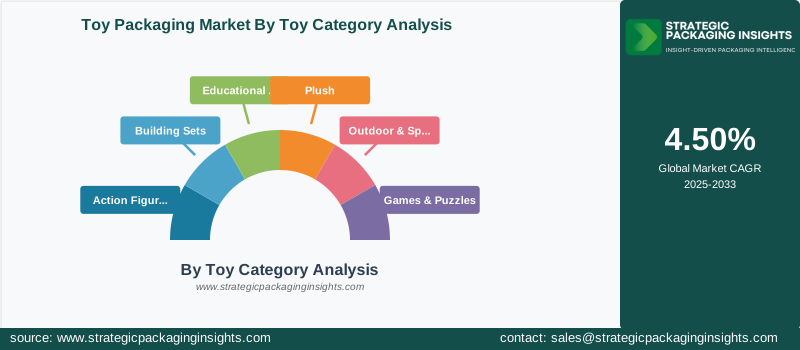
Educational & STEM toys are gaining popularity, driving demand for packaging solutions that enhance product visibility and consumer engagement. Companies are focusing on developing packaging solutions that highlight the educational value of these toys, appealing to both parents and children. The plush toy segment is characterized by a need for soft and protective packaging solutions that ensure product safety and appeal. Outdoor & sports toys require durable and weather-resistant packaging solutions that can withstand the elements, while games & puzzles demand packaging solutions that provide organization and protection for multiple components.
By End Use Analysis
The Toy Packaging market is segmented by end use, including mass retail, e-commerce, and specialty toy stores. Mass retail remains a dominant channel for toy packaging, with companies focusing on developing packaging solutions that enhance product appeal and shelf presence. The rise of e-commerce is driving demand for packaging solutions that ensure product safety and visibility during transit. Companies like PakFactory are leading the way in offering customizable packaging solutions that cater to the unique needs of the e-commerce channel.
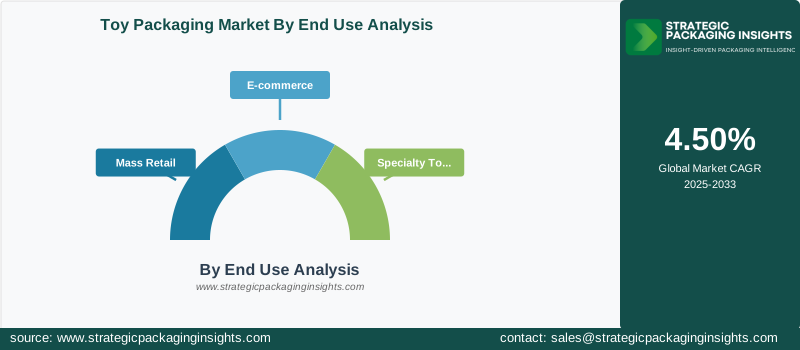
Specialty toy stores are also a key segment in the Toy Packaging market, with a focus on developing packaging solutions that enhance the premium and unique appeal of specialty toys. Companies are investing in research and development to create packaging solutions that align with the brand image and consumer preferences of specialty toy stores. As consumer preferences continue to evolve, manufacturers are focusing on developing packaging solutions that meet the diverse needs of the toy industry, ensuring long-term growth and competitiveness in the market.
Toy Packaging Market Segments
The Toy Packaging market has been segmented on the basis ofBy Material
- Corrugated & Paperboard
- Plastic (Blister, Clamshell, Windows)
- Flexible Films
- Molded Pulp Inserts
By Packaging Type
- Boxes with Window
- Blister & Clamshell
- Open-Face Try-Me Packs
- Bags & Pouches
- Tubes & Cylinders
By Toy Category
- Action Figures & Dolls
- Building Sets
- Educational & STEM
- Plush
- Outdoor & Sports
- Games & Puzzles
By End Use
- Mass Retail
- E-commerce
- Specialty Toy Stores
By Region
- North America (U.S., Canada, Mexico)
- Europe (Germany, UK, France, Italy, Spain, Rest of Europe)
- Asia Pacific (China, India, Japan, South Korea, Australia, Rest of Asia Pacific)
- Latin America (Brazil, Argentina, Rest of Latin America)
- Middle East & Africa (GCC Countries, South Africa, Rest of MEA)




