


Touch Screen Film Market Outlook
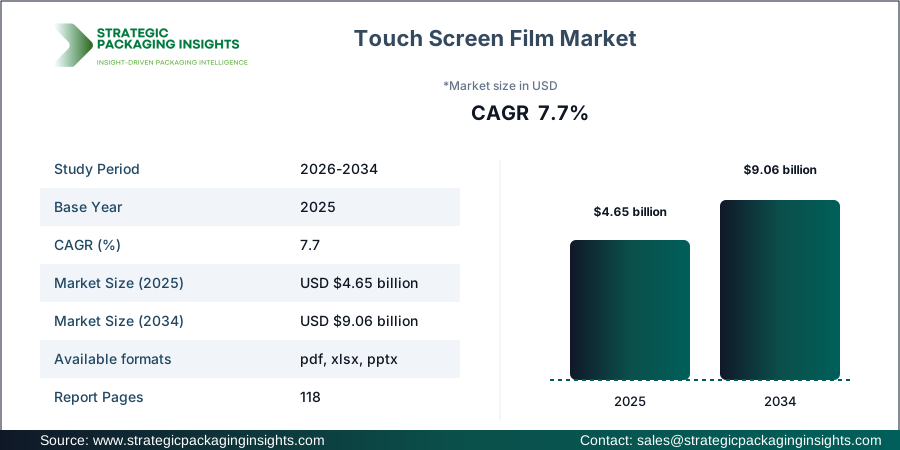
The Touch Screen Film market was valued at $4.65 billion in 2025 and is projected to reach $9.06 billion by 2034, growing at a CAGR of 7.7% during the forecast period 2026-2034. This growth is driven by the increasing demand for touch-enabled devices across various sectors, including consumer electronics, automotive, and industrial applications. The proliferation of smartphones and tablets, coupled with advancements in display technologies, has significantly boosted the demand for touch screen films. Additionally, the automotive industry is increasingly integrating touch screen interfaces in vehicles, further propelling market growth. The rise in industrial automation and the adoption of human-machine interfaces (HMIs) in manufacturing processes are also contributing to the market's expansion.
Despite the promising growth prospects, the Touch Screen Film market faces certain challenges. Regulatory constraints related to the use of specific materials in film production and environmental concerns regarding the disposal of electronic waste are potential restraining factors. However, the market holds significant growth potential due to ongoing innovations in film technologies, such as the development of flexible and transparent conductive films. These innovations are expected to open new avenues for market players, enabling them to cater to emerging applications in flexible displays and wearable devices. The increasing focus on sustainability and the development of eco-friendly films are also anticipated to drive market growth in the coming years.
Report Scope
| Attributes | Details |
| Report Title | Touch Screen Film Market Size, Future Growth and Forecast 2034 |
| Product Type | ITO films, PET conductive films, Protective films, Anti-glare films |
| Technology | Capacitive films, Resistive films, Flexible touch films |
| Application | Smartphones, Tablets, Automotive displays, Industrial HMIs |
| End Use | Electronics OEMs, Automotive firms, Display manufacturers, Industrial equipment makers |
| Region | Asia Pacific, North America, Latin America, Europe, Middle East & Africa |
| Base Year | 2025 |
| Historic Period | 2018-2024 |
| Forecast Period | 2026-2034 |
| Number of Pages | 118 |
| Customization Available | Yes* |
Opportunities & Threats
The Touch Screen Film market presents numerous opportunities, particularly in the realm of flexible and transparent conductive films. As the demand for flexible displays and wearable technology continues to rise, manufacturers are investing in research and development to create films that offer enhanced flexibility and conductivity. This trend is expected to unlock new applications in sectors such as healthcare, where flexible touch screens can be integrated into medical devices and wearables. Additionally, the growing adoption of touch screen interfaces in the automotive industry presents a lucrative opportunity for market players. As vehicles become more technologically advanced, the demand for high-quality touch screen films that can withstand harsh environmental conditions is expected to increase.
Another significant opportunity lies in the development of eco-friendly touch screen films. With increasing environmental awareness and stringent regulations on electronic waste, manufacturers are focusing on creating sustainable film solutions. This includes the use of biodegradable materials and the reduction of hazardous substances in film production. Companies that can offer environmentally friendly products are likely to gain a competitive edge in the market. Furthermore, the expansion of the Internet of Things (IoT) and smart home technologies is expected to drive demand for touch screen films, as these technologies often rely on touch-enabled interfaces for user interaction.
However, the market also faces threats, particularly from the volatility of raw material prices. The production of touch screen films relies on materials such as indium tin oxide (ITO) and polyethylene terephthalate (PET), which are subject to price fluctuations. These fluctuations can impact production costs and profit margins for manufacturers. Additionally, the market is highly competitive, with numerous players vying for market share. This intense competition can lead to price wars and reduced profitability for companies. Moreover, the rapid pace of technological advancements poses a threat, as companies must continuously innovate to keep up with changing consumer preferences and technological trends.
Drivers & Challenges
One of the primary drivers of the Touch Screen Film market is the increasing demand for touch-enabled devices across various industries. The consumer electronics sector, in particular, has witnessed a surge in demand for smartphones, tablets, and other touch-enabled gadgets, driving the need for high-quality touch screen films. Additionally, the automotive industry is increasingly incorporating touch screen interfaces in vehicles, enhancing the user experience and driving market growth. The rise of industrial automation and the adoption of human-machine interfaces (HMIs) in manufacturing processes are also contributing to the market's expansion. These interfaces rely on touch screen technology to facilitate seamless interaction between humans and machines, further boosting demand for touch screen films.
Technological advancements in film production are another key driver of market growth. Manufacturers are investing in research and development to create films with enhanced properties, such as increased flexibility, transparency, and conductivity. These advancements are enabling the development of innovative applications, such as flexible displays and wearable devices, which are expected to drive market growth. Additionally, the increasing focus on sustainability and the development of eco-friendly films are anticipated to drive market growth in the coming years. Companies that can offer environmentally friendly products are likely to gain a competitive edge in the market.
Despite the promising growth prospects, the Touch Screen Film market faces several challenges. One of the primary challenges is the volatility of raw material prices. The production of touch screen films relies on materials such as indium tin oxide (ITO) and polyethylene terephthalate (PET), which are subject to price fluctuations. These fluctuations can impact production costs and profit margins for manufacturers. Additionally, the market is highly competitive, with numerous players vying for market share. This intense competition can lead to price wars and reduced profitability for companies. Moreover, the rapid pace of technological advancements poses a challenge, as companies must continuously innovate to keep up with changing consumer preferences and technological trends.
Market Share Analysis
The Touch Screen Film market is characterized by a competitive landscape with several key players vying for market share. Companies such as Nitto Denko, 3M, Toray Industries, Toyobo, Teijin, TDK, LG Chem, Samsung SDI, Gunze, and Cambrios Technologies are prominent players in this market. These companies are engaged in the production and distribution of various types of touch screen films, catering to a wide range of applications across different industries. The competitive landscape is marked by continuous innovation, with companies investing in research and development to enhance their product offerings and gain a competitive edge.
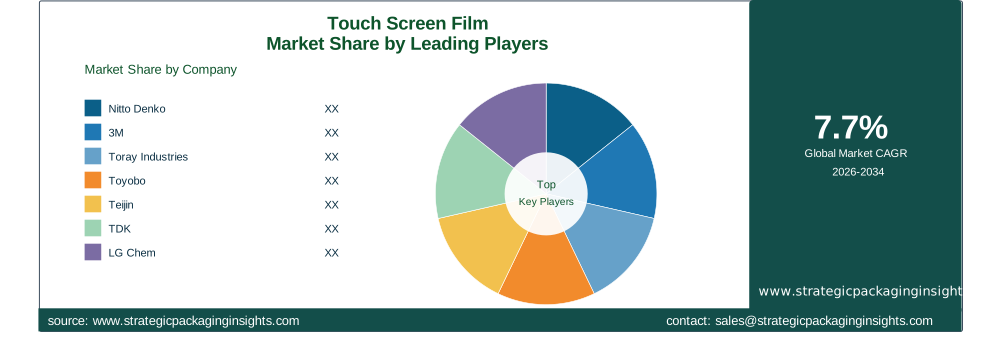
Nitto Denko is a leading player in the touch screen film market, known for its high-quality films that are used in a variety of applications, including smartphones, tablets, and automotive displays. The company has a strong presence in the Asia Pacific region, which is a major market for touch screen films. 3M is another key player, offering a wide range of touch screen films that are used in consumer electronics and industrial applications. The company's focus on innovation and sustainability has helped it maintain a strong position in the market.
Toray Industries and Toyobo are also significant players in the market, known for their advanced film technologies and strong focus on research and development. These companies have a strong presence in the global market, with a focus on expanding their product offerings to cater to emerging applications. Teijin and TDK are other notable players, offering a range of touch screen films that are used in various applications, including automotive and industrial displays. These companies are focused on enhancing their product portfolios through continuous innovation and strategic partnerships.
LG Chem and Samsung SDI are prominent players in the touch screen film market, known for their advanced film technologies and strong focus on sustainability. These companies have a strong presence in the global market, with a focus on expanding their product offerings to cater to emerging applications. Gunze and Cambrios Technologies are also significant players, offering a range of touch screen films that are used in various applications, including automotive and industrial displays. These companies are focused on enhancing their product portfolios through continuous innovation and strategic partnerships.
Key Highlights
- The Touch Screen Film market is projected to grow at a CAGR of 7.7% from 2026 to 2034.
- Increasing demand for touch-enabled devices is a major driver of market growth.
- Technological advancements in film production are enabling the development of innovative applications.
- The automotive industry is increasingly incorporating touch screen interfaces in vehicles.
- Environmental concerns and regulatory constraints are potential restraining factors.
- Flexible and transparent conductive films present significant growth opportunities.
- Eco-friendly touch screen films are gaining traction in the market.
- Volatility of raw material prices poses a challenge for manufacturers.
- The market is highly competitive, with numerous players vying for market share.
- Continuous innovation is essential for companies to maintain a competitive edge.
Top Countries Insights
In the Touch Screen Film market, the United States stands out as a key player, with a market size of approximately $1.2 billion and a CAGR of 6%. The country's strong demand for consumer electronics, particularly smartphones and tablets, drives this growth. Additionally, the automotive industry's integration of touch screen interfaces in vehicles further boosts the market. However, regulatory constraints and environmental concerns regarding electronic waste pose challenges for manufacturers.
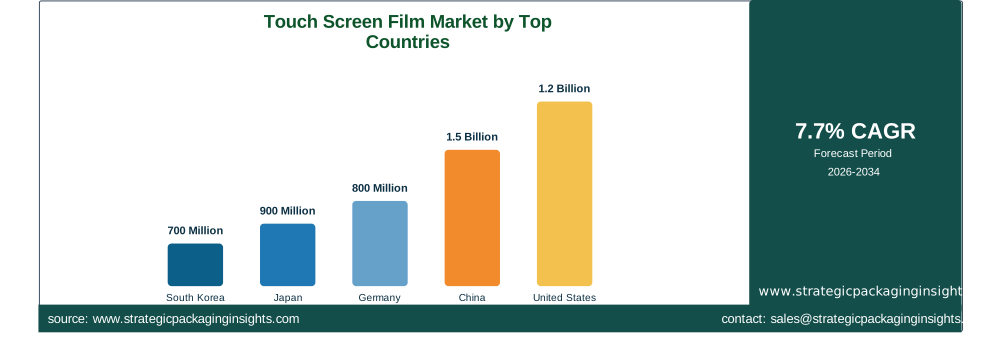
China is another significant market, with a market size of around $1.5 billion and a CAGR of 8%. The country's booming electronics manufacturing sector, coupled with the increasing adoption of touch screen technology in various applications, drives market growth. The government's focus on technological innovation and the development of smart cities further supports the market. However, the volatility of raw material prices and intense competition among local manufacturers are challenges that need to be addressed.
Germany, with a market size of approximately $800 million and a CAGR of 5%, is a key player in the European market. The country's strong automotive industry, which increasingly incorporates touch screen interfaces in vehicles, drives market growth. Additionally, the rise of industrial automation and the adoption of human-machine interfaces (HMIs) in manufacturing processes contribute to the market's expansion. However, regulatory constraints and environmental concerns regarding electronic waste pose challenges for manufacturers.
Japan, with a market size of around $900 million and a CAGR of 7%, is a significant player in the Asia Pacific region. The country's strong focus on technological innovation and the development of advanced film technologies drive market growth. Additionally, the increasing demand for touch-enabled devices in consumer electronics and automotive applications supports the market. However, the volatility of raw material prices and intense competition among local manufacturers are challenges that need to be addressed.
South Korea, with a market size of approximately $700 million and a CAGR of 6%, is another key player in the Asia Pacific region. The country's strong electronics manufacturing sector, coupled with the increasing adoption of touch screen technology in various applications, drives market growth. The government's focus on technological innovation and the development of smart cities further supports the market. However, the volatility of raw material prices and intense competition among local manufacturers are challenges that need to be addressed.
Touch Screen Film Market Segments Insights

Product Type Analysis
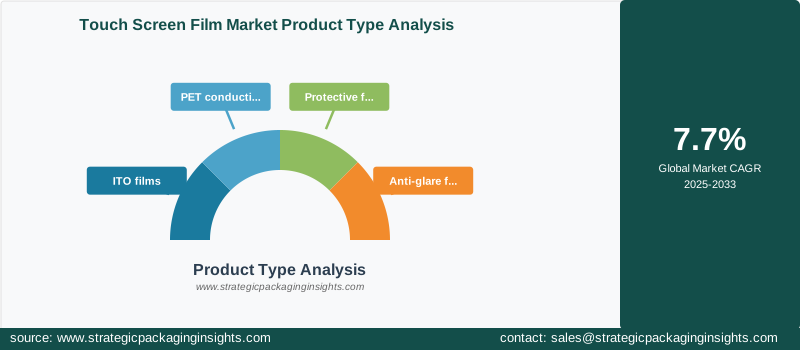
The Touch Screen Film market is segmented by product type into ITO films, PET conductive films, protective films, and anti-glare films. ITO films are widely used due to their excellent conductivity and transparency, making them ideal for applications in smartphones and tablets. The demand for PET conductive films is also on the rise, driven by their flexibility and cost-effectiveness. Protective films are gaining traction in the automotive industry, where they are used to enhance the durability and longevity of touch screen interfaces. Anti-glare films are increasingly being adopted in industrial applications to improve visibility and reduce eye strain for users.
Technological advancements in film production are enabling the development of innovative products with enhanced properties. Manufacturers are focusing on creating films that offer increased flexibility, transparency, and conductivity to cater to emerging applications in flexible displays and wearable devices. The increasing focus on sustainability is also driving the development of eco-friendly films, which are expected to gain traction in the market. Companies that can offer environmentally friendly products are likely to gain a competitive edge in the market.
Technology Analysis
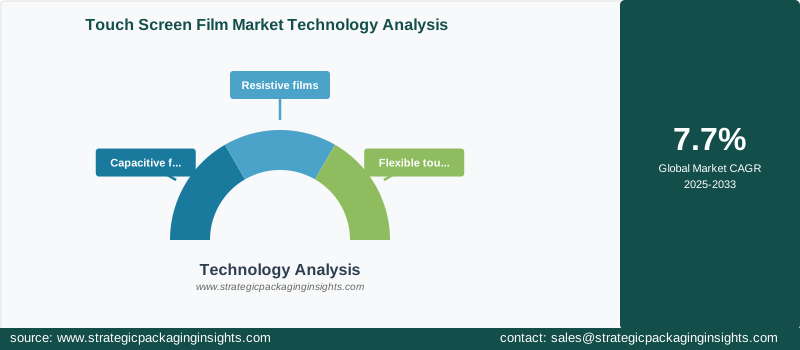
The Touch Screen Film market is segmented by technology into capacitive films, resistive films, and flexible touch films. Capacitive films are widely used in consumer electronics, such as smartphones and tablets, due to their high sensitivity and accuracy. Resistive films are commonly used in industrial applications, where durability and resistance to harsh environmental conditions are critical. Flexible touch films are gaining popularity in emerging applications, such as flexible displays and wearable devices, due to their ability to conform to various shapes and surfaces.
Technological advancements in film production are enabling the development of innovative products with enhanced properties. Manufacturers are focusing on creating films that offer increased flexibility, transparency, and conductivity to cater to emerging applications in flexible displays and wearable devices. The increasing focus on sustainability is also driving the development of eco-friendly films, which are expected to gain traction in the market. Companies that can offer environmentally friendly products are likely to gain a competitive edge in the market.
Application Analysis
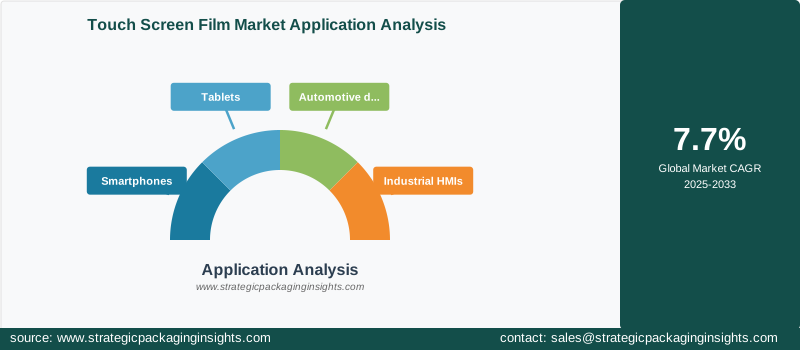
The Touch Screen Film market is segmented by application into smartphones, tablets, automotive displays, and industrial HMIs. The demand for touch screen films in smartphones and tablets is driven by the increasing adoption of touch-enabled devices in the consumer electronics sector. The automotive industry is also a significant market for touch screen films, as vehicles increasingly incorporate touch screen interfaces to enhance the user experience. Industrial HMIs are another key application, where touch screen films are used to facilitate seamless interaction between humans and machines in manufacturing processes.
Technological advancements in film production are enabling the development of innovative products with enhanced properties. Manufacturers are focusing on creating films that offer increased flexibility, transparency, and conductivity to cater to emerging applications in flexible displays and wearable devices. The increasing focus on sustainability is also driving the development of eco-friendly films, which are expected to gain traction in the market. Companies that can offer environmentally friendly products are likely to gain a competitive edge in the market.
End Use Analysis
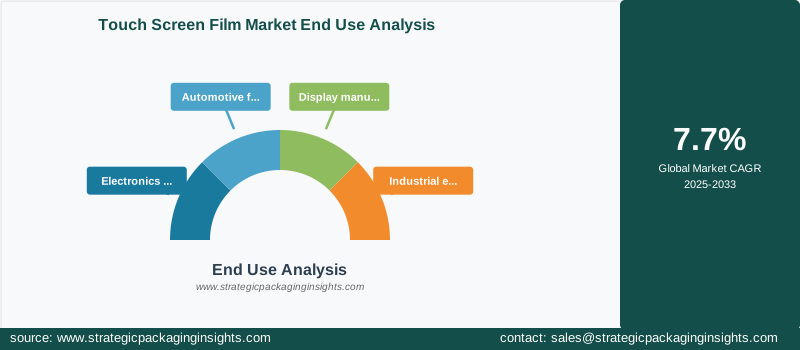
The Touch Screen Film market is segmented by end use into electronics OEMs, automotive firms, display manufacturers, and industrial equipment makers. Electronics OEMs are a major market for touch screen films, as they are used in the production of a wide range of consumer electronics, including smartphones, tablets, and laptops. Automotive firms are also significant users of touch screen films, as vehicles increasingly incorporate touch screen interfaces to enhance the user experience. Display manufacturers are another key market, as touch screen films are used in the production of various types of displays, including LCDs and OLEDs.
Technological advancements in film production are enabling the development of innovative products with enhanced properties. Manufacturers are focusing on creating films that offer increased flexibility, transparency, and conductivity to cater to emerging applications in flexible displays and wearable devices. The increasing focus on sustainability is also driving the development of eco-friendly films, which are expected to gain traction in the market. Companies that can offer environmentally friendly products are likely to gain a competitive edge in the market.
Touch Screen Film Market Segments
The Touch Screen Film market has been segmented on the basis ofProduct Type
- ITO films
- PET conductive films
- Protective films
- Anti-glare films
Technology
- Capacitive films
- Resistive films
- Flexible touch films
Application
- Smartphones
- Tablets
- Automotive displays
- Industrial HMIs
End Use
- Electronics OEMs
- Automotive firms
- Display manufacturers
- Industrial equipment makers
Region
- Asia Pacific
- North America
- Latin America
- Europe
- Middle East & Africa




