


Third Party Logistics Services Market Outlook
The Third Party Logistics Services market was valued at $1, 221.86 billion in 2025 and is projected to reach $2, 546.19 billion by 2034, growing at a CAGR of 8.5% during the forecast period 2026-2034. This market is experiencing significant growth due to the increasing globalization of supply chains and the rising demand for efficient logistics solutions. Companies are increasingly outsourcing logistics services to third-party providers to focus on their core competencies, reduce costs, and improve service quality. The market is also driven by technological advancements such as the integration of IoT, AI, and blockchain in logistics operations, which enhance transparency, efficiency, and real-time tracking capabilities.
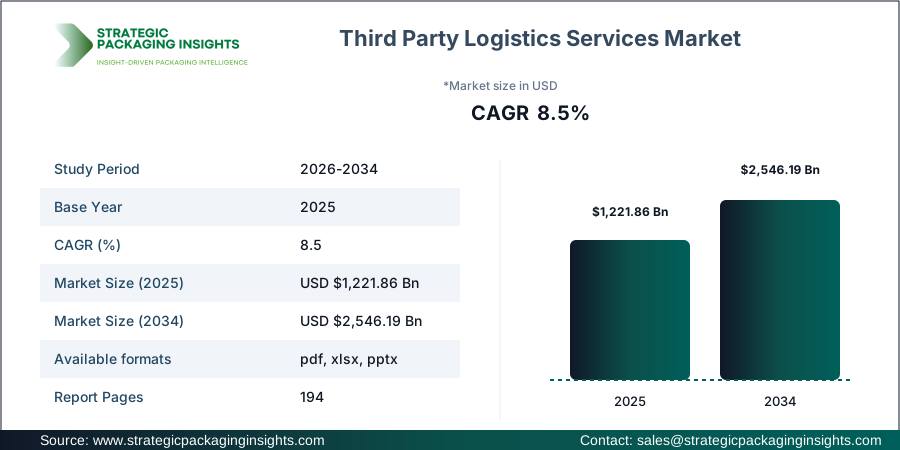
Despite the promising growth prospects, the Third Party Logistics Services market faces several challenges. Regulatory complexities and compliance issues across different regions can pose significant hurdles for logistics providers. Additionally, the market is highly competitive, with numerous players vying for market share, which can lead to price wars and reduced profit margins. However, the growing e-commerce sector and the increasing demand for last-mile delivery solutions present lucrative opportunities for market expansion. The shift towards sustainable and green logistics practices is also expected to drive market growth, as companies seek to reduce their carbon footprint and comply with environmental regulations.
Report Scope
| Attributes | Details |
| Report Title | Third Party Logistics Services Market Size, Future Growth and Forecast 2034 |
| By Service Type | Transportation, Warehousing, Freight Forwarding, Value-Added Services |
| By Mode | Road, Sea, Air, Rail |
| By End Use | Retail, Automotive, Healthcare, Industrial |
| By Contract Type | Domestic, International |
| Region | Asia Pacific, North America, Latin America, Europe, Middle East & Africa |
| Base Year | 2025 |
| Historic Period | 2018-2024 |
| Forecast Period | 2026-2034 |
| Number of Pages | 194 |
| Customization Available | Yes* |
Opportunities & Threats
The Third Party Logistics Services market is ripe with opportunities, particularly in the realm of e-commerce. As online shopping continues to surge globally, the demand for efficient and reliable logistics solutions is at an all-time high. Third-party logistics providers are uniquely positioned to capitalize on this trend by offering specialized services such as last-mile delivery, reverse logistics, and inventory management. Additionally, the increasing adoption of advanced technologies like AI, machine learning, and blockchain in logistics operations presents opportunities for providers to enhance their service offerings, improve operational efficiency, and gain a competitive edge in the market.
Another significant opportunity lies in the growing emphasis on sustainability and green logistics. With increasing awareness of environmental issues and stringent regulations, companies are seeking logistics partners that can help them reduce their carbon footprint and implement eco-friendly practices. Third-party logistics providers that invest in sustainable technologies and practices, such as electric vehicles, energy-efficient warehouses, and optimized transportation routes, can attract environmentally conscious clients and gain a competitive advantage in the market.
However, the market is not without its threats. One of the primary challenges facing third-party logistics providers is the complexity of regulatory compliance across different regions. Navigating the myriad of regulations related to customs, tariffs, and trade agreements can be daunting and time-consuming, potentially leading to delays and increased costs. Additionally, the market is highly competitive, with numerous players vying for market share. This intense competition can lead to price wars, eroding profit margins and making it difficult for smaller players to survive. Furthermore, the ongoing geopolitical tensions and trade disputes can disrupt supply chains and create uncertainties in the market.
Drivers & Challenges
The Third Party Logistics Services market is driven by several key factors, including the globalization of supply chains and the increasing complexity of logistics operations. As companies expand their operations across borders, the need for efficient and reliable logistics solutions becomes paramount. Third-party logistics providers offer the expertise and infrastructure necessary to manage complex supply chains, enabling companies to focus on their core competencies and improve their overall efficiency. Additionally, the rise of e-commerce has significantly increased the demand for logistics services, particularly in the areas of last-mile delivery and reverse logistics.
Technological advancements are also playing a crucial role in driving the growth of the Third Party Logistics Services market. The integration of IoT, AI, and blockchain in logistics operations is transforming the industry by enhancing transparency, efficiency, and real-time tracking capabilities. These technologies enable logistics providers to optimize their operations, reduce costs, and improve service quality, thereby attracting more clients and expanding their market share. Furthermore, the growing emphasis on sustainability and green logistics is driving companies to seek logistics partners that can help them reduce their carbon footprint and comply with environmental regulations.
Despite the positive drivers, the market faces several challenges that could hinder its growth. One of the primary challenges is the complexity of regulatory compliance across different regions. Navigating the myriad of regulations related to customs, tariffs, and trade agreements can be daunting and time-consuming, potentially leading to delays and increased costs. Additionally, the market is highly competitive, with numerous players vying for market share. This intense competition can lead to price wars, eroding profit margins and making it difficult for smaller players to survive. Furthermore, the ongoing geopolitical tensions and trade disputes can disrupt supply chains and create uncertainties in the market.
Market Share Analysis
The Third Party Logistics Services market is characterized by a highly competitive landscape, with several key players dominating the market. These companies are continuously striving to expand their market share through strategic partnerships, mergers and acquisitions, and the adoption of advanced technologies. The competitive landscape is marked by the presence of both global giants and regional players, each vying for a larger share of the market. The market is also witnessing a trend towards consolidation, as larger players acquire smaller companies to enhance their service offerings and expand their geographical reach.
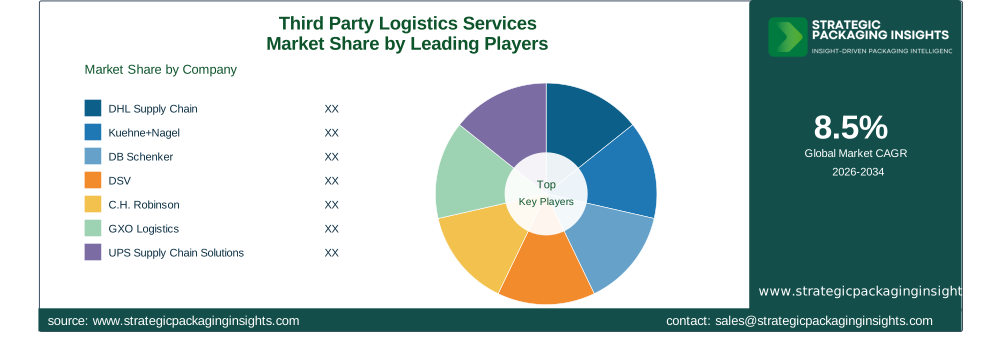
DHL Supply Chain is one of the leading players in the Third Party Logistics Services market, known for its extensive global network and comprehensive service offerings. The company has a significant market share and is continuously expanding its operations through strategic partnerships and acquisitions. Kuehne+Nagel is another major player, renowned for its expertise in sea and air freight logistics. The company has a strong presence in Europe and is expanding its operations in Asia and North America to capture a larger share of the market.
DB Schenker is a prominent player in the market, offering a wide range of logistics services, including transportation, warehousing, and freight forwarding. The company is focused on expanding its digital capabilities to enhance its service offerings and improve operational efficiency. DSV is another key player, known for its strong presence in the European market and its focus on providing customized logistics solutions to its clients. The company is actively expanding its operations in emerging markets to capitalize on the growing demand for logistics services.
C.H. Robinson, GXO Logistics, UPS Supply Chain Solutions, FedEx Logistics, Nippon Express, and CEVA Logistics are other notable players in the market. These companies are continuously investing in advanced technologies and expanding their service offerings to gain a competitive edge in the market. The competitive landscape is expected to remain dynamic, with companies focusing on innovation, sustainability, and customer-centric solutions to differentiate themselves and capture a larger share of the market.
Key Highlights
- The Third Party Logistics Services market is projected to grow at a CAGR of 8.5% from 2026 to 2034.
- The market is driven by the globalization of supply chains and the increasing complexity of logistics operations.
- Technological advancements such as IoT, AI, and blockchain are transforming the logistics industry.
- The rise of e-commerce is significantly increasing the demand for logistics services, particularly in last-mile delivery.
- Sustainability and green logistics are becoming key focus areas for logistics providers.
- The market is highly competitive, with numerous players vying for market share.
- Regulatory compliance and geopolitical tensions pose significant challenges for logistics providers.
- The market is witnessing a trend towards consolidation, with larger players acquiring smaller companies.
- Key players in the market include DHL Supply Chain, Kuehne+Nagel, DB Schenker, and DSV.
- The market is characterized by a dynamic competitive landscape, with companies focusing on innovation and customer-centric solutions.
Top Countries Insights
In the Third Party Logistics Services market, the United States stands out as a key player, with a market size of approximately $500 billion and a CAGR of 7%. The country's advanced infrastructure, technological innovation, and strong e-commerce sector drive the demand for logistics services. The U.S. government’s focus on improving transportation infrastructure further supports market growth. However, regulatory complexities and labor shortages pose challenges for logistics providers operating in the region.
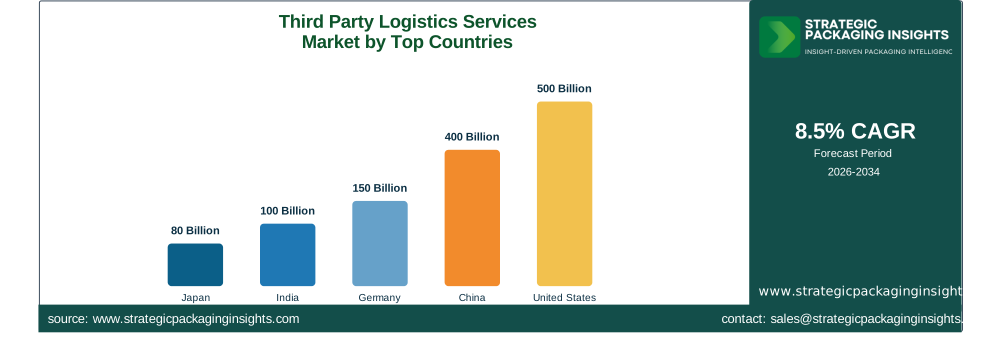
China is another significant market, with a market size of around $400 billion and a CAGR of 10%. The country's rapid industrialization, expanding e-commerce sector, and government initiatives to improve logistics infrastructure are key growth drivers. However, the market faces challenges such as regulatory hurdles and intense competition among local and international players. The Chinese government's focus on sustainability and green logistics also presents opportunities for growth.
Germany, with a market size of approximately $150 billion and a CAGR of 6%, is a leading market in Europe. The country's strategic location, advanced infrastructure, and strong manufacturing sector drive the demand for logistics services. However, regulatory compliance and labor shortages are significant challenges for logistics providers in the region. The German government's focus on digitalization and sustainability in logistics presents opportunities for market growth.
India, with a market size of around $100 billion and a CAGR of 12%, is an emerging market with significant growth potential. The country's expanding e-commerce sector, government initiatives to improve logistics infrastructure, and increasing foreign investments are key growth drivers. However, the market faces challenges such as regulatory complexities, inadequate infrastructure, and intense competition. The Indian government's focus on digitalization and sustainability in logistics presents opportunities for growth.
Japan, with a market size of approximately $80 billion and a CAGR of 5%, is a mature market with a strong focus on technology and innovation. The country's advanced infrastructure, strong manufacturing sector, and emphasis on quality and efficiency drive the demand for logistics services. However, regulatory compliance and labor shortages are significant challenges for logistics providers in the region. The Japanese government's focus on sustainability and green logistics presents opportunities for market growth.
Third Party Logistics Services Market Segments Insights

Service Type Analysis
The Third Party Logistics Services market is segmented by service type into transportation, warehousing, freight forwarding, and value-added services. Transportation services dominate the market, driven by the increasing demand for efficient and reliable logistics solutions. The rise of e-commerce and the need for last-mile delivery services are key drivers for the transportation segment. Warehousing services are also experiencing significant growth, as companies seek to optimize their inventory management and reduce costs. The integration of advanced technologies such as IoT and AI in warehousing operations is enhancing efficiency and transparency, further driving market growth.
Freight forwarding services are gaining traction, as companies seek to streamline their supply chain operations and reduce costs. The increasing complexity of global supply chains and the need for efficient customs clearance and documentation are driving the demand for freight forwarding services. Value-added services, such as packaging, labeling, and assembly, are also witnessing growth, as companies seek to differentiate themselves and enhance customer satisfaction. The growing emphasis on sustainability and green logistics is driving the demand for value-added services that focus on reducing environmental impact.
Mode Analysis
The Third Party Logistics Services market is segmented by mode into road, sea, air, and rail. Road transportation is the dominant mode, driven by the increasing demand for last-mile delivery services and the flexibility and cost-effectiveness of road transport. The rise of e-commerce and the need for efficient and reliable logistics solutions are key drivers for the road transportation segment. Sea transportation is also experiencing significant growth, as companies seek to optimize their supply chain operations and reduce costs. The increasing complexity of global supply chains and the need for efficient customs clearance and documentation are driving the demand for sea transportation services.
Air transportation is gaining traction, as companies seek to reduce transit times and improve service quality. The growing demand for time-sensitive and high-value goods is driving the demand for air transportation services. Rail transportation is also witnessing growth, as companies seek to reduce costs and improve efficiency. The integration of advanced technologies such as IoT and AI in rail transportation operations is enhancing efficiency and transparency, further driving market growth. The growing emphasis on sustainability and green logistics is driving the demand for rail transportation services that focus on reducing environmental impact.
End Use Analysis
The Third Party Logistics Services market is segmented by end use into retail, automotive, healthcare, and industrial. The retail sector is the dominant end-use segment, driven by the increasing demand for efficient and reliable logistics solutions. The rise of e-commerce and the need for last-mile delivery services are key drivers for the retail segment. The automotive sector is also experiencing significant growth, as companies seek to optimize their supply chain operations and reduce costs. The increasing complexity of global supply chains and the need for efficient customs clearance and documentation are driving the demand for automotive logistics services.
The healthcare sector is gaining traction, as companies seek to streamline their supply chain operations and reduce costs. The growing demand for time-sensitive and high-value goods is driving the demand for healthcare logistics services. The industrial sector is also witnessing growth, as companies seek to reduce costs and improve efficiency. The integration of advanced technologies such as IoT and AI in industrial logistics operations is enhancing efficiency and transparency, further driving market growth. The growing emphasis on sustainability and green logistics is driving the demand for industrial logistics services that focus on reducing environmental impact.
Contract Type Analysis
The Third Party Logistics Services market is segmented by contract type into domestic and international. Domestic logistics services dominate the market, driven by the increasing demand for efficient and reliable logistics solutions. The rise of e-commerce and the need for last-mile delivery services are key drivers for the domestic segment. International logistics services are also experiencing significant growth, as companies seek to optimize their supply chain operations and reduce costs. The increasing complexity of global supply chains and the need for efficient customs clearance and documentation are driving the demand for international logistics services.
The growing emphasis on sustainability and green logistics is driving the demand for international logistics services that focus on reducing environmental impact. The integration of advanced technologies such as IoT and AI in international logistics operations is enhancing efficiency and transparency, further driving market growth. The competitive landscape is expected to remain dynamic, with companies focusing on innovation, sustainability, and customer-centric solutions to differentiate themselves and capture a larger share of the market.
Third Party Logistics Services Market Segments
The Third Party Logistics Services market has been segmented on the basis ofBy Service Type
- Transportation
- Warehousing
- Freight Forwarding
- Value-Added Services
By Mode
- Road
- Sea
- Air
- Rail
By End Use
- Retail
- Automotive
- Healthcare
- Industrial
By Contract Type
- Domestic
- International
Region
- Asia Pacific
- North America
- Latin America
- Europe
- Middle East & Africa




