


Thermoformed Medical Packaging Market Outlook
The Thermoformed Medical Packaging market size was valued at USD $8.40 Billion in 2025 and is anticipated to reach USD $13.90 Billion by 2035, growing at a CAGR of 5.20% % during the forecast period according to Strategic Packaging Insights.
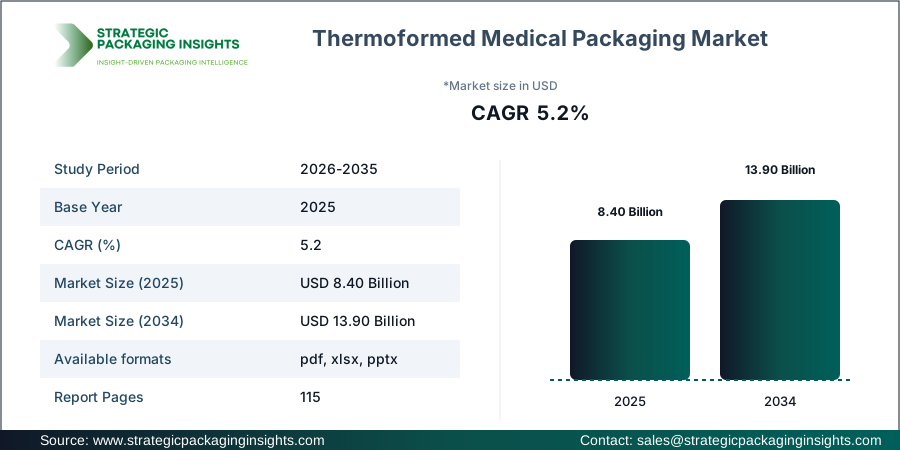
The increasing demand for sterile and tamper-evident packaging solutions in the healthcare sector is a significant driver for the market. The rise in chronic diseases and the growing need for advanced medical devices are propelling the demand for thermoformed medical packaging. Regulatory bodies like the FDA and EMA are emphasizing the importance of packaging integrity, further boosting market growth.
Report Scope
| Attributes | Details |
| Report Title | Thermoformed Medical Packaging Market Projected to Scale to 13.90 Billion by 2035, Assesses Strategic Packaging Insights |
| By packaging type | Blister Packs, Clamshells, Trays, Tubs, Lids, Pouches, Containers, Custom Thermoformed Packaging |
| By material type | Polyvinyl Chloride, Polyethylene Terephthalate, Polypropylene, Polyethylene, Polystyrene, Polycarbonate, Acrylonitrile Butadiene Styrene, Other Thermoplastics |
| By product type | Medical Device Packaging, Pharmaceutical Packaging, Surgical Instrument Packaging, Diagnostic Product Packaging, Drug Delivery Device Packaging, Implant Packaging, Dental Product Packaging, Laboratory Product Packaging |
| By application | Syringes, Vials, Ampoules, Catheters, Surgical Instruments, Implants, Diagnostic Kits, Medical Devices, Drug Delivery Systems, Dental Instruments |
| By sterilization method | Ethylene Oxide Sterilization, Gamma Sterilization, Steam Sterilization, Electron Beam Sterilization, Other Sterilization Methods |
| By packaging level | Primary Packaging, Secondary Packaging, Tertiary Packaging |
| By functionality | Sterile Barrier Protection, Tamper Evidence, Product Protection, Moisture Barrier, Oxygen Barrier, Light Protection, Contamination Prevention, Impact Protection, Shelf Life Extension |
| By end user | Hospitals, Pharmaceutical Companies, Medical Device Manufacturers, Diagnostic Laboratories, Clinics, Research Institutions, Dental Clinics, Healthcare Distributors |
| By region | North America, Europe, Asia Pacific, Latin America, Middle East and Africa |
| Base Year | 2025 |
| Historic Period | 2018-2024 |
| Forecast Period | 2026-2035 |
| Number of Pages | 115 |
| Customization Available | Yes* |
Market Trends Analysis
Thermoformed medical packaging is witnessing a shift towards sustainable materials, with companies increasingly adopting recyclable and biodegradable options. This trend is driven by stringent environmental regulations and consumer demand for eco-friendly products. The integration of digital technologies, such as RFID and QR codes, is enhancing traceability and patient safety, influencing purchasing decisions and fostering market growth.
Regionally, Asia Pacific is emerging as a key growth area due to the expanding healthcare infrastructure and rising investments in medical device manufacturing. The region's cost-effective production capabilities and favorable government policies are attracting global players, leading to increased competition and innovation in the market.
Industry Transformation Analysis
The thermoformed medical packaging industry is undergoing significant transformation with advancements in automation and manufacturing technologies. Companies are investing in high-speed thermoforming machines to enhance production efficiency and reduce costs. The shift towards localized production to mitigate supply chain disruptions is also notable, with manufacturers setting up facilities closer to key markets.
Sustainability is becoming a core focus, with manufacturers exploring the use of post-consumer recycled (PCR) materials and mono-material structures to improve recyclability. This shift is driven by regulatory pressures and brand commitments to reduce carbon footprints. The integration of smart packaging solutions is also gaining traction, offering enhanced functionality and compliance with regulatory standards.
Trends & Disruptions Impacting Customers' Customers
Downstream customers, such as hospitals and pharmaceutical companies, are increasingly prioritizing packaging solutions that ensure product safety and compliance with regulatory standards. The demand for packaging that offers sterile barrier protection and tamper evidence is rising, driven by the need to prevent contamination and ensure patient safety. The growing focus on sustainability is also influencing purchasing decisions, with customers seeking eco-friendly packaging options.
These changes are impacting the thermoformed medical packaging market by driving innovation and the development of new materials and technologies. Suppliers are under pressure to offer solutions that meet stringent regulatory requirements while also addressing sustainability concerns. This is creating opportunities for companies to differentiate themselves through product innovation and strategic partnerships.
Thermoformed Medical Packaging Market Ecosystem
The thermoformed medical packaging ecosystem involves a complex interplay of raw material suppliers, resin producers, converters, and distributors. The procurement of high-quality thermoplastics is critical for ensuring packaging integrity and compliance with regulatory standards. Resin production is a key stage, with manufacturers focusing on producing materials that offer superior barrier properties and recyclability.
Film and sheet production involves the extrusion of materials into formats suitable for thermoforming. This stage is crucial for achieving the desired packaging characteristics, such as clarity and strength. Converting processes transform these films into various packaging formats, tailored to meet specific medical applications. Distribution channels ensure the timely delivery of packaged products to end users, while recycling initiatives focus on minimizing environmental impact.
Analyst Perspective
Analyst Perspective: The thermoformed medical packaging market is poised for significant growth, driven by advancements in material science and regulatory compliance requirements.
The increasing adoption of sustainable materials and smart packaging solutions is reshaping the competitive landscape, offering opportunities for differentiation and market expansion. Companies that invest in innovative technologies and strategic partnerships are likely to gain a competitive edge.
Market participants should closely monitor regulatory developments and consumer preferences to align their strategies with emerging trends. The focus on sustainability and product safety will continue to drive innovation and investment in the sector.
Opportunities & Threats
The thermoformed medical packaging market presents significant opportunities for growth, driven by the increasing demand for advanced medical devices and pharmaceuticals. The rise in chronic diseases and the aging population are fueling the need for innovative packaging solutions that ensure product safety and compliance with regulatory standards. Companies that invest in research and development to create sustainable and cost-effective packaging options are likely to gain a competitive advantage.
Technological advancements in material science and manufacturing processes are opening new avenues for product innovation. The integration of smart packaging solutions, such as RFID and QR codes, is enhancing traceability and patient safety, creating opportunities for differentiation and market expansion. The growing focus on sustainability is also driving demand for eco-friendly packaging materials, offering opportunities for companies to align with consumer preferences and regulatory requirements.
However, the market faces several threats, including raw material price volatility and supply chain disruptions. The reliance on specific thermoplastics and additives can lead to supply constraints and increased costs, impacting profitability. Regulatory changes and compliance requirements pose additional challenges, requiring companies to invest in new technologies and processes to meet evolving standards.
Competition from alternative packaging solutions, such as flexible and rigid plastics, is also a threat, as companies seek to differentiate themselves through product innovation and cost-effectiveness. The need for significant capital investment in manufacturing and recycling infrastructure can be a barrier to entry for new players, limiting market growth.
Drivers & Challenges
The thermoformed medical packaging market is driven by the increasing demand for sterile and tamper-evident packaging solutions in the healthcare sector. The rise in chronic diseases and the growing need for advanced medical devices are propelling the demand for thermoformed medical packaging. Regulatory bodies like the FDA and EMA are emphasizing the importance of packaging integrity, further boosting market growth. The focus on sustainability and the adoption of eco-friendly materials are also driving innovation and investment in the sector.
The integration of digital technologies, such as RFID and QR codes, is enhancing traceability and patient safety, influencing purchasing decisions and fostering market growth. The shift towards localized production to mitigate supply chain disruptions is also notable, with manufacturers setting up facilities closer to key markets. The increasing adoption of sustainable materials and smart packaging solutions is reshaping the competitive landscape, offering opportunities for differentiation and market expansion.
However, the market faces several challenges, including raw material price volatility and supply chain disruptions. The reliance on specific thermoplastics and additives can lead to supply constraints and increased costs, impacting profitability. Regulatory changes and compliance requirements pose additional challenges, requiring companies to invest in new technologies and processes to meet evolving standards. Competition from alternative packaging solutions, such as flexible and rigid plastics, is also a threat, as companies seek to differentiate themselves through product innovation and cost-effectiveness.
Packaging Market Economics
The economics of thermoformed medical packaging are influenced by raw material costs, resin pricing, and conversion expenses. The cost of thermoplastics, such as PVC, PET, and PP, plays a significant role in determining overall packaging costs. Conversion costs, including thermoforming and tooling, are critical factors in the production process. Energy costs and logistics expenses also impact the economics of thermoformed medical packaging, influencing pricing strategies and profitability.
Printing and lamination costs are additional considerations, as they contribute to the overall cost structure. The use of advanced technologies and automation can help reduce production costs and improve efficiency. Companies that invest in sustainable materials and processes may incur higher initial costs but can benefit from long-term savings and competitive advantages. The focus on recyclability and the use of PCR materials are also influencing the economics of thermoformed medical packaging, as companies seek to align with regulatory requirements and consumer preferences.
Packaging Value Chain & Cost Analysis
The value chain for thermoformed medical packaging involves several key stages, including resin synthesis, film extrusion, and converting. Resin synthesis is the initial stage, where raw materials are processed to create base resins like PVC, PET, and PP. Film extrusion involves the production of films and sheets, which are then thermoformed into various packaging formats. Converting processes, such as printing and lamination, add value by enhancing packaging functionality and aesthetics.
Downstream activities, including co-packing and distribution, ensure the timely delivery of packaged products to end users. The value chain is influenced by factors such as substrate lead times, capacity utilization, and resin supply. Companies must manage procurement relationships and logistics to optimize the value chain and reduce costs. The focus on sustainability and recyclability is also impacting the value chain, as companies seek to minimize environmental impact and comply with regulatory standards.
Unit Economics & Substrate Cost Analysis
The unit economics of thermoformed medical packaging are driven by raw material costs, energy expenses, and conversion processes. The cost of thermoplastics, such as PVC, PET, and PP, is a significant factor in determining unit costs. Energy expenses, including electricity and fuel, impact the cost structure and influence pricing strategies. Conversion processes, such as extrusion and thermoforming, contribute to the overall cost of production.
Printing and lamination costs are additional considerations, as they enhance packaging functionality and aesthetics. Tooling and scrap costs also impact unit economics, as companies seek to optimize production efficiency and reduce waste. Labor and logistics expenses are critical factors in the cost structure, influencing pricing and profitability. Companies that invest in advanced technologies and automation can achieve cost savings and improve competitiveness in the market.
Packaging Regulatory & Sustainability Analysis
The thermoformed medical packaging market is subject to stringent regulatory requirements, including packaging integrity and safety standards. Regulatory bodies, such as the FDA and EMA, emphasize the importance of sterile barrier protection and tamper evidence in medical packaging. Compliance with these standards is critical for market entry and competitiveness. The focus on sustainability is also driving regulatory changes, with initiatives aimed at reducing packaging waste and promoting recyclability.
Extended producer responsibility (EPR) and packaging taxes are influencing the market, as companies seek to align with regulatory requirements and consumer preferences. The use of post-consumer recycled (PCR) materials and mono-material structures is gaining traction, driven by regulatory pressures and brand commitments to sustainability. Companies must navigate complex regulatory landscapes and invest in sustainable materials and processes to remain competitive in the market.
Strategic Mergers, Acquisitions & Capacity Expansions
Recent strategic developments in the thermoformed medical packaging market include mergers, acquisitions, and capacity expansions. Companies are investing in new facilities and technologies to enhance production capabilities and meet growing demand. Strategic partnerships and collaborations are also notable, as companies seek to leverage complementary strengths and expand market reach.
For example, Amcor plc has expanded its production capacity with the acquisition of new facilities, enhancing its ability to serve the growing demand for thermoformed medical packaging. TekniPlex has invested in advanced manufacturing technologies to improve efficiency and reduce costs. These strategic developments are reshaping the competitive landscape and offering opportunities for growth and innovation in the market.
Strategic Action Directives
Brand Packaging Engineers & Sustainability Directors: Focus on material selection and mono-material qualification to enhance recyclability and meet regulatory requirements. Integrate PCR materials to align with sustainability goals.
Converter Operations & Extrusion Leads: Optimize line speed and tooling to improve production efficiency and reduce scrap. Manage PCR variability and capacity utilization to enhance competitiveness.
Procurement & Material Sourcing Managers: Diversify supplier base and negotiate resin contracts to mitigate price volatility. Index prices to market conditions and manage EPR exposure.
Investors: Monitor capacity expansions and technology investments to identify growth opportunities. Evaluate market concentration and margin structure to assess competitive positioning.
Market Share Analysis
The thermoformed medical packaging market is characterized by a competitive landscape with several key players, including Amcor plc, TekniPlex, and Nelipak Healthcare. These companies are leveraging their extensive product portfolios and advanced manufacturing capabilities to maintain a strong market presence. The focus on innovation and sustainability is driving competition, with companies investing in new technologies and materials to differentiate themselves.
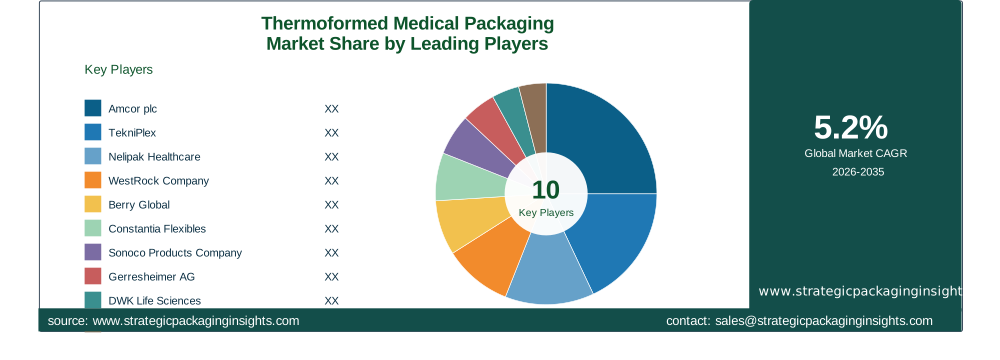
Amcor plc is a leading player in the market, offering a wide range of thermoformed medical packaging solutions. The company's focus on sustainability and innovation has strengthened its competitive position. TekniPlex is another key player, known for its advanced manufacturing technologies and commitment to sustainability. The company's strategic investments in new facilities and technologies have enhanced its market presence.
Nelipak Healthcare is a prominent player in the thermoformed medical packaging market, offering customized solutions for medical device manufacturers and pharmaceutical companies. The company's focus on quality and regulatory compliance has positioned it as a trusted partner in the industry. WestRock Company and Berry Global are also notable players, with a strong focus on innovation and sustainability.
Other key players in the market include Constantia Flexibles, Sonoco Products Company, Gerresheimer AG, DWK Life Sciences, Oliver Healthcare Packaging, Nelipak Corporation, Prent Corporation, Molded Fiber Glass Companies, Plastikon Industries, and Beacon Converters. These companies are investing in research and development to create innovative packaging solutions that meet the evolving needs of the healthcare sector.
Key Highlights
- Largest Region: North America
- Fastest-Growing Region: Asia Pacific
- Largest Segment: Medical Device Packaging
- Fastest-Growing Segment: Custom Thermoformed Packaging
- Base-year market size: USD 8.40 Billion
- Forecast-year market size: USD 13.90 Billion
- CAGR: 5.20%
- Important application: Surgical Instruments
- Major end-use industry: Medical Device Manufacturers
- Major market driver: Increasing demand for sterile and tamper-evident packaging solutions
Regional Insights
The global thermoformed medical packaging market is segmented into major regions, including North America, Europe, Asia Pacific, Latin America, and the Middle East & Africa. North America is the largest region, driven by the presence of established healthcare infrastructure and leading medical device manufacturers. The region's focus on innovation and regulatory compliance is contributing to market growth.
North America
North America holds a significant share of the thermoformed medical packaging market, driven by the presence of leading healthcare companies and advanced manufacturing capabilities. The region's focus on innovation and regulatory compliance is contributing to market growth. The demand for sterile and tamper-evident packaging solutions is rising, driven by the need to ensure product safety and compliance with regulatory standards.
The United States is a major contributor to the market, with a strong focus on research and development and the adoption of advanced technologies. The presence of leading medical device manufacturers and pharmaceutical companies is driving demand for thermoformed medical packaging. The region's focus on sustainability and the use of eco-friendly materials is also influencing market dynamics.
Europe
Europe is a key market for thermoformed medical packaging, driven by the presence of established healthcare infrastructure and stringent regulatory standards. The region's focus on sustainability and innovation is contributing to market growth. The demand for packaging solutions that offer sterile barrier protection and tamper evidence is rising, driven by the need to ensure product safety and compliance with regulatory standards.
Germany, France, and the United Kingdom are major contributors to the market, with a strong focus on research and development and the adoption of advanced technologies. The region's focus on sustainability and the use of eco-friendly materials is also influencing market dynamics. The presence of leading medical device manufacturers and pharmaceutical companies is driving demand for thermoformed medical packaging.
Asia Pacific
Asia Pacific is the fastest-growing region in the thermoformed medical packaging market, driven by the expanding healthcare infrastructure and rising investments in medical device manufacturing. The region's cost-effective production capabilities and favorable government policies are attracting global players, leading to increased competition and innovation in the market.
China, India, and Japan are major contributors to the market, with a strong focus on research and development and the adoption of advanced technologies. The region's focus on sustainability and the use of eco-friendly materials is also influencing market dynamics. The presence of leading medical device manufacturers and pharmaceutical companies is driving demand for thermoformed medical packaging.
Latin America
Latin America is an emerging market for thermoformed medical packaging, driven by the growing healthcare infrastructure and rising demand for advanced medical devices. The region's focus on innovation and regulatory compliance is contributing to market growth. The demand for packaging solutions that offer sterile barrier protection and tamper evidence is rising, driven by the need to ensure product safety and compliance with regulatory standards.
Brazil and Mexico are major contributors to the market, with a strong focus on research and development and the adoption of advanced technologies. The region's focus on sustainability and the use of eco-friendly materials is also influencing market dynamics. The presence of leading medical device manufacturers and pharmaceutical companies is driving demand for thermoformed medical packaging.
Middle East & Africa
The Middle East & Africa is an emerging market for thermoformed medical packaging, driven by the growing healthcare infrastructure and rising demand for advanced medical devices. The region's focus on innovation and regulatory compliance is contributing to market growth. The demand for packaging solutions that offer sterile barrier protection and tamper evidence is rising, driven by the need to ensure product safety and compliance with regulatory standards.
South Africa and the United Arab Emirates are major contributors to the market, with a strong focus on research and development and the adoption of advanced technologies. The region's focus on sustainability and the use of eco-friendly materials is also influencing market dynamics. The presence of leading medical device manufacturers and pharmaceutical companies is driving demand for thermoformed medical packaging.
Thermoformed Medical Packaging Market Segments Insights

By Packaging Type Analysis
The thermoformed medical packaging market is segmented by packaging type, including blister packs, clamshells, trays, tubs, lids, pouches, containers, and custom thermoformed packaging. Blister packs are widely used for pharmaceutical and medical device packaging due to their ability to provide sterile barrier protection and tamper evidence. The demand for custom thermoformed packaging is rising, driven by the need for tailored solutions that meet specific medical applications.
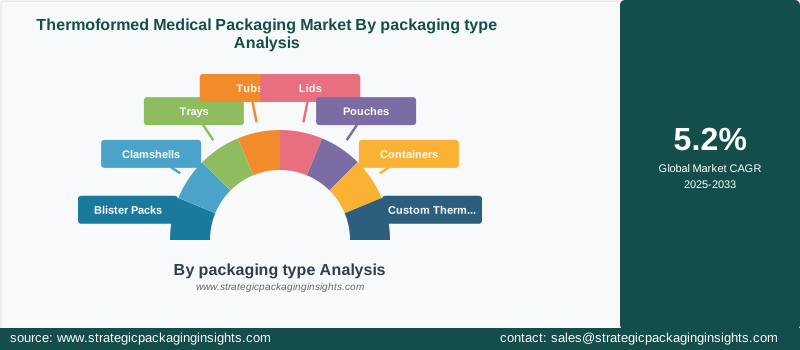
Clamshells and trays are popular for surgical instrument and diagnostic product packaging, offering product protection and ease of use. Tubs and lids are commonly used for laboratory product packaging, providing moisture and contamination prevention. Pouches and containers are versatile packaging solutions, suitable for a wide range of medical applications. The focus on sustainability and the use of eco-friendly materials is influencing packaging type selection, with companies seeking to align with regulatory requirements and consumer preferences.
By Material Type Analysis
The thermoformed medical packaging market is segmented by material type, including polyvinyl chloride (PVC), polyethylene terephthalate (PET), polypropylene (PP), polyethylene (PE), polystyrene (PS), polycarbonate (PC), acrylonitrile butadiene styrene (ABS), and other thermoplastics. PVC is widely used for its excellent clarity and barrier properties, making it suitable for sterile barrier protection and tamper evidence.
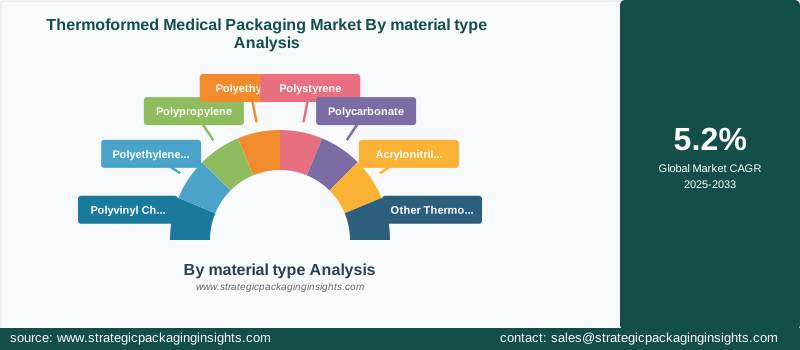
PET is gaining popularity due to its recyclability and superior strength, offering opportunities for sustainable packaging solutions. PP and PE are commonly used for their versatility and cost-effectiveness, suitable for a wide range of medical applications. PS and PC are preferred for their impact resistance and clarity, ideal for packaging that requires product visibility. The focus on sustainability and the use of eco-friendly materials is influencing material selection, with companies seeking to align with regulatory requirements and consumer preferences.
By Product Type Analysis
The thermoformed medical packaging market is segmented by product type, including medical device packaging, pharmaceutical packaging, surgical instrument packaging, diagnostic product packaging, drug delivery device packaging, implant packaging, dental product packaging, and laboratory product packaging. Medical device packaging is the largest segment, driven by the increasing demand for advanced medical devices and the need for sterile barrier protection.
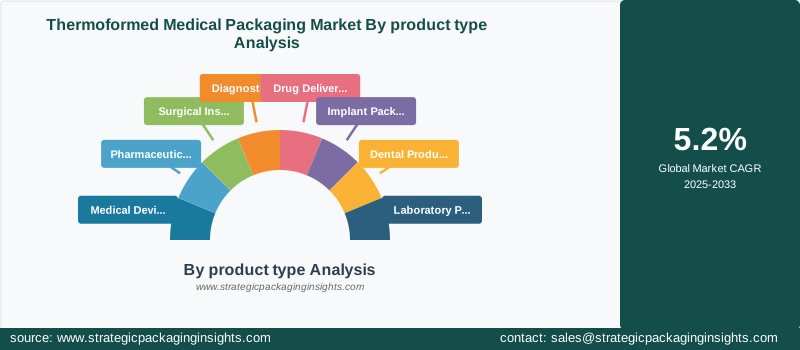
Pharmaceutical packaging is a key segment, with a focus on ensuring product safety and compliance with regulatory standards. Surgical instrument packaging is gaining traction, driven by the need for tamper-evident and contamination prevention solutions. Diagnostic product packaging is also a significant segment, with a focus on product protection and ease of use. The demand for drug delivery device packaging is rising, driven by the increasing adoption of innovative drug delivery systems. The focus on sustainability and the use of eco-friendly materials is influencing product type selection, with companies seeking to align with regulatory requirements and consumer preferences.
By Application Analysis
The thermoformed medical packaging market is segmented by application, including syringes, vials, ampoules, catheters, surgical instruments, implants, diagnostic kits, medical devices, drug delivery systems, and dental instruments. Syringes and vials are widely used for pharmaceutical and medical device packaging, offering sterile barrier protection and tamper evidence.
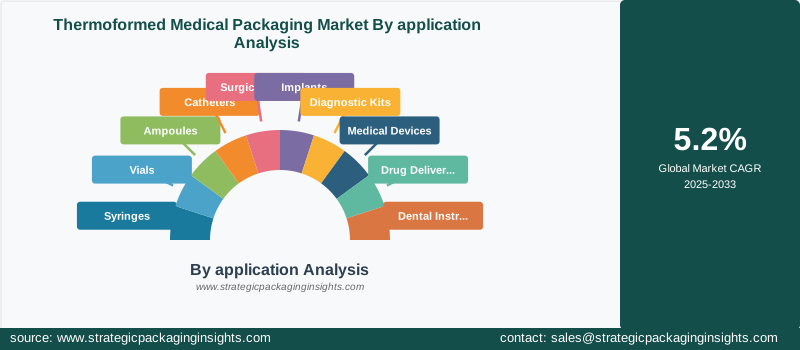
Ampoules and catheters are popular for their ability to provide product protection and ease of use. Surgical instruments and implants are commonly packaged in thermoformed solutions, offering contamination prevention and impact protection. Diagnostic kits and medical devices are significant applications, with a focus on product protection and shelf life extension. The demand for drug delivery systems and dental instruments is rising, driven by the increasing adoption of innovative medical technologies. The focus on sustainability and the use of eco-friendly materials is influencing application selection, with companies seeking to align with regulatory requirements and consumer preferences.
By Sterilization Method Analysis
The thermoformed medical packaging market is segmented by sterilization method, including ethylene oxide sterilization, gamma sterilization, steam sterilization, electron beam sterilization, and other sterilization methods. Ethylene oxide sterilization is widely used for its ability to penetrate packaging materials and ensure product sterility.
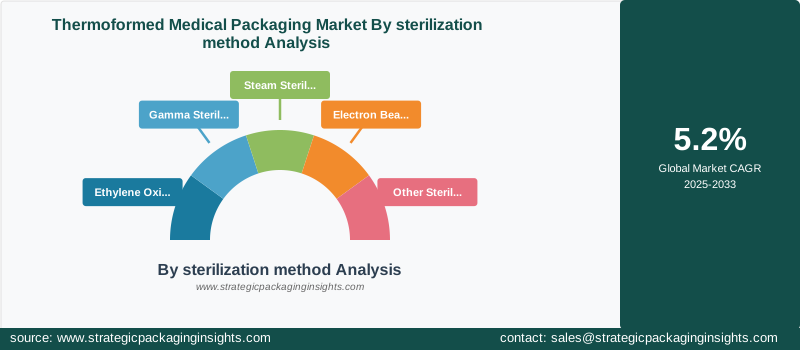
Gamma sterilization is gaining popularity due to its effectiveness and ability to maintain packaging integrity. Steam sterilization is a traditional method, offering cost-effective solutions for certain medical applications. Electron beam sterilization is an emerging method, offering rapid processing and reduced environmental impact. The focus on sustainability and the use of eco-friendly materials is influencing sterilization method selection, with companies seeking to align with regulatory requirements and consumer preferences.
By Packaging Level Analysis
The thermoformed medical packaging market is segmented by packaging level, including primary packaging, secondary packaging, and tertiary packaging. Primary packaging is the most critical level, providing direct contact with the product and ensuring sterile barrier protection and tamper evidence.
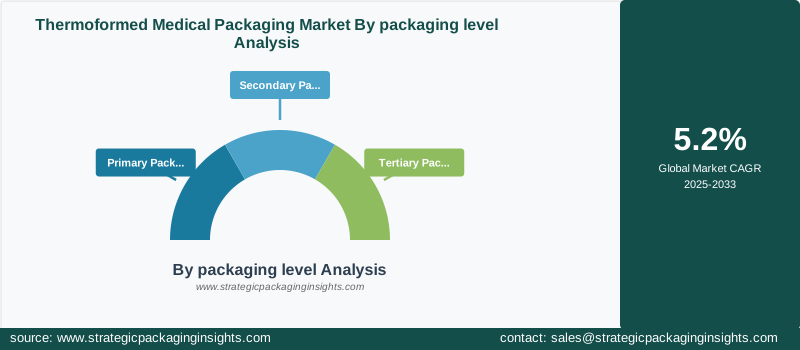
Secondary packaging offers additional protection and branding opportunities, while tertiary packaging is used for bulk transportation and storage. The focus on sustainability and the use of eco-friendly materials is influencing packaging level selection, with companies seeking to align with regulatory requirements and consumer preferences. The demand for innovative packaging solutions that offer product protection and ease of use is rising, driven by the need to ensure product safety and compliance with regulatory standards.
By Functionality Analysis
The thermoformed medical packaging market is segmented by functionality, including sterile barrier protection, tamper evidence, product protection, moisture barrier, oxygen barrier, light protection, contamination prevention, impact protection, and shelf life extension. Sterile barrier protection is the most critical functionality, ensuring product safety and compliance with regulatory standards.
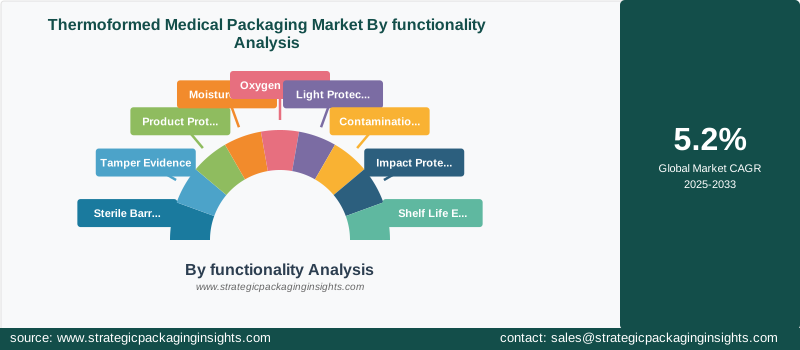
Tamper evidence is gaining importance, driven by the need to prevent contamination and ensure patient safety. Product protection and moisture barrier are essential functionalities, offering protection against environmental factors and extending shelf life. Oxygen barrier and light protection are critical for certain medical applications, ensuring product stability and efficacy. The focus on sustainability and the use of eco-friendly materials is influencing functionality selection, with companies seeking to align with regulatory requirements and consumer preferences.
By End User Analysis
The thermoformed medical packaging market is segmented by end user, including hospitals, pharmaceutical companies, medical device manufacturers, diagnostic laboratories, clinics, research institutions, dental clinics, and healthcare distributors. Hospitals are the largest end user, driven by the need for sterile and tamper-evident packaging solutions to ensure patient safety and compliance with regulatory standards.
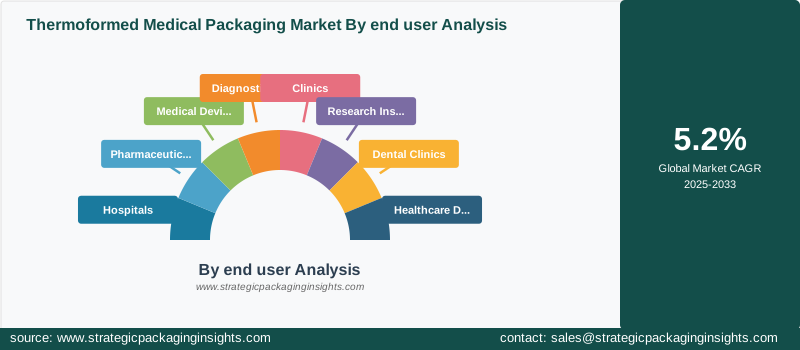
Pharmaceutical companies are a key end user, with a focus on ensuring product safety and compliance with regulatory standards. Medical device manufacturers are also significant end users, driven by the increasing demand for advanced medical devices and the need for sterile barrier protection. Diagnostic laboratories and clinics are important end users, with a focus on product protection and ease of use. The demand for innovative packaging solutions that offer product protection and ease of use is rising, driven by the need to ensure product safety and compliance with regulatory standards.
Thermoformed Medical Packaging Market Segments
The Thermoformed Medical Packaging market has been segmented on the basis ofBy packaging type
- Blister Packs
- Clamshells
- Trays
- Tubs
- Lids
- Pouches
- Containers
- Custom Thermoformed Packaging
By material type
- Polyvinyl Chloride
- Polyethylene Terephthalate
- Polypropylene
- Polyethylene
- Polystyrene
- Polycarbonate
- Acrylonitrile Butadiene Styrene
- Other Thermoplastics
By product type
- Medical Device Packaging
- Pharmaceutical Packaging
- Surgical Instrument Packaging
- Diagnostic Product Packaging
- Drug Delivery Device Packaging
- Implant Packaging
- Dental Product Packaging
- Laboratory Product Packaging
By application
- Syringes
- Vials
- Ampoules
- Catheters
- Surgical Instruments
- Implants
- Diagnostic Kits
- Medical Devices
- Drug Delivery Systems
- Dental Instruments
By sterilization method
- Ethylene Oxide Sterilization
- Gamma Sterilization
- Steam Sterilization
- Electron Beam Sterilization
- Other Sterilization Methods
By packaging level
- Primary Packaging
- Secondary Packaging
- Tertiary Packaging
By functionality
- Sterile Barrier Protection
- Tamper Evidence
- Product Protection
- Moisture Barrier
- Oxygen Barrier
- Light Protection
- Contamination Prevention
- Impact Protection
- Shelf Life Extension
By end user
- Hospitals
- Pharmaceutical Companies
- Medical Device Manufacturers
- Diagnostic Laboratories
- Clinics
- Research Institutions
- Dental Clinics
- Healthcare Distributors
By region
- North America
- Europe
- Asia Pacific
- Latin America
- Middle East and Africa




