


Thermochromic Closure Market Outlook
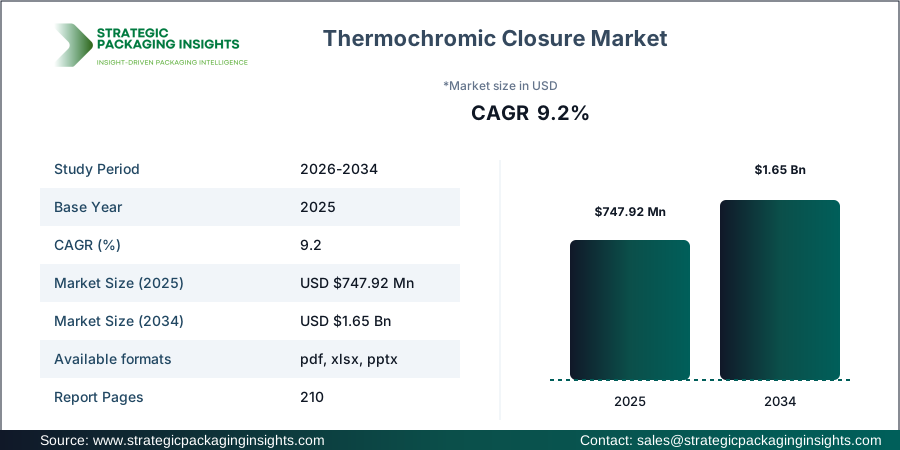
The Thermochromic Closure market was valued at $747.92 million in 2025 and is projected to reach $1.65 billion by 2034, growing at a CAGR of 9.2% during the forecast period 2026-2034. This market is witnessing significant growth due to the increasing demand for innovative packaging solutions that enhance consumer interaction and product safety. Thermochromic closures, which change color with temperature variations, are gaining traction in various industries such as food and beverage, pharmaceuticals, and FMCG. The rising consumer awareness regarding product authenticity and safety is driving the adoption of these closures. Additionally, advancements in material science and technology are enabling the development of more efficient and cost-effective thermochromic solutions, further propelling market growth.
However, the market faces certain challenges that could hinder its growth potential. Regulatory constraints related to the use of specific materials in packaging, particularly in the food and pharmaceutical sectors, pose a significant barrier. Moreover, the high cost of thermochromic materials compared to traditional packaging solutions may limit their widespread adoption, especially among cost-sensitive manufacturers. Despite these challenges, the market holds immense growth potential, driven by the increasing demand for smart packaging solutions and the continuous innovation in thermochromic technologies. Companies are investing in research and development to overcome these challenges and capitalize on the lucrative opportunities in the market.
Report Scope
| Attributes | Details |
| Report Title | Thermochromic Closure Market Size, Future Growth and Forecast 2034 |
| Closure Type | Color-Changing Caps, Smart Closures, Temperature Indicator Closures |
| Material Type | PP, HDPE, Metal, Specialty Polymer |
| Application | Beverages, Pharma, Baby Food, Dairy |
| End Use | Food & Beverage, Healthcare, FMCG |
| Region | Asia Pacific, North America, Latin America, Europe, Middle East & Africa |
| Base Year | 2025 |
| Historic Period | 2018-2024 |
| Forecast Period | 2026-2034 |
| Number of Pages | 210 |
| Customization Available | Yes* |
Opportunities & Threats
The Thermochromic Closure market presents numerous opportunities for growth, primarily driven by the increasing demand for smart packaging solutions. As consumers become more conscious of product safety and authenticity, the need for packaging that can provide real-time information about the product's condition is rising. Thermochromic closures, with their ability to change color based on temperature, offer a unique solution to this demand. This feature not only enhances consumer engagement but also ensures product safety by indicating temperature abuse during storage or transportation. Additionally, the growing trend of personalized packaging is creating new avenues for thermochromic closures, as brands seek to differentiate their products in a competitive market.
Another significant opportunity lies in the expanding application of thermochromic closures in the pharmaceutical industry. With the increasing focus on patient safety and compliance, pharmaceutical companies are adopting innovative packaging solutions that can provide visual cues about the product's condition. Thermochromic closures can play a crucial role in this regard by indicating whether a medication has been stored at the correct temperature, thereby ensuring its efficacy. Furthermore, the rising demand for eco-friendly packaging solutions is driving the development of sustainable thermochromic materials, opening up new growth prospects for the market.
Despite the promising opportunities, the Thermochromic Closure market faces certain threats that could impede its growth. One of the primary challenges is the high cost associated with thermochromic materials, which may deter cost-sensitive manufacturers from adopting these solutions. Additionally, the market is subject to stringent regulatory requirements, particularly in the food and pharmaceutical sectors, where the use of certain materials is restricted. These regulations can pose significant barriers to market entry and expansion. Moreover, the lack of consumer awareness about the benefits of thermochromic closures could limit their adoption, especially in developing regions where traditional packaging solutions are still prevalent.
Drivers & Challenges
The Thermochromic Closure market is primarily driven by the increasing demand for innovative packaging solutions that enhance consumer interaction and product safety. As consumers become more conscious of product authenticity and safety, the need for packaging that can provide real-time information about the product's condition is rising. Thermochromic closures, with their ability to change color based on temperature, offer a unique solution to this demand. This feature not only enhances consumer engagement but also ensures product safety by indicating temperature abuse during storage or transportation. Additionally, advancements in material science and technology are enabling the development of more efficient and cost-effective thermochromic solutions, further propelling market growth.
Another significant driver of the Thermochromic Closure market is the growing trend of personalized packaging. As brands seek to differentiate their products in a competitive market, they are increasingly adopting innovative packaging solutions that can enhance consumer engagement. Thermochromic closures, with their ability to change color based on temperature, offer a unique opportunity for brands to create personalized packaging that stands out on the shelf. Furthermore, the rising demand for eco-friendly packaging solutions is driving the development of sustainable thermochromic materials, opening up new growth prospects for the market.
Despite the promising growth drivers, the Thermochromic Closure market faces certain challenges that could impede its growth. One of the primary challenges is the high cost associated with thermochromic materials, which may deter cost-sensitive manufacturers from adopting these solutions. Additionally, the market is subject to stringent regulatory requirements, particularly in the food and pharmaceutical sectors, where the use of certain materials is restricted. These regulations can pose significant barriers to market entry and expansion. Moreover, the lack of consumer awareness about the benefits of thermochromic closures could limit their adoption, especially in developing regions where traditional packaging solutions are still prevalent.
Market Share Analysis
The Thermochromic Closure market is characterized by a competitive landscape with several key players vying for market share. Companies such as AptarGroup, Berry Global, Silgan Holdings, Bericap, and Guala Closures are leading the market with their innovative product offerings and strong distribution networks. These companies are focusing on research and development to introduce advanced thermochromic solutions that cater to the evolving needs of consumers and industries. Additionally, strategic partnerships and collaborations are common in this market, as companies seek to expand their product portfolios and geographical presence.
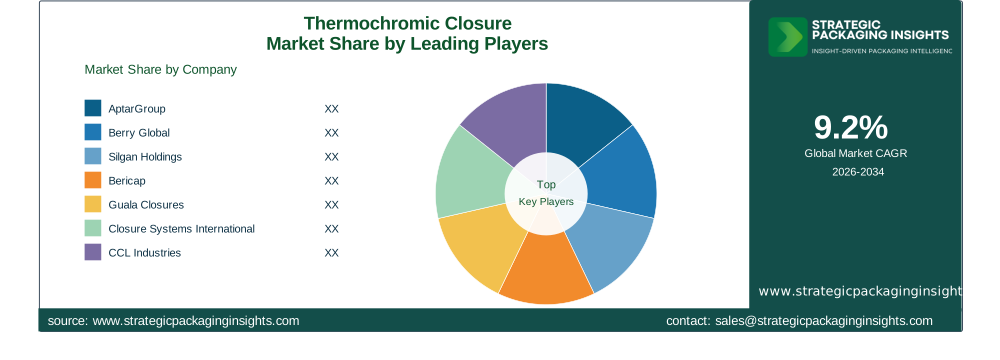
AptarGroup, a prominent player in the Thermochromic Closure market, holds a significant market share due to its extensive product range and strong customer base. The company is known for its innovative packaging solutions that enhance consumer interaction and product safety. Berry Global, another key player, is leveraging its expertise in material science to develop cost-effective and sustainable thermochromic closures. Silgan Holdings, with its focus on product innovation and customer satisfaction, is also a major contributor to the market's growth.
Bericap and Guala Closures are other notable players in the Thermochromic Closure market. Bericap is known for its advanced closure solutions that cater to various industries, including food and beverage, pharmaceuticals, and FMCG. The company's strong focus on research and development has enabled it to introduce innovative thermochromic closures that meet the evolving needs of consumers. Guala Closures, with its extensive product portfolio and strong distribution network, is also a key player in the market. The company is focusing on expanding its geographical presence and enhancing its product offerings to capture a larger market share.
Closure Systems International, CCL Industries, Crown Holdings, Pelliconi, and Weener Plastics are other significant players in the Thermochromic Closure market. These companies are investing in research and development to introduce advanced thermochromic solutions that cater to the evolving needs of consumers and industries. Additionally, strategic partnerships and collaborations are common in this market, as companies seek to expand their product portfolios and geographical presence. The competitive landscape of the Thermochromic Closure market is expected to intensify in the coming years, with companies focusing on innovation and customer satisfaction to gain a competitive edge.
Key Highlights
- The Thermochromic Closure market is projected to grow at a CAGR of 9.2% from 2026 to 2034.
- Increasing demand for smart packaging solutions is driving market growth.
- Advancements in material science are enabling the development of cost-effective thermochromic solutions.
- Regulatory constraints pose a significant barrier to market growth.
- High cost of thermochromic materials may limit their widespread adoption.
- Growing trend of personalized packaging is creating new opportunities for thermochromic closures.
- Expanding application in the pharmaceutical industry is driving demand for thermochromic closures.
- Key players are focusing on research and development to introduce innovative solutions.
- Strategic partnerships and collaborations are common in the market.
- The competitive landscape is expected to intensify in the coming years.
Top Countries Insights
In the Thermochromic Closure market, the United States holds a significant share due to the high demand for innovative packaging solutions in the food and beverage industry. The market in the U.S. is driven by the increasing consumer awareness regarding product safety and authenticity. The presence of key players and the adoption of advanced technologies further contribute to the market's growth. The U.S. market is expected to grow at a CAGR of 8%, with a market size of $450 million.
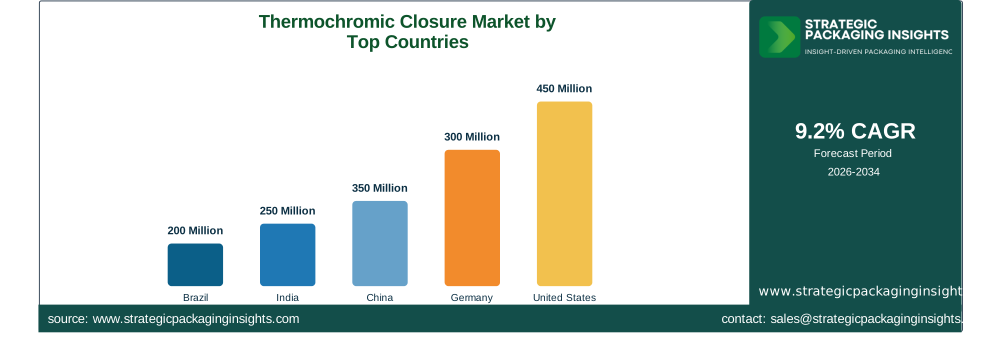
Germany is another prominent market for thermochromic closures, driven by the strong presence of the pharmaceutical industry and the increasing demand for smart packaging solutions. The German market is characterized by stringent regulatory requirements, which drive the adoption of innovative packaging solutions that ensure product safety and compliance. The market in Germany is expected to grow at a CAGR of 7%, with a market size of $300 million.
China is emerging as a key market for thermochromic closures, driven by the rapid growth of the food and beverage industry and the increasing consumer awareness regarding product safety. The Chinese market is characterized by a high demand for cost-effective and sustainable packaging solutions, which is driving the adoption of thermochromic closures. The market in China is expected to grow at a CAGR of 12%, with a market size of $350 million.
India is another growing market for thermochromic closures, driven by the expanding FMCG sector and the increasing demand for innovative packaging solutions. The Indian market is characterized by a high demand for personalized packaging, which is creating new opportunities for thermochromic closures. The market in India is expected to grow at a CAGR of 10%, with a market size of $250 million.
Brazil is also a significant market for thermochromic closures, driven by the growing food and beverage industry and the increasing consumer awareness regarding product safety. The Brazilian market is characterized by a high demand for smart packaging solutions that enhance consumer interaction and product safety. The market in Brazil is expected to grow at a CAGR of 9%, with a market size of $200 million.
Thermochromic Closure Market Segments Insights

Closure Type Analysis
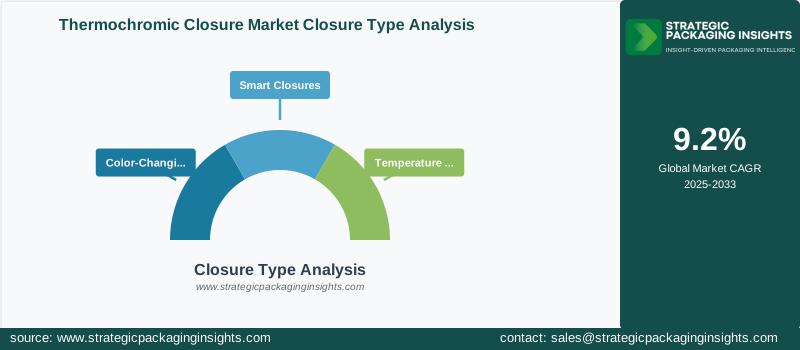
The Thermochromic Closure market is segmented by closure type into color-changing caps, smart closures, and temperature indicator closures. Color-changing caps are gaining popularity due to their ability to provide visual cues about the product's condition, enhancing consumer engagement and product safety. These caps are widely used in the food and beverage industry, where temperature fluctuations can significantly impact product quality. Smart closures, on the other hand, are equipped with advanced features such as QR codes and NFC technology, enabling consumers to access product information and verify authenticity. Temperature indicator closures are particularly popular in the pharmaceutical industry, where maintaining the correct storage temperature is crucial for product efficacy.
The demand for color-changing caps is driven by the increasing consumer awareness regarding product safety and authenticity. These caps offer a cost-effective solution for brands looking to enhance consumer interaction and differentiate their products in a competitive market. Smart closures are gaining traction due to the growing trend of personalized packaging, as they allow brands to create unique and interactive packaging experiences. Temperature indicator closures are witnessing significant demand in the pharmaceutical industry, where they play a crucial role in ensuring product safety and compliance with regulatory requirements.
Material Type Analysis
The Thermochromic Closure market is segmented by material type into PP, HDPE, metal, and specialty polymer. PP and HDPE are the most commonly used materials due to their cost-effectiveness and versatility. These materials are widely used in the food and beverage industry, where they offer excellent barrier properties and durability. Metal closures are preferred in the pharmaceutical industry due to their superior strength and resistance to tampering. Specialty polymers are gaining popularity due to their ability to provide enhanced functionality and sustainability.
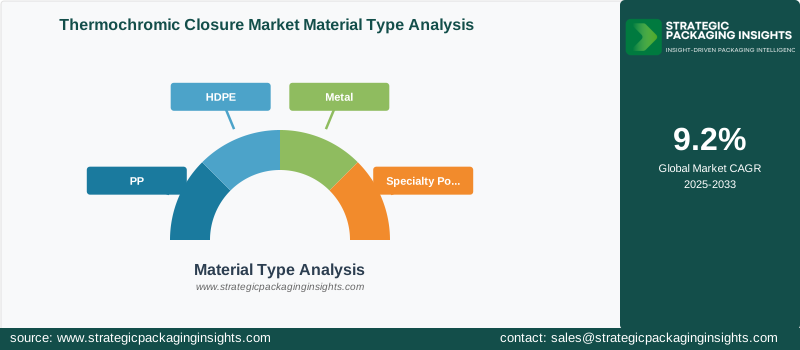
The demand for PP and HDPE closures is driven by the increasing demand for cost-effective and sustainable packaging solutions. These materials offer excellent barrier properties and durability, making them ideal for use in the food and beverage industry. Metal closures are witnessing significant demand in the pharmaceutical industry, where they play a crucial role in ensuring product safety and compliance with regulatory requirements. Specialty polymers are gaining traction due to the growing trend of eco-friendly packaging, as they offer enhanced functionality and sustainability.
Application Analysis
The Thermochromic Closure market is segmented by application into beverages, pharma, baby food, and dairy. The beverage industry is the largest application segment, driven by the increasing demand for innovative packaging solutions that enhance consumer interaction and product safety. Thermochromic closures are widely used in the beverage industry to provide visual cues about the product's condition, ensuring product safety and authenticity. The pharmaceutical industry is another significant application segment, where thermochromic closures play a crucial role in ensuring product safety and compliance with regulatory requirements.
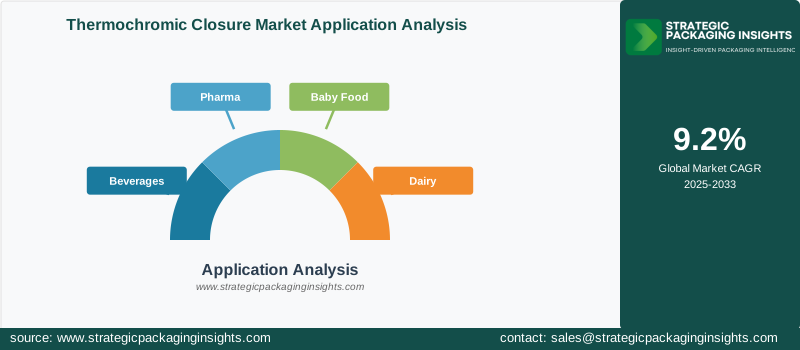
The demand for thermochromic closures in the beverage industry is driven by the increasing consumer awareness regarding product safety and authenticity. These closures offer a cost-effective solution for brands looking to enhance consumer interaction and differentiate their products in a competitive market. The pharmaceutical industry is witnessing significant demand for thermochromic closures due to the increasing focus on patient safety and compliance. Thermochromic closures are also gaining popularity in the baby food and dairy industries, where they play a crucial role in ensuring product safety and quality.
End Use Analysis
The Thermochromic Closure market is segmented by end use into food & beverage, healthcare, and FMCG. The food & beverage industry is the largest end-use segment, driven by the increasing demand for innovative packaging solutions that enhance consumer interaction and product safety. Thermochromic closures are widely used in the food & beverage industry to provide visual cues about the product's condition, ensuring product safety and authenticity. The healthcare industry is another significant end-use segment, where thermochromic closures play a crucial role in ensuring product safety and compliance with regulatory requirements.
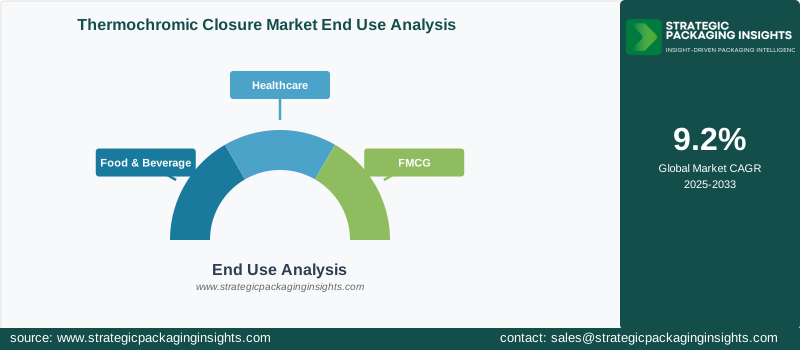
The demand for thermochromic closures in the food & beverage industry is driven by the increasing consumer awareness regarding product safety and authenticity. These closures offer a cost-effective solution for brands looking to enhance consumer interaction and differentiate their products in a competitive market. The healthcare industry is witnessing significant demand for thermochromic closures due to the increasing focus on patient safety and compliance. Thermochromic closures are also gaining popularity in the FMCG sector, where they play a crucial role in ensuring product safety and quality.
Thermochromic Closure Market Segments
The Thermochromic Closure market has been segmented on the basis ofClosure Type
- Color-Changing Caps
- Smart Closures
- Temperature Indicator Closures
Material Type
- PP
- HDPE
- Metal
- Specialty Polymer
Application
- Beverages
- Pharma
- Baby Food
- Dairy
End Use
- Food & Beverage
- Healthcare
- FMCG
Region
- Asia Pacific
- North America
- Latin America
- Europe
- Middle East & Africa




