


Thermal Insulation Packaging Market Outlook
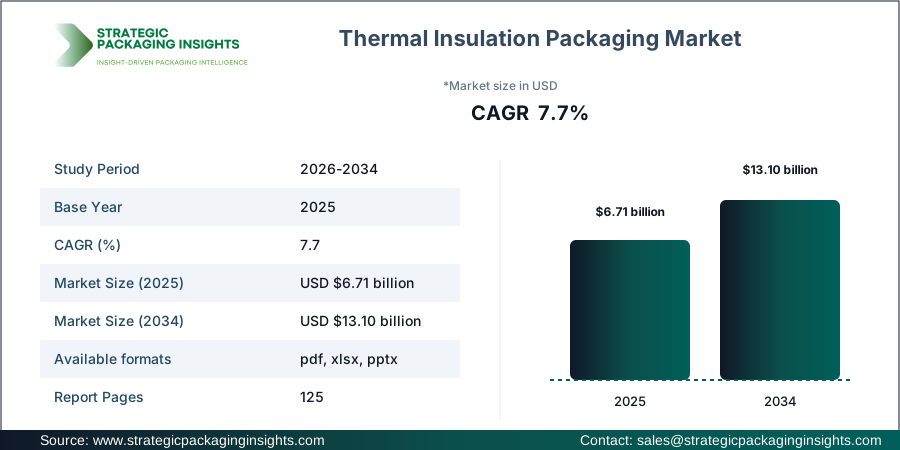
The Thermal Insulation Packaging market was valued at $6.71 billion in 2025 and is projected to reach $13.10 billion by 2034, growing at a CAGR of 7.7% during the forecast period 2026-2034. This market is experiencing significant growth due to the increasing demand for temperature-sensitive products across various industries such as pharmaceuticals, food and beverages, and biotechnology. The rise in e-commerce and the need for efficient cold chain logistics are further propelling the demand for thermal insulation packaging solutions. The market is also driven by technological advancements in packaging materials and the growing awareness of sustainable packaging solutions.
Despite the promising growth prospects, the thermal insulation packaging market faces certain challenges. Regulatory constraints related to packaging waste and environmental concerns are some of the major restraining factors. The high cost of advanced insulation materials and the complexity of maintaining temperature integrity during transportation are additional hurdles. However, the market holds immense potential for growth, driven by the increasing adoption of innovative packaging solutions and the expansion of the cold chain logistics sector. Companies are focusing on developing cost-effective and eco-friendly packaging solutions to overcome these challenges and capitalize on the growing demand.
Report Scope
| Attributes | Details |
| Report Title | Thermal Insulation Packaging Market Size, Future Growth and Forecast 2034 |
| By Product Type | Insulated Boxes, Thermal Liners, Pallet Covers, Insulated Mailers |
| By Material Type | EPS, VIP, PCM, Paper-Based Insulation |
| By Application | Pharma Shipping, Food Delivery, Cold Chain, Biologics |
| By End Use | Healthcare, Food & Beverage, Logistics, Biotechnology |
| Region | Asia Pacific, North America, Latin America, Europe, Middle East & Africa |
| Base Year | 2025 |
| Historic Period | 2018-2024 |
| Forecast Period | 2026-2034 |
| Number of Pages | 125 |
| Customization Available | Yes* |
Opportunities & Threats
The thermal insulation packaging market presents numerous opportunities for growth, primarily driven by the increasing demand for temperature-sensitive products. The pharmaceutical industry, in particular, is witnessing a surge in demand for thermal insulation packaging due to the growing need for safe and efficient transportation of vaccines, biologics, and other temperature-sensitive drugs. The rise in global trade and the expansion of the cold chain logistics sector are further fueling the demand for thermal insulation packaging solutions. Additionally, the increasing focus on sustainability and the development of eco-friendly packaging materials are creating new opportunities for market players to innovate and expand their product offerings.
Another significant opportunity lies in the food and beverage industry, where the demand for thermal insulation packaging is growing due to the increasing popularity of online food delivery services and the need for maintaining the freshness and quality of perishable food items. The rise in consumer awareness regarding food safety and quality is driving the demand for advanced packaging solutions that can ensure temperature integrity during transportation. Moreover, the growing trend of ready-to-eat meals and the expansion of the frozen food segment are further contributing to the demand for thermal insulation packaging.
However, the market also faces certain threats, primarily in the form of regulatory constraints and environmental concerns. The increasing focus on reducing packaging waste and the stringent regulations related to packaging materials pose significant challenges for market players. The high cost of advanced insulation materials and the complexity of maintaining temperature integrity during transportation are additional hurdles that need to be addressed. Companies need to focus on developing cost-effective and sustainable packaging solutions to overcome these challenges and capitalize on the growing demand for thermal insulation packaging.
Drivers & Challenges
The thermal insulation packaging market is driven by several key factors, including the increasing demand for temperature-sensitive products and the expansion of the cold chain logistics sector. The pharmaceutical industry, in particular, is witnessing a surge in demand for thermal insulation packaging due to the growing need for safe and efficient transportation of vaccines, biologics, and other temperature-sensitive drugs. The rise in global trade and the increasing focus on food safety and quality are further fueling the demand for thermal insulation packaging solutions. Additionally, the growing awareness of sustainable packaging solutions and the development of eco-friendly materials are driving innovation and growth in the market.
Technological advancements in packaging materials and the increasing adoption of innovative packaging solutions are also significant drivers of the thermal insulation packaging market. Companies are focusing on developing advanced insulation materials that can provide superior temperature control and protection during transportation. The rise in e-commerce and the increasing popularity of online food delivery services are further contributing to the demand for thermal insulation packaging. Moreover, the growing trend of ready-to-eat meals and the expansion of the frozen food segment are driving the demand for advanced packaging solutions that can ensure temperature integrity and maintain the freshness and quality of perishable food items.
Despite the promising growth prospects, the thermal insulation packaging market faces certain challenges. Regulatory constraints related to packaging waste and environmental concerns are some of the major restraining factors. The high cost of advanced insulation materials and the complexity of maintaining temperature integrity during transportation are additional hurdles. Companies need to focus on developing cost-effective and sustainable packaging solutions to overcome these challenges and capitalize on the growing demand for thermal insulation packaging. The increasing competition in the market and the need for continuous innovation and product development are also significant challenges that need to be addressed.
Market Share Analysis
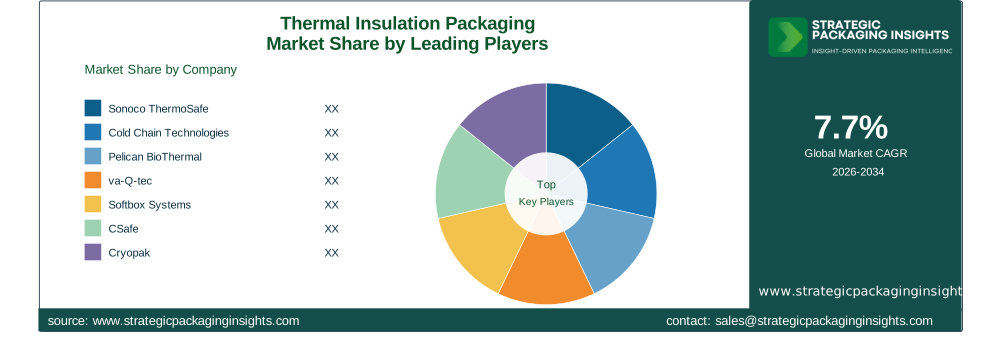
The thermal insulation packaging market is characterized by a highly competitive landscape, with several key players dominating the market. Companies such as Sonoco ThermoSafe, Cold Chain Technologies, Pelican BioThermal, va-Q-tec, and Softbox Systems are some of the major players in the market, holding significant market shares. These companies are focusing on expanding their product portfolios and enhancing their distribution networks to strengthen their market positions. The market is also witnessing the entry of new players, which is intensifying the competition and driving innovation in the market.
Sonoco ThermoSafe is a leading player in the thermal insulation packaging market, offering a wide range of temperature-controlled packaging solutions for various industries, including pharmaceuticals, food and beverages, and biotechnology. The company is known for its innovative packaging solutions and strong focus on sustainability. Cold Chain Technologies is another major player in the market, providing advanced thermal packaging solutions for the safe and efficient transportation of temperature-sensitive products. The company has a strong presence in the pharmaceutical and biotechnology sectors and is known for its high-quality products and services.
Pelican BioThermal is a prominent player in the thermal insulation packaging market, offering a comprehensive range of temperature-controlled packaging solutions for the pharmaceutical and biotechnology industries. The company is known for its innovative products and strong focus on customer satisfaction. va-Q-tec is another key player in the market, providing advanced thermal insulation solutions for various industries, including healthcare, logistics, and food and beverages. The company is known for its high-performance products and strong focus on research and development.
Softbox Systems is a leading provider of temperature-controlled packaging solutions for the pharmaceutical and biotechnology industries. The company is known for its innovative products and strong focus on sustainability. CSafe, Cryopak, Intelsius, TemperPack, and Sealed Air are other major players in the market, offering a wide range of thermal insulation packaging solutions for various industries. These companies are focusing on expanding their product portfolios and enhancing their distribution networks to strengthen their market positions and capitalize on the growing demand for thermal insulation packaging.
Key Highlights
- The thermal insulation packaging market is projected to grow at a CAGR of 7.7% from 2026 to 2034.
- The market is driven by the increasing demand for temperature-sensitive products across various industries.
- Technological advancements in packaging materials are driving innovation and growth in the market.
- The pharmaceutical industry is witnessing a surge in demand for thermal insulation packaging.
- The rise in e-commerce and online food delivery services is fueling the demand for thermal insulation packaging.
- Regulatory constraints and environmental concerns are significant challenges for market players.
- Companies are focusing on developing cost-effective and sustainable packaging solutions.
- The market is characterized by a highly competitive landscape with several key players dominating the market.
- Sonoco ThermoSafe, Cold Chain Technologies, and Pelican BioThermal are some of the major players in the market.
- The market holds immense potential for growth, driven by the expansion of the cold chain logistics sector.
Top Countries Insights
In the thermal insulation packaging market, the United States stands out as a key player, with a market size of approximately $2.5 billion and a CAGR of 6%. The country's robust pharmaceutical industry and the increasing demand for temperature-sensitive products are major growth drivers. The presence of leading market players and the expansion of the cold chain logistics sector further contribute to the market's growth. However, regulatory constraints related to packaging waste and environmental concerns pose significant challenges.
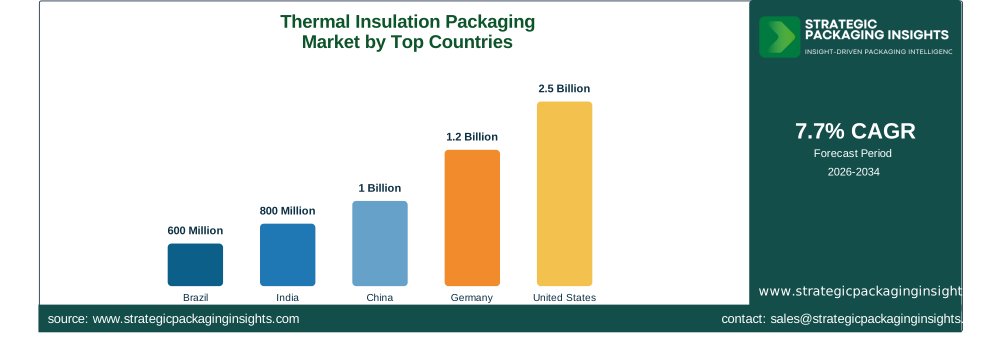
Germany is another significant market for thermal insulation packaging, with a market size of around $1.2 billion and a CAGR of 5%. The country's strong focus on sustainability and the development of eco-friendly packaging materials are driving innovation and growth in the market. The expansion of the food and beverage industry and the increasing demand for temperature-controlled packaging solutions are further fueling the market's growth. However, the high cost of advanced insulation materials and the complexity of maintaining temperature integrity during transportation are significant challenges.
China is a rapidly growing market for thermal insulation packaging, with a market size of approximately $1 billion and a CAGR of 8%. The country's expanding pharmaceutical and biotechnology industries and the increasing demand for temperature-sensitive products are major growth drivers. The rise in e-commerce and the increasing popularity of online food delivery services are further contributing to the market's growth. However, regulatory constraints and environmental concerns pose significant challenges for market players.
India is another emerging market for thermal insulation packaging, with a market size of around $800 million and a CAGR of 9%. The country's growing pharmaceutical industry and the increasing demand for temperature-controlled packaging solutions are major growth drivers. The expansion of the cold chain logistics sector and the increasing focus on food safety and quality are further fueling the market's growth. However, the high cost of advanced insulation materials and the complexity of maintaining temperature integrity during transportation are significant challenges.
Brazil is a key market for thermal insulation packaging in Latin America, with a market size of approximately $600 million and a CAGR of 7%. The country's expanding food and beverage industry and the increasing demand for temperature-controlled packaging solutions are major growth drivers. The rise in consumer awareness regarding food safety and quality is further contributing to the market's growth. However, regulatory constraints and environmental concerns pose significant challenges for market players.
Thermal Insulation Packaging Market Segments Insights

Product Type Analysis
The thermal insulation packaging market is segmented by product type into insulated boxes, thermal liners, pallet covers, and insulated mailers. Insulated boxes are the most widely used product type, driven by their ability to provide superior temperature control and protection during transportation. The increasing demand for temperature-sensitive products in the pharmaceutical and food and beverage industries is fueling the demand for insulated boxes. Thermal liners are also gaining popularity due to their cost-effectiveness and ease of use. The rise in e-commerce and the increasing popularity of online food delivery services are further contributing to the demand for thermal liners. Pallet covers and insulated mailers are also witnessing significant demand, driven by the expansion of the cold chain logistics sector and the increasing focus on food safety and quality.
Technological advancements in packaging materials and the increasing adoption of innovative packaging solutions are driving growth in the product type segment. Companies are focusing on developing advanced insulation materials that can provide superior temperature control and protection during transportation. The growing awareness of sustainable packaging solutions and the development of eco-friendly materials are also driving innovation and growth in the market. However, the high cost of advanced insulation materials and the complexity of maintaining temperature integrity during transportation are significant challenges that need to be addressed.
Material Type Analysis
The thermal insulation packaging market is segmented by material type into EPS, VIP, PCM, and paper-based insulation. EPS is the most widely used material type, driven by its cost-effectiveness and excellent insulation properties. The increasing demand for temperature-sensitive products in the pharmaceutical and food and beverage industries is fueling the demand for EPS. VIP and PCM are also gaining popularity due to their superior insulation properties and ability to maintain temperature integrity during transportation. The rise in e-commerce and the increasing popularity of online food delivery services are further contributing to the demand for VIP and PCM. Paper-based insulation is also witnessing significant demand, driven by the growing awareness of sustainable packaging solutions and the development of eco-friendly materials.
Technological advancements in packaging materials and the increasing adoption of innovative packaging solutions are driving growth in the material type segment. Companies are focusing on developing advanced insulation materials that can provide superior temperature control and protection during transportation. The growing awareness of sustainable packaging solutions and the development of eco-friendly materials are also driving innovation and growth in the market. However, the high cost of advanced insulation materials and the complexity of maintaining temperature integrity during transportation are significant challenges that need to be addressed.
Application Analysis
The thermal insulation packaging market is segmented by application into pharma shipping, food delivery, cold chain, and biologics. Pharma shipping is the largest application segment, driven by the increasing demand for temperature-sensitive products in the pharmaceutical industry. The rise in global trade and the expansion of the cold chain logistics sector are further fueling the demand for thermal insulation packaging solutions in pharma shipping. Food delivery is another significant application segment, driven by the increasing popularity of online food delivery services and the need for maintaining the freshness and quality of perishable food items. The rise in consumer awareness regarding food safety and quality is driving the demand for advanced packaging solutions that can ensure temperature integrity during transportation.
Cold chain and biologics are also witnessing significant demand, driven by the expansion of the cold chain logistics sector and the increasing focus on food safety and quality. The growing trend of ready-to-eat meals and the expansion of the frozen food segment are further contributing to the demand for thermal insulation packaging in cold chain and biologics. However, the high cost of advanced insulation materials and the complexity of maintaining temperature integrity during transportation are significant challenges that need to be addressed.
End Use Analysis
The thermal insulation packaging market is segmented by end use into healthcare, food & beverage, logistics, and biotechnology. Healthcare is the largest end-use segment, driven by the increasing demand for temperature-sensitive products in the pharmaceutical industry. The rise in global trade and the expansion of the cold chain logistics sector are further fueling the demand for thermal insulation packaging solutions in healthcare. Food & beverage is another significant end-use segment, driven by the increasing popularity of online food delivery services and the need for maintaining the freshness and quality of perishable food items. The rise in consumer awareness regarding food safety and quality is driving the demand for advanced packaging solutions that can ensure temperature integrity during transportation.
Logistics and biotechnology are also witnessing significant demand, driven by the expansion of the cold chain logistics sector and the increasing focus on food safety and quality. The growing trend of ready-to-eat meals and the expansion of the frozen food segment are further contributing to the demand for thermal insulation packaging in logistics and biotechnology. However, the high cost of advanced insulation materials and the complexity of maintaining temperature integrity during transportation are significant challenges that need to be addressed.
Thermal Insulation Packaging Market Segments
The Thermal Insulation Packaging market has been segmented on the basis ofBy Product Type
- Insulated Boxes
- Thermal Liners
- Pallet Covers
- Insulated Mailers
By Material Type
- EPS
- VIP
- PCM
- Paper-Based Insulation
By Application
- Pharma Shipping
- Food Delivery
- Cold Chain
- Biologics
By End Use
- Healthcare
- Food & Beverage
- Logistics
- Biotechnology
Region
- Asia Pacific
- North America
- Latin America
- Europe
- Middle East & Africa




