


Thermal Insulated Bubble Wrap Market Outlook
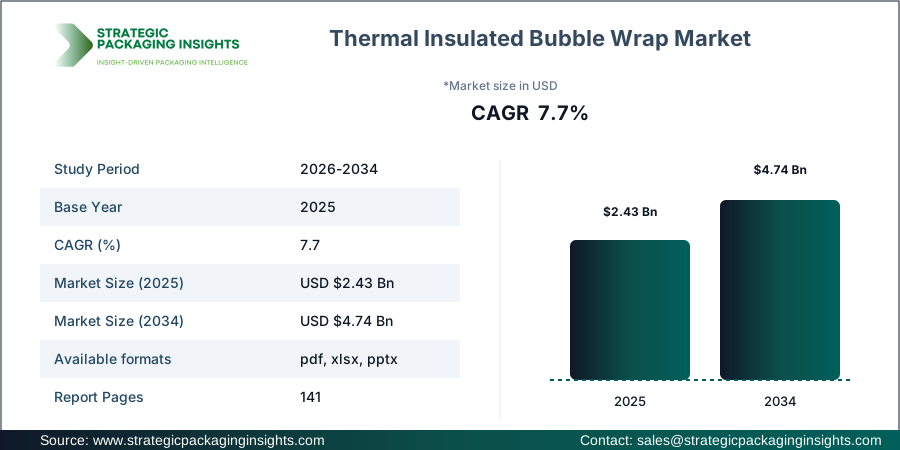
The Thermal Insulated Bubble Wrap market size was valued at USD 2.43 billion in 2025 and is anticipated to reach USD 4.74 billion by 2034, growing at a CAGR of 7.7% during the forecast period according to Strategic Packaging Insights. The market is witnessing significant growth due to the increasing demand for efficient packaging solutions that provide thermal insulation. Sealed Air, a leading player in the market, has been at the forefront of innovation, offering advanced bubble wrap solutions that cater to various industries. The rising e-commerce sector, coupled with the need for temperature-sensitive packaging, is driving the demand for thermal insulated bubble wrap. Additionally, the growing awareness about sustainable packaging solutions is further propelling market growth.
One of the most impactful drivers of the Thermal Insulated Bubble Wrap market is the increasing emphasis on reducing food wastage and maintaining the quality of perishable goods during transportation. According to the United Nations, approximately one-third of the food produced globally is wasted, and efficient packaging solutions like thermal insulated bubble wrap can significantly reduce this wastage by maintaining the required temperature during transit. Companies like Pregis are investing in research and development to create more effective and environmentally friendly packaging solutions, which is expected to drive market growth. The focus on sustainability and the adoption of recyclable materials in packaging are also contributing to the market's expansion.
Report Scope
| Attributes | Details |
| Report Title | Thermal Insulated Bubble Wrap Market Size, Future Growth and Forecast 2034 |
| By Product Type | Foil Bubble Wrap, Recyclable Bubble Wrap, Bubble Mailer Rolls |
| By Material Type | PE Bubble, Aluminum Foil, Recycled Film, Paper-Based Insulation |
| By Application | Cold Chain, Food Delivery, Pharma Shipping, E-commerce |
| By End Use | Healthcare, Food & Beverage, Logistics, Retail |
| Region | Asia Pacific, North America, Latin America, Europe, Middle East & Africa |
| Base Year | 2025 |
| Historic Period | 2018-2024 |
| Forecast Period | 2026-2034 |
| Number of Pages | 141 |
| Customization Available | Yes* |
Opportunities & Threats
The Thermal Insulated Bubble Wrap market presents numerous opportunities, particularly in the realm of e-commerce and online food delivery services. With the surge in online shopping, there is an increasing demand for packaging solutions that ensure the safe and temperature-controlled delivery of products. Companies like Storopack are capitalizing on this trend by developing innovative packaging solutions that cater to the specific needs of e-commerce businesses. The growing trend of online grocery shopping and meal kit deliveries is further boosting the demand for thermal insulated bubble wrap, as these services require packaging that can maintain the freshness and quality of perishable items during transit.
Another significant opportunity lies in the pharmaceutical industry, where the need for temperature-sensitive packaging is paramount. The transportation of vaccines, biologics, and other temperature-sensitive pharmaceuticals requires reliable packaging solutions that can maintain the required temperature range. Companies like Sonoco ThermoSafe are focusing on developing advanced thermal insulated bubble wrap solutions that cater to the specific needs of the pharmaceutical industry. The increasing investment in healthcare infrastructure and the growing demand for pharmaceuticals in emerging markets are expected to drive the demand for thermal insulated bubble wrap in this sector.
However, the market also faces certain threats, primarily related to environmental concerns and regulatory challenges. The increasing scrutiny on plastic usage and the push for sustainable packaging solutions pose a challenge for manufacturers of thermal insulated bubble wrap. Companies are under pressure to develop eco-friendly alternatives that meet regulatory requirements and consumer expectations. The high cost of raw materials and the complexity of recycling processes for certain types of bubble wrap can also hinder market growth. To address these challenges, companies are investing in research and development to create innovative, sustainable packaging solutions that minimize environmental impact.
Drivers & Challenges
The primary driver of the Thermal Insulated Bubble Wrap market is the growing demand for temperature-sensitive packaging solutions across various industries. The food and beverage industry, in particular, is witnessing a surge in demand for thermal insulated bubble wrap due to the increasing focus on reducing food wastage and maintaining product quality during transportation. Companies like PAC Worldwide are leveraging this trend by offering innovative packaging solutions that cater to the specific needs of the food and beverage industry. The rise in online food delivery services and the growing popularity of meal kit deliveries are further driving the demand for thermal insulated bubble wrap.
Another significant driver is the increasing emphasis on sustainability and the adoption of eco-friendly packaging solutions. Consumers are becoming more environmentally conscious, and there is a growing demand for packaging solutions that are recyclable and have a minimal environmental impact. Companies like EcoEnclose are leading the way in developing sustainable packaging solutions that meet consumer expectations and regulatory requirements. The focus on reducing plastic waste and the adoption of recyclable materials in packaging are expected to drive market growth in the coming years.
Despite the positive growth prospects, the Thermal Insulated Bubble Wrap market faces several challenges. One of the primary challenges is the high cost of raw materials, which can impact the profitability of manufacturers. The fluctuating prices of raw materials, such as polyethylene and aluminum foil, can pose a challenge for companies in maintaining competitive pricing. Additionally, the complexity of recycling processes for certain types of bubble wrap can hinder the adoption of sustainable packaging solutions. Companies are investing in research and development to address these challenges and create innovative, cost-effective packaging solutions that meet consumer and regulatory demands.
Market Growth Factors
- The EU Packaging and Packaging Waste Regulation entered into force on February 11, 2025 and generally applies from August 12, 2026, adding requirements around packaging design, recoverability, and empty-space reduction in transport and e-commerce packaging. This is pushing shippers toward lighter, more material-efficient insulated wraps and cushioning formats. [European Commission ]
- U.S. retail e-commerce continues to expand, with the Census Bureau reporting first-quarter 2026 e-commerce sales of 6.7 billion, up 9.8% year over year. Rising parcel fulfillment volumes support recurring demand for lightweight protective bubble materials, insulated mailers, and thermal wrap used in direct-to-consumer shipping.
- Pharmaceutical and life-science cold-chain shipping is shifting away from EPS toward validated sustainable thermal packaging. TemperPack’s 2025 Qualified Shipper Program was launched specifically to help pharma manufacturers, distributors, specialty pharmacies, and biotech companies transition to ISTA-qualified thermal shippers across 2–8°C, 15–25°C, and -20°C ranges.
- U.S. state and local adoption of newer energy codes remains an ongoing demand driver for reflective bubble insulation in roofs, walls, metal buildings, and ducts. DOE continues to track adoption against the IECC and ASHRAE 90.1 framework, which keeps thermal-performance and compliance requirements active across construction markets.
- ASTM maintains active specifications and installation practices for reflective insulation, including C1224 for building applications, C727-19(2024) for installation and use, and E2231-25 for pipe and duct insulation fire-test specimen preparation. These standards support code acceptance and reduce qualification friction for reflective bubble insulation products.
- Manufacturers are expanding North American film and insulation-related capacity. In May 2026, Balcan Innovations commissioned new W&H and Bandera extrusion lines in Wisconsin, citing higher 5-layer film capacity, stronger manufacturing redundancy, and improved PCR incorporation, which supports supply availability for PE-film-based protective wraps and reflective insulation products.
- Brand owners are replacing harder-to-recycle plastic cushioning with locally made recyclable alternatives. Visy’s March 2026 launch of Paper Bubble wrap, positioned as a substitute for plastic bubble wrap and produced from Australian paper, reflects growing commercial demand for lower-plastic protective wrap solutions. [Visy ]
Recent Developments
- In April 2025, Visy announced Visycell, a fibre-based thermal insulation liner made from cardboard waste offcuts in Melbourne’s west and trialed with food delivery businesses as a recyclable alternative to expanded polystyrene for temperature-sensitive food and beverage shipments. [Visy ]
- In December 2025, Sealed Air introduced the BUBBLE WRAP® Brand Universal Inflation System, a single inflator designed to run more than 80 on-demand BUBBLE WRAP® materials, including recycled-content films, across cushioning, wrapping, pouch, and void-fill applications.
- In February 2026, Vybond launched 444 HVAC Bubble Wrap Tape, a purpose-built product for securing reflective bubble wrap insulation in HVAC applications, alongside its 555 Clear FlexFix® tape expansion. [Vybond ]
- In March 2026, Visy launched Australian-made Paper Bubble wrap, a curbside-recyclable alternative to plastic bubble wrap produced at its Reservoir plant using paper from its Tumut mill, reinforcing the shift toward lower-plastic protective wrap formats.
Market Share Analysis
The competitive landscape of the Thermal Insulated Bubble Wrap market is characterized by the presence of several key players who are driving innovation and growth in the industry. Companies like Sealed Air, Pregis, and Storopack hold significant market shares and are continuously investing in research and development to enhance their product offerings. These companies are focusing on developing advanced packaging solutions that cater to the specific needs of various industries, including food and beverage, healthcare, and logistics. The emphasis on sustainability and the adoption of eco-friendly materials are key strategies employed by these companies to maintain their competitive edge.
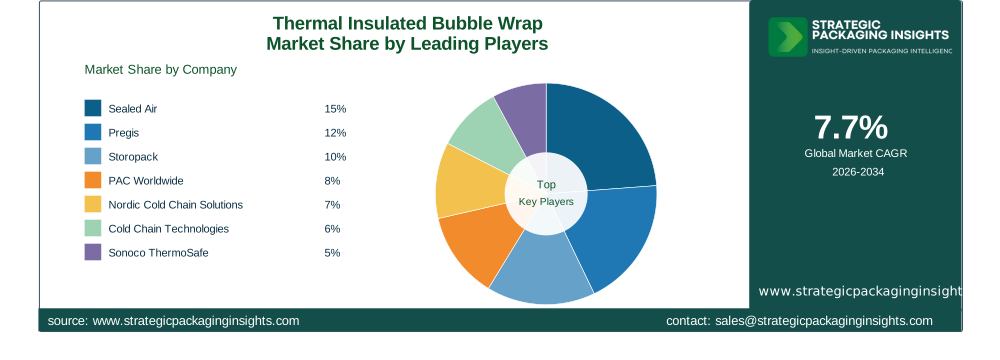
Sealed Air is a leading player in the market, known for its innovative packaging solutions that provide superior thermal insulation. The company has a strong global presence and is continuously expanding its product portfolio to cater to the growing demand for sustainable packaging solutions. Pregis, another major player, is focused on developing recyclable and environmentally friendly packaging solutions that meet consumer and regulatory demands. The company's commitment to sustainability and innovation has helped it maintain a strong position in the market.
Storopack is renowned for its advanced packaging solutions that cater to the specific needs of the e-commerce and logistics industries. The company's focus on innovation and sustainability has enabled it to capture a significant share of the market. PAC Worldwide is another key player, known for its high-quality packaging solutions that provide superior thermal insulation. The company's emphasis on research and development and its commitment to sustainability have helped it maintain a competitive edge in the market.
Nordic Cold Chain Solutions and Cold Chain Technologies are prominent players in the pharmaceutical packaging sector, offering advanced thermal insulated bubble wrap solutions that cater to the specific needs of the industry. These companies are focused on developing innovative packaging solutions that ensure the safe and temperature-controlled transportation of pharmaceuticals. The growing demand for temperature-sensitive packaging solutions in the healthcare industry is expected to drive the growth of these companies in the coming years.
Key Highlights
- The Thermal Insulated Bubble Wrap market is projected to grow at a CAGR of 7.7% from 2025 to 2034.
- Sealed Air, Pregis, and Storopack are leading players in the market, known for their innovative packaging solutions.
- The increasing demand for temperature-sensitive packaging solutions is driving market growth.
- The e-commerce and online food delivery sectors present significant growth opportunities for the market.
- Environmental concerns and regulatory challenges pose threats to market growth.
- Companies are focusing on developing sustainable and eco-friendly packaging solutions.
- The pharmaceutical industry is a key end-user of thermal insulated bubble wrap, driving demand for temperature-sensitive packaging solutions.
Thermal Insulated Bubble Wrap Market Segments Insights

By Product Type Analysis
The Thermal Insulated Bubble Wrap market is segmented by product type into Foil Bubble Wrap, Recyclable Bubble Wrap, and Bubble Mailer Rolls. Foil Bubble Wrap is gaining popularity due to its superior thermal insulation properties, making it ideal for temperature-sensitive applications. Companies like Sealed Air are focusing on developing advanced foil bubble wrap solutions that cater to the specific needs of various industries. Recyclable Bubble Wrap is also witnessing significant demand, driven by the increasing emphasis on sustainability and the adoption of eco-friendly packaging solutions. The growing awareness about the environmental impact of packaging materials is encouraging companies to develop recyclable alternatives that meet consumer and regulatory demands.
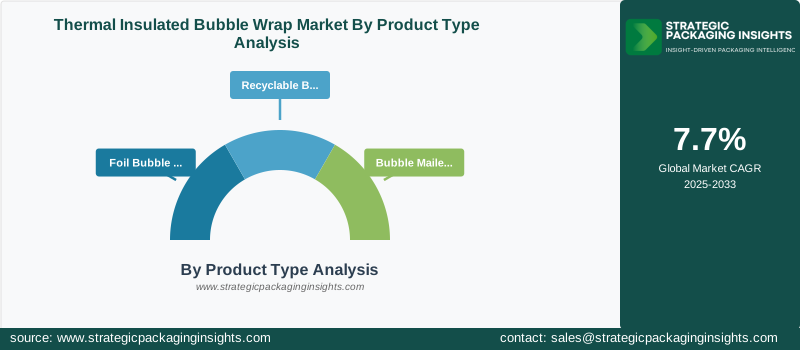
Bubble Mailer Rolls are widely used in the e-commerce and logistics industries, providing a cost-effective and efficient packaging solution for the safe transportation of products. The rise in online shopping and the increasing demand for secure packaging solutions are driving the growth of this segment. Companies like Storopack are capitalizing on this trend by offering innovative bubble mailer roll solutions that cater to the specific needs of e-commerce businesses. The focus on reducing packaging waste and the adoption of sustainable materials are expected to drive the growth of the bubble mailer rolls segment in the coming years.
By Material Type Analysis
The market is segmented by material type into PE Bubble, Aluminum Foil, Recycled Film, and Paper-Based Insulation. PE Bubble is the most commonly used material in thermal insulated bubble wrap, offering excellent thermal insulation properties and cost-effectiveness. Companies like Pregis are focusing on developing advanced PE bubble solutions that cater to the specific needs of various industries. Aluminum Foil is also gaining popularity due to its superior thermal insulation properties, making it ideal for temperature-sensitive applications. The growing demand for aluminum foil-based packaging solutions is driven by the increasing emphasis on reducing food wastage and maintaining product quality during transportation.
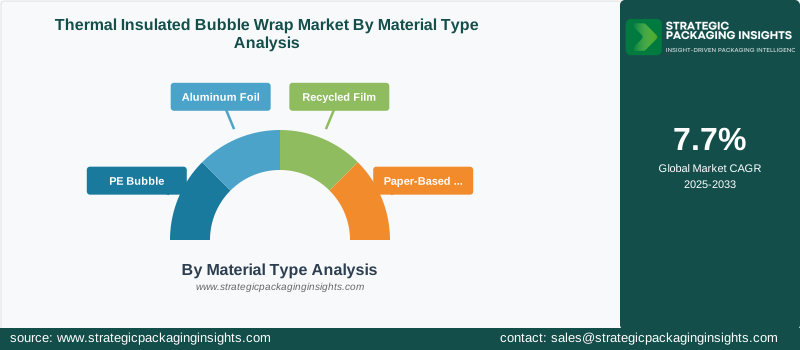
Recycled Film and Paper-Based Insulation are witnessing significant demand, driven by the increasing focus on sustainability and the adoption of eco-friendly packaging solutions. Companies like EcoEnclose are leading the way in developing innovative recycled film and paper-based insulation solutions that meet consumer and regulatory demands. The focus on reducing plastic waste and the adoption of sustainable materials are expected to drive the growth of these segments in the coming years. The increasing investment in research and development to create innovative, sustainable packaging solutions is expected to drive market growth.
By Application Analysis
The Thermal Insulated Bubble Wrap market is segmented by application into Cold Chain, Food Delivery, Pharma Shipping, and E-commerce. The Cold Chain segment is witnessing significant growth, driven by the increasing demand for temperature-sensitive packaging solutions in the food and pharmaceutical industries. Companies like Sonoco ThermoSafe are focusing on developing advanced cold chain packaging solutions that cater to the specific needs of these industries. The growing emphasis on reducing food wastage and maintaining product quality during transportation is driving the demand for thermal insulated bubble wrap in the cold chain segment.
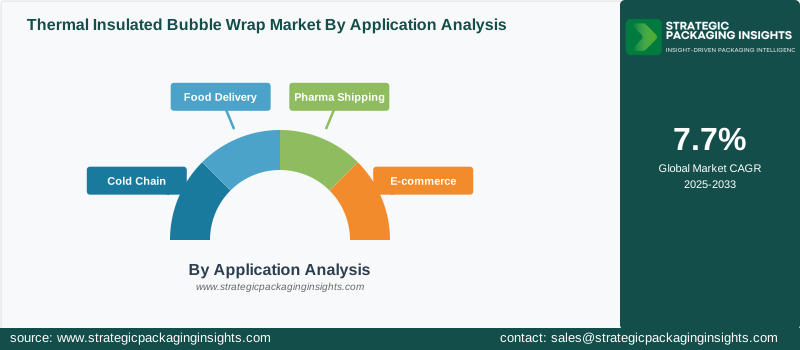
The Food Delivery and E-commerce segments are also witnessing significant demand, driven by the rise in online shopping and the increasing demand for secure packaging solutions. Companies like PAC Worldwide are capitalizing on this trend by offering innovative packaging solutions that cater to the specific needs of the food delivery and e-commerce industries. The focus on reducing packaging waste and the adoption of sustainable materials are expected to drive the growth of these segments in the coming years. The increasing investment in research and development to create innovative, sustainable packaging solutions is expected to drive market growth.
By End Use Analysis
The market is segmented by end use into Healthcare, Food & Beverage, Logistics, and Retail. The Healthcare segment is witnessing significant growth, driven by the increasing demand for temperature-sensitive packaging solutions in the pharmaceutical industry. Companies like Cold Chain Technologies are focusing on developing advanced packaging solutions that cater to the specific needs of the healthcare industry. The growing investment in healthcare infrastructure and the increasing demand for pharmaceuticals in emerging markets are expected to drive the demand for thermal insulated bubble wrap in this segment.
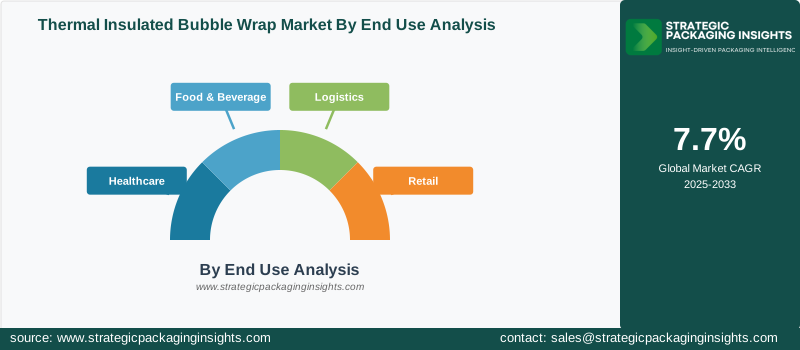
The Food & Beverage and Logistics segments are also witnessing significant demand, driven by the increasing focus on reducing food wastage and maintaining product quality during transportation. Companies like Ranpak are capitalizing on this trend by offering innovative packaging solutions that cater to the specific needs of the food and beverage and logistics industries. The focus on reducing packaging waste and the adoption of sustainable materials are expected to drive the growth of these segments in the coming years. The increasing investment in research and development to create innovative, sustainable packaging solutions is expected to drive market growth.
Thermal Insulated Bubble Wrap Market Segments
The Thermal Insulated Bubble Wrap market has been segmented on the basis ofBy Product Type
- Foil Bubble Wrap
- Recyclable Bubble Wrap
- Bubble Mailer Rolls
By Material Type
- PE Bubble
- Aluminum Foil
- Recycled Film
- Paper-Based Insulation
By Application
- Cold Chain
- Food Delivery
- Pharma Shipping
- E-commerce
By End Use
- Healthcare
- Food & Beverage
- Logistics
- Retail
Region
- Asia Pacific
- North America
- Latin America
- Europe
- Middle East & Africa




