


Textile Transfer Paper Market Outlook
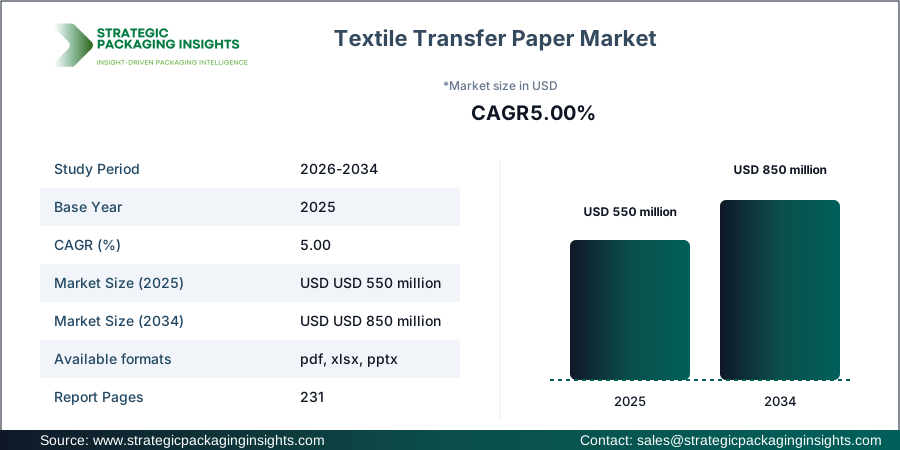
The Textile Transfer Paper market size was valued at USD 550 million in 2025 and is anticipated to reach USD 850 million by 2034, growing at a CAGR of 5.00% during the forecast period according to Strategic Packaging Insights. This growth is driven by the increasing demand for customized apparel and home textiles, which has led to a surge in the use of textile transfer papers. Companies like Sappi and Felix Schoeller are at the forefront of this market, leveraging advanced technologies to enhance product quality and meet the evolving needs of consumers. The market is also benefiting from the rising popularity of digital printing technologies, which offer high-quality prints and greater design flexibility.
One of the most impactful drivers of the Textile Transfer Paper market is the growing trend towards sustainable and eco-friendly printing solutions. As consumers become more environmentally conscious, there is a significant shift towards using transfer papers that are recyclable and made from sustainable materials. This trend is supported by government regulations and initiatives aimed at reducing carbon footprints and promoting sustainable practices. Companies like Neenah Coldenhove and Ahlstrom are investing in research and development to create innovative products that align with these sustainability goals, thereby enhancing their market position and driving growth.
Report Scope
| Attributes | Details |
| Report Title | Textile Transfer Paper Market Size, Future Growth and Forecast 2034 |
| By Type | Dye Sublimation Transfer Paper, Heat Transfer Paper (Light Fabrics), Heat Transfer Paper (Dark Fabrics), Laser Transfer Paper, Inkjet Transfer Paper |
| By Weight | Below 80 GSM, 80-120 GSM, Above 120 GSM |
| By Application | Sportswear & Activewear, Fashion Apparel, Home Textiles (Curtains, Upholstery), Flags & Banners, Promotional Products |
| By Printing Technology | Inkjet (Water-Based), Laser, Offset |
| By Region | North America (U.S., Canada, Mexico), Europe (Germany, UK, France, Italy, Spain, Rest of Europe), Asia Pacific (China, India, Japan, South Korea, Australia, Rest of Asia Pacific), Latin America (Brazil, Argentina, Rest of Latin America), Middle East & Africa (GCC Countries, South Africa, Rest of MEA) |
| Base Year | 2025 |
| Historic Period | 2018-2024 |
| Forecast Period | 2026-2034 |
| Number of Pages | 231 |
| Customization Available | Yes* |
Sustainability & Circular Economy Analysis
Sustainability initiatives are significantly shaping the Textile Transfer Paper market, as companies strive to meet consumer demand for eco-friendly products. The use of recyclable materials and the development of reusable packaging solutions are becoming increasingly important. Companies are focusing on lightweight packaging to reduce material usage and transportation costs, which also contributes to a lower carbon footprint. Innovations in eco-friendly materials are driving the market forward, as manufacturers seek to create products that are both sustainable and high-performing.
Extended Producer Responsibility (EPR) is another key factor influencing the market, as regulations require manufacturers to take responsibility for the entire lifecycle of their products. This has led to the adoption of waste reduction strategies and the implementation of ESG initiatives. As a result, companies are investing in sustainable packaging design and manufacturing processes to comply with these regulations and enhance their long-term competitiveness. The focus on reducing carbon emissions and promoting sustainable practices is also influencing investment decisions and supply chain strategies.
Consumer preferences for sustainable products are driving changes in packaging design and manufacturing. Companies are increasingly adopting circular economy practices, which involve designing products for reuse and recycling. This approach not only reduces waste but also enhances brand reputation and customer loyalty. As sustainability becomes a key differentiator in the market, companies that prioritize eco-friendly practices are likely to gain a competitive edge. The integration of sustainability into business strategies is essential for regulatory compliance and long-term market success.
Packaging Value Chain & Supply Chain Analysis
The packaging value chain in the Textile Transfer Paper market is complex, involving multiple stakeholders from raw material suppliers to end-users. Raw material sourcing is a critical component, as the availability and cost of materials like paper and inks can significantly impact production capabilities and pricing strategies. Packaging converters and manufacturers play a vital role in transforming raw materials into finished products, with a focus on efficiency and quality. Companies like Hansol Paper and Beaver Paper are optimizing their production processes to enhance supply chain resilience and meet growing demand.
Logistics and distribution channels are essential for ensuring timely delivery of products to retailers and end-users. Efficient transportation and inventory management are crucial for maintaining supply chain efficiency and minimizing costs. Strategic partnerships with logistics providers and distributors can enhance market reach and competitiveness. Companies are also exploring localization strategies to reduce dependency on global sourcing and mitigate risks associated with supply chain disruptions.
Recycling networks are becoming increasingly important as companies focus on sustainability and circular economy practices. The integration of recycling into the supply chain not only reduces waste but also supports regulatory compliance and enhances brand reputation. Procurement strategies are evolving to prioritize sustainable materials and suppliers, reflecting the growing importance of environmental considerations in business decisions. As the market continues to evolve, companies that effectively manage their supply chains and value chains are likely to achieve greater success and competitiveness.
Opportunities & Threats
The Textile Transfer Paper market presents numerous opportunities for growth, driven by the increasing demand for customized and personalized products. The rise of digital printing technologies has opened up new possibilities for creating high-quality, intricate designs on textiles, which is particularly appealing to the fashion and home textiles industries. Companies that invest in advanced printing technologies and innovative product offerings are well-positioned to capitalize on this trend. Additionally, the growing popularity of sportswear and activewear is driving demand for transfer papers that can withstand frequent washing and wear, presenting further opportunities for market expansion.
Another significant opportunity lies in the development of eco-friendly and sustainable transfer papers. As consumers become more environmentally conscious, there is a growing demand for products that are made from sustainable materials and have a minimal environmental impact. Companies that prioritize sustainability in their product development and manufacturing processes are likely to gain a competitive advantage. The implementation of circular economy practices, such as designing products for reuse and recycling, can also enhance brand reputation and customer loyalty, providing additional growth opportunities.
Despite the opportunities, the Textile Transfer Paper market faces several threats, including regulatory challenges and competition from alternative printing technologies. Stringent environmental regulations and standards can increase production costs and limit market entry for new players. Additionally, the market is highly competitive, with numerous players vying for market share. Companies must continuously innovate and differentiate their products to maintain their competitive edge. The threat of substitutes, such as direct-to-garment printing, also poses a challenge, as these technologies offer similar benefits and may appeal to cost-conscious consumers.
Drivers & Challenges
One of the primary drivers of the Textile Transfer Paper market is the increasing demand for customized and personalized products. Consumers are seeking unique and personalized designs, particularly in the fashion and home textiles sectors. This trend is driving the adoption of digital printing technologies, which offer high-quality prints and greater design flexibility. Companies that invest in advanced printing technologies and innovative product offerings are well-positioned to capitalize on this trend. Additionally, the growing popularity of sportswear and activewear is driving demand for transfer papers that can withstand frequent washing and wear.
Another significant driver is the growing focus on sustainability and eco-friendly products. As consumers become more environmentally conscious, there is a significant shift towards using transfer papers that are recyclable and made from sustainable materials. This trend is supported by government regulations and initiatives aimed at reducing carbon footprints and promoting sustainable practices. Companies that prioritize sustainability in their product development and manufacturing processes are likely to gain a competitive advantage. The implementation of circular economy practices, such as designing products for reuse and recycling, can also enhance brand reputation and customer loyalty.
Despite the drivers, the Textile Transfer Paper market faces several challenges, including regulatory hurdles and competition from alternative printing technologies. Stringent environmental regulations and standards can increase production costs and limit market entry for new players. Additionally, the market is highly competitive, with numerous players vying for market share. Companies must continuously innovate and differentiate their products to maintain their competitive edge. The threat of substitutes, such as direct-to-garment printing, also poses a challenge, as these technologies offer similar benefits and may appeal to cost-conscious consumers.
Market Share Analysis
The Textile Transfer Paper market is characterized by a competitive landscape with several key players vying for market share. Companies like Sappi, Felix Schoeller, and Neenah Coldenhove are leading the market, leveraging their expertise and innovative product offerings to maintain a strong market position. These companies are investing in research and development to create high-quality, sustainable products that meet the evolving needs of consumers. The market is also witnessing the entry of new players, which is intensifying competition and driving innovation.
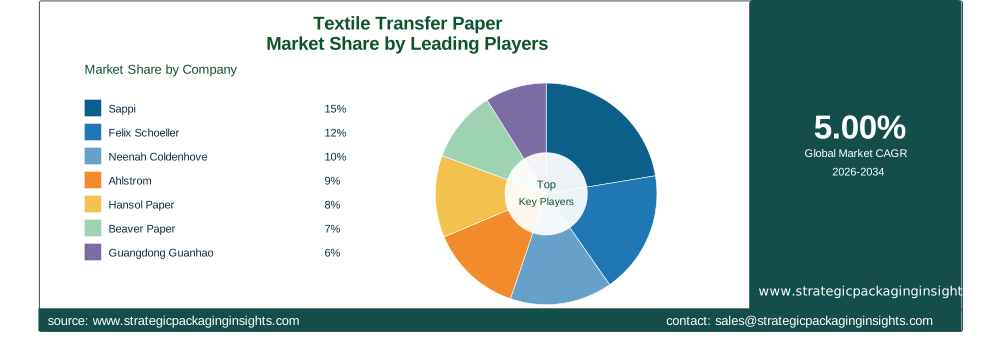
Sappi is a prominent player in the Textile Transfer Paper market, known for its high-quality products and commitment to sustainability. The company is focused on developing eco-friendly transfer papers that align with consumer preferences for sustainable products. Felix Schoeller is another key player, offering a wide range of transfer papers for various applications. The company's emphasis on innovation and quality has helped it maintain a strong market presence. Neenah Coldenhove is also a major player, known for its advanced printing technologies and sustainable product offerings.
Ahlstrom and Hansol Paper are other significant players in the market, with a focus on delivering high-performance transfer papers for diverse applications. These companies are investing in research and development to enhance product quality and meet the growing demand for sustainable solutions. Beaver Paper is also a notable player, offering a range of transfer papers for the fashion and home textiles industries. The company's commitment to innovation and sustainability has helped it gain a competitive edge in the market.
Guangdong Guanhao, Jiangyin Allnice, A-SUB, and TexPrint are other key players in the market, each with their unique strengths and product offerings. These companies are focused on expanding their market presence through strategic partnerships and collaborations. The competitive landscape of the Textile Transfer Paper market is dynamic, with companies continuously striving to innovate and differentiate their products to maintain their market position. As the market continues to evolve, companies that prioritize sustainability and innovation are likely to achieve greater success.
Key Highlights
- Market Size: The Textile Transfer Paper market was valued at USD 550 million in 2025 and is projected to reach USD 850 million by 2034.
- Growth Rate: The market is expected to grow at a CAGR of 5.00% during the forecast period.
- Leading Companies: Key players include Sappi, Felix Schoeller, Neenah Coldenhove, and Ahlstrom.
- Growing Segments: Dye Sublimation Transfer Paper and Heat Transfer Paper for both light and dark fabrics are gaining popularity.
- Regional Insights: Asia Pacific is expected to witness significant growth, driven by increasing demand for customized apparel.
- Sustainability Focus: Companies are prioritizing eco-friendly and sustainable transfer papers to meet consumer demand.
- Technological Advancements: Digital printing technologies are driving innovation and enhancing product offerings.
Textile Transfer Paper Market Segments Insights

By Type Analysis
The "By Type" segment of the Textile Transfer Paper market is diverse, encompassing various types of transfer papers such as Dye Sublimation Transfer Paper, Heat Transfer Paper for both light and dark fabrics, Laser Transfer Paper, and Inkjet Transfer Paper. Dye Sublimation Transfer Paper is gaining traction due to its ability to produce vibrant, long-lasting prints, making it ideal for sportswear and activewear applications. Heat Transfer Paper, available for both light and dark fabrics, is popular for its versatility and ease of use, catering to the growing demand for customized apparel and home textiles.
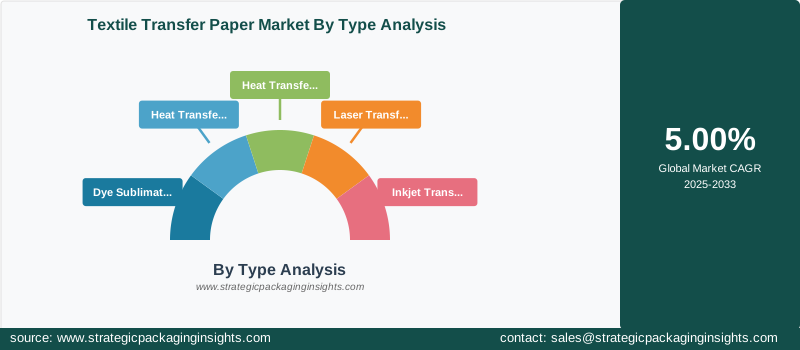
Laser Transfer Paper and Inkjet Transfer Paper are also significant contributors to the market, offering high-quality prints and compatibility with various printing technologies. The increasing adoption of digital printing technologies is driving demand for these transfer papers, as they offer greater design flexibility and efficiency. Companies are focusing on developing innovative products that cater to the specific needs of different applications, enhancing their competitiveness in the market. The "By Type" segment is expected to witness steady growth, driven by the rising demand for customized and personalized products.
By Weight Analysis
The "By Weight" segment of the Textile Transfer Paper market is categorized into Below 80 GSM, 80-120 GSM, and Above 120 GSM. Each weight category serves different applications and offers unique benefits. Below 80 GSM transfer papers are lightweight and cost-effective, making them suitable for high-volume printing applications. The 80-120 GSM category is the most popular, offering a balance between quality and cost, and is widely used in fashion apparel and home textiles. Above 120 GSM transfer papers are thicker and more durable, ideal for applications that require high-quality, long-lasting prints.
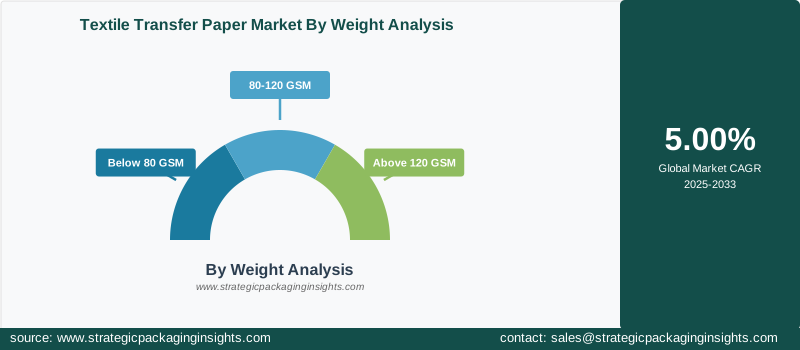
The choice of weight depends on the specific requirements of the application, with factors such as print quality, durability, and cost playing a crucial role. Companies are focusing on developing transfer papers that offer optimal performance across different weight categories, catering to the diverse needs of consumers. The "By Weight" segment is expected to experience steady growth, driven by the increasing demand for high-quality, durable transfer papers in various applications.
By Application Analysis
The "By Application" segment of the Textile Transfer Paper market includes Sportswear & Activewear, Fashion Apparel, Home Textiles, Flags & Banners, and Promotional Products. Sportswear & Activewear is a significant application area, driven by the growing popularity of fitness and outdoor activities. The demand for durable, high-quality transfer papers that can withstand frequent washing and wear is driving growth in this segment. Fashion Apparel is another key application, with consumers seeking unique and personalized designs that reflect their individual style.
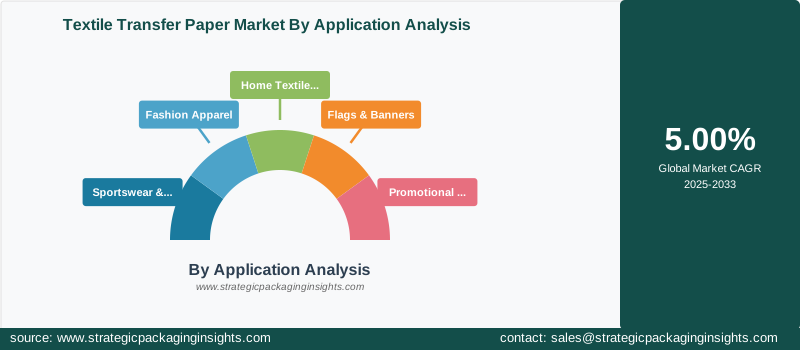
Home Textiles, including curtains and upholstery, are also witnessing increased demand for transfer papers, as consumers look to customize their living spaces. Flags & Banners and Promotional Products are other important application areas, with businesses seeking to create eye-catching, branded materials. Companies are focusing on developing transfer papers that cater to the specific needs of each application, enhancing their competitiveness in the market. The "By Application" segment is expected to witness steady growth, driven by the increasing demand for customized and personalized products across various industries.
By Printing Technology Analysis
The "By Printing Technology" segment of the Textile Transfer Paper market includes Inkjet (Water-Based), Laser, and Offset printing technologies. Inkjet (Water-Based) is the most popular printing technology, offering high-quality prints and compatibility with a wide range of transfer papers. The increasing adoption of digital printing technologies is driving demand for Inkjet transfer papers, as they offer greater design flexibility and efficiency. Laser printing technology is also gaining traction, offering high-quality prints and fast production speeds.
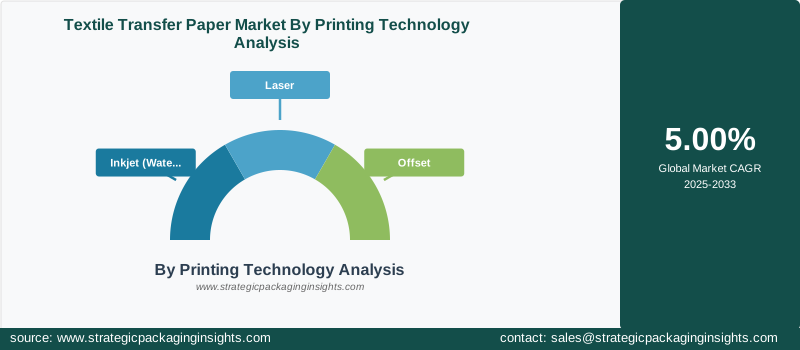
Offset printing technology is used for high-volume printing applications, offering cost-effective solutions for large-scale production. Companies are focusing on developing transfer papers that are compatible with different printing technologies, catering to the diverse needs of consumers. The "By Printing Technology" segment is expected to witness steady growth, driven by the increasing adoption of digital printing technologies and the demand for high-quality, customized products.
Textile Transfer Paper Market Segments
The Textile Transfer Paper market has been segmented on the basis ofBy Type
- Dye Sublimation Transfer Paper
- Heat Transfer Paper (Light Fabrics)
- Heat Transfer Paper (Dark Fabrics)
- Laser Transfer Paper
- Inkjet Transfer Paper
By Weight
- Below 80 GSM
- 80-120 GSM
- Above 120 GSM
By Application
- Sportswear & Activewear
- Fashion Apparel
- Home Textiles (Curtains, Upholstery)
- Flags & Banners
- Promotional Products
By Printing Technology
- Inkjet (Water-Based)
- Laser
- Offset
By Region
- North America (U.S., Canada, Mexico)
- Europe (Germany, UK, France, Italy, Spain, Rest of Europe)
- Asia Pacific (China, India, Japan, South Korea, Australia, Rest of Asia Pacific)
- Latin America (Brazil, Argentina, Rest of Latin America)
- Middle East & Africa (GCC Countries, South Africa, Rest of MEA)




