


Temperature Sensitive Packaging Market Outlook
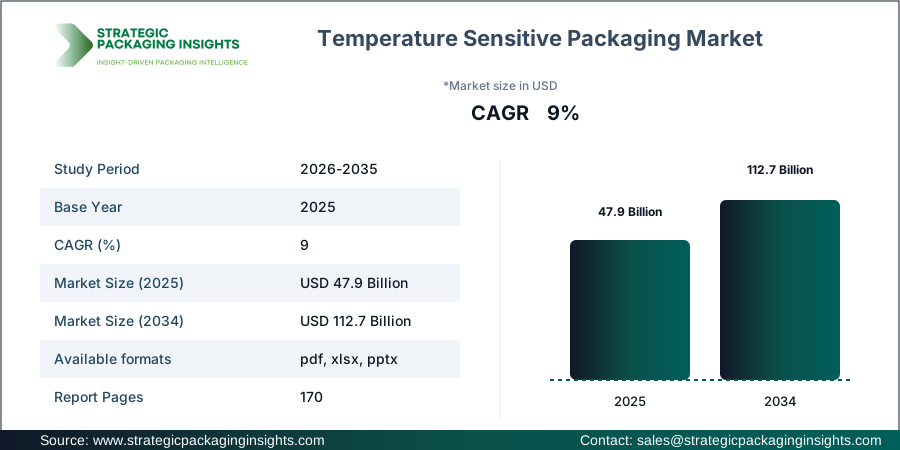
The Temperature Sensitive Packaging market size was valued at USD $47.9 Billion in 2025 and is anticipated to reach USD $112.7 Billion by 2035, growing at a CAGR of 9.0% during the forecast period according to Strategic Packaging Insights.
The increasing demand for temperature-sensitive pharmaceuticals and biologics is a significant driver for the market. Regulatory requirements for maintaining product integrity during transportation, especially in the pharmaceutical sector, are pushing companies to adopt advanced packaging solutions. The rise in global trade of perishable goods further fuels the demand for reliable temperature-sensitive packaging solutions.
Report Scope
| Attributes | Details |
| Report Title | Temperature Sensitive Packaging Market Projected to Scale to 112.7 Billion by 2035, Assesses Strategic Packaging Insights |
| By Product | Insulated Shippers, Insulated Containers, Refrigerants and Thermal Packs, Active Temperature-Controlled Containers, Temperature Monitoring Devices |
| By Usability | Single-Use Packaging, Reusable Packaging, Hybrid Packaging |
| By Temperature Range | Ambient (15°C to 25°C), Refrigerated (2°C to 8°C), Frozen (Below 0°C), Ultra-Low and Cryogenic |
| By End User | Pharmaceutical and Biotechnology, Food and Beverage, Healthcare Providers and Diagnostics, Chemical Industry, Research Laboratories |
| By Region | North America, Europe, Asia-Pacific, Latin America, Middle East and Africa |
| Base Year | 2025 |
| Historic Period | 2018-2024 |
| Forecast Period | 2026-2035 |
| Number of Pages | 170 |
| Customization Available | Yes* |
Market Trends Analysis
Temperature Sensitive Packaging is witnessing a shift towards more sustainable and reusable solutions. Companies are investing in developing packaging that not only maintains temperature integrity but also reduces environmental impact. The adoption of reusable packaging solutions is gaining traction, driven by cost savings and environmental regulations. Additionally, the integration of IoT and smart technologies in packaging is enhancing real-time monitoring capabilities, allowing for better control and management of temperature-sensitive shipments.
Regionally, Asia Pacific is emerging as a significant market due to the rapid growth of the pharmaceutical and biotechnology sectors. The region's expanding middle class and increasing healthcare expenditure are driving demand for temperature-sensitive packaging. In North America and Europe, stringent regulations and a focus on sustainability are influencing market dynamics, with companies investing in advanced packaging technologies to meet regulatory standards and consumer expectations.
Industry Transformation Analysis
The Temperature Sensitive Packaging industry is undergoing significant transformation with advancements in materials and technology. The development of phase change materials and vacuum insulation panels is enhancing the thermal performance of packaging solutions. Companies are also focusing on optimizing supply chains to improve efficiency and reduce costs. The shift towards localized production and distribution is helping companies meet regional demand more effectively while reducing transportation costs and emissions.
Automation and digitalization are playing a crucial role in transforming the industry. The use of automated systems for packaging and logistics is improving operational efficiency and reducing human error. Digital platforms are enabling better tracking and management of shipments, providing real-time data and insights to stakeholders. These technological advancements are helping companies enhance their competitive positioning and meet the evolving needs of their customers.
Trends & Disruptions Impacting Customers' Customers
Downstream customers, particularly in the pharmaceutical and food industries, are increasingly demanding packaging solutions that ensure product safety and compliance with regulatory standards. The growing focus on sustainability is also influencing purchasing decisions, with customers seeking packaging that minimizes environmental impact. The rise of e-commerce and direct-to-consumer delivery models is further driving demand for reliable temperature-sensitive packaging solutions that can maintain product integrity during last-mile delivery.
These changes are influencing product demand and innovation in the Temperature Sensitive Packaging market. Companies are investing in research and development to create packaging solutions that meet the specific needs of their customers. The demand for customized solutions is increasing, with customers seeking packaging that aligns with their brand values and sustainability goals. This trend is creating new market opportunities and driving competition among packaging providers.
Temperature Sensitive Packaging Market Ecosystem
The Temperature Sensitive Packaging market ecosystem involves a complex interplay of raw material suppliers, manufacturers, distributors, and end users. Raw materials such as phase change materials and insulation panels are critical for manufacturing effective packaging solutions. Manufacturers focus on producing high-performance insulated shippers, containers, and temperature control devices that meet the specific needs of end users.
Distribution plays a crucial role in ensuring that temperature-sensitive products reach their destination without compromising quality. Efficient logistics and supply chain management are essential for maintaining product integrity during transportation. End users, including pharmaceutical, food, and chemical industries, rely on these packaging solutions to ensure compliance with regulatory standards and meet consumer expectations.
Analyst Perspective
Analyst Perspective: The Temperature Sensitive Packaging market is poised for significant growth driven by the pharmaceutical and biotechnology sectors.
As regulatory requirements become more stringent, companies are investing in advanced packaging solutions to ensure compliance and maintain product integrity. The shift towards sustainable and reusable packaging is creating new opportunities for innovation and differentiation in the market.
Companies, investors, and stakeholders should focus on technological advancements and sustainability initiatives to capitalize on market opportunities. Monitoring regulatory changes and consumer preferences will be crucial for maintaining competitive advantage and driving growth in the Temperature Sensitive Packaging market.
Opportunities & Threats
The Temperature Sensitive Packaging market presents significant opportunities for growth, particularly in the pharmaceutical and biotechnology sectors. The increasing demand for biologics and vaccines is driving the need for reliable packaging solutions that ensure product integrity during transportation. Companies that invest in developing advanced packaging technologies and sustainable solutions are well-positioned to capture market share and drive growth.
Technological advancements in materials and IoT integration are creating new opportunities for innovation in the market. The development of smart packaging solutions that provide real-time monitoring and data insights is enhancing supply chain efficiency and improving customer satisfaction. Companies that leverage these technologies can differentiate themselves in the market and meet the evolving needs of their customers.
However, the market also faces challenges, including regulatory uncertainty and supply chain constraints. Stringent regulations and compliance requirements can increase costs and complexity for companies operating in the market. Additionally, disruptions in the supply chain, such as material shortages and transportation delays, can impact product availability and customer satisfaction.
Competition in the market is intensifying, with companies vying for market share and differentiation. Pricing pressure and the need for continuous innovation can pose challenges for companies looking to maintain profitability and competitive advantage. Companies must navigate these challenges by investing in research and development, optimizing supply chains, and focusing on customer-centric solutions.
Drivers & Challenges
The Temperature Sensitive Packaging market is driven by the increasing demand for temperature-sensitive pharmaceuticals and biologics. Regulatory requirements for maintaining product integrity during transportation are pushing companies to adopt advanced packaging solutions. The rise in global trade of perishable goods further fuels the demand for reliable temperature-sensitive packaging solutions. Companies are investing in research and development to create packaging solutions that meet the specific needs of their customers.
Technological advancements in materials and IoT integration are enhancing the performance and efficiency of temperature-sensitive packaging solutions. The development of smart packaging solutions that provide real-time monitoring and data insights is improving supply chain efficiency and customer satisfaction. Companies that leverage these technologies can differentiate themselves in the market and meet the evolving needs of their customers.
However, the market also faces challenges, including regulatory uncertainty and supply chain constraints. Stringent regulations and compliance requirements can increase costs and complexity for companies operating in the market. Additionally, disruptions in the supply chain, such as material shortages and transportation delays, can impact product availability and customer satisfaction. Companies must navigate these challenges by investing in research and development, optimizing supply chains, and focusing on customer-centric solutions.
Packaging Market Economics
The economics of Temperature Sensitive Packaging are influenced by raw material costs, manufacturing processes, and logistics. The cost of specialized materials like phase change materials and insulation panels plays a significant role in determining the overall cost of packaging solutions. Manufacturing processes, including the production of insulated shippers and containers, require significant investment in technology and equipment.
Logistics and supply chain management are critical for maintaining product integrity during transportation. Companies must invest in efficient logistics solutions to ensure timely delivery and minimize temperature excursions. The integration of IoT and smart technologies in packaging is enhancing real-time monitoring capabilities, allowing for better control and management of temperature-sensitive shipments.
Packaging Value Chain & Cost Analysis
The value chain for Temperature Sensitive Packaging involves multiple tiers, including raw material suppliers, manufacturers, and end users. Raw material suppliers provide specialized materials like phase change materials and insulation panels, which are critical for manufacturing effective packaging solutions. Manufacturers focus on producing high-performance insulated shippers, containers, and temperature control devices that meet the specific needs of end users.
Downstream, efficient logistics and supply chain management are essential for maintaining product integrity during transportation. Companies must invest in efficient logistics solutions to ensure timely delivery and minimize temperature excursions. The integration of IoT and smart technologies in packaging is enhancing real-time monitoring capabilities, allowing for better control and management of temperature-sensitive shipments.
Unit Economics & Substrate Cost Analysis
The unit economics of Temperature Sensitive Packaging are influenced by raw material costs, manufacturing processes, and logistics. The cost of specialized materials like phase change materials and insulation panels plays a significant role in determining the overall cost of packaging solutions. Manufacturing processes, including the production of insulated shippers and containers, require significant investment in technology and equipment.
Logistics and supply chain management are critical for maintaining product integrity during transportation. Companies must invest in efficient logistics solutions to ensure timely delivery and minimize temperature excursions. The integration of IoT and smart technologies in packaging is enhancing real-time monitoring capabilities, allowing for better control and management of temperature-sensitive shipments.
Packaging Regulatory & Sustainability Analysis
The Temperature Sensitive Packaging market is subject to stringent regulatory requirements, particularly in the pharmaceutical and food sectors. Regulatory bodies such as the FDA and EMA mandate strict guidelines for maintaining product integrity during transportation. Companies must invest in advanced packaging solutions to ensure compliance with these regulations and maintain product quality.
Sustainability is also a key focus in the market, with companies seeking to reduce the environmental impact of their packaging solutions. The development of reusable and recyclable packaging is gaining traction, driven by consumer demand and regulatory pressure. Companies that invest in sustainable packaging solutions can differentiate themselves in the market and meet the evolving needs of their customers.
Strategic Mergers, Acquisitions & Capacity Expansions
Recent strategic developments in the Temperature Sensitive Packaging market include mergers, acquisitions, and capacity expansions. Companies are investing in expanding their production capabilities to meet growing demand for temperature-sensitive packaging solutions. Strategic partnerships and collaborations are also playing a crucial role in driving innovation and expanding market reach.
For example, companies are partnering with technology providers to integrate IoT and smart technologies into their packaging solutions. These partnerships are enhancing real-time monitoring capabilities and improving supply chain efficiency. Companies are also investing in research and development to create advanced packaging solutions that meet the specific needs of their customers.
Strategic Action Directives
Brand Packaging Engineers & Sustainability Directors should focus on material selection and recyclability to meet regulatory requirements and consumer expectations. The integration of PCR materials and mono-material qualification can enhance sustainability and reduce environmental impact.
Converter Operations & Extrusion Leads should optimize line speed and tooling to improve efficiency and reduce costs. The use of advanced technologies and automation can enhance production capabilities and meet growing demand for temperature-sensitive packaging solutions.
Procurement & Material Sourcing Managers should focus on supplier diversification and price indexing to mitigate risks associated with raw material volatility. The integration of IoT and smart technologies can enhance supply chain visibility and improve procurement efficiency.
Investors should focus on capacity expansion and technology investments to capitalize on market opportunities. Monitoring regulatory changes and consumer preferences will be crucial for maintaining competitive advantage and driving growth in the Temperature Sensitive Packaging market.
Market Share Analysis
The Temperature Sensitive Packaging market is characterized by a competitive landscape with several key players vying for market share. Companies such as Peli BioThermal, CSafe, and Envirotainer are leading the market with their advanced packaging solutions and strong global presence. These companies are investing in research and development to create innovative packaging solutions that meet the specific needs of their customers.
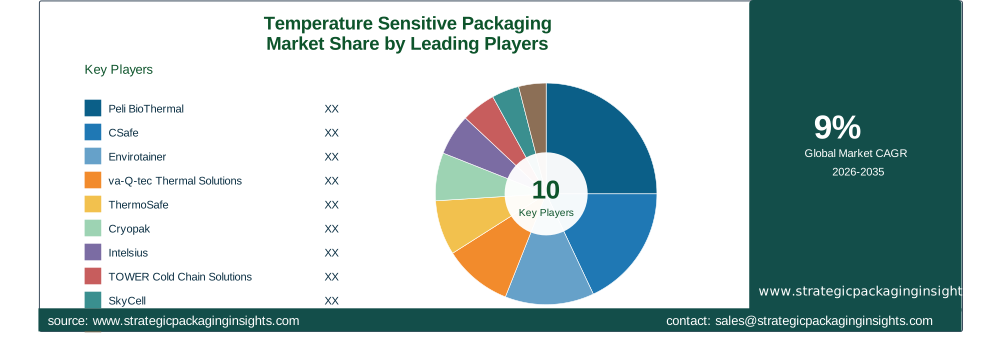
Other notable players in the market include va-Q-tec Thermal Solutions, ThermoSafe, and Cryopak, which are focusing on expanding their product portfolios and enhancing their competitive positioning. These companies are leveraging technological advancements and strategic partnerships to drive growth and capture market share.
The market is also witnessing increased competition from new entrants and regional players, which are offering cost-effective and innovative packaging solutions. Companies must focus on differentiation and innovation to maintain their competitive advantage and meet the evolving needs of their customers.
Overall, the Temperature Sensitive Packaging market is poised for significant growth, driven by the increasing demand for temperature-sensitive pharmaceuticals and biologics. Companies that invest in advanced packaging solutions and sustainability initiatives are well-positioned to capture market share and drive growth in the coming years.
Key Highlights
- Largest Region: North America
- Fastest-Growing Region: Asia Pacific
- Largest Segment: Pharmaceutical and Biotechnology
- Fastest-Growing Segment: Reusable Packaging
- Base-year market size: $47.9 Billion
- Forecast-year market size: $112.7 Billion
- CAGR: 9.0%
- Important application: Temperature Monitoring Devices
- Major end-use industry: Pharmaceutical and Biotechnology
- Major market driver: Regulatory requirements for product integrity
Regional Insights
The Temperature Sensitive Packaging market is witnessing significant growth across major regions, with North America leading the market due to its strong pharmaceutical and biotechnology sectors. The region's focus on regulatory compliance and sustainability is driving demand for advanced packaging solutions. Asia Pacific is the fastest-growing region, driven by the rapid expansion of the pharmaceutical and biotechnology industries and increasing healthcare expenditure.
North America
North America is the largest market for Temperature Sensitive Packaging, driven by the strong presence of pharmaceutical and biotechnology companies. The region's focus on regulatory compliance and sustainability is driving demand for advanced packaging solutions. Companies are investing in research and development to create innovative packaging solutions that meet the specific needs of their customers.
The increasing demand for biologics and vaccines is driving the need for reliable packaging solutions that ensure product integrity during transportation. Companies are investing in expanding their production capabilities to meet growing demand for temperature-sensitive packaging solutions.
Europe
Europe is a significant market for Temperature Sensitive Packaging, driven by stringent regulations and a focus on sustainability. The region's strong pharmaceutical and biotechnology sectors are driving demand for advanced packaging solutions. Companies are investing in research and development to create innovative packaging solutions that meet the specific needs of their customers.
The increasing demand for biologics and vaccines is driving the need for reliable packaging solutions that ensure product integrity during transportation. Companies are investing in expanding their production capabilities to meet growing demand for temperature-sensitive packaging solutions.
Asia Pacific
Asia Pacific is the fastest-growing region for Temperature Sensitive Packaging, driven by the rapid expansion of the pharmaceutical and biotechnology industries and increasing healthcare expenditure. The region's expanding middle class and increasing healthcare expenditure are driving demand for temperature-sensitive packaging.
Companies are investing in research and development to create innovative packaging solutions that meet the specific needs of their customers. The increasing demand for biologics and vaccines is driving the need for reliable packaging solutions that ensure product integrity during transportation.
Latin America
Latin America is witnessing significant growth in the Temperature Sensitive Packaging market, driven by the increasing demand for pharmaceuticals and biologics. The region's expanding middle class and increasing healthcare expenditure are driving demand for temperature-sensitive packaging.
Companies are investing in research and development to create innovative packaging solutions that meet the specific needs of their customers. The increasing demand for biologics and vaccines is driving the need for reliable packaging solutions that ensure product integrity during transportation.
Middle East & Africa
The Middle East & Africa region is witnessing growth in the Temperature Sensitive Packaging market, driven by the increasing demand for pharmaceuticals and biologics. The region's expanding middle class and increasing healthcare expenditure are driving demand for temperature-sensitive packaging.
Companies are investing in research and development to create innovative packaging solutions that meet the specific needs of their customers. The increasing demand for biologics and vaccines is driving the need for reliable packaging solutions that ensure product integrity during transportation.
Temperature Sensitive Packaging Market Segments Insights

By Product Analysis
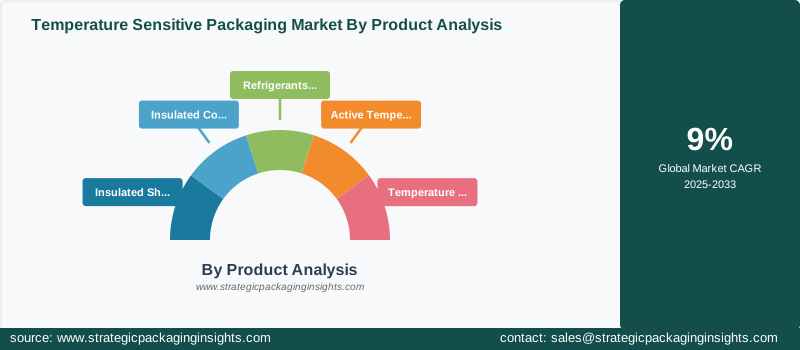
The Temperature Sensitive Packaging market is segmented by product into Insulated Shippers, Insulated Containers, Refrigerants and Thermal Packs, Active Temperature-Controlled Containers, and Temperature Monitoring Devices. Insulated Shippers and Containers are widely used in the pharmaceutical and biotechnology sectors to ensure product integrity during transportation. The demand for Temperature Monitoring Devices is increasing, driven by the need for real-time monitoring and data insights.
Companies are investing in research and development to create innovative packaging solutions that meet the specific needs of their customers. The increasing demand for biologics and vaccines is driving the need for reliable packaging solutions that ensure product integrity during transportation. Companies are investing in expanding their production capabilities to meet growing demand for temperature-sensitive packaging solutions.
By Usability Analysis
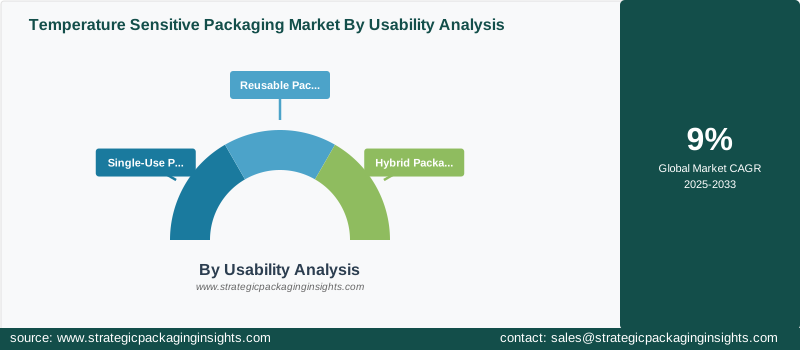
The Temperature Sensitive Packaging market is segmented by usability into Single-Use Packaging, Reusable Packaging, and Hybrid Packaging. Reusable Packaging is gaining traction, driven by cost savings and environmental regulations. Companies are investing in developing packaging that not only maintains temperature integrity but also reduces environmental impact.
The increasing demand for biologics and vaccines is driving the need for reliable packaging solutions that ensure product integrity during transportation. Companies are investing in expanding their production capabilities to meet growing demand for temperature-sensitive packaging solutions. The integration of IoT and smart technologies in packaging is enhancing real-time monitoring capabilities, allowing for better control and management of temperature-sensitive shipments.
By Temperature Range Analysis
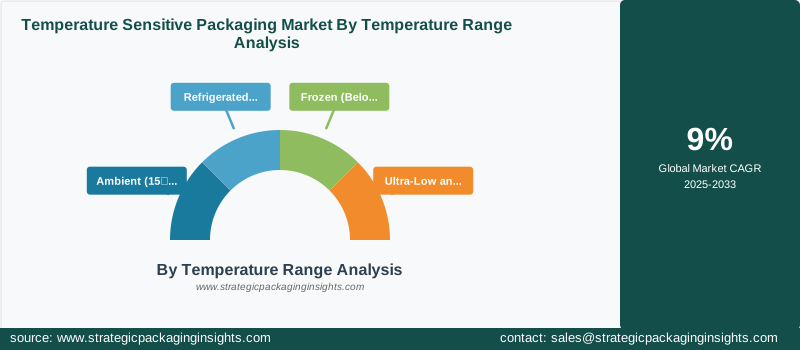
The Temperature Sensitive Packaging market is segmented by temperature range into Ambient (15°C to 25°C), Refrigerated (2°C to 8°C), Frozen (Below 0°C), and Ultra-Low and Cryogenic. The demand for Refrigerated and Frozen packaging solutions is increasing, driven by the need for reliable packaging solutions that ensure product integrity during transportation.
Companies are investing in research and development to create innovative packaging solutions that meet the specific needs of their customers. The increasing demand for biologics and vaccines is driving the need for reliable packaging solutions that ensure product integrity during transportation. Companies are investing in expanding their production capabilities to meet growing demand for temperature-sensitive packaging solutions.
By End User Analysis
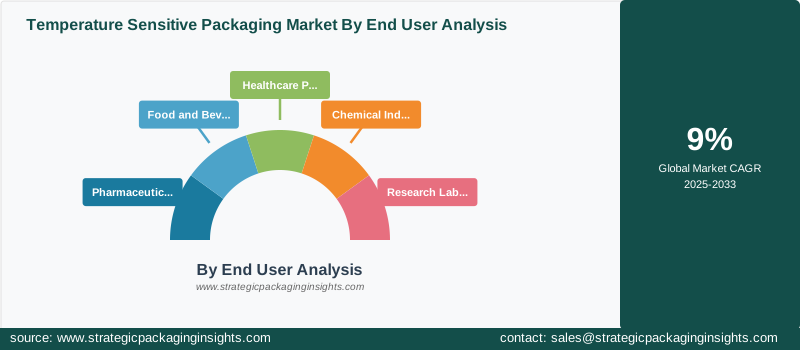
The Temperature Sensitive Packaging market is segmented by end user into Pharmaceutical and Biotechnology, Food and Beverage, Healthcare Providers and Diagnostics, Chemical Industry, and Research Laboratories. The Pharmaceutical and Biotechnology sector is the largest end user, driven by the increasing demand for biologics and vaccines.
Companies are investing in research and development to create innovative packaging solutions that meet the specific needs of their customers. The increasing demand for biologics and vaccines is driving the need for reliable packaging solutions that ensure product integrity during transportation. Companies are investing in expanding their production capabilities to meet growing demand for temperature-sensitive packaging solutions.
By Region Analysis
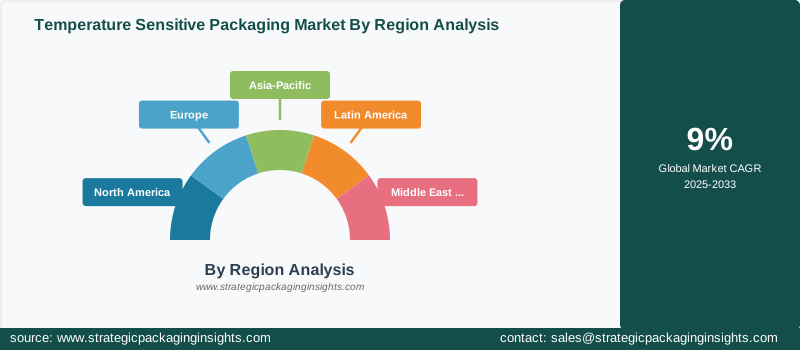
The Temperature Sensitive Packaging market is segmented by region into North America, Europe, Asia Pacific, Latin America, and Middle East & Africa. North America is the largest market, driven by the strong presence of pharmaceutical and biotechnology companies. Asia Pacific is the fastest-growing region, driven by the rapid expansion of the pharmaceutical and biotechnology industries and increasing healthcare expenditure.
Companies are investing in research and development to create innovative packaging solutions that meet the specific needs of their customers. The increasing demand for biologics and vaccines is driving the need for reliable packaging solutions that ensure product integrity during transportation. Companies are investing in expanding their production capabilities to meet growing demand for temperature-sensitive packaging solutions.
Temperature Sensitive Packaging Market Segments
The Temperature Sensitive Packaging market has been segmented on the basis ofBy Product
- Insulated Shippers
- Insulated Containers
- Refrigerants and Thermal Packs
- Active Temperature-Controlled Containers
- Temperature Monitoring Devices
By Usability
- Single-Use Packaging
- Reusable Packaging
- Hybrid Packaging
By Temperature Range
- Ambient (15°C to 25°C)
- Refrigerated (2°C to 8°C)
- Frozen (Below 0°C)
- Ultra-Low and Cryogenic
By End User
- Pharmaceutical and Biotechnology
- Food and Beverage
- Healthcare Providers and Diagnostics
- Chemical Industry
- Research Laboratories
By Region
- North America
- Europe
- Asia-Pacific
- Latin America
- Middle East and Africa




