


Temperature Controlled Pharma Packaging Market Outlook
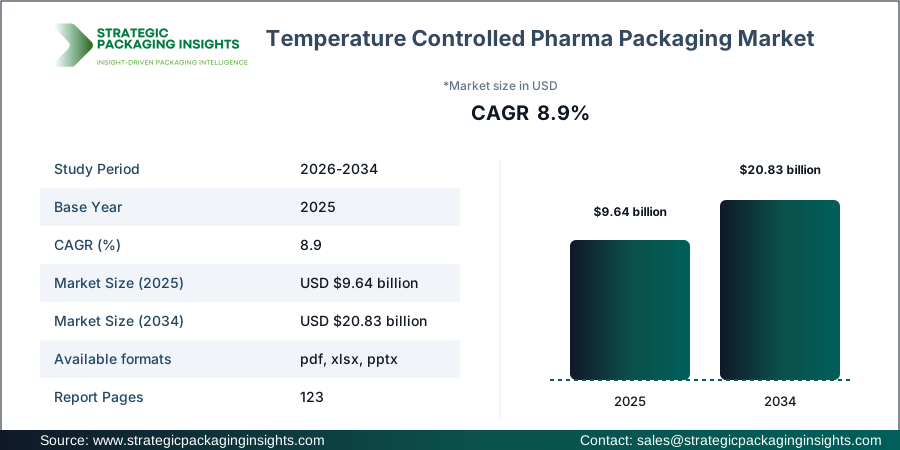
The Temperature Controlled Pharma Packaging market was valued at $9.64 billion in 2025 and is projected to reach $20.83 billion by 2034, growing at a CAGR of 8.9% during the forecast period 2026-2034. This market is driven by the increasing demand for temperature-sensitive pharmaceuticals, which require specialized packaging solutions to maintain efficacy and safety. The rise in global pharmaceutical trade, coupled with stringent regulatory requirements for drug safety, has further propelled the need for advanced temperature-controlled packaging solutions. Additionally, the growing prevalence of biologics and specialty drugs, which are highly sensitive to temperature fluctuations, is expected to significantly boost market growth.
Despite the promising growth prospects, the Temperature Controlled Pharma Packaging market faces several challenges. High costs associated with advanced packaging solutions and the need for substantial initial investments can act as significant barriers for new entrants. Moreover, the complexity of maintaining precise temperature conditions during transportation and storage poses operational challenges. However, technological advancements in packaging materials and solutions, such as the development of more efficient and cost-effective insulation materials, are expected to mitigate some of these challenges. The market also presents substantial growth potential in emerging economies, where the pharmaceutical industry is rapidly expanding, and there is an increasing focus on improving healthcare infrastructure.
Report Scope
| Attributes | Details |
| Report Title | Temperature Controlled Pharma Packaging Market Size, Future Growth and Forecast 2034 |
| By Product Type | Insulated Shippers, Passive Containers, Active Containers, Pallet Shippers |
| By Temperature Range | 2–8°C, Frozen, Ultra-Low Temperature, CRT |
| By Application | Vaccines, Biologics, Clinical Trials, Specialty Drugs |
| By End Use | Pharma Companies, CDMOs, Hospitals, Logistics Providers |
| Region | Asia Pacific, North America, Latin America, Europe, Middle East & Africa |
| Base Year | 2025 |
| Historic Period | 2018-2024 |
| Forecast Period | 2026-2034 |
| Number of Pages | 123 |
| Customization Available | Yes* |
Opportunities & Threats
The Temperature Controlled Pharma Packaging market offers numerous opportunities, particularly in the realm of technological advancements. Innovations in packaging materials and technologies, such as phase change materials and vacuum insulation panels, are enhancing the efficiency and reliability of temperature-controlled packaging solutions. These advancements not only improve the thermal performance of packaging but also reduce the overall weight and cost, making them more accessible to a broader range of pharmaceutical companies. Additionally, the increasing adoption of IoT and smart packaging solutions, which provide real-time monitoring and tracking of temperature conditions, is expected to create significant growth opportunities in the market.
Another opportunity lies in the expanding pharmaceutical industry in emerging markets. Countries in Asia Pacific and Latin America are witnessing rapid growth in pharmaceutical manufacturing and exports, driven by increasing healthcare expenditure and favorable government policies. This expansion necessitates the development of robust cold chain logistics and temperature-controlled packaging solutions to ensure the safe and efficient transportation of temperature-sensitive pharmaceuticals. Furthermore, the growing focus on personalized medicine and biologics, which require stringent temperature control, is expected to drive demand for specialized packaging solutions.
However, the market also faces certain threats that could hinder its growth. One of the primary challenges is the high cost associated with temperature-controlled packaging solutions, which can be prohibitive for small and medium-sized pharmaceutical companies. Additionally, the stringent regulatory requirements for pharmaceutical packaging, which vary across different regions, can pose compliance challenges for manufacturers. The complexity of maintaining precise temperature conditions during transportation and storage also increases the risk of product spoilage, which can lead to significant financial losses and reputational damage for pharmaceutical companies.
Drivers & Challenges
The primary drivers of the Temperature Controlled Pharma Packaging market include the increasing demand for temperature-sensitive pharmaceuticals and the growing prevalence of biologics and specialty drugs. As the global pharmaceutical industry continues to expand, there is a rising need for advanced packaging solutions that can maintain the efficacy and safety of temperature-sensitive products. Additionally, the increasing focus on personalized medicine and the development of new biologics and specialty drugs, which require stringent temperature control, are expected to drive demand for temperature-controlled packaging solutions.
Another significant driver is the stringent regulatory requirements for pharmaceutical packaging, which mandate the use of temperature-controlled solutions to ensure drug safety and efficacy. Regulatory bodies across the globe are implementing stricter guidelines for the transportation and storage of temperature-sensitive pharmaceuticals, which is driving the adoption of advanced packaging solutions. Furthermore, the growing awareness of the importance of maintaining the cold chain in pharmaceutical logistics is encouraging pharmaceutical companies to invest in temperature-controlled packaging solutions.
Despite these drivers, the market faces several challenges that could hinder its growth. One of the primary challenges is the high cost associated with temperature-controlled packaging solutions, which can be prohibitive for small and medium-sized pharmaceutical companies. Additionally, the complexity of maintaining precise temperature conditions during transportation and storage poses operational challenges for logistics providers. The lack of standardization in packaging solutions and the varying regulatory requirements across different regions can also create compliance challenges for manufacturers. Moreover, the risk of product spoilage due to temperature fluctuations during transportation and storage can lead to significant financial losses and reputational damage for pharmaceutical companies.
Market Share Analysis
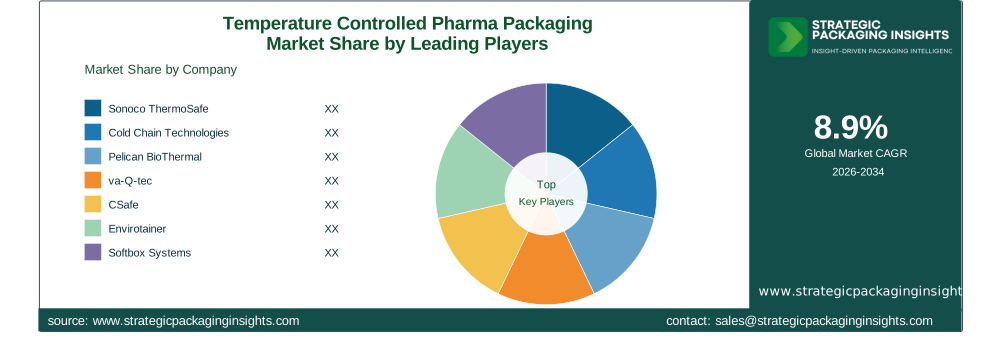
The competitive landscape of the Temperature Controlled Pharma Packaging market is characterized by the presence of several key players who are actively engaged in product innovation and strategic partnerships to strengthen their market position. Companies such as Sonoco ThermoSafe, Cold Chain Technologies, Pelican BioThermal, va-Q-tec, and CSafe are leading the market with their advanced packaging solutions and extensive distribution networks. These companies are focusing on expanding their product portfolios and enhancing their technological capabilities to cater to the growing demand for temperature-controlled packaging solutions.
Sonoco ThermoSafe is a prominent player in the market, known for its innovative packaging solutions that ensure the safe transportation of temperature-sensitive pharmaceuticals. The company has a strong presence in North America and Europe and is expanding its operations in emerging markets to capitalize on the growing demand for cold chain logistics. Cold Chain Technologies is another key player, offering a wide range of temperature-controlled packaging solutions for the pharmaceutical industry. The company is focused on developing sustainable packaging solutions that reduce environmental impact while maintaining product integrity.
Pelican BioThermal is renowned for its high-performance temperature-controlled packaging solutions, which are widely used in the transportation of biologics and specialty drugs. The company has a strong global presence and is continuously investing in research and development to enhance its product offerings. va-Q-tec is a leading provider of vacuum insulation panels and phase change materials, which are used in advanced temperature-controlled packaging solutions. The company is focused on expanding its product portfolio and strengthening its distribution network to meet the growing demand for temperature-sensitive pharmaceuticals.
CSafe is a key player in the market, offering a range of active and passive temperature-controlled packaging solutions for the pharmaceutical industry. The company is known for its innovative products that provide reliable temperature control during transportation and storage. Envirotainer is another major player, specializing in active temperature-controlled containers for the transportation of pharmaceuticals. The company has a strong presence in Europe and North America and is expanding its operations in Asia Pacific to tap into the growing demand for cold chain logistics in the region.
Key Highlights
- The Temperature Controlled Pharma Packaging market is projected to grow at a CAGR of 8.9% from 2026 to 2034.
- Increasing demand for biologics and specialty drugs is driving the need for advanced packaging solutions.
- Technological advancements in packaging materials are enhancing the efficiency and reliability of temperature-controlled solutions.
- Emerging markets in Asia Pacific and Latin America offer significant growth opportunities for market players.
- Stringent regulatory requirements for pharmaceutical packaging are driving the adoption of temperature-controlled solutions.
- High costs associated with advanced packaging solutions pose a challenge for small and medium-sized companies.
- Key players in the market are focusing on product innovation and strategic partnerships to strengthen their market position.
- The growing focus on personalized medicine is expected to drive demand for specialized packaging solutions.
- IoT and smart packaging solutions are gaining traction, providing real-time monitoring and tracking of temperature conditions.
Top Countries Insights
In the Temperature Controlled Pharma Packaging market, the United States holds a significant share, driven by the presence of a well-established pharmaceutical industry and stringent regulatory requirements for drug safety. The market in the U.S. is expected to grow at a CAGR of 7%, with increasing demand for biologics and specialty drugs driving the need for advanced packaging solutions. The adoption of IoT and smart packaging technologies is also contributing to market growth, providing real-time monitoring and tracking of temperature conditions.
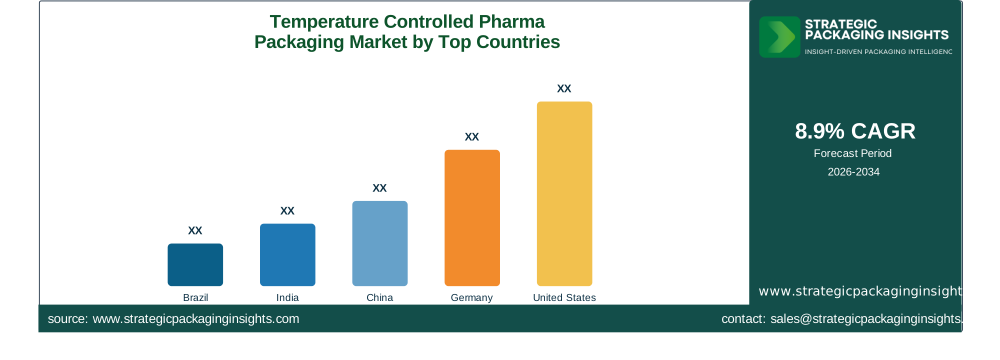
Germany is another key market for temperature-controlled pharma packaging, with a strong focus on innovation and sustainability. The market in Germany is projected to grow at a CAGR of 6%, driven by the increasing demand for biologics and the presence of a robust pharmaceutical manufacturing sector. The country's stringent regulatory requirements for pharmaceutical packaging are also driving the adoption of advanced temperature-controlled solutions.
China is emerging as a significant market for temperature-controlled pharma packaging, with rapid growth in the pharmaceutical industry and increasing healthcare expenditure. The market in China is expected to grow at a CAGR of 10%, driven by favorable government policies and the expansion of cold chain logistics infrastructure. The growing focus on improving healthcare infrastructure and the increasing prevalence of chronic diseases are also contributing to market growth.
India is witnessing rapid growth in the temperature-controlled pharma packaging market, driven by the expansion of the pharmaceutical industry and increasing demand for biologics and specialty drugs. The market in India is projected to grow at a CAGR of 12%, with the government's focus on improving healthcare infrastructure and increasing healthcare expenditure driving demand for advanced packaging solutions.
Brazil is another key market for temperature-controlled pharma packaging, with a growing pharmaceutical industry and increasing demand for biologics and specialty drugs. The market in Brazil is expected to grow at a CAGR of 8%, driven by favorable government policies and the expansion of cold chain logistics infrastructure. The increasing focus on improving healthcare infrastructure and the growing prevalence of chronic diseases are also contributing to market growth.
Temperature Controlled Pharma Packaging Market Segments Insights

Product Type Analysis
The Temperature Controlled Pharma Packaging market is segmented by product type into Insulated Shippers, Passive Containers, Active Containers, and Pallet Shippers. Insulated shippers are widely used due to their cost-effectiveness and ability to maintain temperature stability for extended periods. These shippers are particularly popular among small and medium-sized pharmaceutical companies that require reliable yet affordable packaging solutions. Passive containers, on the other hand, offer enhanced thermal protection and are preferred for long-distance transportation of high-value pharmaceuticals. Active containers, equipped with advanced temperature control systems, are gaining traction for their ability to provide precise temperature regulation, making them ideal for transporting biologics and specialty drugs.
Pallet shippers are increasingly being adopted for bulk transportation of temperature-sensitive pharmaceuticals, offering a cost-effective solution for large-scale logistics operations. The growing demand for biologics and specialty drugs, which require stringent temperature control, is driving the adoption of advanced packaging solutions across all product types. Additionally, technological advancements in packaging materials and solutions are enhancing the efficiency and reliability of temperature-controlled packaging, further boosting market growth. Companies are focusing on developing innovative packaging solutions that offer improved thermal performance, reduced weight, and lower costs, making them more accessible to a broader range of pharmaceutical companies.
Temperature Range Analysis
The market is also segmented by temperature range into 2-8°C, Frozen, Ultra-Low Temperature, and CRT. The 2-8°C segment holds a significant share of the market, driven by the increasing demand for vaccines and biologics that require storage within this temperature range. The frozen segment is also witnessing substantial growth, with the rising demand for specialty drugs and biologics that require storage at sub-zero temperatures. The ultra-low temperature segment is gaining traction, particularly for the transportation of advanced biologics and cell and gene therapies that require storage at extremely low temperatures.
Controlled Room Temperature (CRT) packaging solutions are also in demand, particularly for pharmaceuticals that require stable temperature conditions during transportation and storage. The growing focus on personalized medicine and the development of new biologics and specialty drugs, which require stringent temperature control, are driving demand for temperature-controlled packaging solutions across all temperature ranges. Additionally, regulatory requirements for pharmaceutical packaging, which mandate the use of temperature-controlled solutions to ensure drug safety and efficacy, are further boosting market growth.
Application Analysis
The Temperature Controlled Pharma Packaging market is segmented by application into Vaccines, Biologics, Clinical Trials, and Specialty Drugs. The vaccines segment holds a significant share of the market, driven by the increasing demand for vaccines and the need for reliable temperature-controlled packaging solutions to ensure their efficacy and safety. The biologics segment is also witnessing substantial growth, with the rising demand for advanced biologics and specialty drugs that require stringent temperature control during transportation and storage.
Clinical trials are another key application area, with the growing focus on personalized medicine and the development of new biologics and specialty drugs driving demand for temperature-controlled packaging solutions. The specialty drugs segment is also experiencing significant growth, driven by the increasing prevalence of chronic diseases and the growing demand for advanced therapies that require stringent temperature control. Companies are focusing on developing innovative packaging solutions that cater to the specific needs of each application area, offering improved thermal performance, reduced weight, and lower costs.
End Use Analysis
The market is segmented by end use into Pharma Companies, CDMOs, Hospitals, and Logistics Providers. Pharma companies hold a significant share of the market, driven by the increasing demand for temperature-controlled packaging solutions to ensure the safe and efficient transportation of temperature-sensitive pharmaceuticals. CDMOs are also witnessing substantial growth, with the growing focus on outsourcing pharmaceutical manufacturing and the need for reliable temperature-controlled packaging solutions to ensure product integrity.
Hospitals are another key end-use segment, with the increasing demand for biologics and specialty drugs driving the need for advanced packaging solutions to ensure their efficacy and safety. Logistics providers are also experiencing significant growth, driven by the expansion of cold chain logistics infrastructure and the growing demand for temperature-controlled packaging solutions to ensure the safe and efficient transportation of temperature-sensitive pharmaceuticals. Companies are focusing on developing innovative packaging solutions that cater to the specific needs of each end-use segment, offering improved thermal performance, reduced weight, and lower costs.
Temperature Controlled Pharma Packaging Market Segments
The Temperature Controlled Pharma Packaging market has been segmented on the basis ofBy Product Type
- Insulated Shippers
- Passive Containers
- Active Containers
- Pallet Shippers
By Temperature Range
- 2–8°C
- Frozen
- Ultra-Low Temperature
- CRT
By Application
- Vaccines
- Biologics
- Clinical Trials
- Specialty Drugs
By End Use
- Pharma Companies
- CDMOs
- Hospitals
- Logistics Providers
Region
- Asia Pacific
- North America
- Latin America
- Europe
- Middle East & Africa




