


Tea Packaging Market Outlook
The Tea Packaging market was valued at $6.79 billion in 2025 and is projected to reach $10.75 billion by 2034, growing at a CAGR of 5.2% during the forecast period 2026-2034. The market's growth is driven by increasing tea consumption worldwide, with a notable shift towards premium and specialty teas. This trend is fueling demand for innovative and sustainable packaging solutions that not only preserve the quality of tea but also appeal to environmentally conscious consumers. The rise in disposable income and changing consumer preferences towards healthier beverages are further propelling the market. Additionally, the expansion of e-commerce platforms has facilitated the distribution of tea products, thereby boosting the demand for effective packaging solutions.
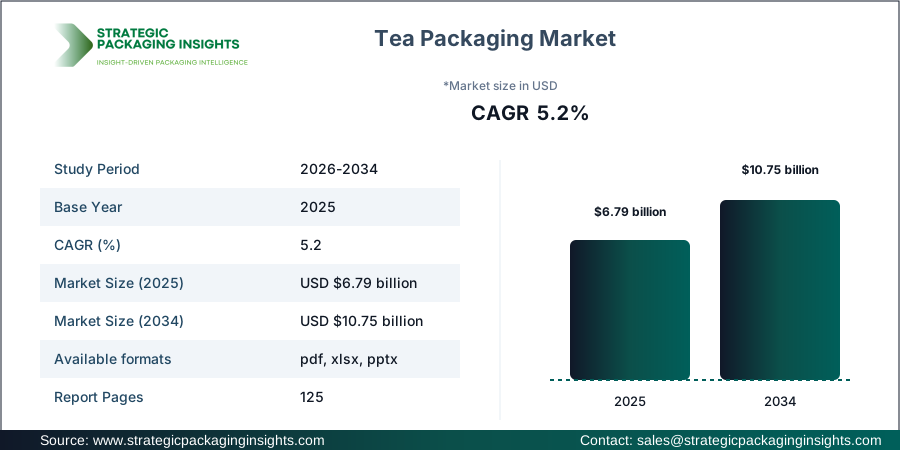
However, the market faces challenges such as stringent environmental regulations and the high cost of raw materials, which could hinder growth. The increasing focus on sustainability has led to a demand for eco-friendly packaging materials, which are often more expensive than traditional options. Despite these challenges, the market holds significant growth potential, particularly in emerging economies where tea consumption is on the rise. The development of biodegradable and compostable packaging materials presents lucrative opportunities for market players to differentiate themselves and capture a larger market share.
Report Scope
| Attributes | Details |
| Report Title | Tea Packaging Market Size, Future Growth and Forecast 2034 |
| By Packaging Type | Tea Bags, Sachets, Cartons, Tins |
| By Material Type | Filter Paper, Paperboard, Foil Laminate, Compostable Films |
| By Tea Type | Black Tea, Green Tea, Herbal Tea, Premium Blends |
| By End Use | Tea Brands, Foodservice, Retailers |
| Region | Asia Pacific, North America, Latin America, Europe, Middle East & Africa |
| Base Year | 2025 |
| Historic Period | 2018-2024 |
| Forecast Period | 2026-2034 |
| Number of Pages | 125 |
| Customization Available | Yes* |
Opportunities & Threats
The tea packaging market is ripe with opportunities, particularly in the realm of sustainable packaging solutions. As consumers become more environmentally conscious, there is a growing demand for packaging that minimizes environmental impact. This has led to increased investment in research and development of biodegradable and compostable materials. Companies that can innovate in this space stand to gain a competitive edge. Additionally, the rise of e-commerce presents a significant opportunity for tea packaging manufacturers. With more consumers purchasing tea online, there is a need for packaging that not only protects the product during transit but also enhances the unboxing experience. This trend is driving demand for aesthetically pleasing and functional packaging designs.
Another opportunity lies in the premiumization of tea products. As consumers become more discerning, there is a growing market for high-quality, premium teas that require sophisticated packaging solutions. This trend is particularly evident in developed markets where consumers are willing to pay a premium for unique and artisanal tea blends. Packaging that reflects the premium nature of the product can enhance brand perception and drive sales. Furthermore, the increasing popularity of herbal and specialty teas presents an opportunity for packaging manufacturers to cater to niche markets with tailored solutions.
Despite these opportunities, the tea packaging market faces several threats. One of the primary challenges is the volatility in raw material prices, which can impact profit margins. Additionally, the industry is subject to stringent regulations regarding packaging waste and recyclability. Companies must navigate these regulatory challenges while maintaining cost-effectiveness. The competitive landscape is also a threat, with numerous players vying for market share. This intense competition can lead to price wars and reduced profitability. To mitigate these threats, companies must focus on innovation, efficiency, and sustainability.
Drivers & Challenges
The tea packaging market is driven by several key factors, including the increasing global consumption of tea. As one of the most popular beverages worldwide, tea consumption continues to rise, particularly in emerging markets. This growth is fueled by the health benefits associated with tea, as well as the increasing popularity of specialty and premium tea blends. The demand for innovative packaging solutions that preserve the freshness and quality of tea is a significant driver of market growth. Additionally, the rise of e-commerce has transformed the way consumers purchase tea, leading to increased demand for packaging that is both protective and visually appealing.
Another major driver is the growing focus on sustainability. Consumers are increasingly seeking products that align with their environmental values, leading to a demand for eco-friendly packaging solutions. This trend is driving innovation in the development of biodegradable and compostable materials, which are becoming more prevalent in the tea packaging market. Companies that can offer sustainable packaging solutions are well-positioned to capture a larger share of the market. Furthermore, advancements in packaging technology, such as smart packaging and active packaging, are providing new opportunities for market growth.
However, the market also faces several challenges. One of the primary challenges is the high cost of sustainable packaging materials, which can impact profitability. Additionally, the industry is subject to stringent regulations regarding packaging waste and recyclability, which can pose compliance challenges for manufacturers. The competitive landscape is another challenge, with numerous players competing for market share. This intense competition can lead to price wars and reduced profitability. To overcome these challenges, companies must focus on innovation, efficiency, and sustainability.
Market Share Analysis
The tea packaging market is characterized by a competitive landscape with several key players vying for market share. Companies such as Amcor, Mondi, Huhtamaki, Ahlstrom, and Glatfelter are prominent players in the market, each holding a significant share. These companies are known for their innovative packaging solutions and strong focus on sustainability. Amcor, for instance, is a leader in the development of eco-friendly packaging materials, while Mondi is renowned for its high-quality paper and flexible packaging solutions. Huhtamaki, on the other hand, is a major player in the foodservice packaging segment, offering a wide range of products for the tea industry.
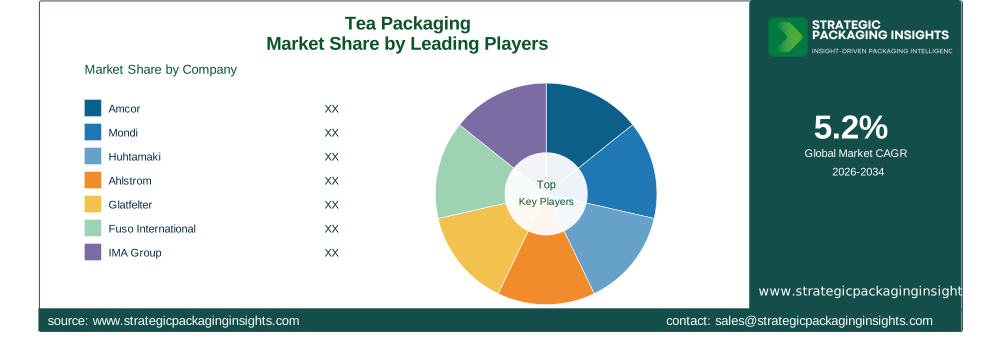
Fuso International and IMA Group are also key players in the tea packaging market, known for their advanced packaging machinery and solutions. Fuso International specializes in the production of tea bag packaging machines, while IMA Group offers a comprehensive range of packaging solutions for the tea industry. Teepack, a subsidiary of the Teekanne Group, is another notable player, known for its innovative tea bag packaging machines. Constantia Flexibles and UFlex are also significant players, offering a wide range of flexible packaging solutions for the tea industry.
These companies are focused on expanding their product portfolios and enhancing their market presence through strategic partnerships and acquisitions. For instance, Amcor has been actively acquiring companies to strengthen its position in the sustainable packaging market. Similarly, Mondi has been investing in research and development to develop innovative packaging solutions that meet the evolving needs of consumers. The competitive landscape is further intensified by the presence of numerous regional players, each offering unique packaging solutions tailored to local markets.
Overall, the tea packaging market is highly competitive, with companies striving to differentiate themselves through innovation and sustainability. The focus on eco-friendly packaging solutions is a key trend in the market, with companies investing heavily in research and development to meet the growing demand for sustainable products. As the market continues to evolve, companies that can offer innovative and sustainable packaging solutions are well-positioned to capture a larger share of the market.
Key Highlights
- The tea packaging market is projected to grow from $6.79 billion in 2025 to $10.75 billion by 2034, at a CAGR of 5.2%.
- Increasing global tea consumption and the rise of specialty and premium teas are driving market growth.
- Sustainability is a key trend, with a growing demand for eco-friendly packaging solutions.
- Advancements in packaging technology, such as smart and active packaging, are providing new opportunities for growth.
- The rise of e-commerce is transforming the way consumers purchase tea, leading to increased demand for protective and visually appealing packaging.
- Stringent regulations regarding packaging waste and recyclability pose challenges for manufacturers.
- The competitive landscape is characterized by numerous players, with companies focusing on innovation and sustainability to gain a competitive edge.
Top Countries Insights
In the tea packaging market, China stands out as a leading country with a market size of approximately $2.5 billion and a CAGR of 6%. The country's large population and cultural affinity for tea consumption drive demand. Government initiatives promoting sustainable packaging further bolster growth. India follows closely with a market size of $1.8 billion and a CAGR of 7%. The country's rich tea culture and increasing disposable income contribute to market expansion. The government's push for eco-friendly packaging solutions also supports growth.
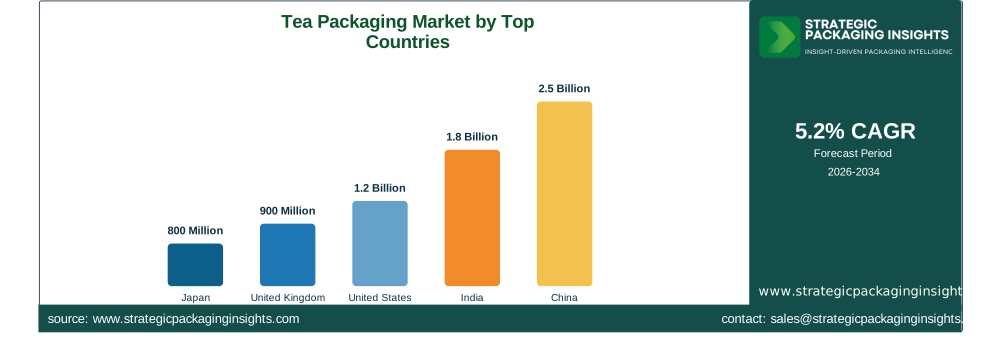
The United States, with a market size of $1.2 billion and a CAGR of 4%, is a significant player in the tea packaging market. The growing popularity of specialty and premium teas, along with a focus on sustainability, drives demand. The presence of major tea brands and a well-established retail sector further support market growth. In the United Kingdom, the market size is approximately $900 million, with a CAGR of 3%. The country's strong tea culture and increasing demand for premium teas contribute to market growth. The focus on sustainable packaging solutions is also a key driver.
Japan, with a market size of $800 million and a CAGR of 5%, is another important market for tea packaging. The country's rich tea culture and increasing demand for specialty teas drive growth. The government's emphasis on sustainability and innovation in packaging solutions further supports market expansion. Overall, these countries represent significant opportunities for growth in the tea packaging market, driven by cultural preferences, government initiatives, and a focus on sustainability.
Tea Packaging Market Segments Insights

Packaging Type Analysis
The tea packaging market is segmented by packaging type into tea bags, sachets, cartons, and tins. Tea bags remain the most popular packaging type due to their convenience and ease of use. The demand for tea bags is driven by the increasing consumption of tea in both developed and developing markets. Sachets are also gaining popularity, particularly for premium and specialty teas, as they offer a more sophisticated packaging solution. Cartons and tins are preferred for bulk packaging and premium tea products, offering durability and protection.
The trend towards premiumization is driving demand for innovative packaging solutions that enhance the consumer experience. Companies are investing in research and development to create packaging that not only preserves the quality of tea but also appeals to consumers' aesthetic preferences. The rise of e-commerce is also influencing packaging design, with a focus on creating visually appealing and protective packaging for online sales. Overall, the packaging type segment is characterized by a focus on innovation and sustainability, with companies striving to meet the evolving needs of consumers.
Material Type Analysis
The material type segment of the tea packaging market includes filter paper, paperboard, foil laminate, and compostable films. Filter paper is widely used for tea bags due to its ability to retain flavor and aroma while allowing for easy infusion. Paperboard is commonly used for cartons and boxes, offering durability and protection. Foil laminate is preferred for its barrier properties, protecting tea from moisture and light. Compostable films are gaining traction as consumers seek eco-friendly packaging solutions.
The focus on sustainability is driving innovation in material types, with companies investing in the development of biodegradable and compostable materials. This trend is particularly evident in developed markets where consumers are more environmentally conscious. The high cost of sustainable materials remains a challenge, but advancements in technology are helping to reduce costs and improve accessibility. Overall, the material type segment is characterized by a focus on sustainability and innovation, with companies striving to meet the growing demand for eco-friendly packaging solutions.
Tea Type Analysis
The tea type segment of the tea packaging market includes black tea, green tea, herbal tea, and premium blends. Black tea remains the most popular type of tea, driving demand for packaging solutions that preserve its flavor and aroma. Green tea is also gaining popularity due to its health benefits, leading to increased demand for packaging that retains its freshness. Herbal teas and premium blends are experiencing significant growth, driven by consumer interest in unique and artisanal tea products.
The trend towards premiumization is influencing packaging design, with companies investing in innovative solutions that enhance the consumer experience. The rise of specialty teas is also driving demand for packaging that reflects the premium nature of the product. Overall, the tea type segment is characterized by a focus on innovation and premiumization, with companies striving to meet the evolving needs of consumers.
End Use Analysis
The end use segment of the tea packaging market includes tea brands, foodservice, and retailers. Tea brands are the largest end users, driving demand for packaging solutions that enhance brand perception and consumer experience. The rise of specialty and premium teas is influencing packaging design, with companies investing in innovative solutions that reflect the premium nature of their products. Foodservice is also a significant end user, with demand for packaging solutions that are convenient and easy to use.
Retailers are increasingly focusing on packaging that enhances the consumer experience and drives sales. The rise of e-commerce is also influencing packaging design, with a focus on creating visually appealing and protective packaging for online sales. Overall, the end use segment is characterized by a focus on innovation and premiumization, with companies striving to meet the evolving needs of consumers.
Tea Packaging Market Segments
The Tea Packaging market has been segmented on the basis ofBy Packaging Type
- Tea Bags
- Sachets
- Cartons
- Tins
By Material Type
- Filter Paper
- Paperboard
- Foil Laminate
- Compostable Films
By Tea Type
- Black Tea
- Green Tea
- Herbal Tea
- Premium Blends
By End Use
- Tea Brands
- Foodservice
- Retailers
Region
- Asia Pacific
- North America
- Latin America
- Europe
- Middle East & Africa




