


Syringe Filling Machine Market Outlook
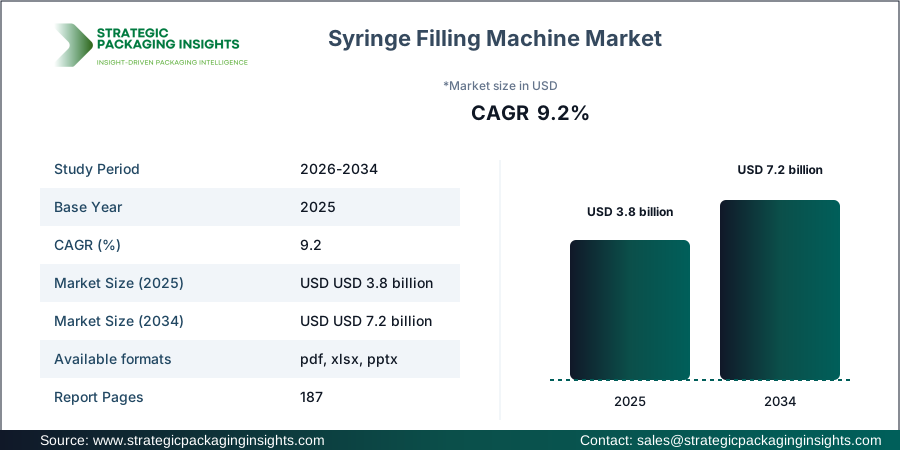
The Syringe Filling Machine market size was valued at USD 3.8 billion in 2025 and is anticipated to reach USD 7.2 billion by 2034, growing at a CAGR of 9.2% during the forecast period according to Strategic Packaging Insights. This growth is driven by the increasing demand for efficient and precise filling solutions in the pharmaceutical industry, where companies like Syntegon Technology GmbH and IMA Group are leading the charge. The rise in chronic diseases and the subsequent increase in injectable drug consumption are further propelling the market. Additionally, technological advancements in filling machines, such as automation and enhanced accuracy, are attracting significant investments from key players.
One of the most impactful drivers of the Syringe Filling Machine market is the stringent regulatory framework governing pharmaceutical manufacturing. Governments worldwide are enforcing strict guidelines to ensure the safety and efficacy of injectable drugs, which in turn is boosting the demand for advanced syringe filling machines. According to recent reports, the FDA and EMA have been particularly active in updating their regulations, which has led to increased adoption of state-of-the-art filling technologies by companies like Groninger and Co. GmbH and OPTIMA Packaging Group GmbH. This regulatory push is expected to continue driving market growth as manufacturers strive to comply with evolving standards.
Report Scope
| Attributes | Details |
| Report Title | Syringe Filling Machine Market Size, Future Growth and Forecast 2034 |
| Syringe Type | Glass syringe, Plastic syringe |
| Capacity | 1000 to 5000 syringes per hour, 1000 syringes per hour, 5000 to 100000 syringes per hour, 100000 syringes per hour |
| Machine Type | Automatic, Semiautomatic, Manual |
| Region | Asia Pacific, North America, Latin America, Europe, Middle East & Africa |
| Base Year | 2025 |
| Historic Period | 2018-2024 |
| Forecast Period | 2026-2034 |
| Number of Pages | 187 |
| Customization Available | Yes* |
Sustainability & Circular Economy Analysis
Sustainability initiatives and circular economy practices are increasingly influencing the packaging market, including the syringe filling machine sector. Companies are focusing on using recyclable materials and developing reusable packaging solutions to reduce environmental impact. This shift towards eco-friendly material innovation is driven by consumer preferences for sustainable products and the need to comply with packaging regulations. As a result, manufacturers are investing in lightweight packaging and waste reduction strategies to minimize their carbon footprint and enhance their ESG initiatives.
The influence of sustainability trends on packaging design and manufacturing is profound. Companies are rethinking their investment decisions and supply chain strategies to align with these trends. For instance, the adoption of eco-friendly materials is not only reducing waste but also improving regulatory compliance and long-term market competitiveness. Extended producer responsibility (EPR) is another key factor driving this change, as it holds manufacturers accountable for the entire lifecycle of their products, encouraging them to design more sustainable packaging solutions.
These sustainability trends are also impacting the syringe filling machine market by influencing the choice of materials and technologies used in machine manufacturing. Companies are increasingly opting for energy-efficient machinery and processes that reduce waste and emissions. This focus on sustainability is not only enhancing the environmental credentials of manufacturers but also providing them with a competitive edge in the market. As a result, sustainability is becoming a critical factor in the decision-making process for packaging manufacturers, brand owners, and investors.
Packaging Value Chain & Supply Chain Analysis
The packaging value chain and supply chain ecosystem for syringe filling machines is complex and involves multiple stakeholders. Raw material sourcing is a critical component, as the availability and cost of materials like glass and plastic directly impact production capabilities. Packaging converters and manufacturers play a vital role in transforming these raw materials into finished products, while packaging machinery companies provide the necessary equipment for efficient production. Logistics and distribution channels ensure that these products reach brand owners and retailers in a timely manner.
Supply chain efficiency is crucial for maintaining competitiveness in the syringe filling machine market. Companies are focusing on optimizing their procurement strategies and inventory management to reduce costs and improve delivery times. Strategic partnerships with suppliers and logistics providers are also essential for ensuring a steady supply of raw materials and components. Localization and global sourcing are key strategies employed by manufacturers to enhance supply chain resilience and mitigate risks associated with geopolitical uncertainties and trade disruptions.
Recycling networks are becoming increasingly important in the packaging value chain as companies strive to meet sustainability goals. By integrating recycling into their supply chain strategies, manufacturers can reduce waste and improve their environmental footprint. This not only enhances their brand image but also aligns with consumer preferences for sustainable products. As a result, companies are investing in advanced recycling technologies and collaborating with stakeholders across the value chain to create a more circular economy.
Opportunities & Threats
The Syringe Filling Machine market presents numerous opportunities for growth and innovation. One significant opportunity lies in the increasing demand for personalized medicine, which requires specialized filling solutions. Companies that can offer flexible and customizable machines will be well-positioned to capitalize on this trend. Additionally, the growing focus on biologics and biosimilars is driving demand for advanced filling technologies that can handle complex formulations. This presents an opportunity for manufacturers to develop machines with enhanced precision and accuracy.
Another opportunity in the market is the expansion of healthcare infrastructure in emerging economies. As countries invest in improving their healthcare systems, the demand for syringe filling machines is expected to rise. Companies that can establish a strong presence in these regions will benefit from the growing market potential. Furthermore, advancements in automation and digitalization are creating opportunities for manufacturers to develop smart filling machines that offer real-time monitoring and data analytics capabilities, enhancing operational efficiency and product quality.
Despite these opportunities, the market also faces several threats. One major threat is the high cost of advanced filling machines, which can be a barrier to adoption for small and medium-sized enterprises. Additionally, the market is highly competitive, with numerous players vying for market share. This intense competition can lead to price wars and margin pressures, challenging the profitability of manufacturers. Moreover, the rapid pace of technological advancements means that companies must continuously innovate to stay ahead, which can be resource-intensive and risky.
Drivers & Challenges
The Syringe Filling Machine market is driven by several key factors. One of the primary drivers is the increasing prevalence of chronic diseases, which is leading to a rise in the consumption of injectable drugs. This, in turn, is boosting the demand for efficient and reliable syringe filling machines. Additionally, the growing focus on patient safety and product quality is driving manufacturers to invest in advanced filling technologies that offer enhanced precision and accuracy. Companies like Cytiva and Cozzoli Machine Company are at the forefront of this trend, developing innovative solutions to meet the evolving needs of the pharmaceutical industry.
Another significant driver is the regulatory landscape, which is becoming increasingly stringent. Governments and regulatory bodies are imposing strict guidelines to ensure the safety and efficacy of injectable drugs, which is driving the adoption of advanced syringe filling machines. This regulatory push is encouraging manufacturers to invest in state-of-the-art technologies that comply with evolving standards. Furthermore, the growing trend of automation and digitalization is driving demand for smart filling machines that offer real-time monitoring and data analytics capabilities, enhancing operational efficiency and product quality.
However, the market also faces several challenges. One of the main challenges is the high cost of advanced filling machines, which can be a barrier to adoption for small and medium-sized enterprises. Additionally, the market is highly competitive, with numerous players vying for market share. This intense competition can lead to price wars and margin pressures, challenging the profitability of manufacturers. Moreover, the rapid pace of technological advancements means that companies must continuously innovate to stay ahead, which can be resource-intensive and risky.
Market Share Analysis
The competitive landscape of the Syringe Filling Machine market is characterized by the presence of several key players, each vying for a significant share of the market. Companies like Syntegon Technology GmbH, IMA Group, and Groninger and Co. GmbH are leading the market with their advanced filling solutions and strong global presence. These companies have established themselves as leaders through continuous innovation, strategic partnerships, and a focus on customer satisfaction. Their extensive product portfolios and robust distribution networks have enabled them to capture a substantial share of the market.
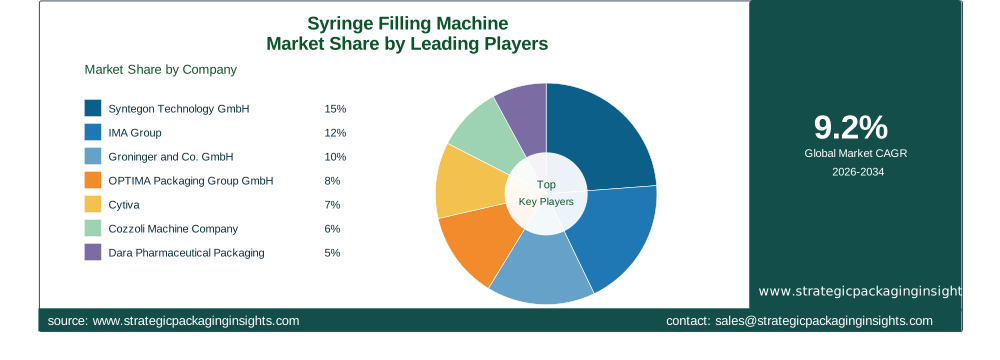
Syntegon Technology GmbH, for instance, is renowned for its cutting-edge filling technologies and comprehensive service offerings. The company's commitment to innovation and quality has earned it a strong reputation in the industry. Similarly, IMA Group is known for its state-of-the-art filling machines and extensive expertise in the pharmaceutical sector. The company's focus on research and development has enabled it to introduce innovative solutions that meet the evolving needs of its customers.
Groninger and Co. GmbH is another major player in the market, known for its high-quality filling machines and customer-centric approach. The company's emphasis on precision and reliability has made it a preferred choice for pharmaceutical manufacturers worldwide. OPTIMA Packaging Group GmbH is also a key player, offering a wide range of filling solutions that cater to various industry requirements. The company's strong focus on sustainability and environmental responsibility has further enhanced its market position.
Other notable companies in the market include Cytiva, Cozzoli Machine Company, and Dara Pharmaceutical Packaging. These companies have carved out a niche for themselves through their innovative products and strong customer relationships. Their focus on quality and reliability has enabled them to maintain a competitive edge in the market. Overall, the Syringe Filling Machine market is highly competitive, with companies constantly striving to innovate and differentiate themselves to capture a larger share of the market.
Key Highlights
- Market Size: The Syringe Filling Machine market was valued at USD 3.8 billion in 2025 and is projected to reach USD 7.2 billion by 2034.
- Growth Rate: The market is expected to grow at a CAGR of 9.2% during the forecast period.
- Leading Companies: Key players include Syntegon Technology GmbH, IMA Group, and Groninger and Co. GmbH.
- Technological Advancements: Automation and digitalization are driving demand for smart filling machines.
- Regulatory Influence: Stringent regulations are boosting the adoption of advanced filling technologies.
- Regional Insights: Asia Pacific is expected to witness significant growth due to expanding healthcare infrastructure.
- Sustainability Focus: Companies are investing in eco-friendly materials and waste reduction strategies.
Syringe Filling Machine Market Segments Insights

Syringe Type Analysis
The Syringe Filling Machine market is segmented by syringe type into glass syringes and plastic syringes. Glass syringes are traditionally preferred due to their chemical resistance and ability to maintain drug stability. However, plastic syringes are gaining popularity due to their lightweight nature and cost-effectiveness. Companies like Syntegon Technology GmbH and IMA Group are focusing on developing machines that can efficiently handle both types of syringes, catering to the diverse needs of the pharmaceutical industry. The demand for plastic syringes is expected to grow significantly, driven by the increasing adoption of disposable syringes in healthcare settings.
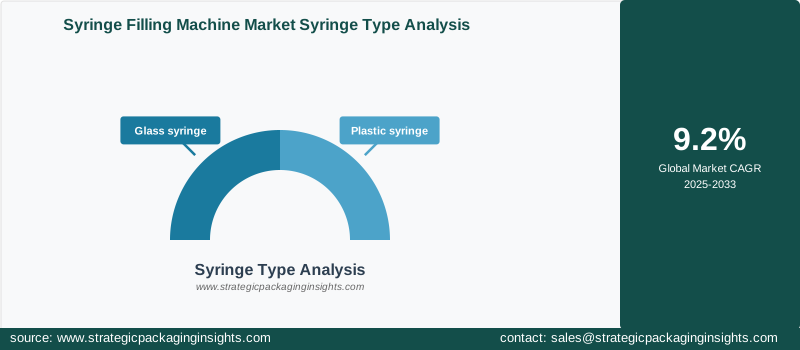
Glass syringes continue to hold a significant share of the market, particularly in applications where drug stability is critical. The ability of glass syringes to withstand high temperatures and their compatibility with a wide range of drugs make them a preferred choice for certain pharmaceutical applications. However, the growing focus on sustainability and waste reduction is driving the adoption of plastic syringes, which are easier to recycle and dispose of. As a result, manufacturers are investing in advanced filling technologies that can accommodate both glass and plastic syringes, ensuring flexibility and efficiency in production processes.
Capacity Analysis
The market is also segmented by capacity, with machines capable of filling 1000 to 5000 syringes per hour, 1000 syringes per hour, 5000 to 100000 syringes per hour, and 100000 syringes per hour. Machines with higher capacities are in demand due to the increasing need for mass production in the pharmaceutical industry. Companies like Groninger and Co. GmbH and OPTIMA Packaging Group GmbH are leading the market with their high-capacity filling solutions, which offer enhanced efficiency and productivity. The demand for machines with capacities exceeding 100000 syringes per hour is expected to grow, driven by the need for large-scale production in response to rising drug demand.
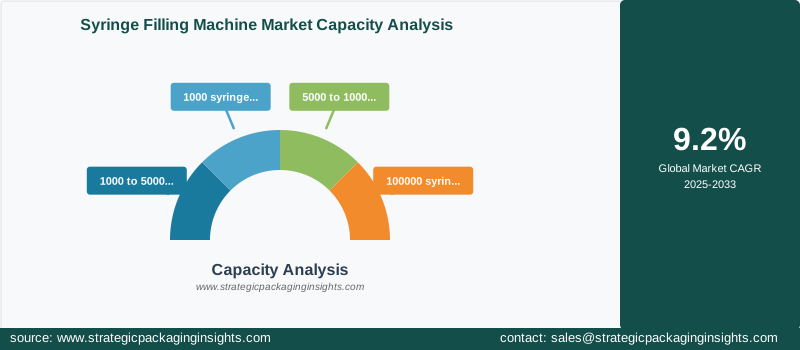
Machines with lower capacities are also gaining traction, particularly in niche applications where flexibility and precision are more important than volume. These machines are ideal for small-scale production and research and development purposes, where customization and adaptability are key. As a result, manufacturers are focusing on developing versatile machines that can cater to a wide range of production needs, from small batches to large-scale manufacturing. This flexibility is crucial for meeting the diverse requirements of the pharmaceutical industry and ensuring efficient and cost-effective production processes.
Machine Type Analysis
The Syringe Filling Machine market is further segmented by machine type into automatic, semiautomatic, and manual machines. Automatic machines are the most popular due to their high efficiency and ability to reduce labor costs. Companies like Cytiva and Cozzoli Machine Company are at the forefront of this segment, offering advanced automatic filling solutions that enhance productivity and accuracy. The demand for automatic machines is expected to continue growing, driven by the increasing focus on automation and digitalization in the pharmaceutical industry.
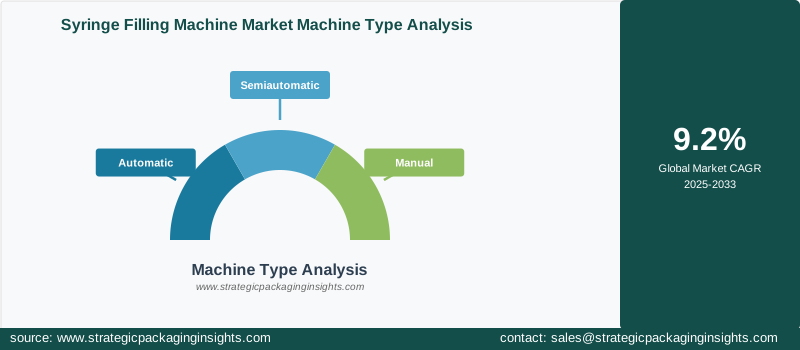
Semiautomatic and manual machines also have a significant presence in the market, particularly in applications where flexibility and control are more important than speed. These machines are ideal for small-scale production and research and development purposes, where customization and adaptability are key. As a result, manufacturers are focusing on developing versatile machines that can cater to a wide range of production needs, from small batches to large-scale manufacturing. This flexibility is crucial for meeting the diverse requirements of the pharmaceutical industry and ensuring efficient and cost-effective production processes.
Syringe Filling Machine Market Segments
The Syringe Filling Machine market has been segmented on the basis ofSyringe Type
- Glass syringe
- Plastic syringe
Capacity
- 1000 to 5000 syringes per hour
- 1000 syringes per hour
- 5000 to 100000 syringes per hour
- 100000 syringes per hour
Machine Type
- Automatic
- Semiautomatic
- Manual
Region
- Asia Pacific
- North America
- Latin America
- Europe
- Middle East & Africa




