


Synthetic Paper Market Outlook
The synthetic paper market was valued at $1.28 billion in 2025 and is projected to reach $2.43 billion by 2034, growing at a CAGR of 7.4% during the forecast period 2026-2034. This market is witnessing significant growth due to the increasing demand for eco-friendly and durable paper alternatives across various industries. Synthetic paper, known for its water-resistant and tear-resistant properties, is gaining traction in sectors such as packaging, labeling, and printing. The market's expansion is further fueled by technological advancements in synthetic paper production, which enhance its printability and versatility. As industries continue to seek sustainable solutions, synthetic paper is poised to become a preferred choice, driving its market growth in the coming years.
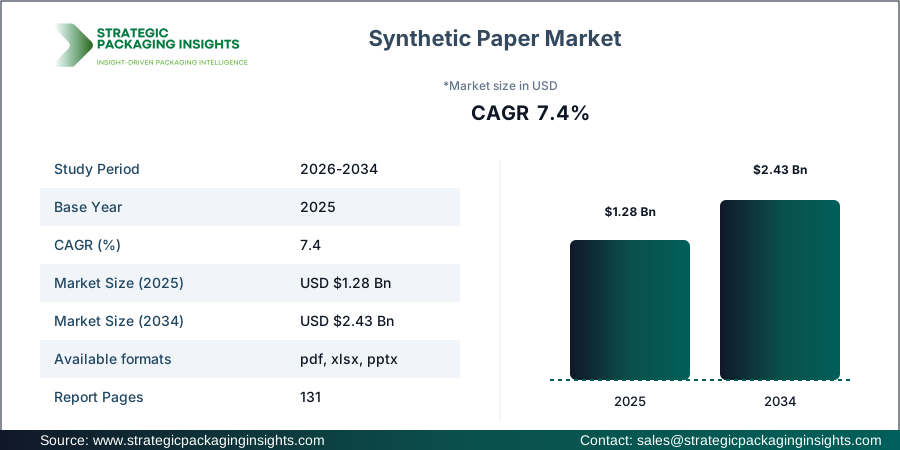
Despite its promising growth trajectory, the synthetic paper market faces certain challenges. Regulatory constraints related to environmental sustainability and the high cost of raw materials are potential restraining factors. However, the market's growth potential remains substantial, driven by the increasing adoption of synthetic paper in emerging economies and the rising awareness of its benefits. The market is also expected to benefit from ongoing research and development efforts aimed at improving the quality and cost-effectiveness of synthetic paper. As a result, the synthetic paper market is anticipated to experience robust growth, with opportunities for innovation and expansion in various applications and regions.
Report Scope
| Attributes | Details |
| Report Title | Synthetic Paper Market Size, Future Growth and Forecast 2034 |
| By Material Type | BOPP, HDPE, PET, PVC |
| By Application | Labels, Tags, Menus, Maps, Packaging |
| By End Use | Retail, Printing, Packaging, Logistics |
| Region | Asia Pacific, North America, Latin America, Europe, Middle East & Africa |
| Base Year | 2025 |
| Historic Period | 2018-2024 |
| Forecast Period | 2026-2034 |
| Number of Pages | 131 |
| Customization Available | Yes* |
Opportunities & Threats
The synthetic paper market presents numerous opportunities for growth, particularly in the packaging industry. As consumer preferences shift towards sustainable and eco-friendly packaging solutions, synthetic paper offers a viable alternative to traditional paper and plastic materials. Its durability, water resistance, and recyclability make it an attractive option for packaging applications, driving demand in this segment. Additionally, the increasing use of synthetic paper in the printing industry, particularly for high-quality prints and labels, presents further growth opportunities. The market is also poised to benefit from the rising demand for synthetic paper in emerging economies, where industrialization and urbanization are driving the need for innovative and sustainable materials.
Another significant opportunity lies in the development of new applications for synthetic paper. As industries continue to explore the potential of synthetic paper, new uses are emerging in sectors such as logistics, retail, and advertising. The versatility of synthetic paper, combined with its environmental benefits, makes it an ideal choice for a wide range of applications. Furthermore, advancements in synthetic paper technology are expected to enhance its properties and expand its use in various industries, creating new avenues for growth and innovation.
However, the synthetic paper market also faces certain threats that could impact its growth. One of the primary challenges is the high cost of production, which can limit its adoption in price-sensitive markets. Additionally, the availability of cheaper alternatives, such as traditional paper and plastic, poses a threat to the widespread adoption of synthetic paper. Environmental regulations and sustainability concerns also present challenges, as manufacturers must ensure that their products meet stringent environmental standards. Despite these challenges, the synthetic paper market is expected to continue its growth trajectory, driven by increasing demand for sustainable and durable materials.
Drivers & Challenges
The synthetic paper market is driven by several key factors, including the growing demand for eco-friendly and sustainable materials. As environmental concerns continue to rise, industries are increasingly seeking alternatives to traditional paper and plastic products. Synthetic paper, with its recyclable and durable properties, offers a sustainable solution that meets these demands. Additionally, the increasing use of synthetic paper in the packaging industry is a significant driver of market growth. Its water-resistant and tear-resistant properties make it an ideal choice for packaging applications, where durability and sustainability are paramount.
Technological advancements in synthetic paper production are also driving market growth. Innovations in manufacturing processes have improved the quality and versatility of synthetic paper, making it suitable for a wider range of applications. These advancements have also enhanced the printability of synthetic paper, making it a preferred choice for high-quality printing and labeling applications. Furthermore, the rising demand for synthetic paper in emerging economies, where industrialization and urbanization are driving the need for innovative materials, is expected to fuel market growth in the coming years.
Despite these drivers, the synthetic paper market faces several challenges that could impact its growth. One of the primary challenges is the high cost of raw materials, which can limit the adoption of synthetic paper in price-sensitive markets. Additionally, the availability of cheaper alternatives, such as traditional paper and plastic, poses a threat to the widespread adoption of synthetic paper. Environmental regulations and sustainability concerns also present challenges, as manufacturers must ensure that their products meet stringent environmental standards. Despite these challenges, the synthetic paper market is expected to continue its growth trajectory, driven by increasing demand for sustainable and durable materials.
Market Share Analysis
The synthetic paper market is characterized by a competitive landscape with several key players dominating the market. Companies such as Yupo Corporation, Nan Ya Plastics, and PPG Industries hold significant market shares, driven by their strong product portfolios and extensive distribution networks. These companies are focused on expanding their market presence through strategic partnerships, mergers, and acquisitions, as well as investing in research and development to enhance their product offerings. The competitive landscape is further intensified by the presence of regional players, who are leveraging their local expertise to capture market share.
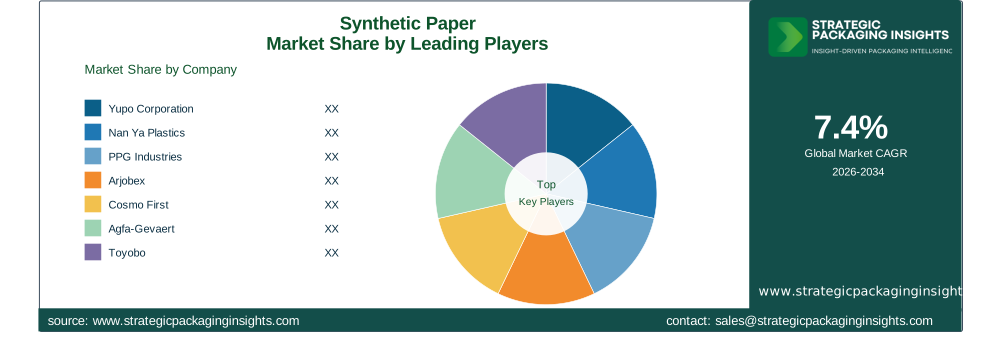
Yupo Corporation is a leading player in the synthetic paper market, known for its high-quality products and innovative solutions. The company has a strong presence in the Asia Pacific region, where it is capitalizing on the growing demand for sustainable materials. Nan Ya Plastics, another major player, is focused on expanding its product portfolio and strengthening its market position through strategic collaborations and investments in research and development. PPG Industries, a global leader in the coatings and materials industry, is leveraging its expertise to develop advanced synthetic paper solutions that meet the evolving needs of its customers.
Other notable players in the synthetic paper market include Arjobex, Cosmo First, Agfa-Gevaert, Toyobo, Relyco, Transcendia, and MDV Papier. These companies are actively engaged in expanding their market presence through product innovation and strategic partnerships. Arjobex, for example, is focused on developing eco-friendly synthetic paper solutions that cater to the growing demand for sustainable materials. Cosmo First is leveraging its expertise in the packaging industry to develop innovative synthetic paper products that meet the needs of its customers. Agfa-Gevaert, a leading player in the imaging and printing industry, is focused on expanding its synthetic paper offerings to capture market share in the printing and labeling segments.
Key Highlights
- The synthetic paper market is projected to grow at a CAGR of 7.4% from 2026 to 2034.
- Increasing demand for eco-friendly and sustainable materials is driving market growth.
- Technological advancements in synthetic paper production are enhancing product quality and versatility.
- The packaging industry is a significant driver of synthetic paper demand.
- Emerging economies are expected to offer significant growth opportunities for the synthetic paper market.
- High production costs and availability of cheaper alternatives pose challenges to market growth.
- Key players are focused on expanding their market presence through strategic partnerships and product innovation.
Top Countries Insights
In the synthetic paper market, the United States stands out as a key player, with a market size of approximately $400 million and a CAGR of 6%. The country's strong focus on sustainability and eco-friendly materials is driving demand for synthetic paper, particularly in the packaging and printing industries. Government policies promoting sustainable practices and the increasing adoption of synthetic paper in various applications are key growth drivers in the U.S. market. However, challenges such as high production costs and competition from traditional paper products remain.
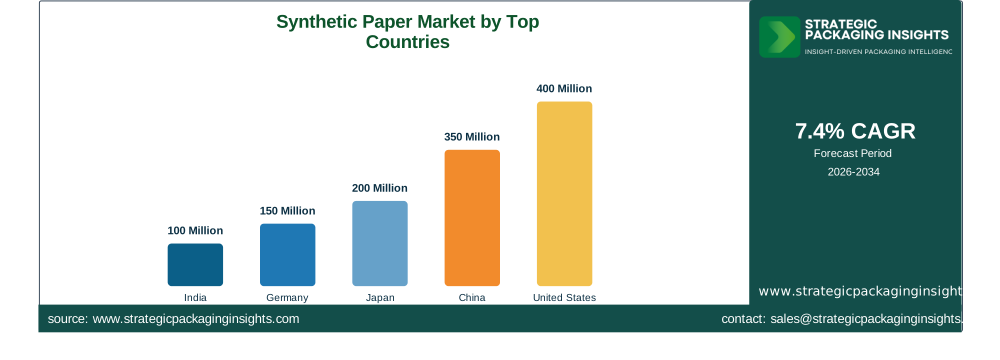
China is another significant market for synthetic paper, with a market size of around $350 million and a CAGR of 9%. The country's rapid industrialization and urbanization are driving demand for innovative materials, including synthetic paper. The Chinese government's focus on environmental sustainability and the growing awareness of the benefits of synthetic paper are key factors contributing to market growth. However, the market faces challenges such as regulatory constraints and the availability of cheaper alternatives.
Japan, with a market size of approximately $200 million and a CAGR of 5%, is a mature market for synthetic paper. The country's advanced manufacturing capabilities and strong focus on quality and innovation are driving demand for synthetic paper in various applications. The Japanese market is characterized by a high level of competition, with several key players vying for market share. Despite challenges such as high production costs and stringent environmental regulations, the market is expected to continue its growth trajectory.
Germany, with a market size of around $150 million and a CAGR of 4%, is a key market for synthetic paper in Europe. The country's strong focus on sustainability and eco-friendly materials is driving demand for synthetic paper, particularly in the packaging and printing industries. Government policies promoting sustainable practices and the increasing adoption of synthetic paper in various applications are key growth drivers in the German market. However, challenges such as high production costs and competition from traditional paper products remain.
India, with a market size of approximately $100 million and a CAGR of 8%, is an emerging market for synthetic paper. The country's rapid industrialization and urbanization are driving demand for innovative materials, including synthetic paper. The Indian government's focus on environmental sustainability and the growing awareness of the benefits of synthetic paper are key factors contributing to market growth. However, the market faces challenges such as regulatory constraints and the availability of cheaper alternatives.
Synthetic Paper Market Segments Insights

By Material Type Analysis
The synthetic paper market is segmented by material type into BOPP, HDPE, PET, and PVC. BOPP (Biaxially Oriented Polypropylene) is the most widely used material in the synthetic paper market, owing to its excellent printability, durability, and cost-effectiveness. BOPP synthetic paper is extensively used in packaging, labeling, and printing applications, where its water-resistant and tear-resistant properties are highly valued. The growing demand for eco-friendly and sustainable materials is driving the adoption of BOPP synthetic paper, particularly in the packaging industry. HDPE (High-Density Polyethylene) synthetic paper is also gaining traction, driven by its superior strength and recyclability. HDPE synthetic paper is widely used in applications such as maps, menus, and tags, where durability and environmental sustainability are key considerations.
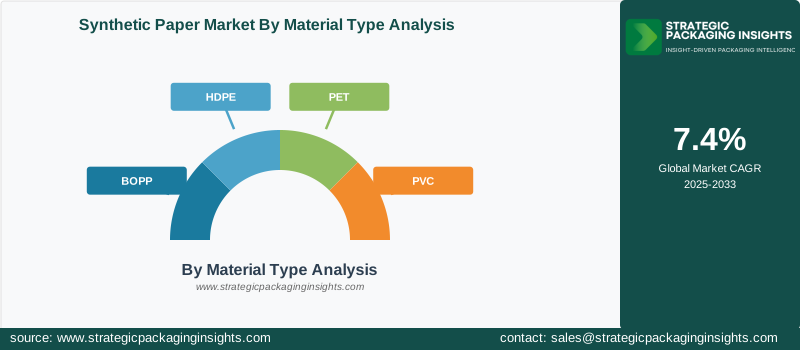
PET (Polyethylene Terephthalate) synthetic paper is known for its excellent clarity and printability, making it a preferred choice for high-quality printing and labeling applications. The increasing demand for PET synthetic paper in the printing industry is a significant driver of market growth. PVC (Polyvinyl Chloride) synthetic paper, although less commonly used, offers unique properties such as flexibility and chemical resistance, making it suitable for specialized applications. The market for PVC synthetic paper is expected to grow, driven by the increasing demand for durable and versatile materials in various industries.
By Application Analysis
The synthetic paper market is segmented by application into labels, tags, menus, maps, and packaging. Labels are the largest application segment, driven by the increasing demand for high-quality and durable labeling solutions in various industries. Synthetic paper labels offer excellent printability, water resistance, and tear resistance, making them ideal for use in harsh environments. The growing demand for eco-friendly and sustainable labeling solutions is further driving the adoption of synthetic paper labels. Tags are another significant application segment, with synthetic paper tags being widely used in retail, logistics, and manufacturing industries. The durability and recyclability of synthetic paper tags make them a preferred choice for various applications.
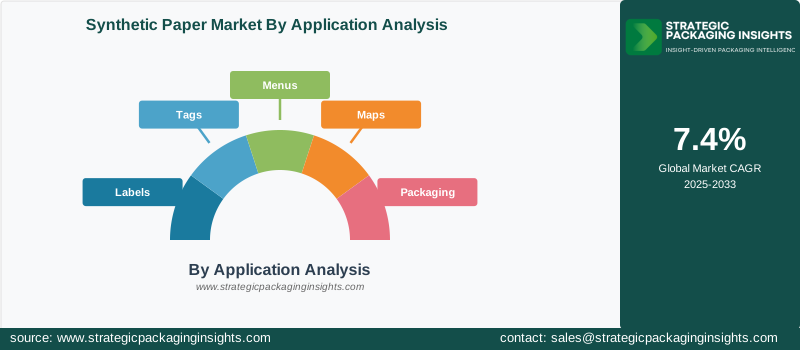
Menus and maps are also important application segments, with synthetic paper offering superior durability and printability compared to traditional paper. The increasing demand for high-quality and long-lasting menus and maps is driving the adoption of synthetic paper in these applications. Packaging is a rapidly growing application segment, driven by the increasing demand for sustainable and eco-friendly packaging solutions. Synthetic paper packaging offers excellent durability, water resistance, and recyclability, making it an attractive option for various packaging applications.
By End Use Analysis
The synthetic paper market is segmented by end use into retail, printing, packaging, and logistics. The retail sector is a significant end-use segment, driven by the increasing demand for high-quality and durable labeling and tagging solutions. Synthetic paper offers excellent printability and durability, making it an ideal choice for retail applications. The printing industry is another major end-use segment, with synthetic paper being widely used for high-quality printing and labeling applications. The growing demand for eco-friendly and sustainable printing solutions is driving the adoption of synthetic paper in the printing industry.
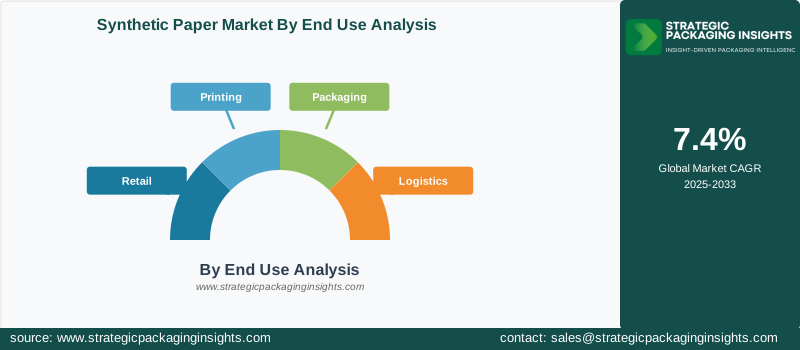
The packaging industry is a rapidly growing end-use segment, driven by the increasing demand for sustainable and eco-friendly packaging solutions. Synthetic paper offers excellent durability, water resistance, and recyclability, making it an attractive option for various packaging applications. The logistics industry is also a significant end-use segment, with synthetic paper being used for durable and long-lasting labeling and tagging solutions. The increasing demand for high-quality and durable logistics solutions is driving the adoption of synthetic paper in the logistics industry.
Synthetic Paper Market Segments
The Synthetic Paper market has been segmented on the basis ofBy Material Type
- BOPP
- HDPE
- PET
- PVC
By Application
- Labels
- Tags
- Menus
- Maps
- Packaging
By End Use
- Retail
- Printing
- Packaging
- Logistics
Region
- Asia Pacific
- North America
- Latin America
- Europe
- Middle East & Africa




